Features / Racism
Bristol communities confront fear and division amid rising racism
In the wake of several racially motivated attacks in September and October, including a hate letter to the Jamia Masjid mosque in Easton, an airgun attack on a nine-year-old girl in Brentry and ongoing protests over asylum policy, conversations about racism have returned to the fore. Bristol has a reputation for inclusivity and tolerance. So, many might feel removed from this growing racism. However, there is growing anxiety amongst others that old prejudices are resurfacing in new forms.
Abir Ahmed, from Easton, is the women and family engagement worker for the Bristol Somali Resource Centre (BSRC).
The community welfare organisation in Lawrence Hill provides a range of services, often to people with language barriers and to those unfamiliar with public systems in the UK, due to their inexperience with functioning state institutions after decades of civil war in Somalia.
is needed now More than ever
“It’s 100% different”, says Abir, while talking about the current mood in the neighbourhood.
She says: “There’s a lot of fear being spread on social media. And after the brutal racist attack on two men just down the road recently, people are scared again.“We have mothers who don’t want their sons getting the bus to and from school on their own. I wear a hijab, and as a woman, I won’t go out after dark now.
“The fear and the precautions I feel I have to take now are literally limiting my life.”
For Abir, the fear is also deeply personal. Born in Somalia, she came to England as a refugee, alone, when she was 15. She sees herself as a success story, making the most of the opportunities that were offered, now also running her own educational charity, Home 2 School Link. Abir adds: “Why should that be questioned because now there’s a cost-of-living crisis and people are looking for others to blame?”
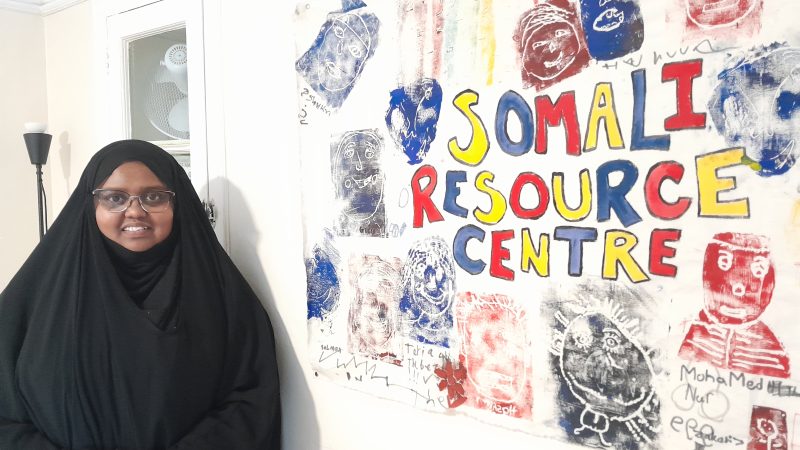
Fluent English, Somali and Arabic speaker, Abir says: “To a racist, I’m African, Somali, Pakistani, whatever. They don’t care”
The cumulative weight of inflammatory rhetoric on television, online, and in politics is worrying for those like Abir. But the fact that negative views on immigration are also shared by many ethnic minorities shows a wider political and social issue rather than simply a racial one.
Bristol has long prided itself on its diversity, from postwar Commonwealth arrivals to more recent communities from Somalia, Sudan, and Syria. Easton’s mosques and Indian shops, St Paul’s Carnival, the Sikh temples of St George – these are the legacies of a wider story of migration, labour and integration. But many who have lived here for decades say the civic culture that once defined the city has thinned out over the years because of budget cuts.
At the Sri Guru Singh Sabha Gurdwara in St George, Nirmal Kaur Bal, the temple’s secretary, has spent more than forty years working with Bristol’s Punjabi community. “We’ve always promoted integration,” she says. “Our families have built their lives here since the 1950s. We are part of the city.”
Yet, she admits, the sense of security that once underpinned that belonging has been shaken. “People are very conscious about it; they’re worried. We see what’s happening on the news: the racially aggravated rapes of young Sikh women in the West Midlands, attacks in Wolverhampton, and even here in Bristol. It affects your wellbeing. You feel vulnerable.”
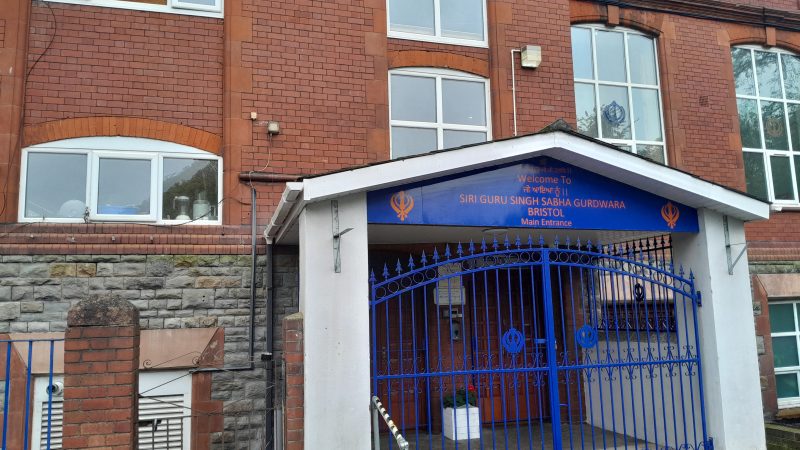
The Sri Guru Singh Sabha Gurdwara is located in St. George
Her concern is not abstract. Racially motivated reported crime in Bristol rose by almost 40 per cent in the two years between 2022 and 2024 (2,743 to 3,774 cases). But in St. George and Easton, the sense is that people from minority ethnic backgrounds seem largely shielded from the worst of it.
Having stopped a few shoppers on St. Marks Road in Easton to ask them how they were feeling, there was an acknowledgement of growing fears, but those fears were not necessarily impinging on their own personal sense of safety. Two Muslim women, who did not want to be named, said that everyone in Easton gets on and that they feel it is a very safe environment for them, “especially when compared to places like Hartcliffe.”
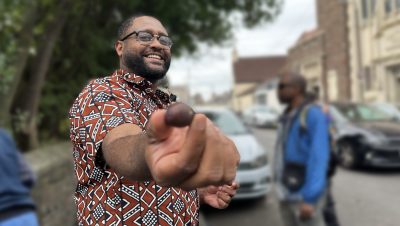
Rakesh Ranchhod was with his parents, who were visiting from New Zealand. He said: “I’ve been here for six years and never had any issues. There is a small but vocal minority of people who are racist, most are fine. It’s good to remember that.” His parents remembered the 80s in the UK and said it was much worse then.
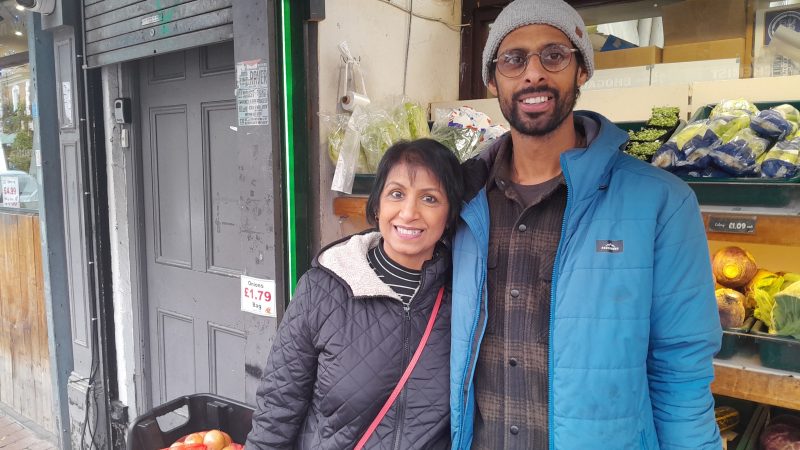
A Bristol resident, Rakesh, was on St Marks Road with his parents, who were visiting him from New Zealand
On the other hand, Nirmal’s recollections reach back to a different era of community life. In the 1980s and 1990s, she helped deliver health and education programmes in Punjabi as a Community Development Office for the Open University in Bristol. “We had proper funding for Hindi and Urdu speakers too”, she recalls. “Workshops for women, language classes, sessions about loneliness, heart health, depression. It made such a difference. People felt connected.”
Those services have largely disappeared. The gurdwara still hosts many older people on Thursdays, offering a cooked meal and a place to meet friends. But the activities that once filled the day and were funded by the local authority have dwindled. “We want to do more,” Nirmal says, “but the funding isn’t there. The Gurdwara runs on donations. The elders have small pensions. It’s very limited.”
That erosion of infrastructure, such as community centres, youth clubs and cultural grants, has left gaps that misinformation and resentment can fill.
Both Abir and Nirmal point to the political climate as a source of unease. Nirmal speaks candidly about how the far-right has tapped into frustration. “It’s political,” she says. “Nigel Farage is flaming the fire of racism because it wins him votes. It’s the government’s duty to control what’s happening with the boats; it shouldn’t be used to flare up racial attacks among communities.”
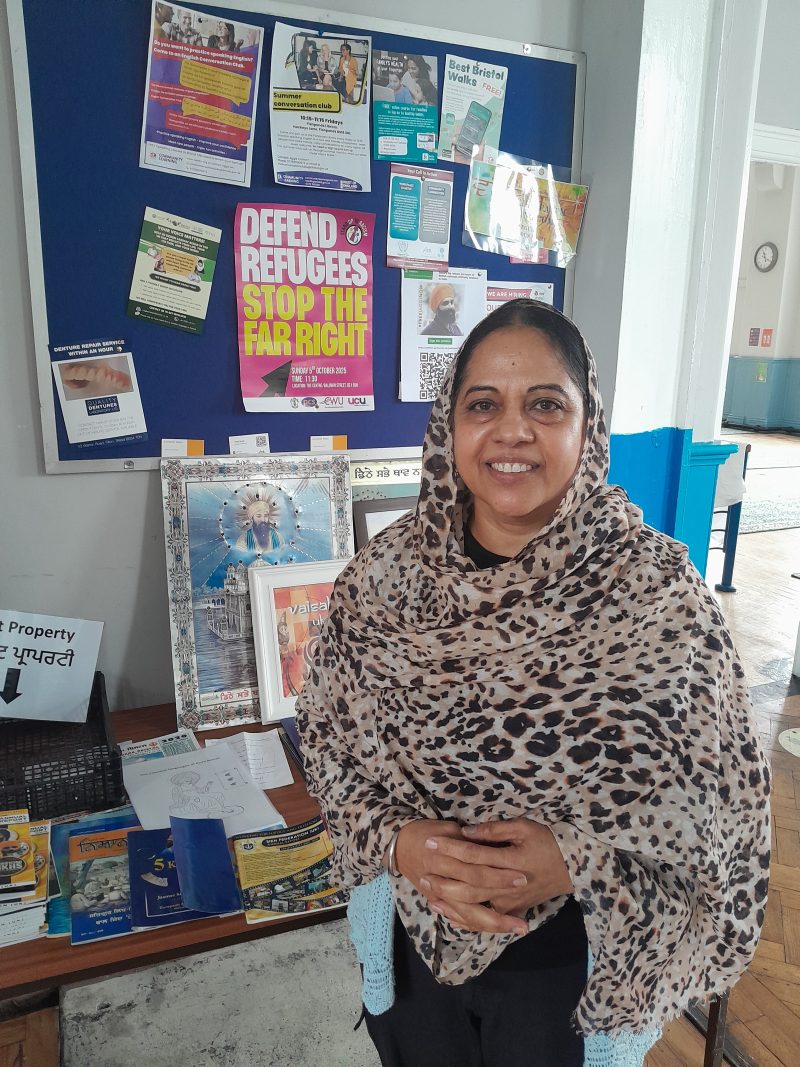
The gurdwara’s secretary, Nirmal, says: “If Nigel Farage wins, yeah, it will be worse”
The rhetoric resonates in unexpected places. Recent reports show that support for Reform UK is growing among British Indians. “Younger Sikhs might have had a smoother phase of life,” says Nirmal. “They judge things differently. But those who remember the 70s and 80s, they should know what’s coming.”
One of Nirmal’s frustrations is the unequal attention paid to different faith groups’ security concerns. “The synagogues have been given protection, the mosques too,” she says. “But the gurdwaras are equally vulnerable. Where is our security?”
The visible symbols of Sikh identity, such as turbans and beards, have long made worshippers targets for mistaken Islamophobia. Yet, funding for safety infrastructure, such as CCTV and on-site guards, remains inconsistent.
“The racist doesn’t know the difference,” Nirmal says bluntly. “That’s why the response must be equal.”
Despite the anxiety, both women stress the solidarity that still threads Bristol’s communities together. Nirmal says: “Any issue, we stand together. We always have.”
However, both Nirmal and Abir would like to see the Bristol City Council do more to assuage fears and take more proactive steps to bring communities together.
During the far-right protests in central Bristol in August 2024, volunteers from the gurdwara stood guard outside their temple, protecting the granthi (priest) and his family. “We did day and night shifts,” Nirmal recalls. “We had to protect ourselves.”
The collective vigilance speaks to a deeper truth: that communities often end up doing for themselves what the state once did: ensuring safety, cohesion, and belonging.
Both Nirmal and Abir are clear that they are British citizens, as much a part of the English flag as anybody. They have contributed to the community in numerous ways and are part of the success story of multiculturalism, now much maligned because of scarcity and scapegoating.
For now, that shared decency holds the city together. But those who have lived through past cycles of hate know how fragile it can be – and how urgently it must be protected.
On a parting note, Abir says: “Most people are kind. The majority of people, who you mostly never hear about, just want to live their lives. I count myself to be one of the luckiest people in my family to live in Bristol. But, yeah, the fear is real.”
Bristol24/7 has contacted Bristol City Council for a comment.
All photos: Kiran Dhami
Kiran Dhami is reporting on St George, Easton and Eastville as part of Bristol24/7’s Community Reporters programme, aiming to amplify marginalised voices and communities often overlooked by mainstream media.
Read next:
 Our newsletters emailed directly to you