Your say / Politics
‘The question for Bristol is whether Burnham will now surrender some of the power he has inherited’
Having moved from a regional mayoralty to Number 10, Andy Burnham understands the frustrations of England’s over-centralised political system.
The question for Bristol is whether he will now surrender some of the power he has inherited.
Andy Burnham knows what it is like to govern with one hand tied behind his back.
is needed now More than ever
As mayor of Greater Manchester, Burnham built his national reputation by championing his region, negotiating with Whitehall, and occasionally confronting it.
In his first speech outside Number 10 as prime minister, he promised to “take power out of here and carry it into every postcode in the land”.
For Bristol and the wider West of England, this creates an immediate test of whether a former regional mayor is genuinely prepared to loosen Whitehall’s grip now that he controls the machinery of central government.
There is already an important discussion taking place about the future of the West of England Mayoral Combined Authority.
North Somerset is preparing to join Bristol, Bath & North East Somerset and South Gloucestershire in the combined authority.
Regional leaders are also seeking Established Mayoral Strategic Authority status, which would bring broader powers and make the region eligible for a more flexible, integrated funding settlement, bringing the West of England closer to the level of devolution already enjoyed by places including Greater Manchester and West Yorkshire.
This matters because the challenges facing the region do not respect council boundaries.
People cross council boundaries every day for work, education, and public services. Housing markets, transport networks, and patterns of economic growth are regional, even when the institutions responsible for them remain fragmented.
A combined authority covering the full West of England could therefore make better decisions across the region’s real economic and social geography.
But enlarging it is not enough. Size is not the same thing as power, and having an elected mayor is not the same thing as possessing meaningful autonomy.
Enhanced business-rate retention already allows the region to retain a larger share of growth in locally raised business rates, and its continuation until 2028–29 is welcome.
But it is not a durable basis for regional autonomy. The resources available still depend partly on changes in the local commercial tax base, while major spending decisions remain divided between separate Whitehall schemes.
Nor does it end WECA’s dependence on government announcements, competitive funding pots and bids designed around priorities set elsewhere.
Too much regional energy is spent competing for money, awaiting decisions, and repackaging projects to fit the latest national scheme. This is not real autonomy. It is regional administration by permission.
Real autonomy means the ability to combine funding, set regional priorities and move resources between transport, housing, skills, and regeneration without repeatedly seeking Whitehall’s permission.
The more important prize is a long-term integrated financial settlement. Established status would make WECA eligible to secure one, bringing several funding streams together and giving regional leaders greater flexibility over how money is used.
The authority has already identified securing such a settlement as a central ambition. That would make it easier to plan beyond short political and funding cycles.
Transport investment could be coordinated with new housing. Skills spending could reflect the needs of local employers and communities. Regeneration projects could be developed over a decade rather than repeatedly repackaged for the latest national competition.
For Burnham, this should be familiar territory. His experience in Greater Manchester demonstrated how mayors can convene public bodies, bring councils and businesses together and provide a visible voice for their region.
But their ability to deliver depends on the resources and authority transferred to them.
No amount of mayoral profile can compensate indefinitely for uncertain funding or decisions that remain concentrated in government departments.
Greater Manchester’s model cannot simply be transplanted to the West of England. This region has a different political geography and a history of sometimes difficult institutional relationships.
Stronger regional leadership must therefore be built through partnership rather than becoming another concentration of power at a different level.
Greater autonomy must also bring greater accountability. As the combined authority gains responsibilities, controls more money, and potentially covers a larger population, its decisions must be transparent and open to effective scrutiny.
Public engagement is not a barrier to devolution; it is what makes devolution democratic.
Burnham must also ensure that his language of rebalancing does not become too narrowly focused on northern England.
The West of England is productive and prosperous, but its success coexists with deep inequality, unaffordable housing and transport infrastructure that has struggled to keep pace with growth.
A former metro mayor entering Number 10 creates a rare opportunity to change how England is governed.
The test will not be how often Helen Godwin and other mayors are invited to Downing Street, but whether they return with broader powers, long-term financial certainty and the freedom to make consequential choices for their regions.
That is how Burnham can carry power into every postcode – and prove that his rhetoric about devolution really does mean autonomy.
This is an opinion piece by Dr Thom Oliver, a senior lecturer at UWE. He co-leads the Bristol Civic Leadership Project, a collaboration between UWE and the University of Bristol examining governance innovation, political leadership and democratic accountability in Bristol and the West of England.
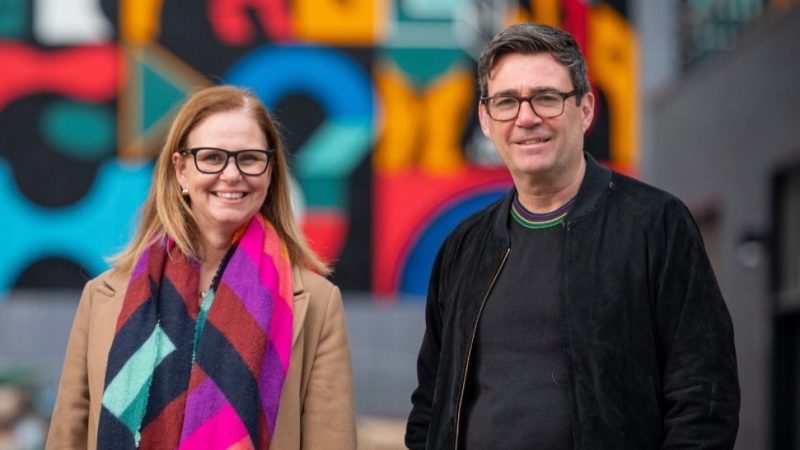
Main photo: Labour Party
Read next:
 Our newsletters emailed directly to you