Features / climate fiction
New novel imagines a ‘radically different’ future Bristol
A new novel imagines what a future Bristol could look like, inviting readers to consider the changes they’d like to see in the city.
Future Song is the fourth work of fiction from Tim Kindberg and the first time he has focused on the changing climate – though the crisis did appear as the backdrop to his dystopian novel Vampires of Avonmouth.
That fictional dystopia arose from the implications of insidious technology – “an ‘if Elon Musk had got his own way’ kind of thing” Kindberg grimaces – an unsurprising focus given the now full-time author’s background in tech that saw him running his own computer science company, becoming a resident of the Watershed’s Pervasive Media Studio and a fellow of the University of Bristol’s Bristol Digital Futures, Brigstow and Cabot Institutes.
is needed now More than ever
But he’s largely avoided the question of tech in this latest work, focusing instead on the human experience and our relationship with nature.
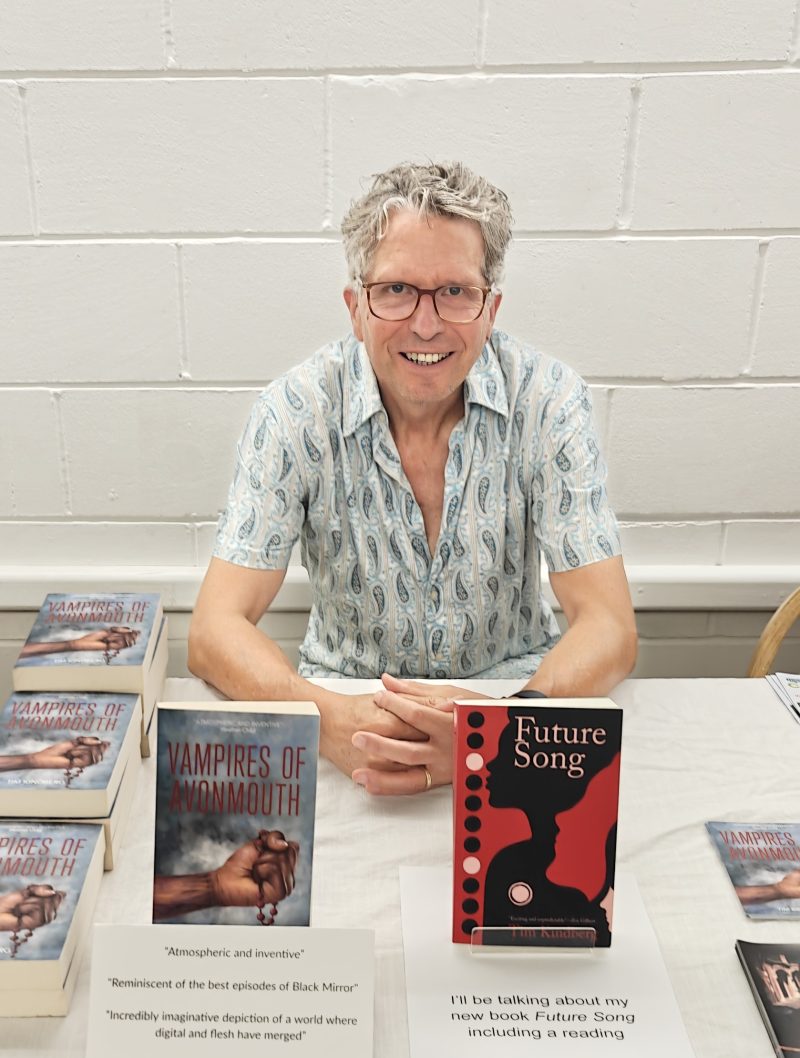
Tim Kindberg with two of his published novels at Bristol Book Fair this year – photo: Tim Kindberg
“Writing a book, can that have an impact on how we think about big issues like climate?” he asks, considering the inspiration that sparked the work. “Probably not in practice. But I still wanted to put my thoughts down, in the form of a story, about where I feel we are headed.”
Even if Kindberg doesn’t see the book influencing any practical change, he does at least hope it will spark debate. Centred around the search for a child born to a refugee resettled in a Bristol of the near future, the plot is universally relatable.
“We look out for our children and in my case my grandchildren now,” Kindberg says. “I want to think they’re going to have a viable planet to live on. There’s this symbolism about ‘the child of the future’: just like we rear a child and do our best to bring them to a healthy outcome, we should be doing that for their environment too.”
And with the city so present in the novel, he hopes the familiar setting will encourage conversation: “I’ve imagined the place where you live in the future and would really love to hear what your view is, if it’s different from mine which it probably is.”
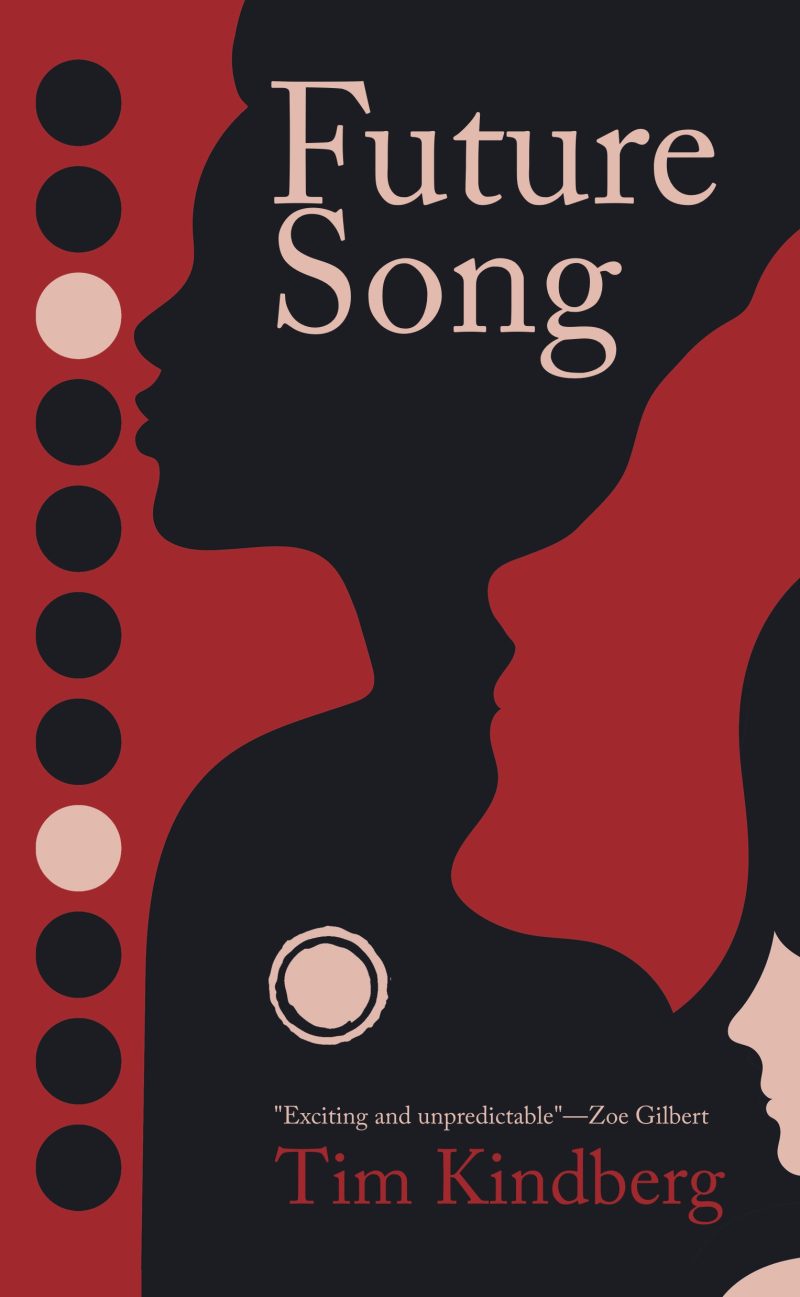
His vision portrays a Bristol that is very ‘can do’ he says, describing the radical differences he’s imagined in terms of transport, infrastructure and food systems.
“We have reengineered many aspects of our city to adapt to the actual rigours of heatwaves, floods and food shortages. But we haven’t, in a sense, fixed ourselves, and there’s alot of issues about climate refugees coming here.
“I’ve echoed what going on now in relation to refugees. That isn’t something that’s just going to go away, it’s a residing problem that we have as a society. We will need refugees to augment our labour pool in terms of carework, building and recycling work. We should be welcoming them.”
In some ways, he says, he has adopted environmentalist Rupert Read’s ‘thrutopia’ concept which encourages a focus on navigating pathways through current crises towards a flourishing future: “The book is realistic about the scale of the challenges but hopeful in terms of our ability to adapt and do better.”
With his knowledge of tech activity in Bristol, does Kindberg see positive action on the ground?
“There’s nothing like the pace of change that we need,” he says. “We collectively – perhaps you could say especially in Bristol – know what we need to do with reengineering our cities for heat, floods and everything else. It’s now a question of political will.
“I meet alot of people who think about these things alot which is a good thing about Bristol. And obviously there are things being done. They’re building sea wall defences in Avonmouth which otherwise will get completely flooded.
“But at the same time we’re building houses on flood-prone land, so it’s a very mixed picture. We also have a rubbish public transport system. But there is room for hope in that Bristol does have quite a can-do attitude to things in general, and there’s alot of activists here which is a good thing about us.”
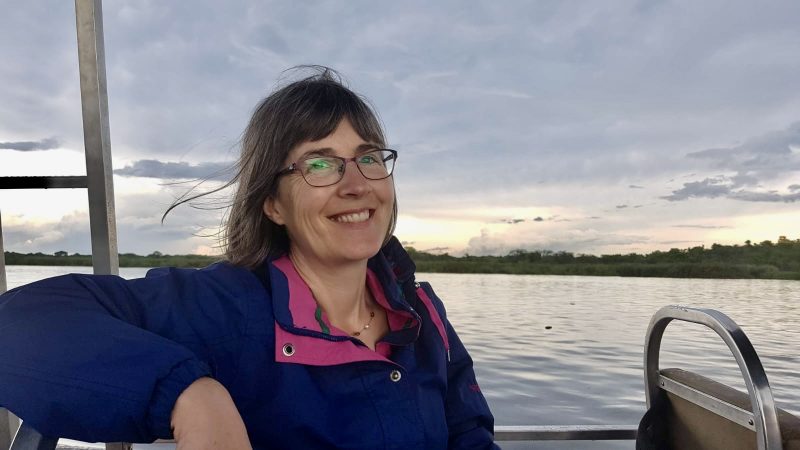
Kindberg is not alone in Bristol; author Deborah Tomkins, who set up the Bristol Climate Writers group, won a prize for her climate future-focused novella Aerth – photo: Deborah Tomkins
While Kindberg has deliberately left tech out of this novel because he doesn’t want it to subsume his wider vision, he’s “nothing like a luddite” he says, but rather cautious about using tech for the right reasons.
“In a fairly prosaic way, I think technology can be of great help but the way things are developing at the moment it is too much of an energy hog given its actual value to us,” he says, suggesting there is misinformation about the water data centres use but their vast energy consumption cannot be denied.
“You have to question whether that’s a good use of energy given lots of things that AI is used for. I don’t think it’s something that’s going to get us out of trouble in any way.
“As a country we’re very strong in the life sciences so should be concentrating on that. There’s a lot of value in agricultural science, biotechnology, engineering. But I don’t think digital tech is always our friend.
“We should concentrate on the positive. We are very capable, creative people as a nation and should be building our capabilities in accordance with our own values rather than kowtowing to companies run by sociopaths.”
Tim Kindberg launches his novel Future Song at Café Kino on Wednesday, July 22. Find all information at eventbrite.co.uk/e/book-launch-future-song-tickets
The book will be available at futuresong.uk and the following independent bookshops in Bristol: Bookhaus, East Bristol Books, the Haunted Bookshop, Paper Tales, People’s Republic of Stokes Croft and Shambles.
Main image: Tim Kindberg
Read next:
 Our newsletters emailed directly to you