Features / Ashton Court Mansion
Ashton Court Mansion: from dereliction to restoration
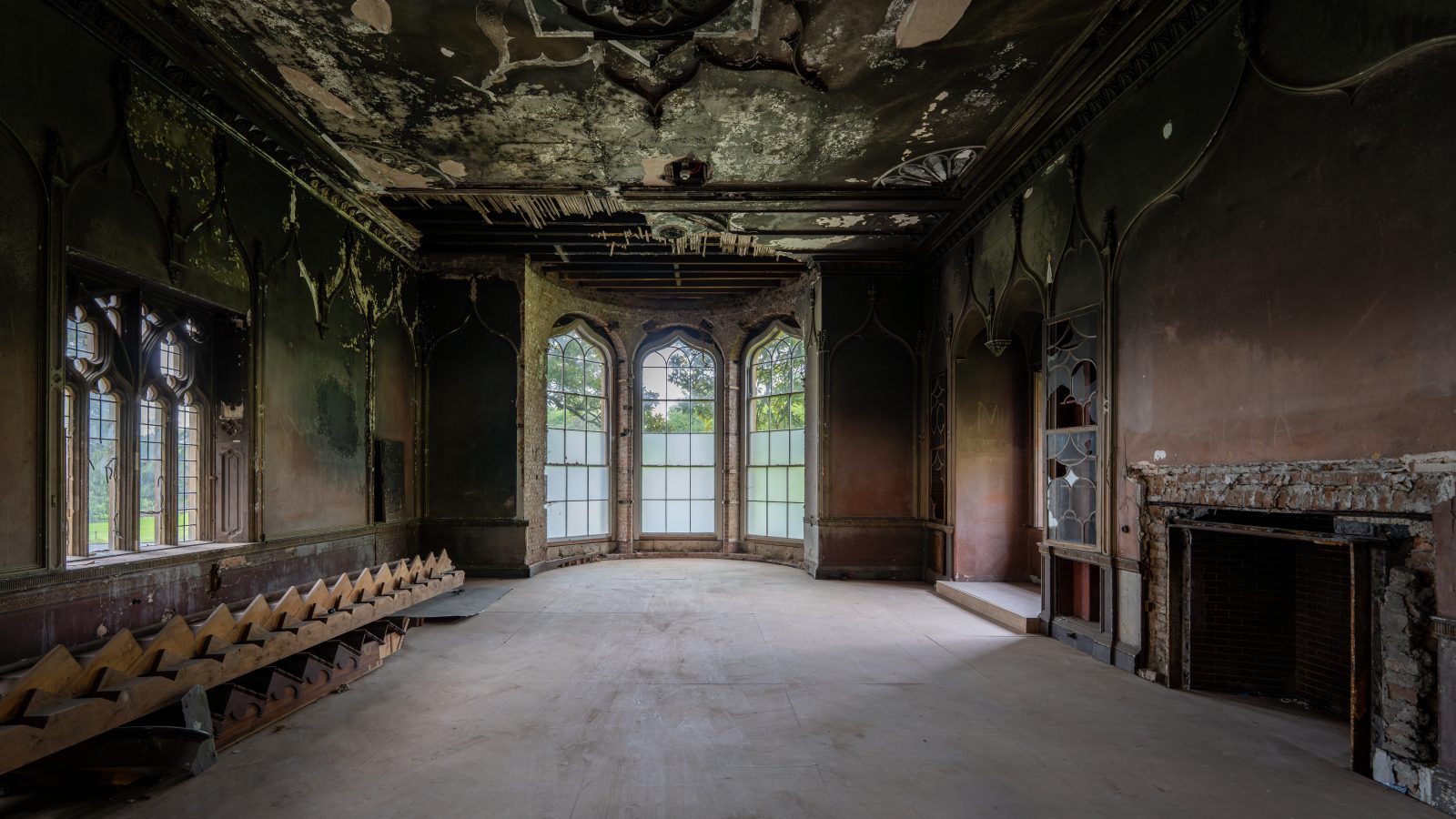
There is a room within Ashton Court Mansion which contains dozens and dozens of doors piled up on the floor or propped up against walls. It is a mystery where many of these doors used to belong in the sprawling mansion but at least the floor and walls in this room, the Long Gallery, are mostly intact unlike elsewhere in the building where hundreds of years of history are in various states of dilapidation.
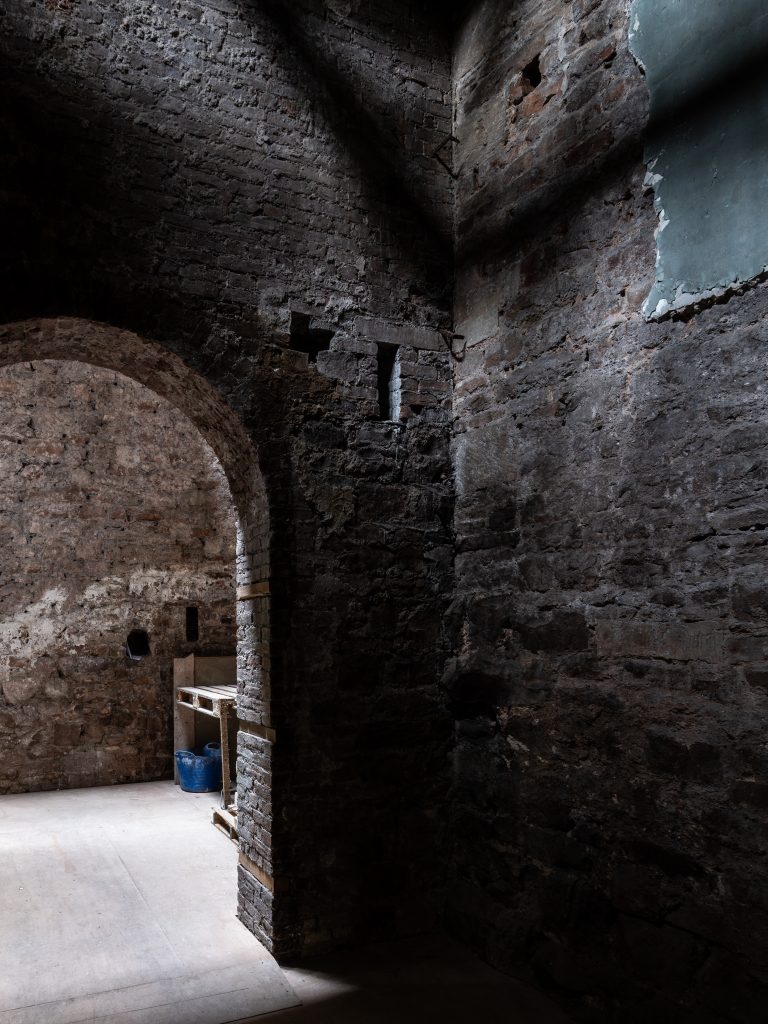
The core of the present house dates from the late 14th century
On a recent morning, two trustees from Bristol Historic Buildings Trust (BHBT), Simon Cook and Josh Nesfield, led me on a hard-hat tour through doors still in their correct places that lead to parts of the Grade I-listed building that have long been hidden from public view. BHBT have ambitious plans to take on a long lease of the mansion from its owners Bristol City Council and bring this astonishing historical artefact back from the brink of ruin, completely restoring it so it can be reopened to the public in its entirety under a community ownership model.
According to the Pevsner Architectural Guide to Bristol, Ashton Court Mansion “is at once exciting, puzzling, neglected and intensely sad”. Today it is also a huge opportunity for BHBT who plan to launch a major fundraising campaign which will see the organisation transition to become a charitable community benefit society which will allow anyone to buy shares in the mansion to help bring it back to life. What that new life will be is currently completely undecided but the mansion will need to be able to generate income in order to stay standing.
is needed now More than ever
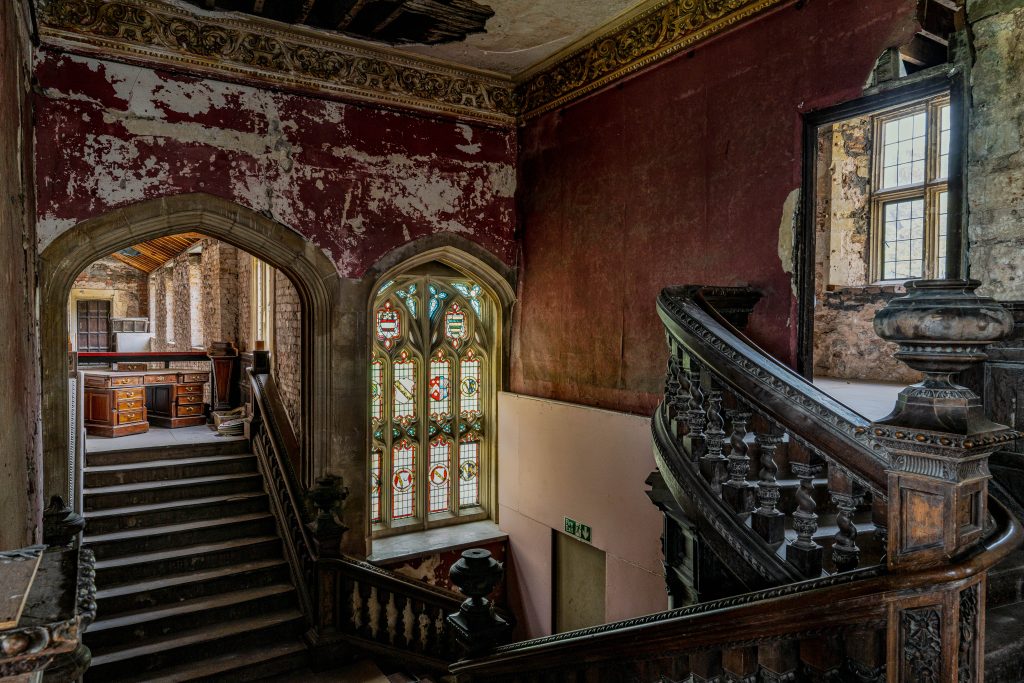
If only walls could talk
A manor was recorded here in the Domesday Book but the core of the present house dates back to the late 14th century. It was lived in by the Smyth family from 1545 to 1946, and since 1959 has been owned by Bristol City Council who after paying the princely sum of £103,000 have allowed it to fall into its current sorry state.
For Cook, BHBT chair of trustees and a former council leader and lord mayor during his days as a Lib Dem councillor, it is pointless to dwell on the reasons why it has been able to deteriorate, other than appreciating that a local authority should always prioritise looking after the living rather than spending the millions needed to prevent a mansion from falling down.
Back in the 1950s, the city fathers were also much more interested in acquiring the parkland surrounding the mansion rather than the mansion itself which came as a job lot with the land as the Smyth family were hit by debilitating death duties.
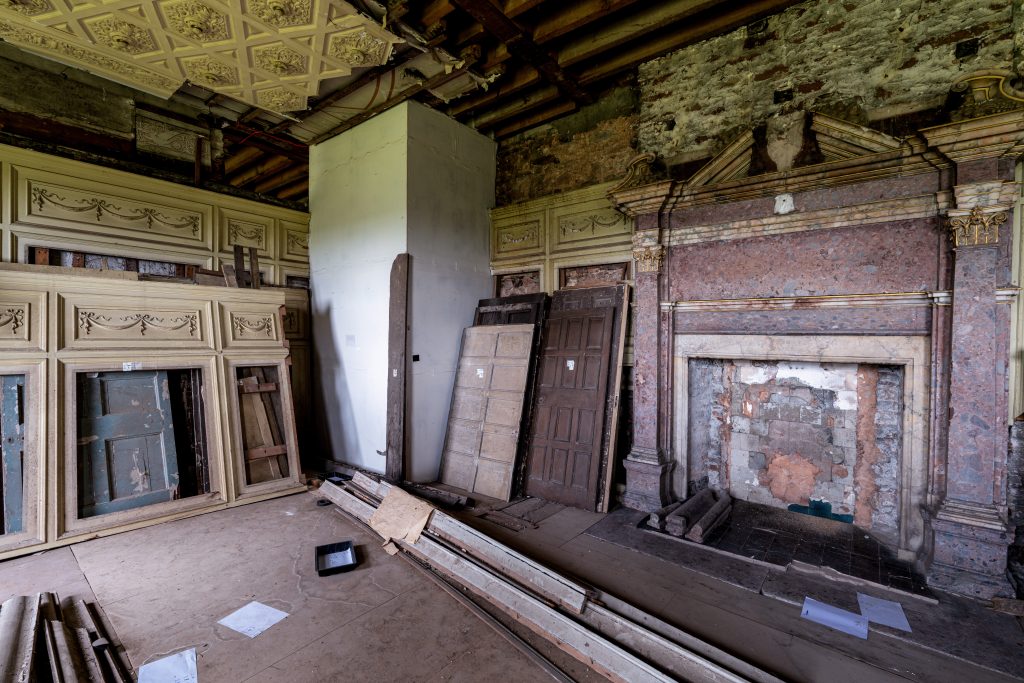
Once grand rooms are falling apart
Major remodelling in the 16th, 17th, 18th and 19th centuries have turned the building into a patchwork quilt of architectural styles. One of the intriguing questions that BHBT will have to answer is when the restoration work starts, how much will be possible to restore? There are some areas with such little left that only a modern refit seems possible.
As we walked around from one wing to another, along once grand corridors and around narrow spiral staircases, it was impossible not to imagine what has happened here over its history, from lavish celebrations several hundred years ago to military occupation during the Second World War as the last resident, Esme Smyth, lived out her final years in her private quarters.
If BHBT manage to pull off a restoration project whose wheels were first put in motion by its inspirational founder Norman Routledge, a Bristol Legends winner who sadly died in 2025, it will be an extraordinary achievement. As we made our way around the building – avoiding missing floorboards in some rooms and thousands of ladybirds in another – the scale of the ambition became abundantly clear to see.
But Cook remains optimistic, quoting Eden Project co-founder Tim Smit. “If you believe in a project deeply enough and your determination is strong enough, you can do it,” Cook said. “You can find the money. And I know we can find the money for this.”
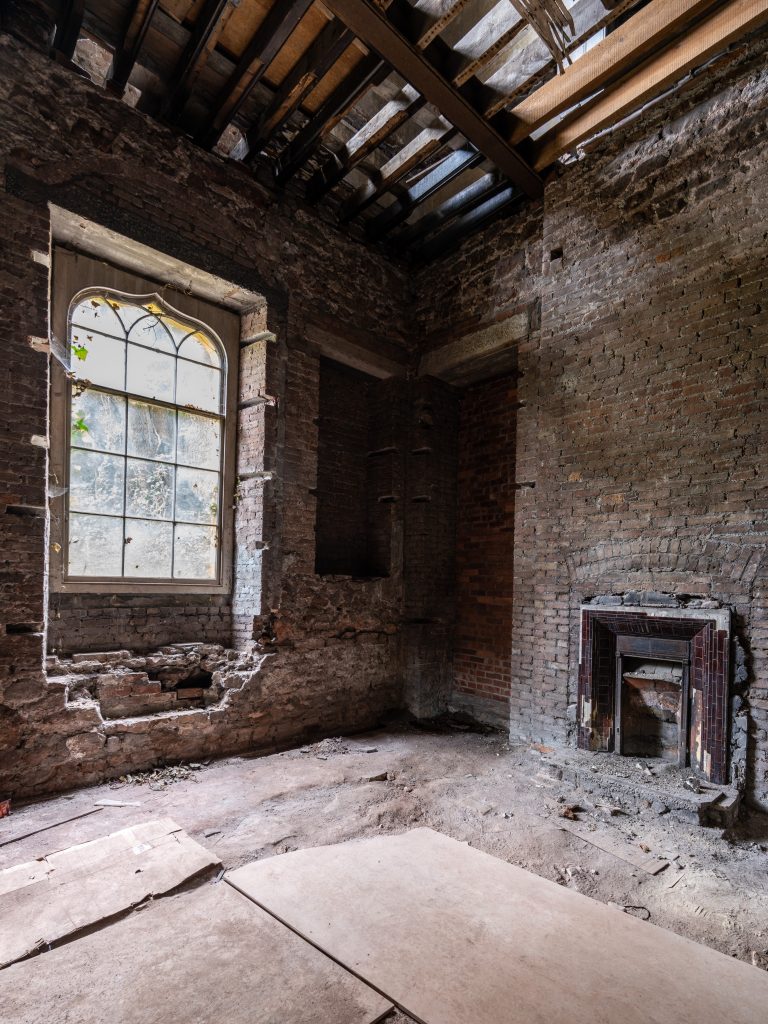
The multiple layers of the building can clearly be seen
According to Nesfield, the only viable future use for the mansion is for an independent charity running what he describes as a mixed-use model which could see a wedding taking place in one wing with a few of the party staying in rooms upstairs; while in another wing a film shoot happens simultaneously; next to office space in first floor rooms unsuitable for bedrooms.
“This really is the biggest time capsule that there is,” explains Nesfield, who is also chair of Hotwells & District Allotment Association, sits as a magistrate on the Avon & Somerset Bench and is currently studying for an MSc in food policy.
Food is one of five strands that BHBT are building their charity programming around alongside culture, heritage, skills and outdoors. “It’s going to be exciting to have different areas of public interest,” said Cook, who is optimistic that the team will not have too much difficulty in raising big grants.
“I think we’ll certainly be able to make our case and be very seriously considered. There’s always a pressure for these things. But this is switching on people’s enthusiasm in a way that I’ve never found with any other project. It’s at such an early stage, the foundation level of what will be one day be one of our great institutions in the city.”
A volunteer open morning is taking place at Ashton Court Mansion on Saturday for anyone interested in helping to bring Ashton Court Mansion back to life as a community-owned asset. For more information, visit www.eventbrite.com/e/volunteer-open-morning-ashton-court-mansion-tickets-1993601375380
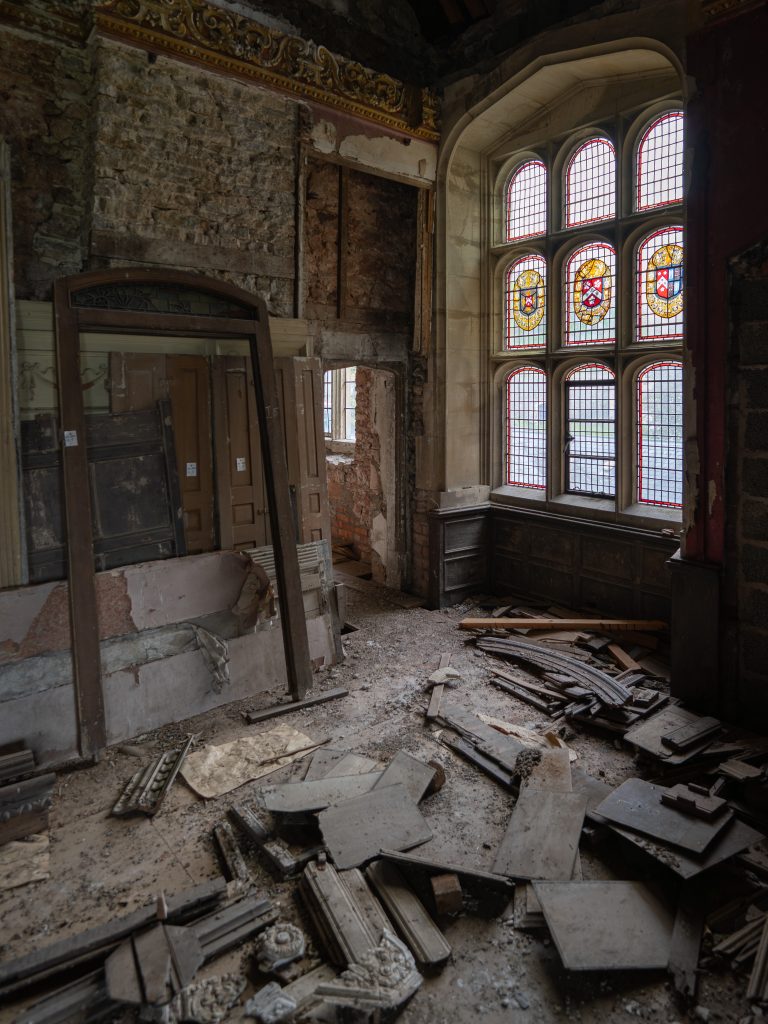
The neglect over the years is palpable
All photos: Rob Browne
Read next:
 Our newsletters emailed directly to you