Features / things you probably didn't know
5 things you probably didn’t know about Easton
Easton is one of Bristol’s most recognisable and arguably interesting neighbourhoods – known for its outstanding food, pubs, community spirit and multiculturalism.
Look closer and you can find also centuries of rich history and some unusual recent quirks.
1. Easton has more street parties than anywhere else in Bristol
is needed now More than ever
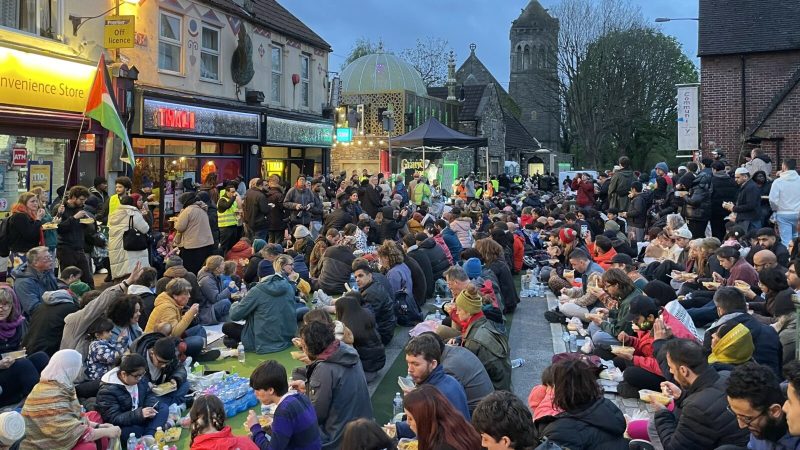
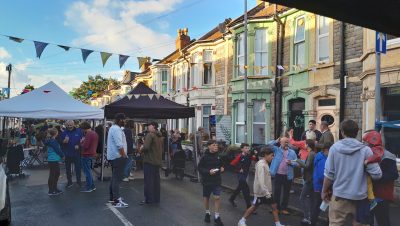
Hundreds of people from across Bristol take part in the Grand Iftar on St Mark’s Road – photo Martin Booth
Easton has become so well known for its community celebrations that some claim it hosts more street parties than anywhere else in Bristol.
From spontaneous summer gatherings to major events like the St Mark’s Road Grand Iftar, the area has built a reputation for bringing people together outdoors.
On warm evenings, it is not unusual to find music spilling onto pavements, neighbours chatting outside shops and roads temporarily transformed into community spaces.
2. Easton was originally three settlements
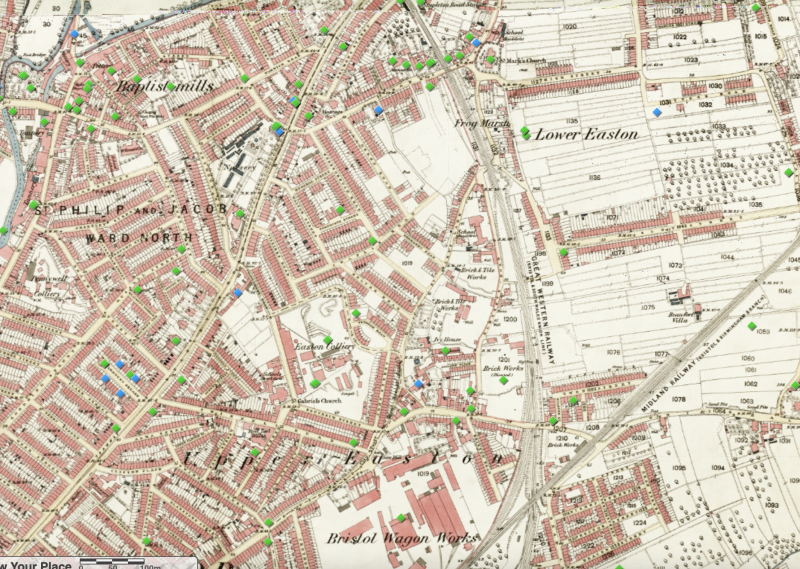
The earliest maps depict the area divided into three distinct medieval settlements located within the Royal Forest of Kingswood – map: Know Your Place
Most people think of Easton as one neighbourhood, but historic maps show it was once three separate settlements within the ancient Royal Forest of Kingswood.
A 1610 map of Kingswood identifies Upper Easton, Lower Easton and Baptist Mills as distinct places long before East Bristol became absorbed into the growing city we know today.
Upper Easton sat roughly around today’s Easton Road, while Lower Easton developed closer to what is now St Mark’s Road. Baptist Mills grew separately along the River Frome, becoming known for its brass industry in the 18th century, and today has the M32 cutting straight through the middle of it.
By comparing historic maps with modern ones, it is possible to see how these once-separate settlements slowly merged together into the Easton we know today.
3. Upper Easton is further south than Lower Easton
Speaking of the aforementioned settlements, eagle-eyed Bristolians might have noticed that Upper Easton sits further south on maps than Lower Easton, as is the case today.
The confusing layout comes from the way settlements were originally named. Rather than being based on north and south, ‘upper’ and ‘lower’ referred to the historic flow of the Frome.
In medieval and early modern place names, upper usually meant upstream – closer to the river’s source – while lower referred to areas further downstream. On early maps, including Chester and Master’s 1610 map of Kingswood, Upper Easton sat further upstream along the Frome, while Lower Easton lay downstream towards Baptist Mills.
4. Some of Easton’s walls hold leftovers from Bristol’s historic brass industry
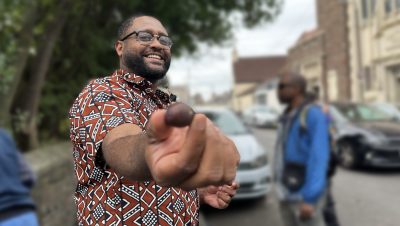
Keep an eye out for strange glossy black-purple blocks hidden in walls around Easton and neighbouring streets.
These dark “slag blocks” are leftovers from Bristol’s historic brass industry which was centred around nearby Baptist Mills from the early 1700s. Waste from copper and brass smelting was poured into moulds to create cheap building blocks, sometimes known locally as “Bristol Black”.
Examples can still be spotted in walls around All Hallows Road, Lower Ashley Road and elsewhere across East Bristol.
But the story behind them is more complicated than unusual building materials.
Bristol’s brass industry was deeply tied to the transatlantic slave trade. Brass goods produced at Baptist Mills were traded in West Africa as part of the triangular trade, while investors in the industry profited from Britain’s colonial economy.
Today, that history remains embedded in ordinary streets and garden walls.
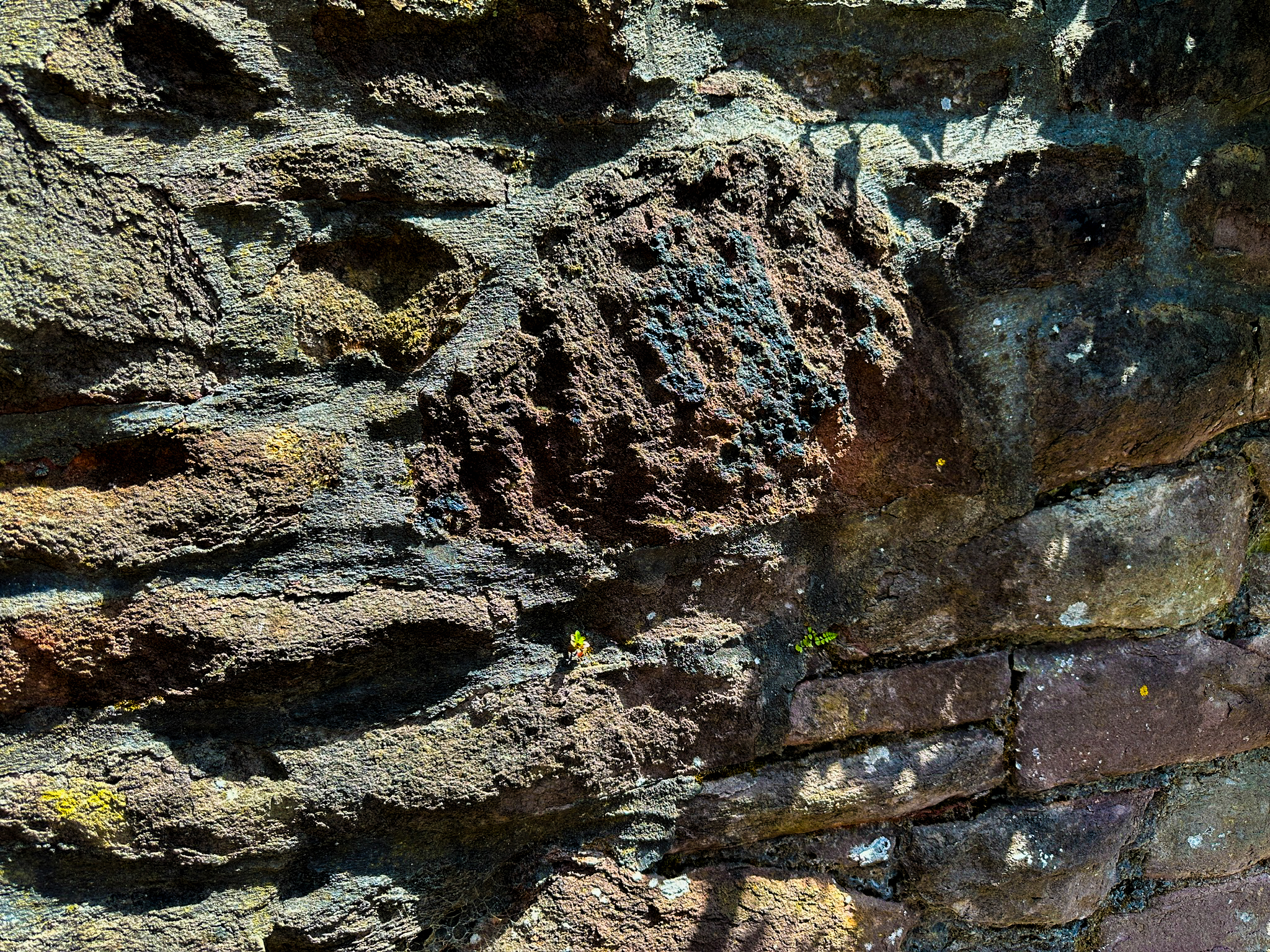
Dark “slag blocks” are leftovers from Bristol’s historic brass industry – photo: Carla Wakfer
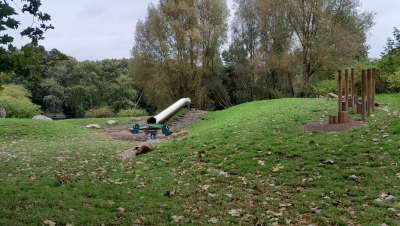
5. Easton has a community garden tucked behind Gordon Road
Hidden behind the main road connecting Whitehall to Eastville is one of Easton’s quietest community spaces.
Easton Community Garden began life in the 1990s after local residents transformed a neglected patch of land into a shared green space.
Today, the garden includes vegetable beds, wildlife areas, fruit trees and communal spaces used for workshops, events, outdoor gatherings and harvesting seasonal crops.
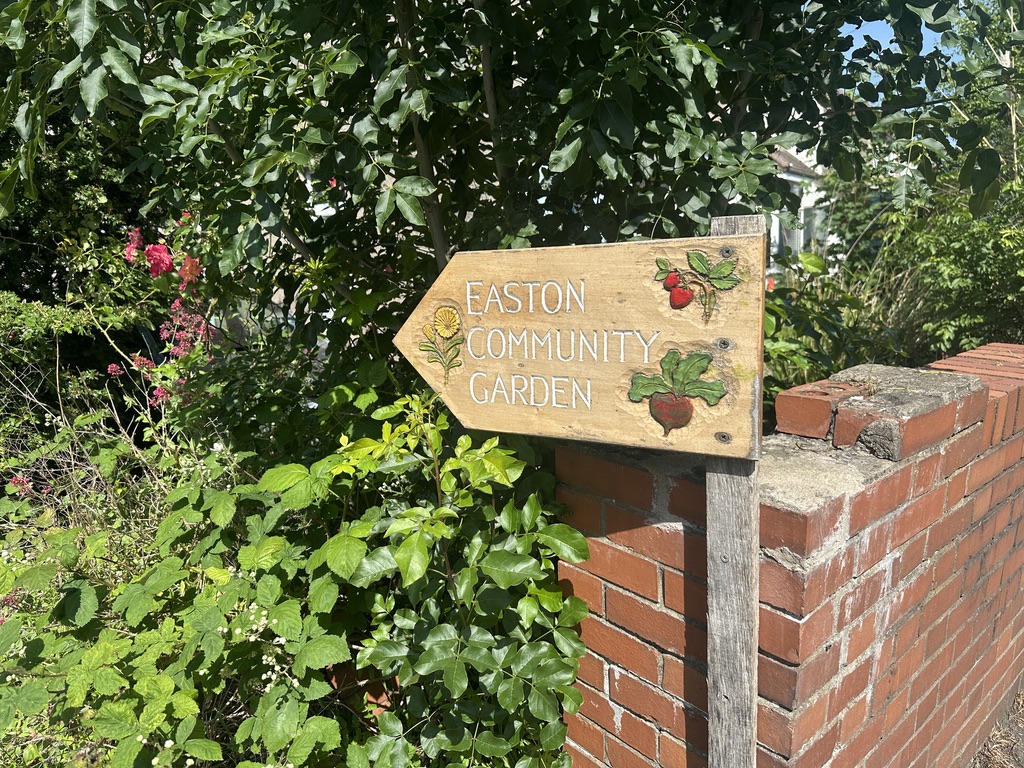
Easton Community Garden is open to all – photo: Carla Wakfer
Carla Wakfer is reporting on Easton as part of Bristol24/7’s Community Reporters programme, aiming to amplify marginalised voices and communities often overlooked by mainstream media.
This initiative is funded by our public, Better Business members and a grant from the Nisbets Trust.
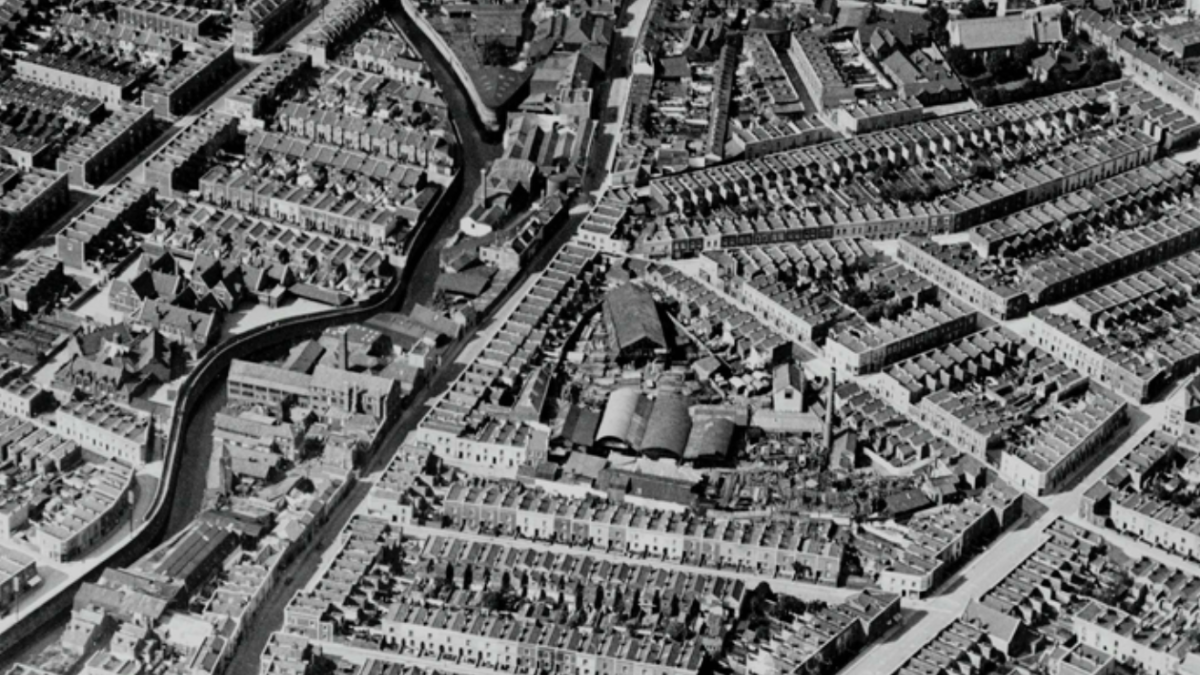
Main photo: Bristol Archives (ref PicBox/1/AVu/112)
Read next:
 Our newsletters emailed directly to you