Features / drugs
Group urges ‘mandatory’ medical cannabis awareness training for police officers
A Bristol-based group is pushing for Avon and Somerset Police to reform its policing practices around dealing with those who use cannabis for medicinal purposes.
Alister Flowers co-founded the Bristol Cannabis Club after witnessing how misinformation skewed the narrative around medicinal cannabis. His group is now mounting pressure on the police to train officers on cannabis-based products for medicinal use (CBPMs).
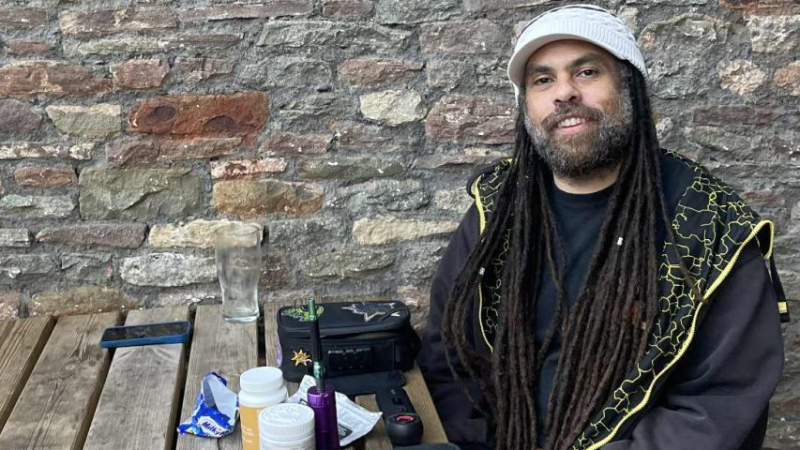
On a recent afternoon, Alister met Bristol24/7 at the Sugar Loaf, his local pub in Easton. Laid out on the table before him were the various cannabis-based products prescribed for his chronic pain.
is needed now More than ever
Alister has suffered from chronic pain since his late teens due to a slight spinal curve and muscle problems related to autism. Before 2018, he managed his symptoms with street cannabis and specific exercises, achieving full remission for a period.
However, after quitting cannabis to reset his tolerance, he experienced a severe flare-up of symptoms. Unable to exercise or maintain a job, he was prescribed several conventional painkillers that caused debilitating side effects, including nausea and dissociation. He eventually resorted to self-medicating with cannabis alongside his prescriptions, finding cannabis far more effective.
By 2021, Alister secured a legal prescription for medical cannabis and has since become an outspoken advocate for the rights of patients. Now he uses his cannabis club as a social and advocacy organisation focused on cannabis education, harm reduction, and political campaigning.
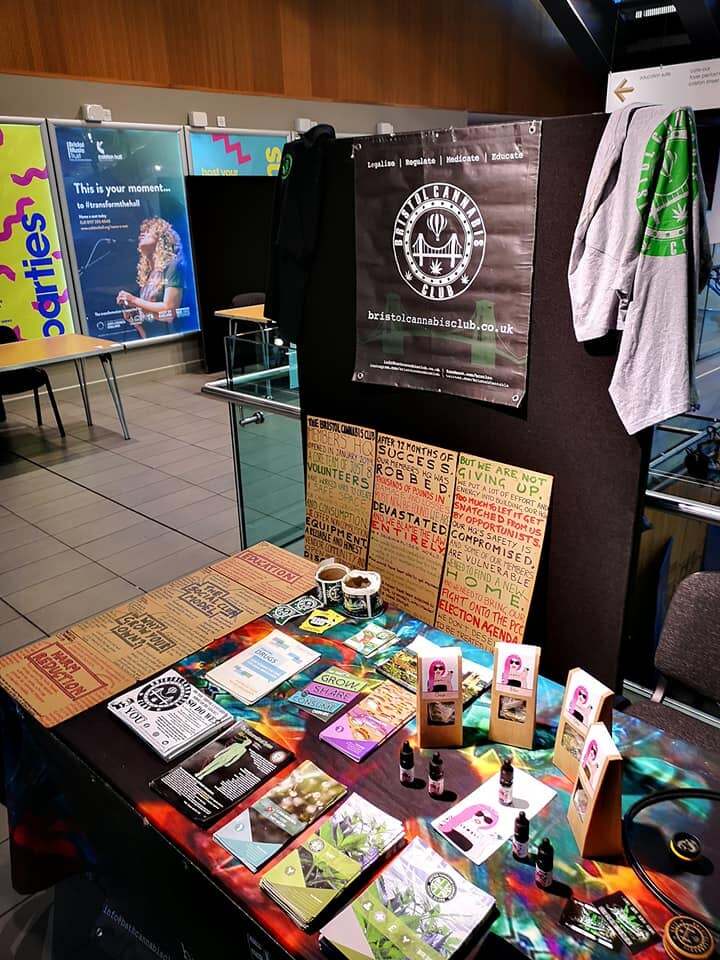
The Bristol Cannabis Club’s stall at a drug policy reform exhibition in 2020 had plenty of education materials to curb misinformation around medical use of cannabis – photo: The Bristol Cannabis Club
CBPMs in oil and flower form became legally available in the UK in November 2018. Since the law changed, an estimated 50,000 to 60,000 patients are now prescribed CBPMs, the majority through private prescriptions.
Beyond chronic pain, cannabis products can be prescribed for a wide range of neurological, psychiatric, and physical conditions. Consequently, the medical cannabis market is booming; a 2024 report projected that the number of people accessing prescription cannabis will surpass 300,000 by 2028.
Despite this rapid growth, Alister and his club believe there is widespread ignorance about the medication, particularly within the police force, with patients continuing to say they face mistreatment and have their prescriptions confiscated.
This lack of understanding has had real and distressing consequences, as illustrated by one individual who shared his story anonymously, as he intends to pursue a claim in small claims court.
The source, who has been prescribed cannabis for two years to treat PTSD, anxiety, depression and chronic pain, was stopped and searched by a police officer while walking back home in June. Although he admitted to possessing non-prescribed drugs for pain management, the officer continued the search and seized his legally prescribed medical cannabis and morphine, despite showing legal prescriptions for both substances.
He told Bristol24/7: “Not only did I have all these things that were necessary to prove my prescriptions, but I had additional proof, like my prescription in the NHS app, but the officer just wasn’t taking that into account.”
After the officer confiscated some of his prescription cannabis – worth approximately £40 – the man, unable to buy more, said he was left in severe pain: “When this happened, I was like a week away from being paid again to be able to afford more.
“It left me on the sofa, screaming my house down in pain, because not only did I not have the medical cannabis, I didn’t have the morphine that I was prescribed…I had no pain relief whatsoever at that time.”
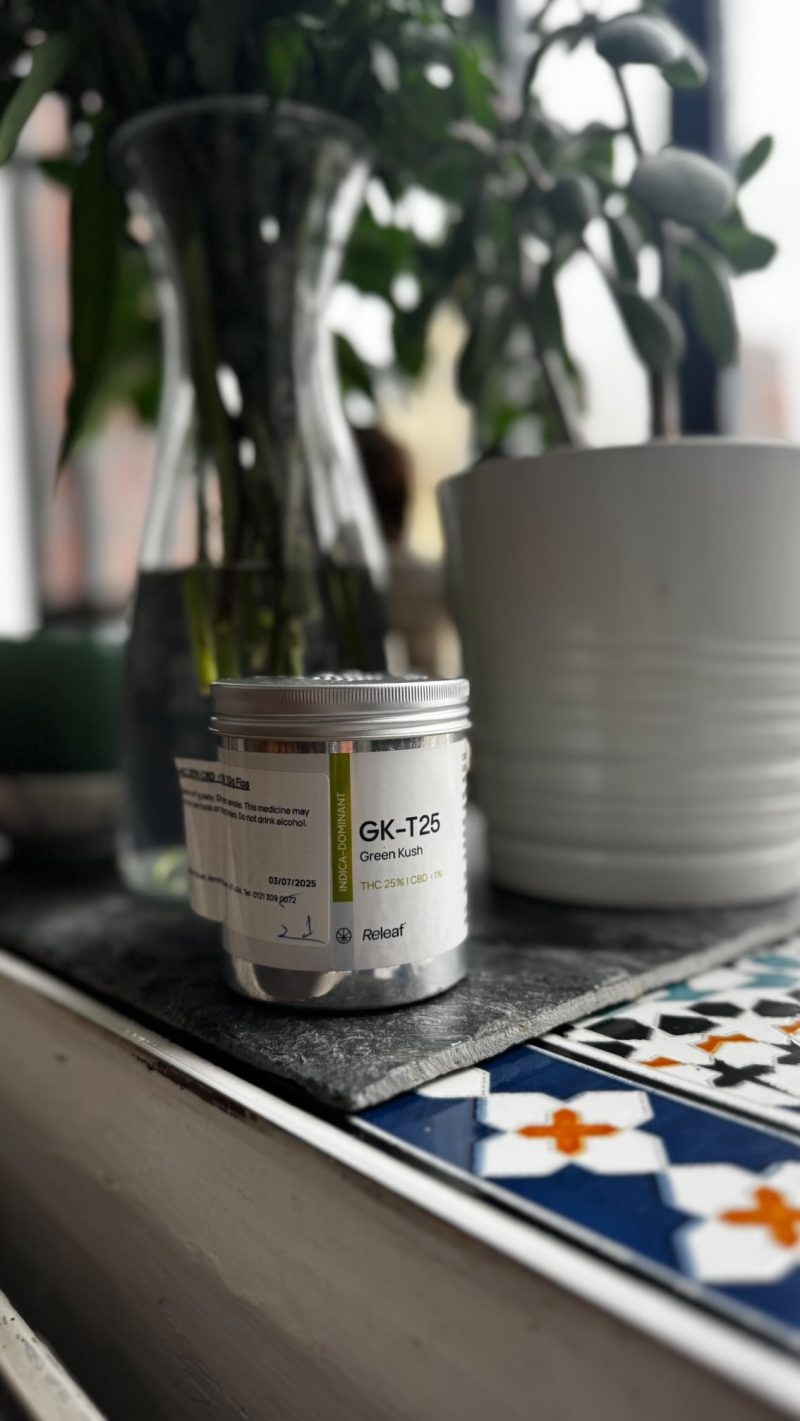
The medication is typically prescribed at an average dosage of about 1 gram per day, which can cost anywhere between £120 to £250 per month, depending on the strain
This incident appears far from isolated. Within Medicinal Cann UK, an advocacy group on Facebook, multiple patients report having their prescribed cannabis confiscated by the police.
According to Alister, this is a direct consequence of inadequate police training: “We were already in talks with three different organisations in Bristol about the issues, and we were seeing constant problems with the police and a lack of education. As we were researching, someone pointed out a Freedom of Information (FOI) request about their training.”
The FOI request revealed that while the force has teaching materials on CBPMs, there is no “official training” exclusively for medical cannabis.
“The materials we received actually looked pretty good. They were decent and would have served the purpose,” Alister explained. “But the problem is, it’s not mandatory training; it’s optional. And it is buried in an internal newsletter.”
The FOI response confirmed that the officers only receive standard drug offence training, during which they “are made aware that a medical exemption can exist for cannabis possession and use.”
Avon and Somerset Police explained that officers and staff – including frontline officers, specialist units, and investigation teams – have a range of training courses and programmes to choose from, including one that covers Cannabis-based Products for Medicinal Use (CBPMs), but these are not mandatory.
They further added that the optional training includes “self-learn packages and information resources which are available with unrestricted access”.
The FOI also mentions other practices within Avon and Somerset Police that are dedicated to advice on medical cannabis: “We have a Teams Channel dedicated to advice in relation to medical cannabis, which was publicised on our internal communications bulletin in January 2024. Information available via this channel includes two documents.”
These are:
- a medical cannabis information sheet, which includes guidance on the documentation required
- a presentation on medical cannabis by Avon and Somerset Police’s drug expert action team
Alister added: “When legislation changes, the police who are meant to enforce these laws need to understand them properly. If officers miss this optional training, they will inevitably assume all cannabis possession is criminal.
“And for some reason, there’s no system to push out mandatory training when these changes happen.”
This training gap is the primary focus of the Bristol Cannabis Club’s campaign to pressurise Bristol City Council and Avon and Somerset Police to mandate officer training on CBPMs.
“We’re arguing that the police should design a system and run training days like teachers have,” Alister said. “When officers attend training, others can be drafted in to cover, just as police do for major events… There needs to be mandatory education for every police officer.”
Alister pointed to similar initiatives launched across the country as a model for their own campaign, such as a motion passed by Flintshire County Council in April. While the motion primarily safeguards the rights of council employees and tenants to use their medication indoors, it also commits the council to work with North Wales Police, providing training to ensure these protections are understood and enforced.
“The hope is we can get a local councillor on side to help push something similar through here.”
In a statement to Bristol24/7, a spokesperson for Avon and Somerset Police explained the force’s ongoing efforts to better practices around dealing with CBPMs: “Following recent public engagement, we have identified a need to enhance officer awareness around the lawful possession of CBPMs due to the increasing number of patients using them legally.
“This will improve officer confidence and consistency, reduce unnecessary criminalisation, and enhance public trust.
“We are actively reviewing how we train and support our officers in this area.
“A short training package has already been developed by one of our officers, and our Drug Education and Awareness Team (DEAT) is working with our learning and development colleagues to explore how best to incorporate this into our initial and ongoing officer training.
“This includes the possibility of co-delivery by subject matter experts to ensure consistency across the organisation.
“While CBPMs have been legally prescribed in the UK since November 2018, there is no specifically designed identification in relation to an individual who is legally prescribed medical cannabis, and it is just like any other prescription medicine.
“As outlined in Freedom of Information responses published here and here, for the reasons explained in these links, we’re not able to identify the statistics.
“We will continue to follow the College of Policing’s APP Guidelines on this matter and comply with any national guidance provided to us from the College or the National Police Chief’s Council.
“Once it has been established that the patient has been prescribed medical cannabis and that they are legally in possession of it, it is acceptable for it to be returned to them.
“We are keen to work with patient groups on the issue of CBPM and any seizures that are perceived as incorrect.
“We will continue to follow the College of Policing’s APP Guidelines on this matter and comply with any national guidance provided to us from the College or the National Police Chiefs’ Council.”
Joss Thomas is reporting on Lawrence Hill and Easton as part of Bristol24/7’s Community Reporters programme, aiming to amplify marginalised voices and communities often overlooked by mainstream media.
This initiative is funded by our public, Better Business members and a grant from the Nisbets Trust.
Main photo: Joss Thomas
Read next:
 Our newsletters emailed directly to you