Features / Wildlife
The ‘other’ Taylor swift
Both are known for their signature sound, though only one is commonly described as a ‘scream’. Both fly vast distances each year, are stars of the big screen and inspire passion from their adoring fans.
But while one Taylor is globally recognised, larger than life and seemingly more successful than ever, the other fits snugly into the palm of a hand, disappears for half the year and is suffering significant decline.
At this point it’s worth clarifying, for readers wondering how thinly an analogy can be stretched, that the ‘other’ Taylor is not only an actual swift but also the central character of a film spotlighting the remarkable efforts of one woman to save the birds from extinction.
is needed now More than ever
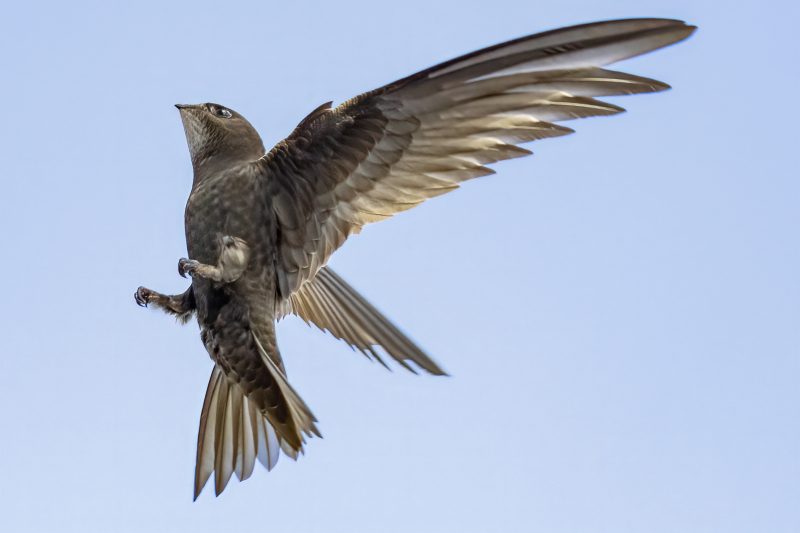
Swifts eat, mate and sleep on the wing. Often their nest is the only land they will intentionally touch in their lifetime – photo: Robert Booth
Swifts famously symbolise summer, their return from Africa to our skies accompanied by characteristic ‘screaming parties’ – “when they’re doing their Red Arrow displays in big, whooping, boisterous groups”, as Hannah Bourne-Taylor puts it – that signal the onset of the sunny months.
But Bolton-based Louise Bentley and her fellow swift rehabbers don’t see the summer. Instead, they take struggling birds into their homes and spend May to August manually feeding them every hour, day and night.
“She’s entirely dedicated”, says Justin Anderson, a wildlife documentarian whose interest was piqued by Bentley’s story.
“Every summer for three months, day in and day out, she hand-rears fallen swift chicks, up to 60 birds at any time. She’s on this mad rota of feeding and doesn’t get out much!”
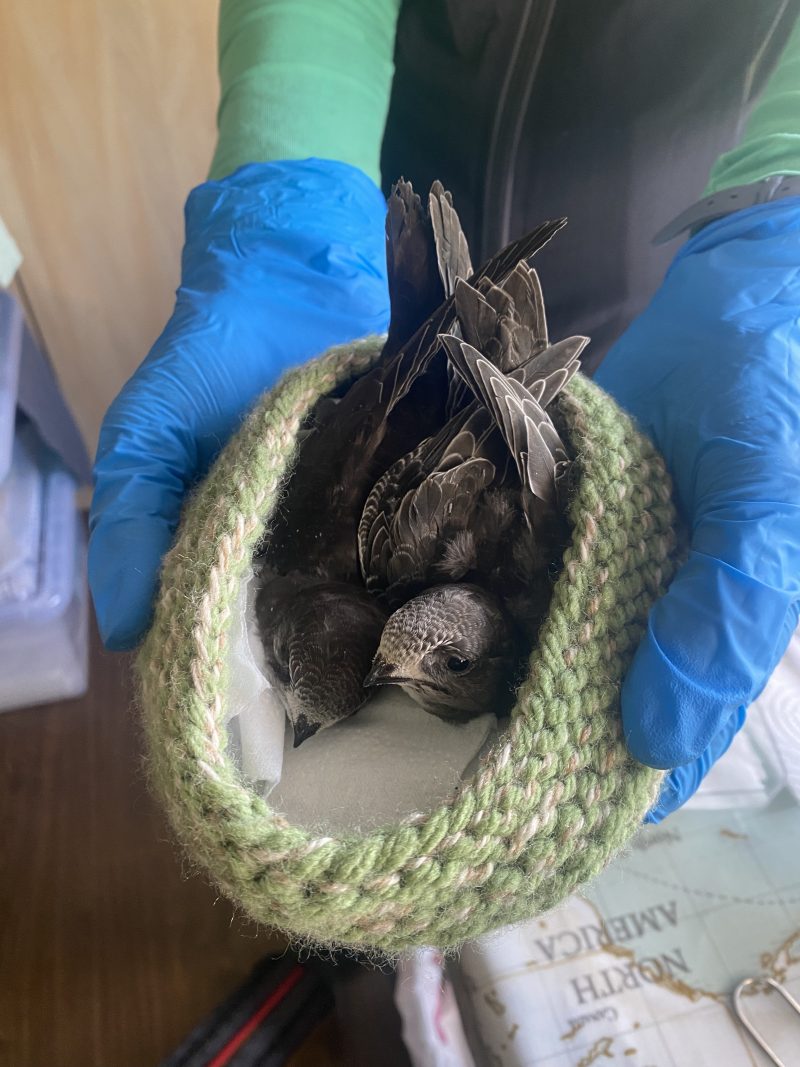
Justin and his team produced the film about swift rehabber Louise Bentley over a period of one summer, a remarkable feat for a wildlife documentary – photo: The Other Taylor Swift
The film he made about Bentley is another tool in Justin’s swift-saving box that includes a children’s book, Super Swifts: the Small Bird with Amazing Powers, and the South Bristol Swift Survey for which an army of volunteers patrol the streets, recording returning birds and their nests.
Last year, 26 volunteers collectively walked over 250kms and this year the group, one of 170 across the country, is even bigger. “There’s definitely a groundswell of swift interest which is great,” smiles Justin.
The fast-flying sickle-winged birds capture imaginations for all manner of reasons, he says: “They’re a creature that belongs to another universe. They belong to the sky more than any other bird. They travel huge distances every year to share our homes which is unusual. For an exotic animal to come and live in our house in Bedminster is amazingly exciting!
“They fly higher for longer and faster than almost any other bird which is super exciting, but they’re also beautiful, with these big gorgeous eyes. And their sound, for me, is a signature sound of summer that reminds me of holidays, so it brings back nice memories.”
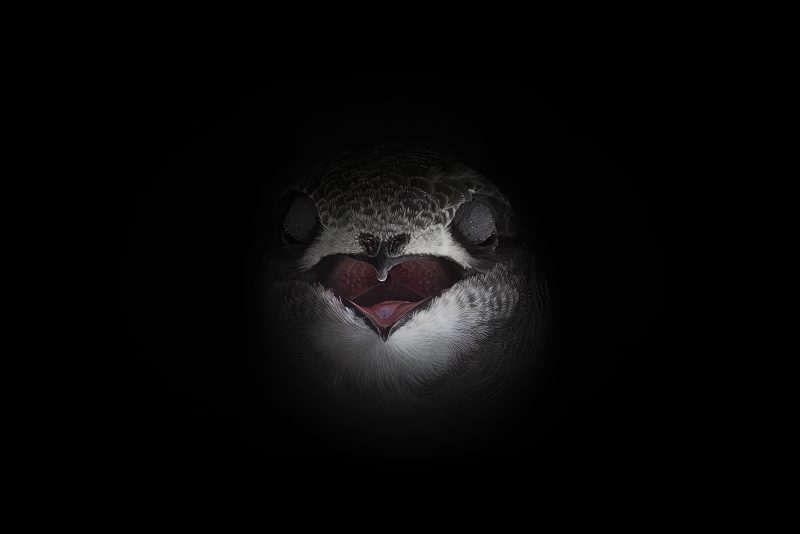
The swift was historically known as ‘the devil’s bird’ but is now synonymous with summer joy – photo: Robert Booth
This year, Justin has recruited a varied group of pensioners, students and bird lovers to pace pavements with eyes to the skies, recording swift sightings and their nesting spots.
“These creatures travel so far and don’t land for the first two-three years of their life. It’s incredible what they go through to complete their life cycle,” enthuses Mary Wood, one such volunteer, on a walk around her Knowle neighbourhood on a muggy late May evening.
She and a friend stroll round their allotted square-kilometre patch once or twice a week in the dusk-to-night window to count swifts, watch nests and record the individual bird’s arcing patterns and behaviour.
Mary is concerned about the ecological emergency but sees action on swifts as a powerful way of inspiring hope: “They are so incredibly vulnerable because of all the threats there are now, particularly lack of food.
“But this little creature is something we can actually do something about. They choose to live with us and adopt our structures – the least we can do is to make sure they’re properly accommodated!”
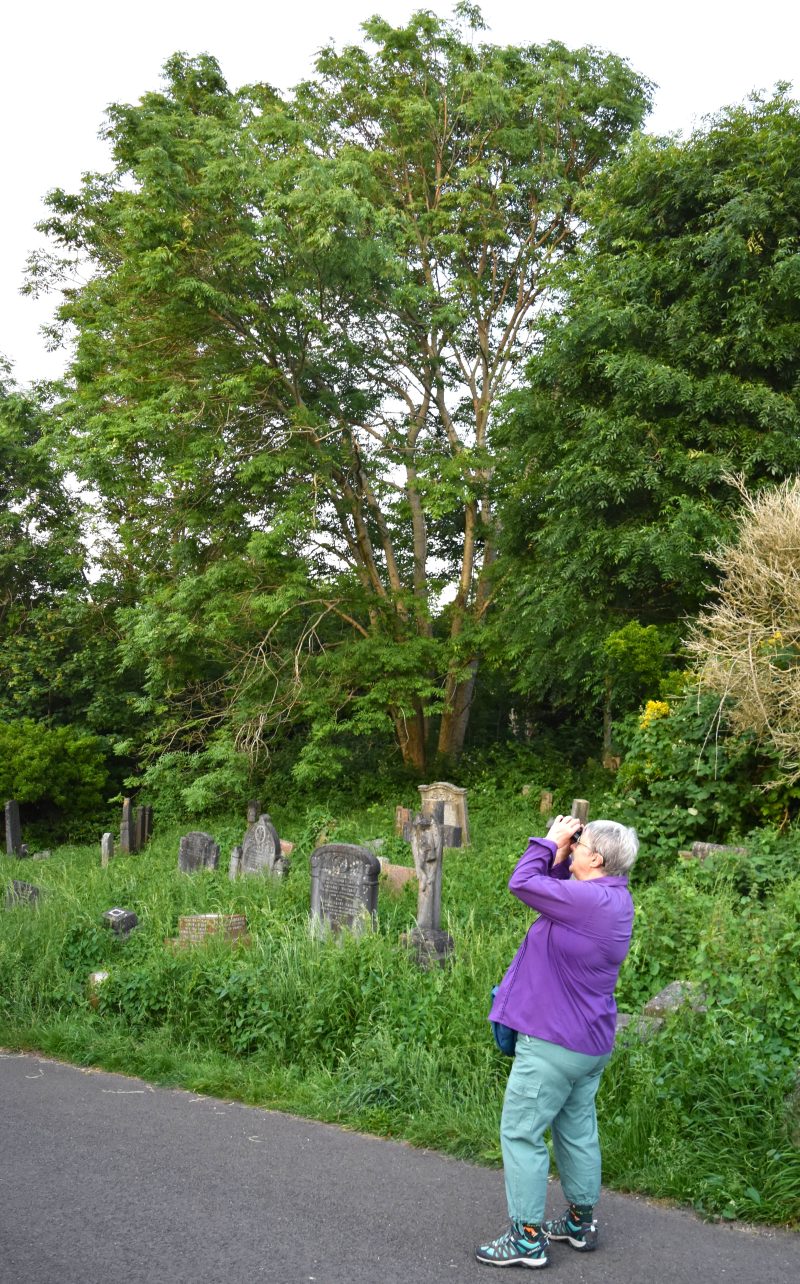
With her knowledge of the nature on her doorstep, Mary Wood describes a whole universe contained with her Knowle neighbourhood – photo: Ursula Billington
While swifts used to nest in holes in trees, she tells me, they started to inhabit houses when woodland became increasingly scarce; now they feel like a part of the urban landscape, at home living alongside us and a natural way for residents to connect with wildlife.
“I think these days we feel things are becoming more remote and out of our control, and it’s frightening, especially when you look into the wider implications of AI,” she says.
“This is one way of reconnecting with the real world around us, through appreciating wildlife and green places. There’s plenty of evidence to show it’s very good for people’s mental health. The stress of modern living prompts a lot of us to find that connectedness and feel some calm.”
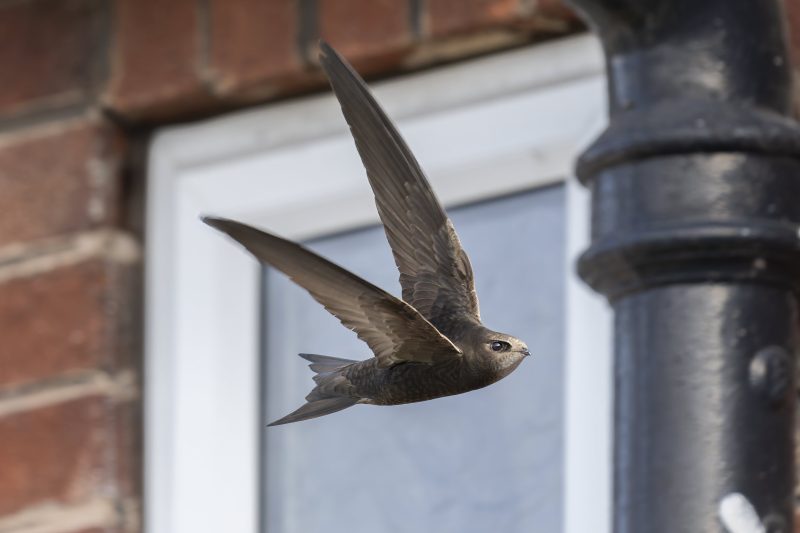
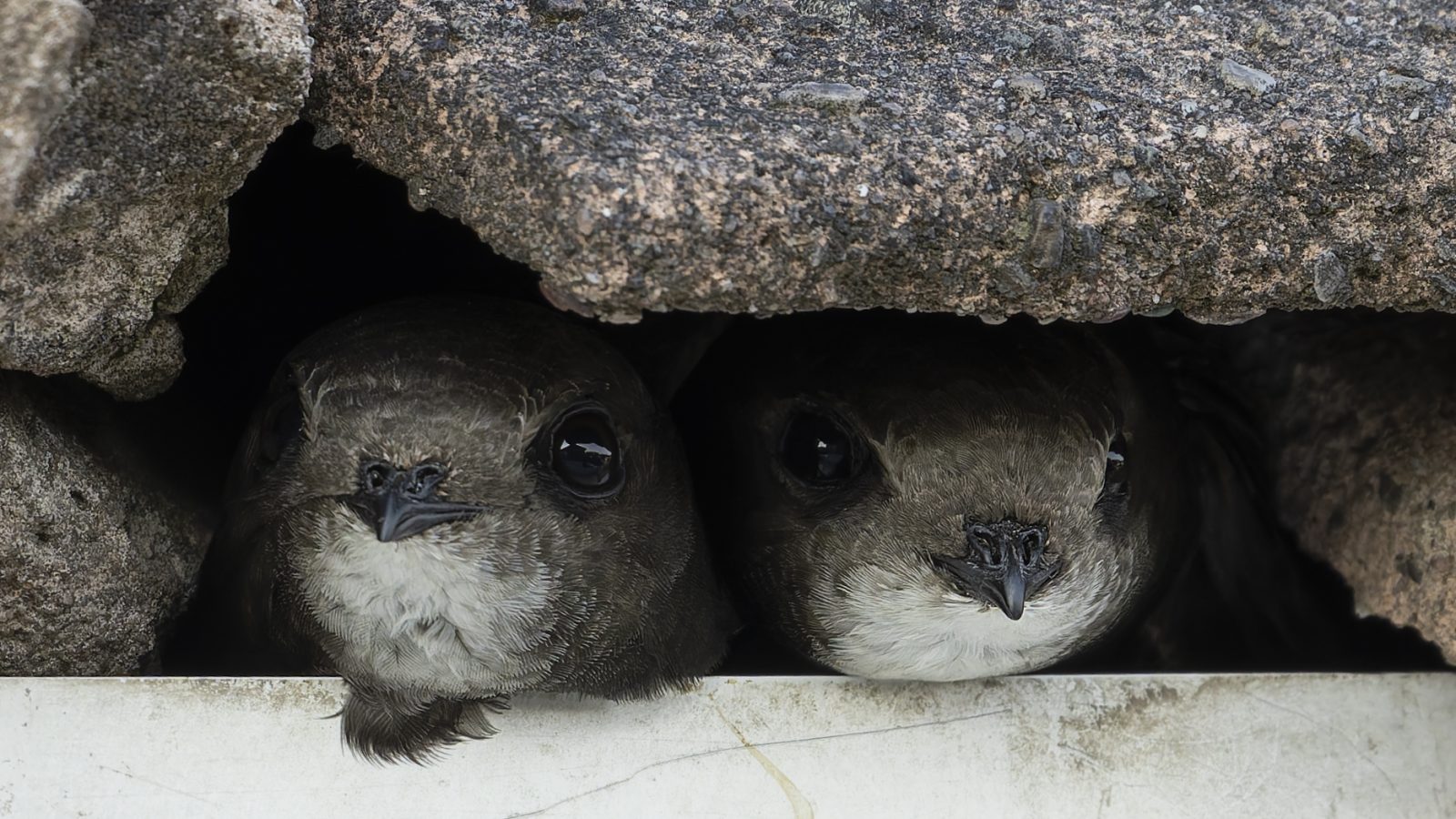
People can help swifts to bounce back by deferring house repairs during nesting season, leaving small nooks and crannies in rooves and installing swift bricks for pairs which, once they’ve found a home, will nest for life alongside their community – photo: Robert Booth
Mary, who has lived in the area for decades, is a former ecologist and trustee of Arnos Vale, one of the group of Friends of the cemetery who helped to save it from development in the 80s.
Talking passionately and knowledgeably about the wildlife in her local area, she gives a sense that there’s a whole universe to be explored right on the doorstep, if only we pay attention to it.
This knowledge instils a core of resilience that protects her against the ever-present stories of biodiversity decline, including swifts’ inclusion on the UK Red List of Birds of Conservation Concern in 2021.
Their dramatic fall in numbers by two thirds since 1995 is a result of climate change causing extreme weather events that disrupt their passage from Africa, and intensely wet and hot periods in the UK which wipe out airborne insects, the birds’ food source, and endanger nesting chicks in turn.
Pesticide use and intensive agriculture is also damaging UK insect populations which have dropped by 60 per cent over the last two decades, while house renovations seal up cracks and destroy nests the life-mating pairs would otherwise return to each year until they die.
View this post on Instagram
But swifts embody hope, Justin says. “Everyday people can have a bigger impact on them than they probably could most other birds we experience. We can improve their nesting opportunities, supplementing their natural nests with artificial nest boxes,” he explains, also relaying the option of installing swift bricks when repairing homes.
On our walk Mary points out boxes hidden in plain sight on the front of houses. Some have multiple: local enthusiast Martin Glanville has 25 situated around his abode.
She explains that the naturally communal birds like to nest together, so playing recorded swift songs can encourage a pair to adopt a box, and hopefully others will then follow suit.
Justin’s film was designed to tell an upbeat nature tale and spread this hope. But it was also intimately bound up with the story of another endangered species: the wildlife filmmaker.
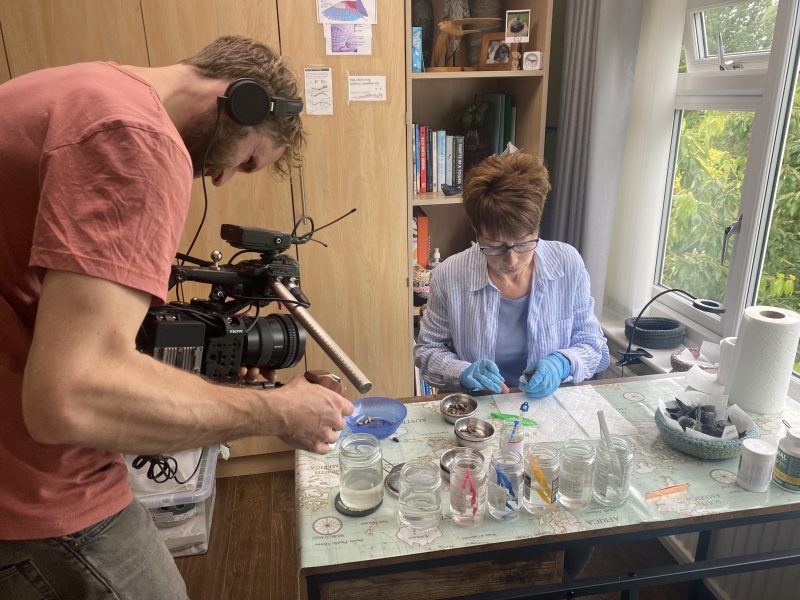
With Bristol long known as ‘green Hollywood’, the home of the BBC’s natural history unit and countless independent nature documentary makers, many do not know that the genre is in decline.
According to the Broadcasting, Entertainment, Communications and Theatre Union (BECTU), up to 57 per cent of people working in documentaries are out of work in the UK.
“Bristol is one of the heartlands of non-scripted with all the natural history done here so for the community it’s been a really tough time,” says Justin, who has worked in the industry for over 30 years and chooses to remain optimistic.
“If you’re doing it for long enough you recognise there’s ups and downs. But it’s fair to say the current decline feels longer and deeper than anything we’ve been through before.
“But there’s so much amazing talent in Bristol, and it will pick up. The natural world and our engagement with it is fundamentally more important than ever so I’m hoping television finds its way back to that world.”
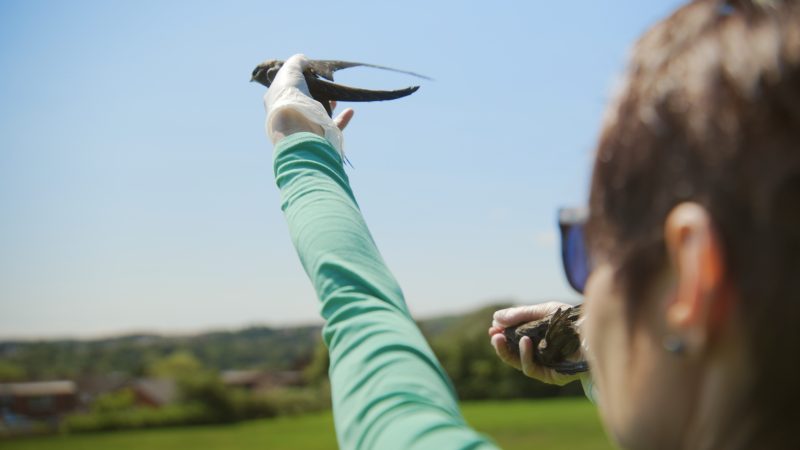
True to its positive feel the film ends with an upbeat display of swift rehabbers across the country releasing the recovered birds out into the wild – photo: The Other Taylor Swift
In the meantime, he took the lull as an opportunity to follow his passion, recruiting other out-of-work filmmakers who volunteered their skills and equipment.
A “top notch camera”, for example, came from acclaimed cameraman and presenter Hamza Yassin (“he came down from Scotland for a wedding and said we could borrow it for the weekend”) to make The ‘Other’ Taylor Swift happen.
“I was lucky there were some amazing people that were up for doing it,” says Justin. “They really bought into the ethos and the idea we could help swifts.”
Even local musicians lent a hand when a “famous composer” denied their music for the film at the last minute and two University of Bristol graduates stepped in.
“Amazing young composers, they blew it out the water; it’s better than the original piece by a long stretch,” he says proudly, explaining Bristol Ensemble’s lead violinist also stepped in voluntarily to perform the piece.
Encountering such generosity ensured the experience was ultimately a positive one for Justin: “What I’ve seen making the film is that in hard times we need to come together more as a community and work together to find solutions.
“There are lots of people going through the same thing and if we pool our resources there might be opportunities we can create ourselves outside of the mainstream industry.
“There are many different ways to excite people about nature. Maybe we just need to be more creative. I think creating your way out of a hole is the best option, if you can. It takes a lot of energy and dedication but that spark keeps you going each day, even if you’re not getting paid for it!
“Hopefully the swift film can be an inspiration for people of what’s possible.”
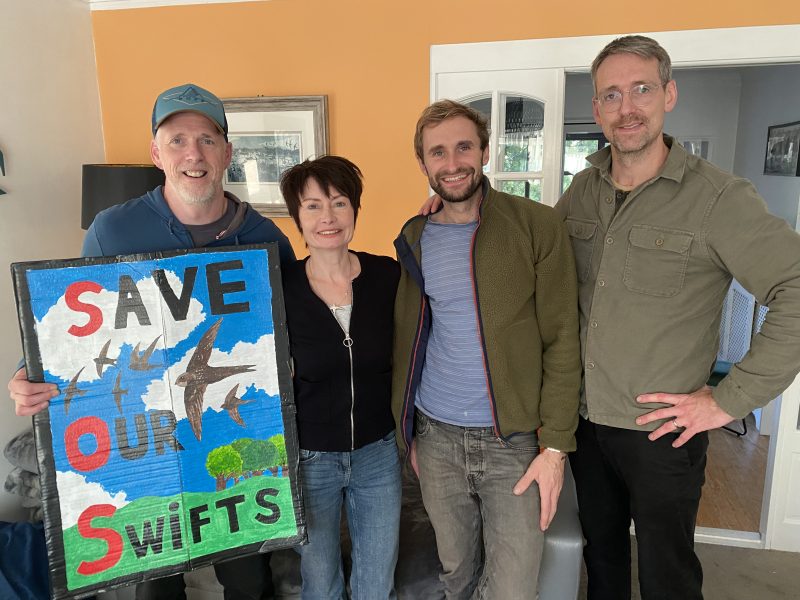
swift-conservation.org is a useful first port of call for anyone inspired to join the swift-saving movement – photo: The Other Taylor Swift
As with the swift rehabbers, he hopes to continue telling those undiscovered stories of the remarkable people quietly making a difference for nature and wildlife: “This process has alerted me to the whole universe of stories in the UK of everyday people and their relationship with nature.
“It’s a nice way to bridge between the two worlds, people can emote with the subject more easily because they’ve seen the effect it has on another human being. A lot of the time the animals are unglamorous and not really in the public psyche so it’s nice to shine a light on them.
“There’s something really nice about seeing people in nature who you don’t traditionally think of. They’re not fleece-wearing, middle class Attenborough groupies, there’s plenty from a wider background.
“I like finding those stories if I can. I think there are probably lots of amazing people out there doing wonderful things that we don’t know about.”
Watch The ‘Other’ Taylor Swift for free at theothertaylorswift.org
Main image: Robert Booth
 Our newsletters emailed directly to you