Your say / St Philips Marsh
‘Bristol needs a new Big Park – have the strategic planners learnt nothing?’
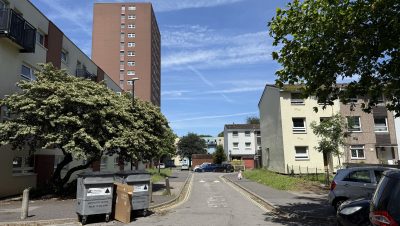
Bristol is a growing city, with increasing reliance upon high-rise dwellings to meet the demand for more homes. High rise living has historically tended to be poorly served by lack of parks and green spaces in our cities.
Climate change is upon us, but we are still being offered homes without gardens, and high rise, high density, small sized flats with little or no outside space. New developments have no parks to play in, nowhere to escape to for your health and well-being. Where are the measures to offset the very well-known and documented heat island effect of all the hard surfaces, e.g. walls and paving?
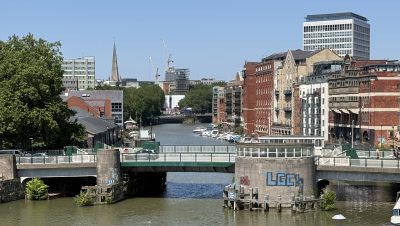
Bristol has an opportunity to be visionary in St Philips Marsh. This is a central location bounded by a river and a canal. This blue infrastructure could be opened up for the enjoyment and benefit of the people of Bristol signalling a renewed emphasis on providing good Blue Green Infrastructure (rivers, parks and trees to you and me) for all.
is needed now More than ever
This area is planned to have, at the very least, 7,000 homes – or roughly 17,500 people, but in reality it is likely to be more.
Countless consultation days, months of design, pretty documents and wall posters, and out of all this comes the St Philips Marsh Masterplan.
A few months ago the previous draft proposed a “large park,” but that was no larger than the nearest park – Sparke Evans Park – which is listed as a small park on Bristol City Council’s online map. Sparke Evans Park already serves existing communities. It cannot be considered as a park that can provide the multifunctional space that the St Phillips development needs and is not a short walk from large parts of the development area, as required by Bristol’s Parks and Green Spaces Strategy.
Bristol Parks Forum and many other organisations countered this proposal, calling it a wasted opportunity for a Big Park in Bristol. There will be no other opportunity in the future as this is the last major area of land to be redeveloped in the heart of the city.
The latest version, now a Masterplan, still shows us pretty pictures of a site with parents and children and people just hanging out – bit of green here, bit of paving there – near a possible new primary school. This is barely lip service to a park and still has insufficient parks or green spaces. There are far too many hard surfaces for the greenery to combat any heat island effect. The proposed high rise blocks will loom over these small spaces.
In the new St Philips Marsh area there will clearly be no space for nature to thrive, for local people – the new community – to escape their small apartments and breathe in clean air, enjoy tranquillity, or watch nature. No spaces for formal or informal sports; nowhere to kick a ball about for an informal game of footie, and definitely no space for neighbourhood rounders or similar. No growing spaces, nowhere to keep cool as Bristol heats up in the ever increasing heatwaves.
Bristol has a raft of policies which should stop this inadequate proposal for homes with no access to decent green space. The Bristol Parks and Green Spaces Strategy and its associated Bristol Open Space provision standards document, clearly set out a requirement for minimum areas of green public open space in central Bristol.
This minimum is woefully inadequate and consigns those in inner cities to less quality green space than those living in the leafy suburbs, but the policy exists nevertheless. There is little evidence of this in the current design proposals which we do not think meets the minimum park provision standards of 7.75 square metres per person and therefore makes insufficient provision for the new communities who will be living and working there.
Of course we must have more homes and housing and unfortunately most of this land is not owned by the city council and the council does not have the funds to buy it and develop it themselves. What the Council does have is the power to direct the developers to make the greenest options including meeting the standards that they are required to.
A big public park is needed in St Philips.
- A park that everyone can access, feel welcome and belong
- A park big enough to have a small copse, woodland area not stressed manicured street trees. A place where you can learn about trees, take bark rubbings, watch wildlife, keep cool in the summer.
- A park with plenty of plants and flowers for a wide range of wildlife – bees, butterflies, hoverflies, beetles etc
- A park where birds can nest and breed safely and you and your family can learn their song and watch them thrive
- A park where the kids can play safely – ensure they can get out and get some exercise
- A park where you can gather with your neighbours and friends
- A park to walk your dog in
What are parks for? Not to put pretty green splodges on a two dimensional map of blocks that fails to show that in three dimensions these squares are very tall, very heat emitting buildings. Just walking past those buildings on a day like we’ve been experiencing in June and July 2026, would remind you that getting to that oasis of the park is an imperative.
Bristol City Council’s Parks and Green Spaces Strategy – Vision for Parks in 2039 – will not be met in St Philips Marsh if this SPD is adopted.
Bristol needs a new Big Park and the place for it is in St Philips Marsh.
If you agree that a Big Park is very important for this development area make sure you let the Council know by responding to their consultation.
You can also contact the Bristol Parks Forum for more information by emailing [email protected]
This is an opinion piece by Frances Robertson, a member of the Bristol Parks Forum Committee.
Main image: Martha Fiddick
Read next:
- Bristol park groups call on council to ‘urgently fund our parks’
- New permanent public artworks set to be installed across St Philips Marsh
- More plans revealed for new homes and school in St Philip’s
 Our newsletters emailed directly to you