Your say / climate crisis
‘Lots of us live with a constant anxiety about climate and our future’
On a hot Monday afternoon in May, a friend messaged me at work to ask if I wanted to go and see a Chris Packham climate film in Stokes Croft that evening.
To list just some of the reasons I didn’t want to go: I was tired; it would be late; the film would be scary and depressing; I already know there is a climate crisis. All I wanted to do was get home, eat something, and watch some rubbish on telly.
But there wasn’t another date we could both make, so we gee’d each other up and hauled our weary bones down to a jam-packed and sweaty People’s Republic of Stokes Croft.
is needed now More than ever
The People’s Emergency Briefing is a punchy 50-minute film, adapted from a meeting last November in Westminster to brief MPs and policymakers on the climate and nature crisis.
Ten leading UK experts set out the evidence and implications of climate and nature breakdown for health, food systems, national security and the economy.
The film also captures reactions from members of the public and a few celebrities: Jennifer Saunders effing and jeffing; Deborah Meaden looking concerned; Adam Buxton being amusing about veggie burgers; was that Konnie Huq?
The aim of the film is to reset the national conversation so that it is grounded in evidence. The National Emergency Briefing campaign is asking the government to support a prime-time televised emergency briefing on the climate and nature crisis.
The film is slick and informative. It is also scary. I tend to turn off the TV when there are stories about extreme weather. That wasn’t possible.
The predictions on what might happen when we pass specific tipping points of global temperature were particularly unsettling. It looks like we will cross 1.5 degrees of warming in 2030, and the difference in outcomes of each fraction of a degree above this are vast.
But I think lots of us live with a constant, silent hum of anxiety about climate and our future. And watching the film in a room with so many others feeling galvanised to do something felt like a huge relief.
The film is not depressing. It’s not too late. There are things we can do, much more that our politicians can do. And most people in the UK want to do more to address the climate crisis.
One statistic that jumped out: how significantly our politicians underestimate the public on this. Roughly 69 per cent of the British public support the UK’s climate targets, but a recent Oxford University study found that policymakers estimated public support at only 37 per cent.
No wonder it slips down their list of priorities.
Some of what hit home most came not from climate specialists. Hugh Montgomery, Professor of Intensive Care Medicine at UCL, outlined the demands that will be placed on the NHS if warming isn’t slowed.
In 2022, nearly 3,000 people in England died from heat-related causes – more than from road accidents. At 3 degrees or more of warming by 2050, there could be more than 4 billion deaths globally.
Lt General Richard Nugee described climate change as a threat multiplier, making existing national security threats worse or more frequent. Climate shocks fuel global instability – when farmers can no longer earn a living, they are recruited by non-state actors. This has already been seen in Afghanistan and with ISIS in Iraq.
The tone was urgent and some of the footage terrifying, but it wasn’t doomsday.
Alongside the worrying scenarios, the film talked about things that are already being done: beautiful flood-absorbing parks in Copenhagen, fuel-efficient transport systems, renewable energy, plant-rich diets, and ways to save money by fixing our draughty housing stock.
I’ve always found it hard to talk to people about climate. I’m not a scientist; I don’t have the numbers at my fingertips. Eyes glaze over, and you can see people consigning it to one of three buckets: that’s too big to think about, I’ve got other things to worry about, or I know, but what can I do?
The People’s Emergency Briefing is an excellent way to start a conversation with people who have disengaged from climate.
If you tend to look away, come along. Bring a friend who isn’t up to speed on the science or bring a net zero sceptic. It’s hard not to be convinced by facts presented by trusted, independent expert speakers who lead in their respective fields.
We’re organising a screening at the Somerville Club on Monday, July 13, but there are plenty happening around Bristol: www.nebriefing.org/screening-map
Get out on a Monday night. You won’t regret it. There might be popcorn.
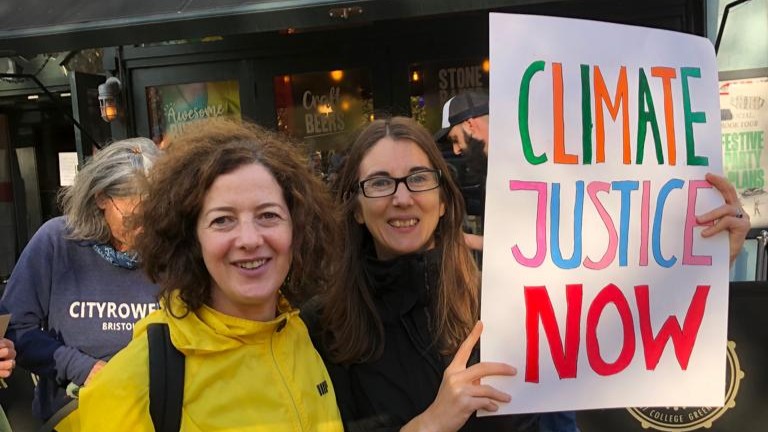
This is an opinion piece by Anna Raphael, a family mediator, who is organising the film screening with Christabel Majendie, a sleep therapist. The pair live in Bishopston and have been friends since their sons met at pre-school many years ago.
Main image: Anna Raphael
Read next:
- Climate crisis film gathers momentum
- Urgent action needed to reverse nature decline
- University ranks 6th in global sustainability index
 Our newsletters emailed directly to you