Film / Interviews
Toby Jones stars in stirring refugee drama
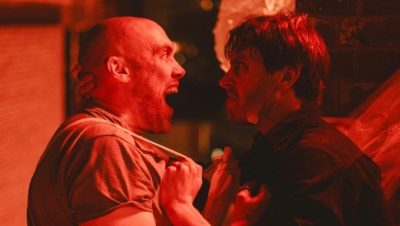
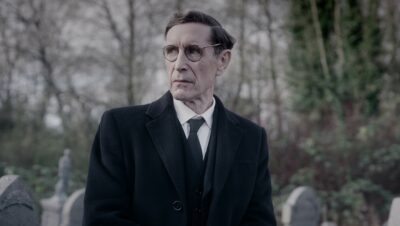
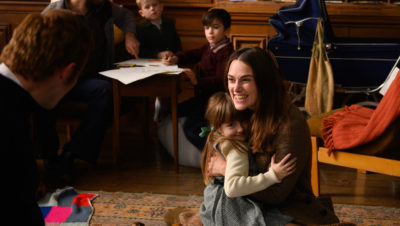
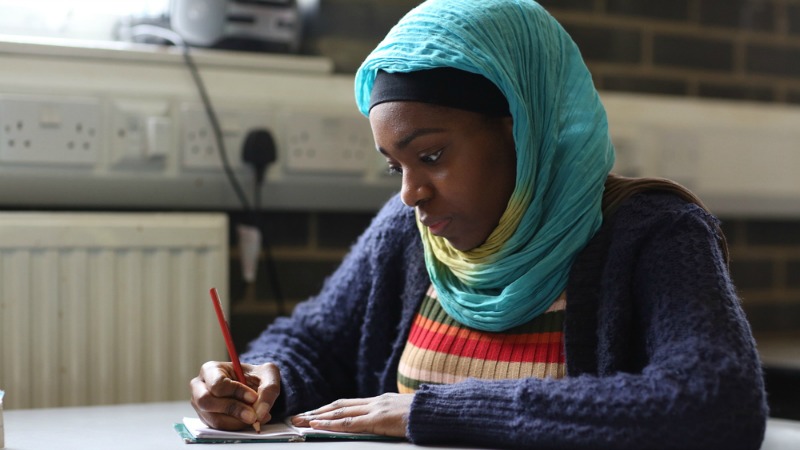
Directed by Bruce Goodison, Leave to Remain is a powerful new British drama boasting a soundtrack by Alt-J. It’s the story of a shy yet charismatic Afghan teenager named Abdul, who finds himself in a shelter for young asylum seekers. Here he encounters a system that’s seemingly rigged against him. The great Toby Jones stars as a fatherly English teacher who takes the refugee teens under his wing, helping them to learn English. Producer Kate Cook, who grew up in Nailsea, comes to the Watershed for a Q&A after a screening of the film as part of Refugee Week in partnership with the Afrika Eye Film Festival on Sunday June 21. We took the opportunity to fire a few questions at her before the Watershed event.
Leave to Remain tells a very topical story. How long has it been in gestation?
is needed now More than ever
A very long time! I came on board in 2009 when Bruce approached me about producing the idea as a dramatic feature. However it had been in discussion as a documentary a good year before this.
How would you pitch the film to an audience who may be wondering whether it’s worth their time and hard-earned cash?
It may surprise you. You will definitely learn something, and for many it’s a film that’s stayed with them, so you know your pennies will go beyond the 90 minutes. You can’t get better value than that!
Tell us about the problems you had getting funding for the film.
We encountered LOTS of closed doors. It wasn’t a film that any of the traditional funding bodies wanted to come on board with, but as we’d had some initial development money from a charitable foundation we pursued match funding through other like-minded organisations in the Third Sector. It took three years of negotiations to secure this. Receiving grants from charitable organisations is a really big deal and we were delighted that two organisations were prepared to work together in taking a risk on a feature film. With this bedrock of funding we were able to go out there and approach individual investors and secure a top up of crowd funding.
Did Toby Jones’s name help?
Definitely! Though we only secured him a few weeks before filming so the bulk of the funding was already in place. However, in terms of distributing the film, his name made all the difference. He has a very diverse fan base. He’s got a great body of well-respected work so it was a real privilege to work with him again and receive his support.
Did potential backers seek to change the film’s tone or content in any way? How much of this was negotiable?
Amazingly, the foundations we approached just let us get on with it. They had a really forward-thinking attitude to the film’s potential and recognised that principally it needed to be able to reach out to new audiences. They kept their objectives open and trusted our experience.
Were there particular challenges associated with casting non-professional members of the refugee community?
Yes, the whole notion was a challenge – trying to find quite a diverse range of kids who could speak both English and their mother tongue, who were unlikely to have had any acting experience before. ‘Street Casting’ per se certainly isn’t a new thing, but we were conscious of making the process as positive an experience as we could for everyone involved. We held open one-day workshops in order to invest more time than you might do normally and were conscious of the fact that anyone who became involved needed to be robust enough to deal with the subject matter and, of course, a gruelling schedule! This involved a whole extra tier of staffing that included a child psychotherapist and youth worker to support all the young people through the process.
What’s the biggest challenge for indie film in the UK: raising funds or getting distribution?
BOTH! But I think the real eye-opener for me is that making a film is no guarantee that anyone is going to see it, let along care about it. It was massive disappointment not to secure distribution in the UK, but in reality it’s probably been the best thing for this film. Using what funds we had to employ our own team of dedicated people has ensured the film has been seen up and down the country with around 70 UK screenings over the course of the year, not to mention the numerous educational screenings we’ve been able to do.
Leave to Remain was your first feature for theatrical release. Are there marked differences between producing for cinema and TV?
Yes, there are significant differences, predominantly at the top and tail of the process. Understanding your audience at the beginning of the process is a key thing in cinema, whereas it’s more pre-determined in TV. Getting bums on seats in a cinema really is a different ball game to tuning in on TV. For this reason, getting a film made takes a hell of a lot longer than commissioning TV. For me however, the mechanics of making the film where not worlds apart – particularly as we ended up making Leave to Remain on a fast schedule, which is much for the norm for TV. I believe grown up films get to take their time!
How did you become a film producer? Was it always an ambition?
I really wanted to work in documentary when I left university but didn’t have a set path that I planned to follow. I started out in production and became quite selective about what I wanted to work on as subject matter was always key – my role within that defined itself as time went on. The blend of telling real stories with a dramatic narrative is the perfect combination for me – I like to work within the realms of the real world, as there’s nothing more fascinating.
People are often confused about what a producer actually does. What do you tell them when they ask?
Jack of all trades! There are some producers who get their hands dirty and those who don’t. I’m not that clever – my hands were very grubby throughout Leave to Remain!
This area is positively teeming with successful film producers. Oscar winner Iain Canning comes from Bedminster and Oscar-nominated Stephen Woolley lives in Bath. Is there something in the water?
Cider!
What’s next for you?
Well I’m currently nurturing my most proud production – my baby daughter Nell, who turns one in a few days. I’ve got a few ideas knocking around but having produced Leave to Remain I know that whatever I do, I need to be prepared to live and breathe it for a few years to come, so it’s got to be for the right reasons. Bruce and I very much hope to work together on something soon.
 Our newsletters emailed directly to you