Film / Reviews
Review: Dunkirk
Dunkirk (12A)
UK 2017 106 mins Dir: Christopher Nolan Cast: Fionn Whitehead, Kenneth Branagh, Cillian Murphy, Mark Rylance, Tom Hardy, Jack Lowden, Harry Styles, Aneurin Barnard, James D’Arcy, Barry Keoghan
Christopher Nolan has been clear and unambiguous from the outset about the Dunkirk he wanted to make. So to criticise him, as a minority of reviewers have done, for not turning out a completely different film seems to be a textbook case of missing the point. If you’re after great gobbits of exposition, phlegmatic stiff-upper-lippery, a touchy-feely humanisation of the enemy or an in-depth exploration of military tactics, this ain’t the WWII movie for you. Nolan simply tips us in at the deep end and doesn’t let up for 106 suspenseful, exhausting minutes, as he immerses us in the evacuation from land, sea and air perspectives in what essentially boils down to a simple survival thriller. And yes, just for once, this is a film that merits the over-used term ‘immersive’, which is now lazily applied to everything made in 3D.
is needed now More than ever
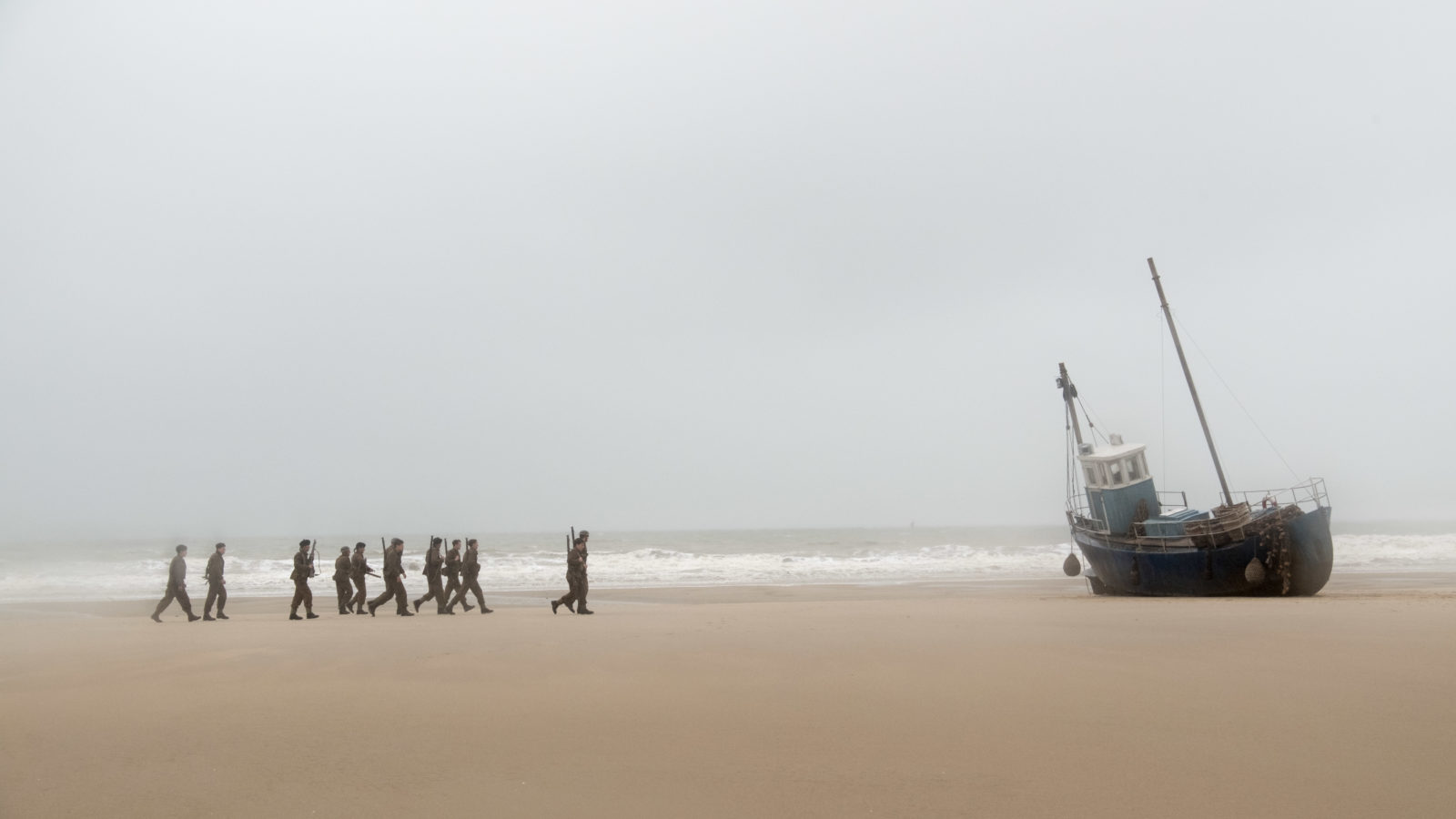
Although this is Nolan’s first film to be grounded in real events, it retains his trademark temporal playfulness – not in any tricksy way, but as an elegant means of intertwining stories unfolding on different timescales. The briefest of introductory captions sets the context of the Allied military retreat to Dunkirk in the spring of 1940. Then we’re introduced to young British everyman soldier Tommy (Whitehead) – geddit? – though we don’t learn his name until much later. Showered in the confetti of German leaflets helpfully informing the retreating troops that they’re trapped, he dodges enemy gunfire (his comrades aren’t so lucky) and eventually makes his way to the beach where thousands of soldiers await evacuation like so many sitting ducks. Over the course of a week, we follow his desperate struggle for survival as death is dealt at random all around him.
Representing the flotilla of ‘little ships’ that came to the rescue and gave rise to the phrase ‘Dunkirk Spirit’ is the pleasure boat Moonstone, skippered by stoic Dawson (Rylance), with his teenage son and a young cabin boy aboard. During their day-long journey, they haul aboard a shell-shocked survivor (Murphy), who is not unnaturally alarmed to find himself being taken straight back into the jaws of death. In the air, RAF pilot Farrier (Hardy, hidden behind a mask once again, as he was in Nolan’s earlier The Dark Knight Rises) and his fellow Spitfire aces attempt to provide cover by engaging in an hour-long aerial duel with the Luftwaffe as their fuel dwindles away.
Remarkably, all of Nolan’s gambles pay off. Casting capable young unknown Fionn Whitehead in the lead role, removes the distracting effect of star power. Popster Harry Styles also acquits himself well as a fellow squaddie, while the heavy lifting is left to such veterans as Rylance and Kenneth Branagh, playing the naval commander who oversees the chaotic evacuation. (Trivia note: just when we thought that Michael Caine would be absent from a Nolan film for once, that’s his voice on the radio advising Farrier.) Nobody speaks for the first 10 minutes or so, and there’s very little dialogue thereafter. This means we’re spared such traditions as inspirational speechifying and maudlin conversations about loved ones back home during dramatically convenient lulls in the fighting. This is also a WWII flick in which not a single Nazi is seen. Nor are there many women, so an F-rating is out of the question. But at least we don’t have to endure those momentum-sapping cutaways to teary spouses and parents, which provide such thankless roles for so many actresses.
Without labouring the point, the film also understands the distinction between praying for a miracle and pretending that some kind of divine intervention was responsible for saving so many lives. Annoyingly, a recent C4 documentary used the term 198 times (estimate), but Dunkirk makes it absolutely clear that only bravery and luck were at play in the evacuation. There are no grand individual acts of movie heroism (“All we did was survive,” remarks one exhausted soldier on being congratulated as he returns home). Patriotism, while present, is kept in proportion. Emblematic of this is Churchill’s “We shall fight on the beaches” speech, which is given such prominence in the Darkest Hour trailer, but is downplayed here to being read from a newspaper in flat tones by a young private.
Instead, it’s all about the scream of the dive bombers, the thud of bullets into the upturned hull of a ship and the sheer terror of being cast into a sea coated with burning fuel. Incorporated into Hans Zimmer’s propulsive, disquieting score is the continuous, ominous tick-tocking of what sounds like Hades’ own grandfather clock, which skilfully ramps up the tension still further and means the Oscars for Original Score, Sound Mixing and Sound Editing must surely be in the bag already, with many more to follow. All well deserved, as this is that rarest of films: a gripping, visceral blockbuster that doesn’t insult our intelligence. It’s also fully deserving of a place in the pantheon of all-time great war movies.
 Our newsletters emailed directly to you