News / Education
Teachers say they risk disciplinary action after being told to use sick leave for work
Teachers told by their bosses to take sick leave to catch up on work risk being disciplined by doing so.
Sources at Downend School, whose staff went on strike on Monday and Tuesday morning, say teachers unable to keep up with the high work load are advised by senior management to take a day of sick leave and work through it.
However, the school policy is for staff to be called to a disciplinary meeting should they be sick three times in a six-month period.
is needed now More than ever
While there are certain exceptions, employees will usually be called to a formal stage absence review meeting where senior staff will decide whether to take punitive action against them.
Sources highlighted the unfairness of this considering that taking sick days to catch up on work is advised by senior management in the first place.
They also pointed out how common it is for teachers to fall ill when working with so many children carrying so many different germs, and how it is not unreasonable for teachers to be off three times in six months as a result.
A spokesperson for Castle School Education Trust (CSET), which managed the school, said: “The allegations made about the management of teacher absence at Downend School are categorically untrue.”

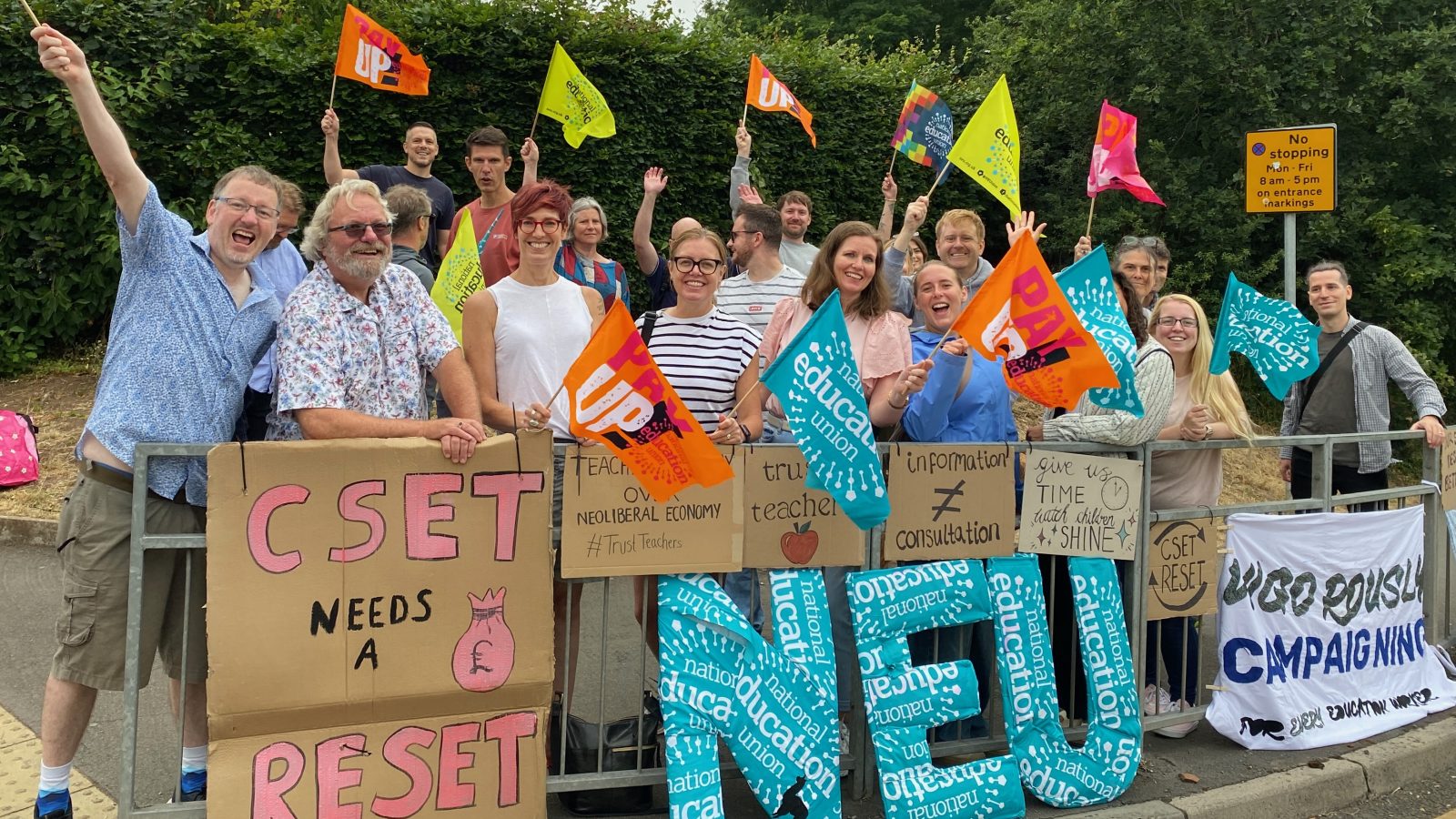
Staff were greeted by honking car horns as they picked outside Downend School on Tuesday – photo: Molly Pipe
The sick day complaints are among the various reasons teachers and staff could be seen at picket lines across the region on Tuesday morning.
National Education Union (NEU) members at Downend School, The Castle School, Mangotsfield School and Marlwood School were on strike calling for action on high workload and a staffing crisis.
Their complaints included inappropriate direction of staff and a lack of consultation on important working arrangements.
One teacher, who wished to remain anonymous, criticised the 51 per cent pay rise given to senior management while staff at the coal face have dealt with higher and higher workloads.
“The senior leadership pay has increased significantly but teachers are working on the weekend,” she said.
“There’s more SEN need than ever, which means you do need more planning time,” said another.
“I think the impact is you are working all the time. It just makes me a bit sad that I want to deliver my best teaching but I can’t.”
Sources also told of more and more teachers having to go part time to avoid overwork.
CSET, however, said all educational leaders in CSET and its schools are paid on national pay scales, with leaders receiving the same percentage increases as teachers to reflect the national pay award each year.

While the strikes had a party atmosphere, they conveyed a more serious message – photo: anonymous
The NEU is calling for more staff to improve teaching and make workloads more manageable.
“Chief Executive Will Roberts, who is paid more than the Prime Minister and received a pay increase of £15-20,000 last year out of the public purse, claims that CSET cannot afford to increase staffing capacity,” the union said.
Elly Owen from South Gloucestershire NEU said: “Our members care deeply about the children and young people they work with. They do not take the decision to strike lightly.
“Members have spent more than a year trying to resolve these issues through dialogue. Instead of meaningful action now, the trust has offered to make slight timetable adjustments in September 2027.
“That simply does not address the crisis staff are facing today.”
A spokesperson from CSET said: “We are disappointed that strike action by members of the NEU is causing unnecessary disruption to pupils’ education.
“This strike has come about primarily because NEU officials are demanding a ten per cent reduction in the number of lessons taught by teachers in CSET secondary schools.
“The current arrangements are determined by nationally agreed teacher contracts and changing this would require a substantial and sustained increase in the funding provided to schools by the Department for Education.
“We recognise the challenges within the teaching profession around workload, with an intensive working pattern during the 39 weeks of term.
“In recent years this has been heightened by additional pressure on teachers resulting from national funding constraints and complex educational challenges.
“We have worked hard with our teachers to identify and implement creative ways of reducing workload pressures, and will continue to do so.
“We have engaged with NEU officials and representatives over recent months. All of the other issues that they have raised have been addressed, and they have rejected alternative proposals to ease workload pressures.
“School leaders are working hard to minimise the disruption caused by the NEU’s industrial action campaign, with educational activities continuing wherever possible on the strike days.”
Main photo: Molly Pipe
Read next:
 Our newsletters emailed directly to you