Features / women's safety
Bristol parks under the spotlight
Free to use and open to all, parks are often described as among the most democratic spaces in any city.
However, in practice, those who feel able to use them, especially after dark, is not equal.
In Bristol, a group of young women, campaigners and politicians are pushing to make our city’s green spaces safer, more inclusive environments.
is needed now More than ever
For these advocates, our city’s parks are not just leisure spaces but frontlines in the broader mission to end violence against women and girls.
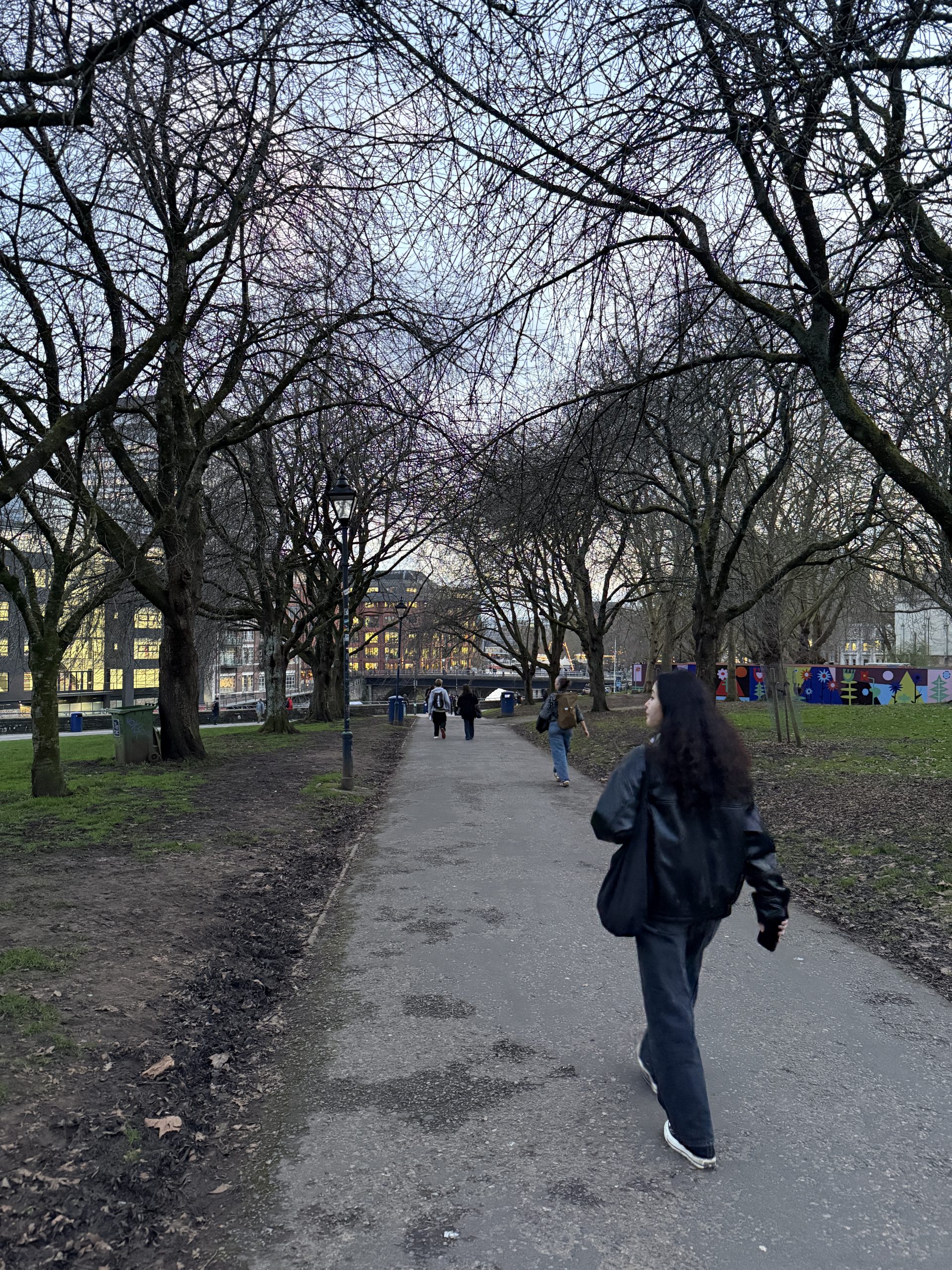
A growing group of campaigners are pushing to make our city’s green spaces safer for all – photo: Betty Woolerton
“There’s a lot of safety planning that women do that men don’t necessarily see,” said Katy Taylor, director of Bristol Women’s Voice, speaking about how walking through a park can involve a quiet set of mental calculations.
“Keys between your fingers, planning your route home, being on your phone (or pretending to be), wearing headphones but not listening to music to avoid unwanted conversations but stay alert.”
Serious violent crime in parks remains relatively low, yet research consistently shows that sexual harassment is experienced by the vast majority of women and girls and that fear of this shapes how and whether they move through public space.
In 2023, academics from the University of Leeds found that in Britain women are three times more likely than men to feel unsafe in a park during the day.
After dark, the gap widens: as many as four out of five women report feeling unsafe walking alone in a park, compared to two out of five men.
The Angiolini Inquiry Report, published after the murder of Sarah Everard, found that nearly half of women feel unsafe in public due to others’ behaviour.
Local figures paint a similar picture. A 2022 survey by the Bristol Nights project team revealed that all of the women surveyed in the city had experienced some form of sexual harassment.
More than a third of residents believe it is a growing issue. A significant proportion of violent and sexual offences take place during evening and at night.
And within that picture, safety is not evenly distributed. Disabled girls and women, those from global majority communities and those living in lower-income neighbourhoods face additional barriers to accessing green space.
Recent research by grassroots charity Your Park Bristol & Bath with the University of Bath found that residents from ethnic minority backgrounds in Bristol are 40 per cent less likely to visit local parks than their white counterparts.
Participants cited concerns ranging from dogs off leads and poor maintenance to fear of harassment.
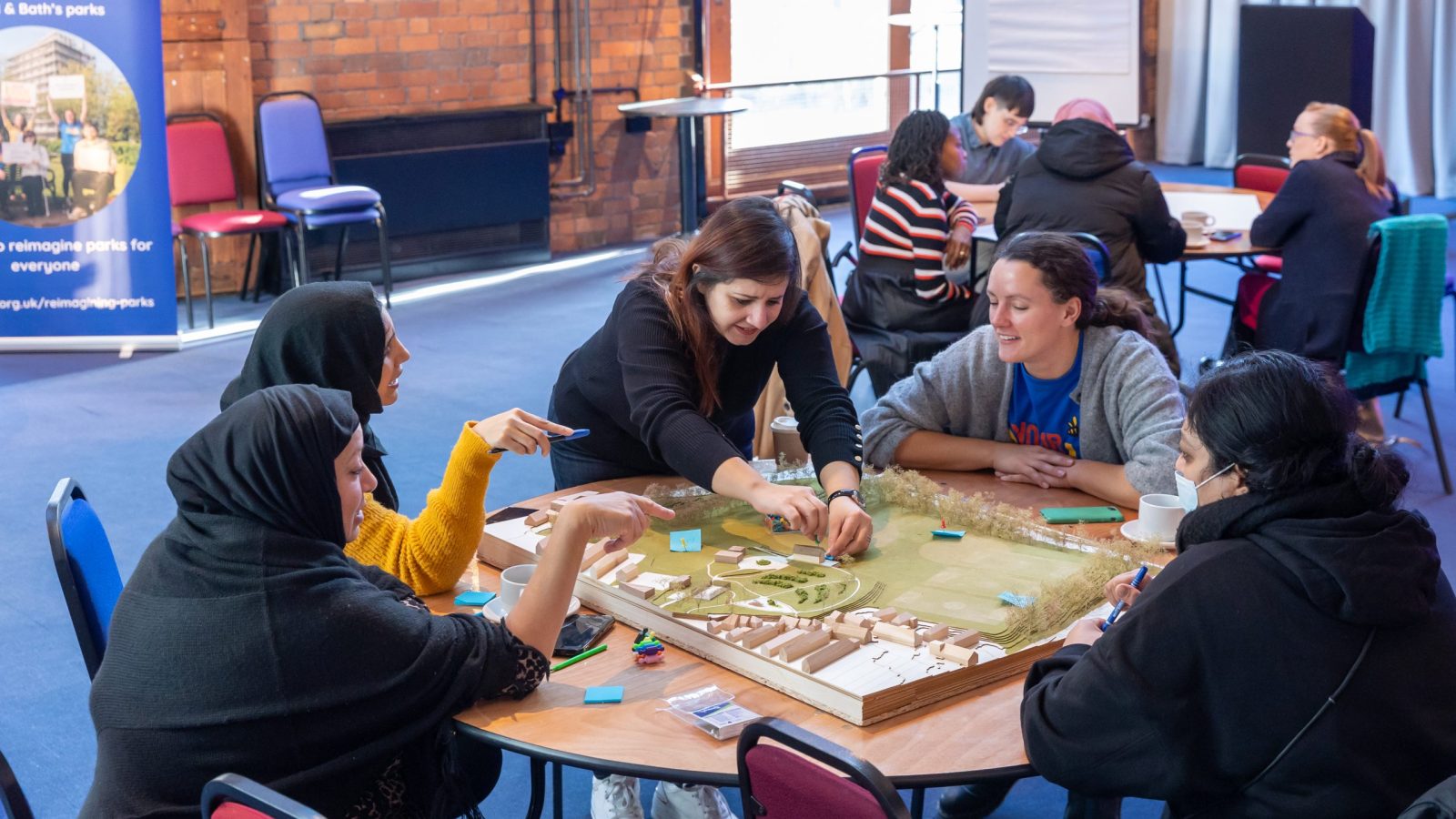
Your Park Bristol & Bath’s Reimagining Parks campaign is working to make parks more widely accessible and inclusive – photo: Your Park Bristol & Bath
Bristol Women’s Voice’s Young Women’s Safety Project responds to these realities. The organisers argue that darkness and poor lighting intensify feelings of vulnerability and design sends a message about who public space is really for.
Young women involved in the project describe not only fear of serious violence but the cumulative impact of so-called “low-level” harassment and everyday sexism from comments and lingering stairs to footsteps following too closely behind.
“There’s still so much casual sexist behaviour that young women are navigating daily,” Katy said.
Raisha Jesmin, 27, lived near Castle Park as a student and said certain routes were simply off-limits at night and even walking with friends felt risky.
“It would have been much quicker to walk through the park,” she told Bristol24/7. “But I just wouldn’t take it. I’d give myself more time and go the longer way round.”
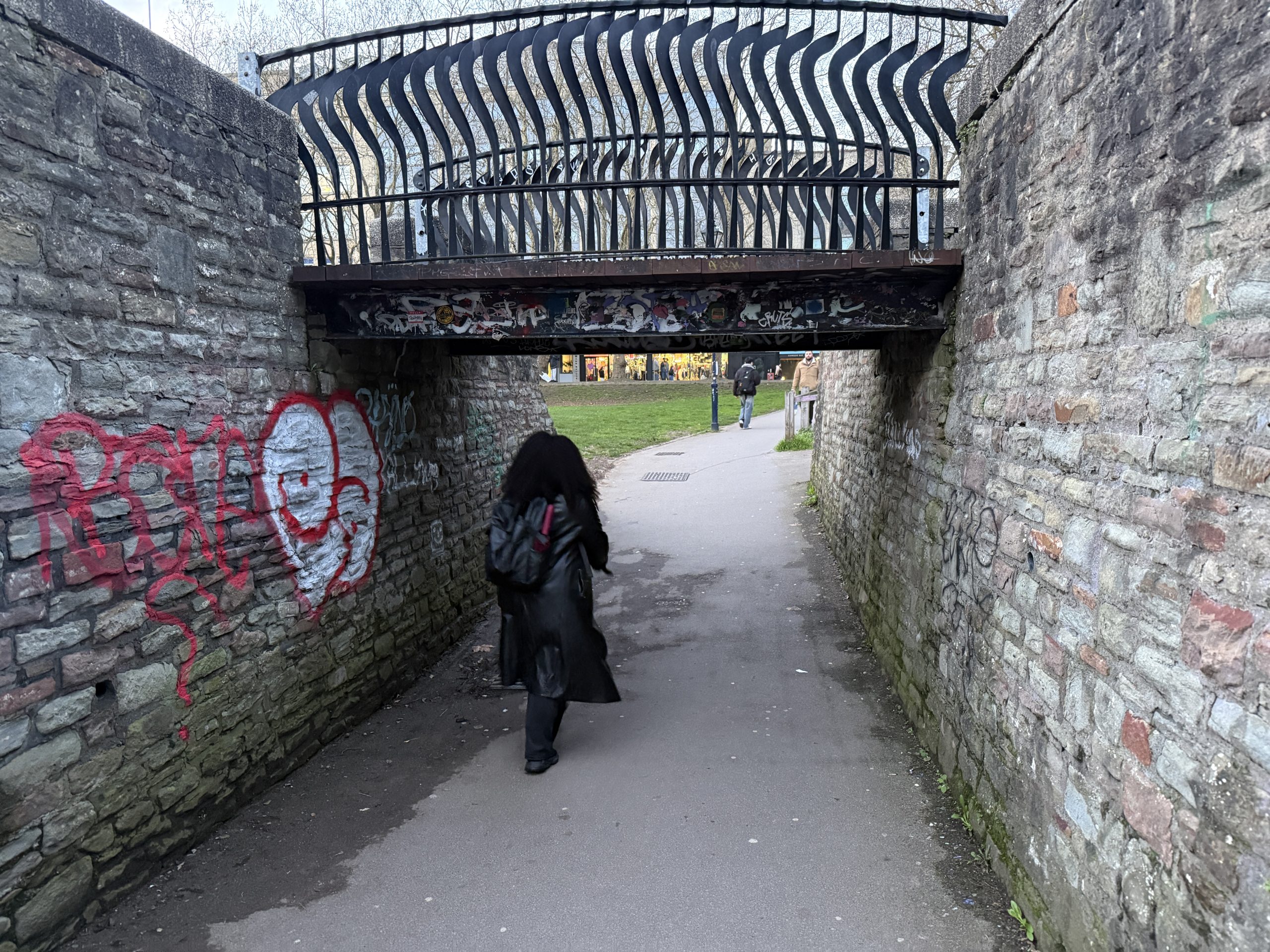
In November, councillors backed a motion to make parks safer for women and girls, addressing concerns about harassment, violence and poor visibility – photo: Betty Woolerton
Castle Park, in the heart of the city centre, has been the site of multiple reported assaults of women and men over the years.
The council’s Castle Park masterplan acknowledges that some people feel uneasy in parts of the park after dark, acknowledging lighting, sightlines and layout are among factors that shape perception.
Part of the safety project’s work focuses on allyship and bystander intervention – encouraging people to recognise harassment and feel confident to challenge it safely.
“Most people want everyone to be safe,” Katy said, explaining that the aim was to address behaviours and environments that enable harassment to persist.
“But they don’t always know how to intervene.”
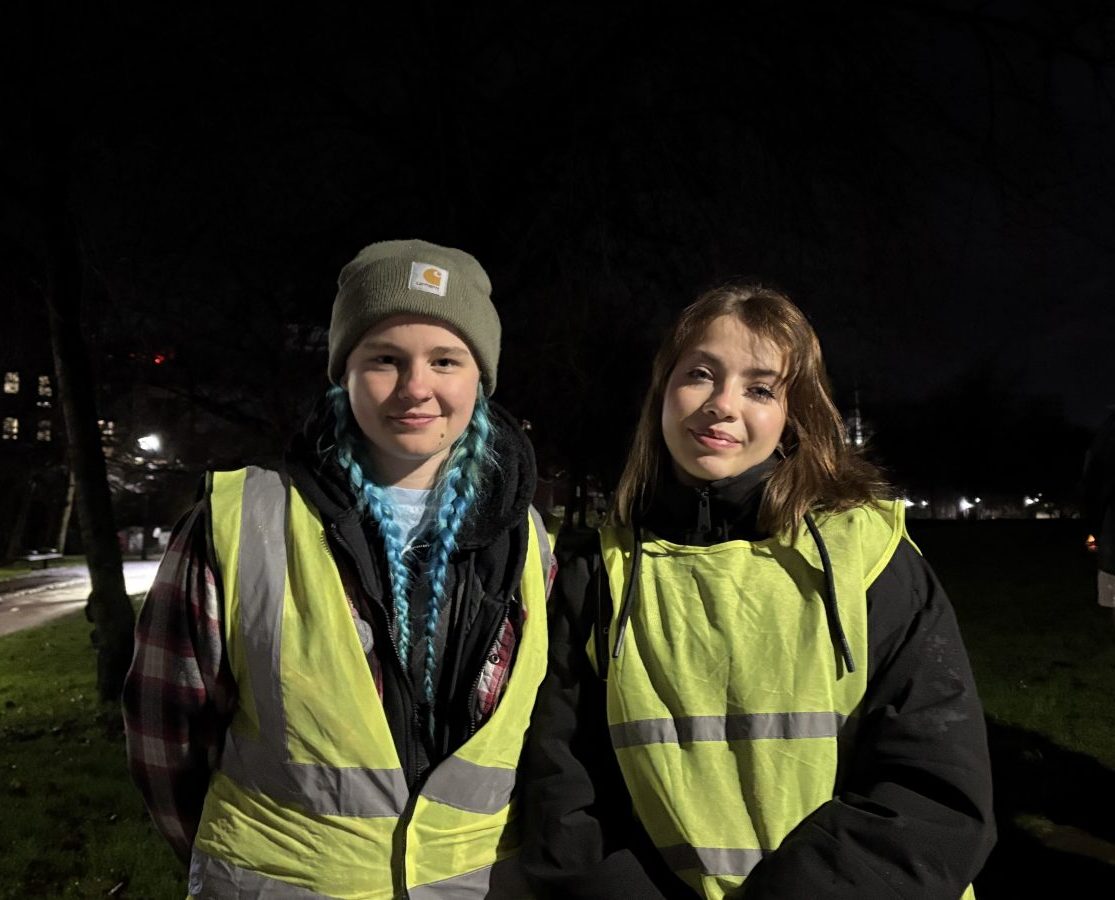
Persephone Jafrate (right) found through her research that poor lighting, isolation and everyday harassment make many women feel unsafe using parks – photo: Karen Johnson
Persephone Jafrate, a final-year sociology student at the University of Bristol, has been researching how the built environment shapes women’s experiences of the city.
Through interviews and “walk-along” studies, she has identified recurring anxieties in parks across Bristol.
As evenings have grown darker, she has stopped visiting St Andrew’s Park, her local green space, citing poor lighting and isolation.
“I haven’t been back since October,” she said. “It just isn’t somewhere I feel safe. There’s no lighting, and it feels deserted. Even though I live close by, I’d rather walk the streets.”
Harassment, she said, ranges from verbal abuse to physical threats, but even mundane forms like people walking too close, shouting or making inappropriate comments have eroded her confidence and sense of belonging.
The safety group has responded with leaflets, creative workshops and public events to create space for connection, conversation and solidarity as much as policy change.
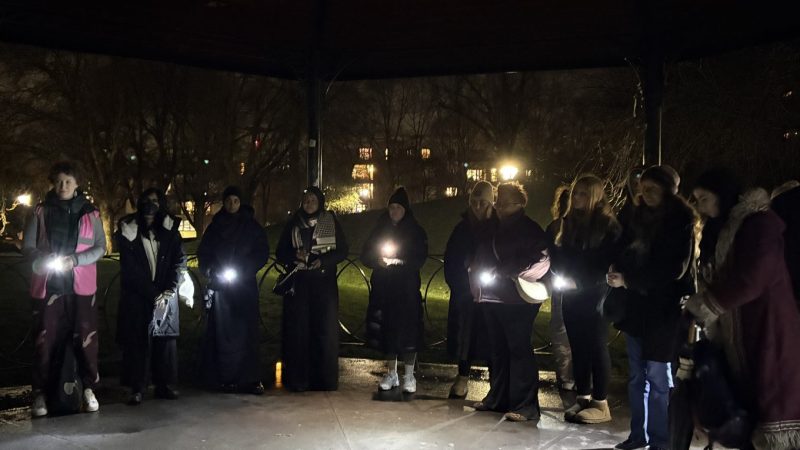
The aim of a gathering at the beginning of the year was to “start a conversation” about how people can enhance women’s safety in public spaces – photo: Karen Johnson
According to Lisa Durston, design plays a central role in who uses parks. The Labour councillor for Filwood noticed her own daughters withdrawing from parks as they got older.
“Once they outgrew the play equipment, there was nothing there for them,” she said.
Lisa argued that historically many public spaces were designed around the “default male” – prioritising certain forms of recreation over others.
Victorian parks were conceived as spaces for promenading and quiet contemplation rather than the flexible, multi-use environments demanded by contemporary urban life.
Facilities like skate parks and football pitches can feel “dominated by boys and younger men”, Lisa said, creating an environment where “girls’ activity goes off a cliff because they just don’t have those spaces to be outside and active in”.
The result, campaigners argue, is visible: younger children use playgrounds, adult men play sport or gather socially but teenage girls and young women are absent.
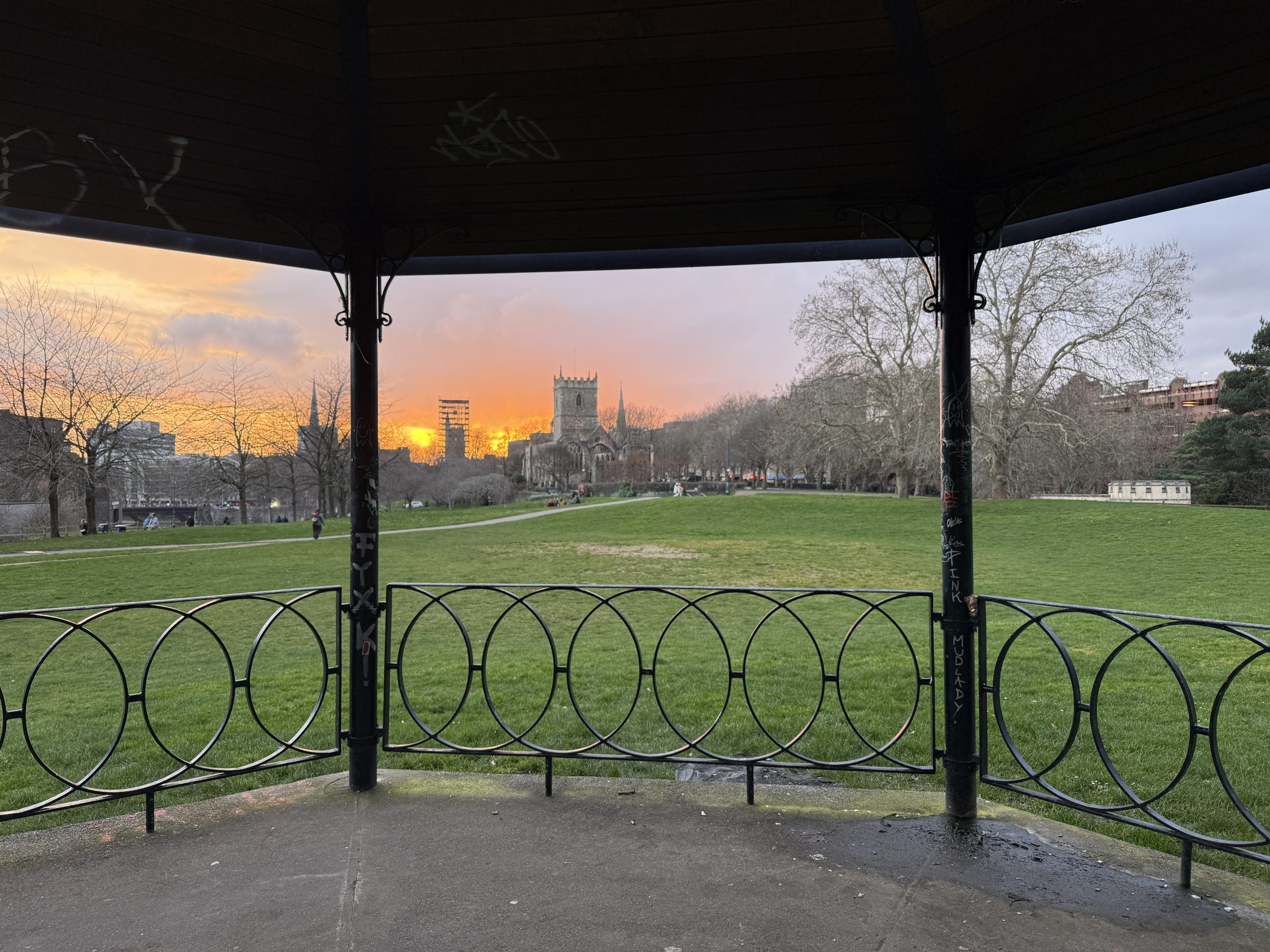
Attacks on women and men have taken place in Castle Park – photo: Betty Woolerton
Lisa spearheaded a unanimously backed motion in Bristol City Council committing to make Bristol parks safer for women and girls, with pilot work including Castle Park.
But she is keen to challenge narrow ideas of what “safer” means.
“As soon as you start talking about safety, people default to lighting and policing,” she said.
“That’s part of it, but big floodlights and the presence of police don’t automatically make everyone feel safer – especially in some communities.”
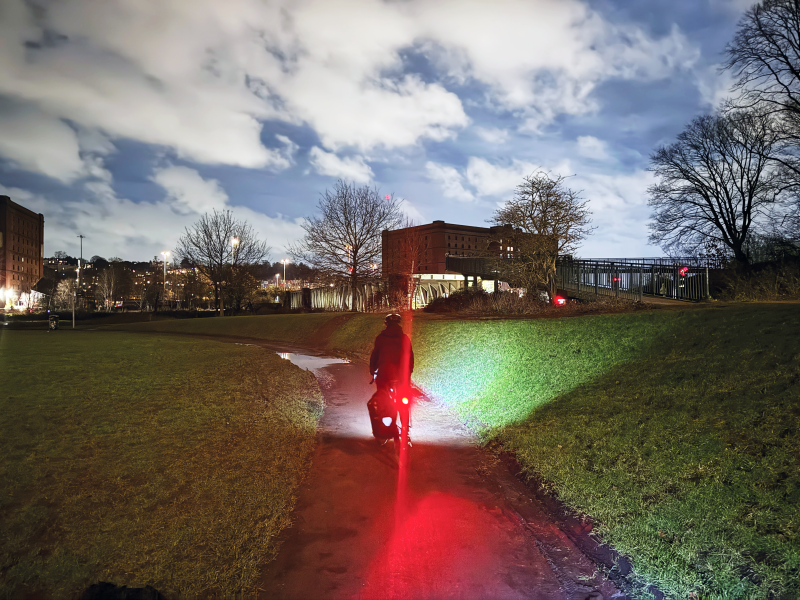
Instead, Lisa advocates a nuanced approach to park design: better sightlines along paths, clearer exits, lighting that is well-designed and wildlife-sensitive rather than harsh and indiscriminate, and potentially staffed information points or park wardens.
The key is co-design, she said. “It’s about speaking to the people who aren’t currently using our parks and asking what would make the difference.”
Some environmental campaigners have raised concerns about increased lighting disrupting wildlife habitats and biodiversity.
Responding to this, Durston insisted that safety and biodiversity are not mutually exclusive. “I do believe that it’s genuinely possible to balance safety and the environment,” she said.
“It’s about… perception of safety and feeling welcome is as important as actual physical safety.”
Labour councillor Lisa Durston wants parks to be a space where “everyone can feel welcome and safe” – photo: Betty Woolerton
For Lisa, the stakes are high. When girls feel safe in public space, the benefits ripple outward, improving physical health, mental wellbeing and social inclusion.
“I want teenage girls to feel they can hang out in a park without feeling intimidated,” Durston said.
“I want us to feel like we can walk through a park at eight o’clock in the evening.”
Proposals to expand safety improvements to open spaces across Bristol will be considered by the public health and communities committee which has been tasked with identifying barriers to park use and the funding required to address them.
It comes at a time when Bristol City Council is projected to need to find over £40m in savings for the next financial year.
The motion offers cautious optimism for campaigners.
“It’s really good that it’s happening,” Persephone said, “but part of me wonders how soon it will take effect and what the pushback will be.
“People are worried about wildlife and sustainability, which are valid, but we also need to protect the people who use these spaces.”

This article originally appeared in Bristol24/7’s March/ April 2026 magazine
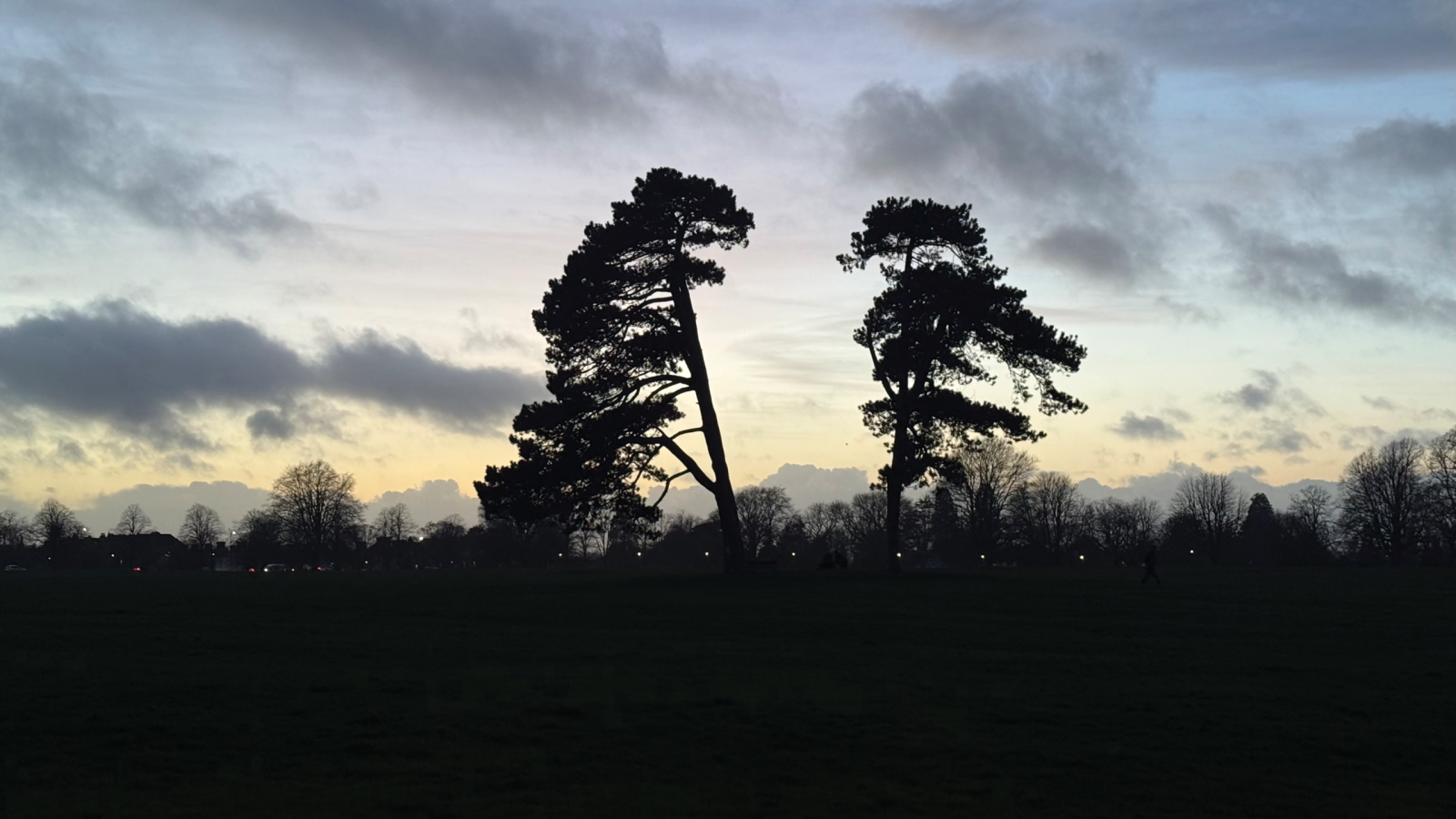
Main photo: Martin Booth
Read next:
 Our newsletters emailed directly to you