Features / Transport
Council bosses on bollards, blockages and ‘big learnings’
Council bosses say they have learned lessons from the East Bristol Liveable Neighbourhood and the city’s second scheme will be different.
A fortnight is left of the public consultation into the South Bristol Liveable Neighbourhood, including plans for parking permits and bollards.
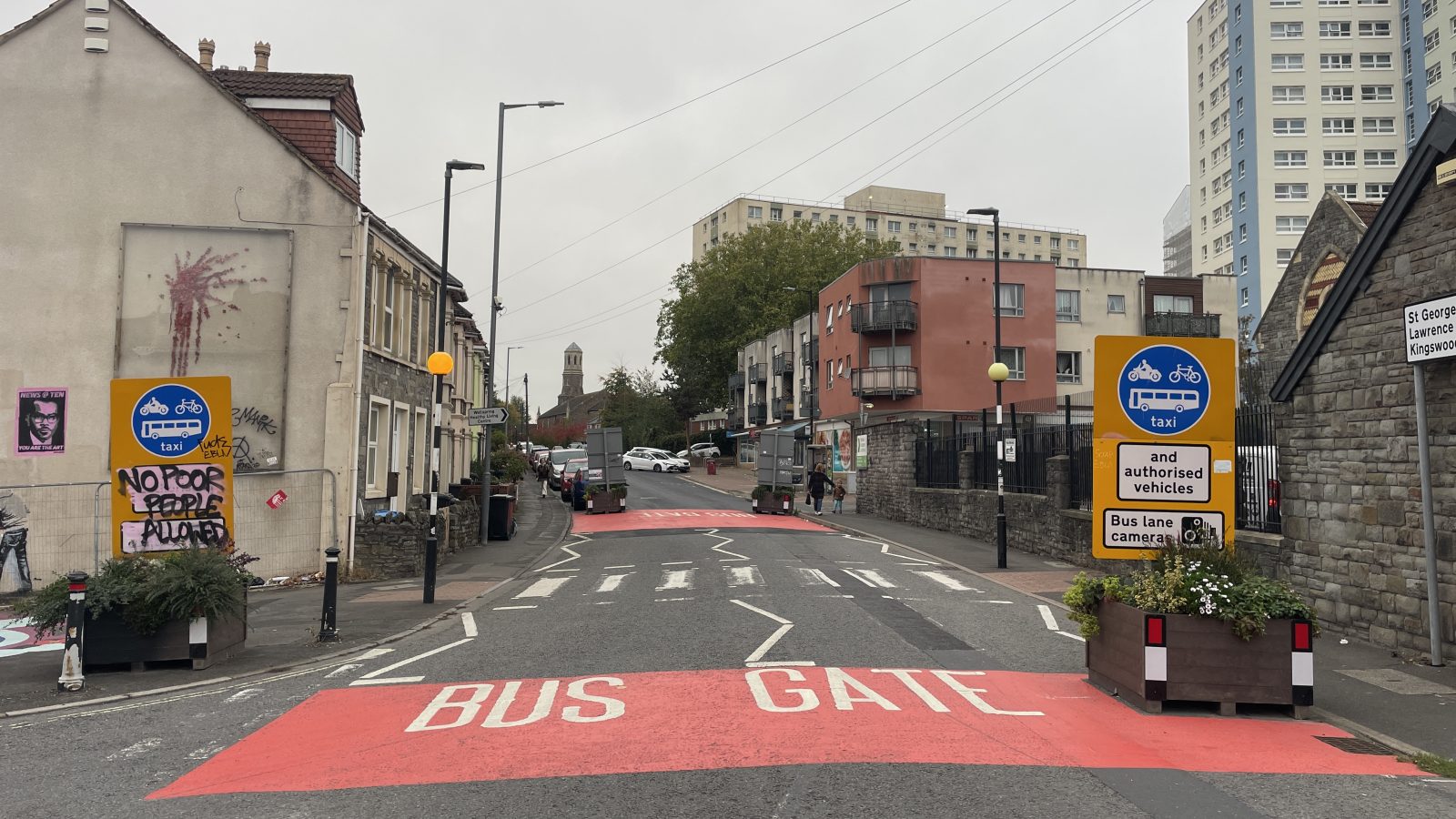
The leader of Bristol City Council said there “hopefully won’t” be police on the streets at 3am again, as happened in March earlier this year when contractors installed bus gates in Barton Hill.
is needed now More than ever
There will also be a focus on smaller areas with more public support for potential changes.
Other lessons include clearer communication with the public and installing “quick wins” early.
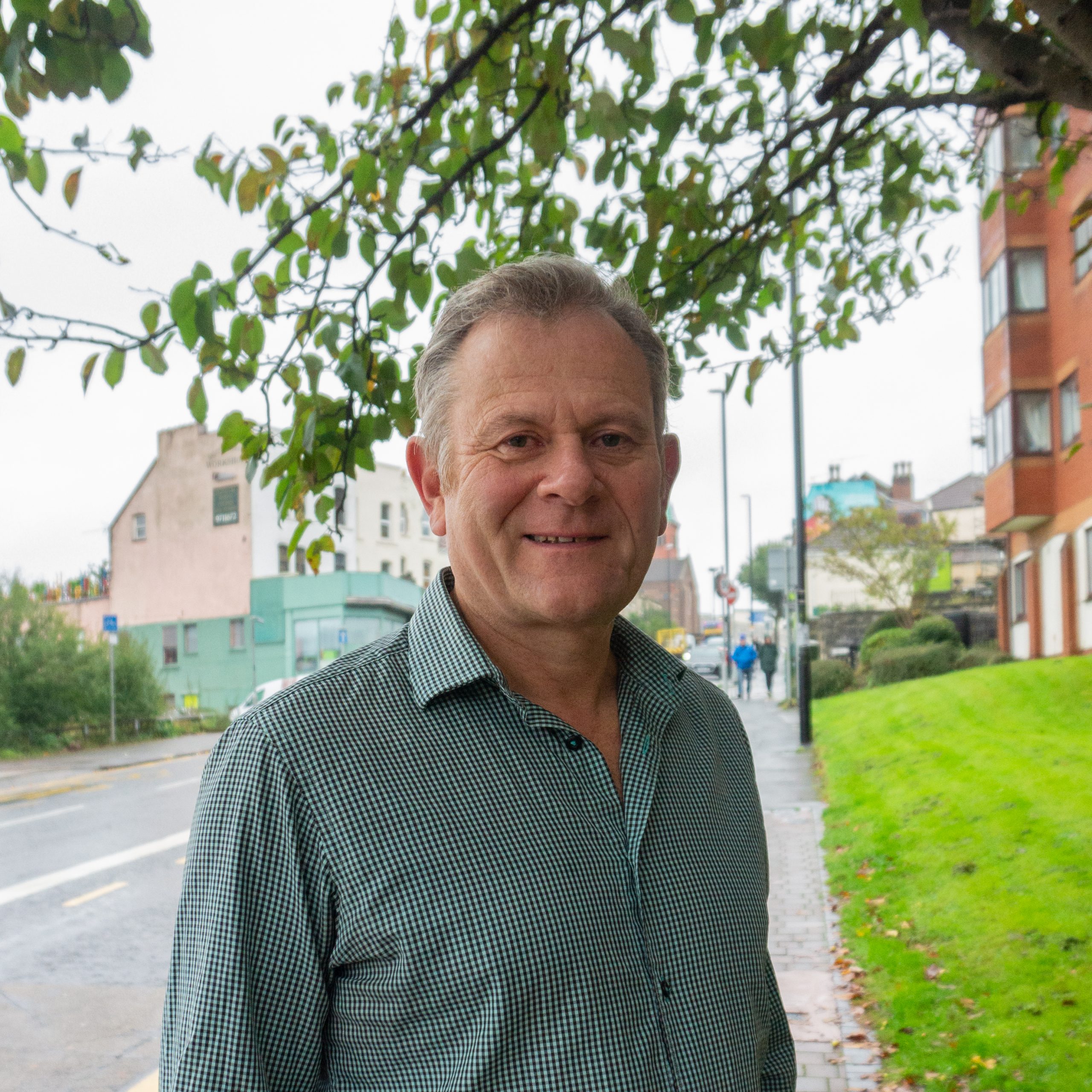
Ed Plowden is a Green councillor for Windmill Hill – photo: Bristol Green Party
In a wide-ranging interview with the Local Democracy Reporting Service, two of Bristol’s leading politicians spoke about the ambitious but controversial South Bristol Liveable Neighbourhood.
Ed Plowden, chair of the transport policy committee, said: “We were more open to listen to the initial feedback. One of things that came back very clearly was that people are keen on residents’ parking.
“We’ve already got it in part of the area, and that’s now the cornerstone of what we’re doing.
“The South Bristol Liveable Neighbourhood area is even bigger than east Bristol, so one of the things we’ve learned is to turn that into smaller pockets.
“Where originally it was going to be a very large liveable neighbourhood, we’re now going to make residents’ parking a cornerstone across the area.
“We’re not committed to doing it everywhere, but we’re asking people what they think. The other thing we’re doing is we looked at the results from the initial engagement and we found three areas that had more appetite for change.
“Rather than doing the whole thing at once, one of the big learnings was ‘let’s pick off those areas and then work incrementally’.”
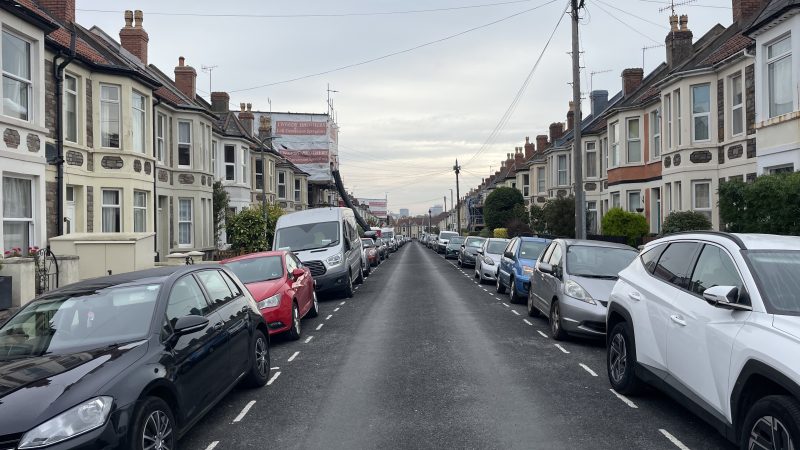
Under the new scheme, three areas of south Bristol will be prioritised: Southville, Bedminster and Totterdown – photo: Betty Woolerton
From Ashton Vale to Totterdown, residents’ parking areas could be created. This would give residents permits allowing them to park near their homes more easily, preventing their roads getting clogged up with commuters or people going to matches and concerts at Ashton Gate.
But in Southville, east Bedminster and Totterdown, there are much more detailed plans. A series of “modal filters” could be installed in Southville, such as bollards or planters, to reduce traffic flowing through the neighbourhood.
One-way roads would be created in Totterdown, to prevent stand-offs on the very narrow streets there. Pavements would be widened on Cannon Street.
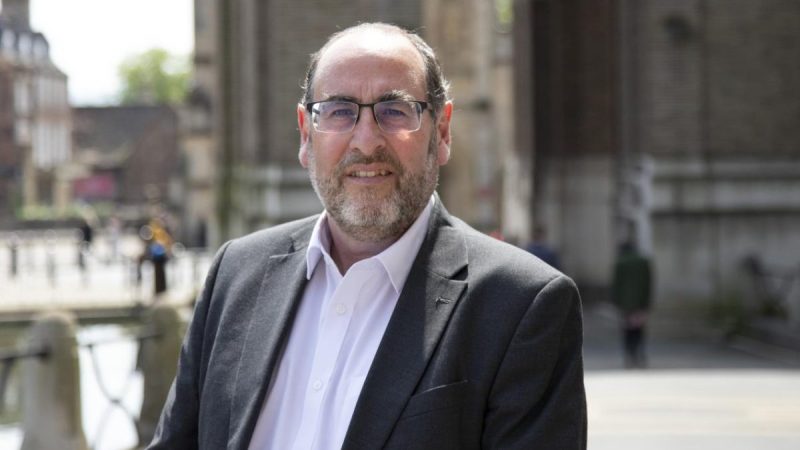
Tony Dyer promises there will be clearer communication with the public for the South Bristol Liveable Neighbourhood – photo: Bristol Green Party
Green councillor for Southville Tony Dyer, who is also leader of the council, added: “Anything that introduces a change is always bound to also introduce an element of concern, particularly in areas like Southville and Totterdown where people largely love the area they live in, while recognising it can be better.
“Sometimes you have to get that balance right between people not wanting things to change but also people who recognise that things need to be a bit different in order to improve the area.
“It’s much more about restricting traffic flows, it’s also about improving the environment for the people who live in the area.
“It’s about allowing people to feel safe crossing the street and not worrying about somebody trying to find a shortcut from North Street over to Coronation Road.
“The key thing we’ve learned is the importance of communication. The level of engagement in south Bristol has been very positive, but at the same time people are always concerned about change.”
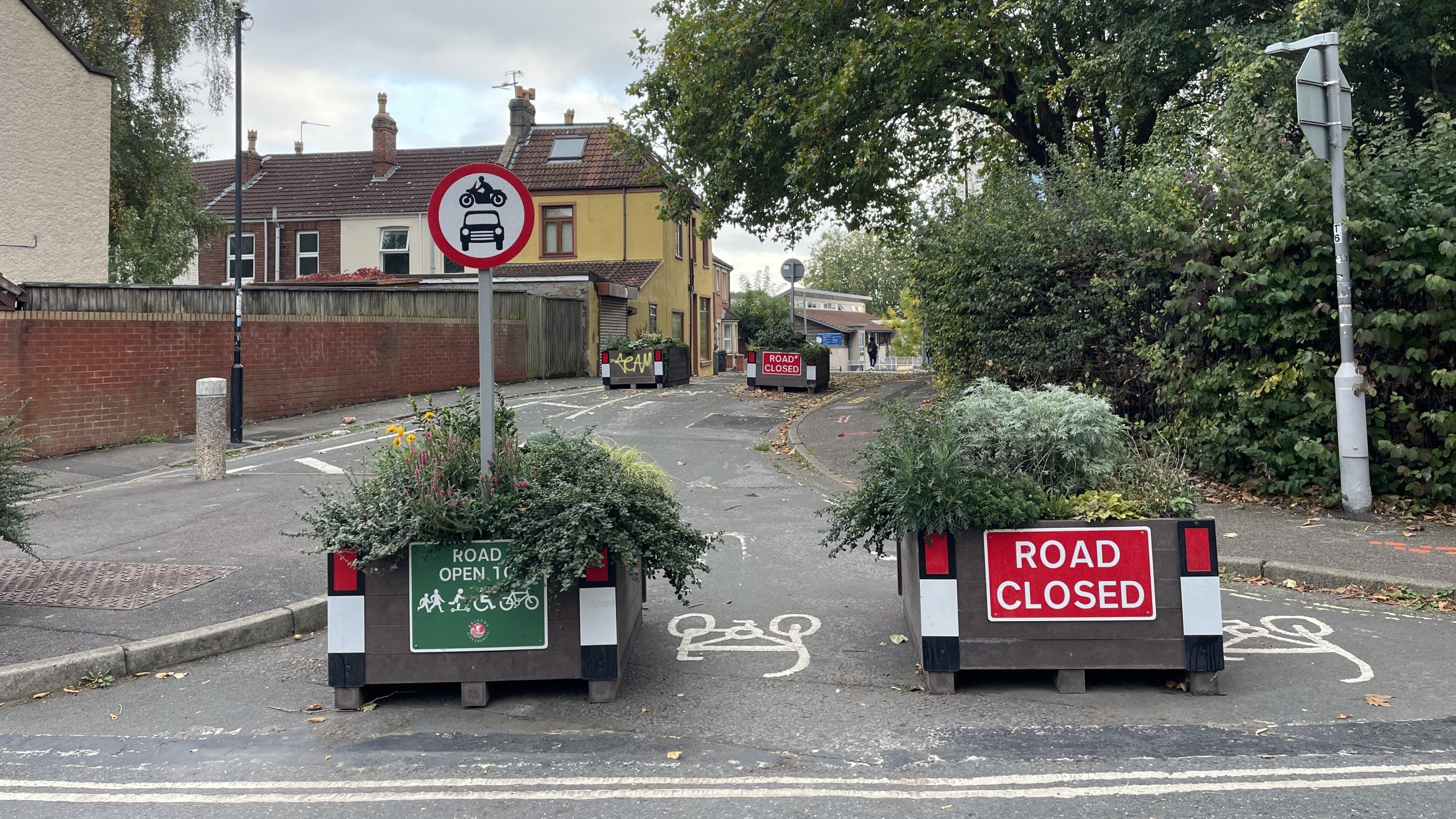
A modal filter, often in the form of planters, is a measure used to restrict through-traffic in residential areas – photo: Betty Woolerton
The council doesn’t need to install modal filters in order to get the funding from the government.
But these do show a high return on investment, and in the east Bristol scheme, the business case showed a benefit of £11 for every £1 spent, largely due to the bollards, bus gates and planters.
Depending on the results of the consultation, modal filters in the south Bristol scheme could keep the roads physically open but install cameras to stop cars going through with the threat of a fine. These would allow some drivers to be exempt, such as disabled people, taxis and carers.
Work for the east Bristol scheme began before the Greens took over the council, under the former Labour administration.
But in south Bristol, the majority of the work has taken place since the Greens have been in charge, allowing them to plan the second scheme differently. This time round, there will be more “quick wins” installed first, like new trees and cycle hangars.
Plowden said: “One of the things we definitely learned from east Bristol is all the nice things like trees and cycle hangars only came with the permanent scheme if it gets installed after the trial.
“We’ve actually reversed that, and we’ll be putting in some of the nicer things and quick wins before having to do the whole caboodle.
“One of the most heartbreaking things for me in east Bristol was telling people all these things are only on the way if the trial is successful.
“Actually, we could have been putting them in as part of the trial. We’ve also been using more accessible language, because some people said they didn’t really understand what was being said before.
“We’ve already shown we’re listening. I’ve been to a couple of the drop-ins and I’ve been listening to people.
“We’re already in the process of amending some of our designs and we’re going to do that in a very transparent way.”
Dyer added there “hopefully” won’t be a repeat of the way some of the bus gates were installed in Barton Hill, with police officers flanking contractors at 3am to prevent protesters from blocking the final installation of the East Bristol Liveable Neighbourhood changes.
He said: “We have to recognise that when we have democratically made decisions to implement, we cannot simply just allow those processes to be stopped by undemocratic means.
“But I don’t get the impression that that’s going to happen in the South Bristol Liveable Neighbourhood.”
The public consultation runs until October 30 and a survey can be filled out on the council’s website.
After that, transport planners will assess the feedback and amend their designs. Any changes are likely to be rolled out late next year or early 2027.
Alex Seabrook is a local democracy reporter for Bristol
Main photo: Betty Woolerton
Read next:
 Our newsletters emailed directly to you