Film / Reviews
Review: Land of Mine
Land of Mine (15)
Denmark/Germany 2015 99 mins Subtitles Dir: Martin Zandvliet Cast: Roland Møller, Louis Hofmann, Joel Basman, Mikkel Boe Følsgaard, Zoe Zandvliet
Ever wanted to see a WWII flick in which the few Brits in uniform are utter bastards who beat up and piss all over a bunch of terrified teenage PoWs? Based on a little-known, shameful post-war episode, Danish director Martin Zandvliet’s superbly photographed, Oscar nominated Land of Mine suffers from obvious and occasionally clumsy plotting, but also boasts Hurt Locker-esque moments of tension as it challenges conventional binary notions of wartime good and evil.
is needed now More than ever
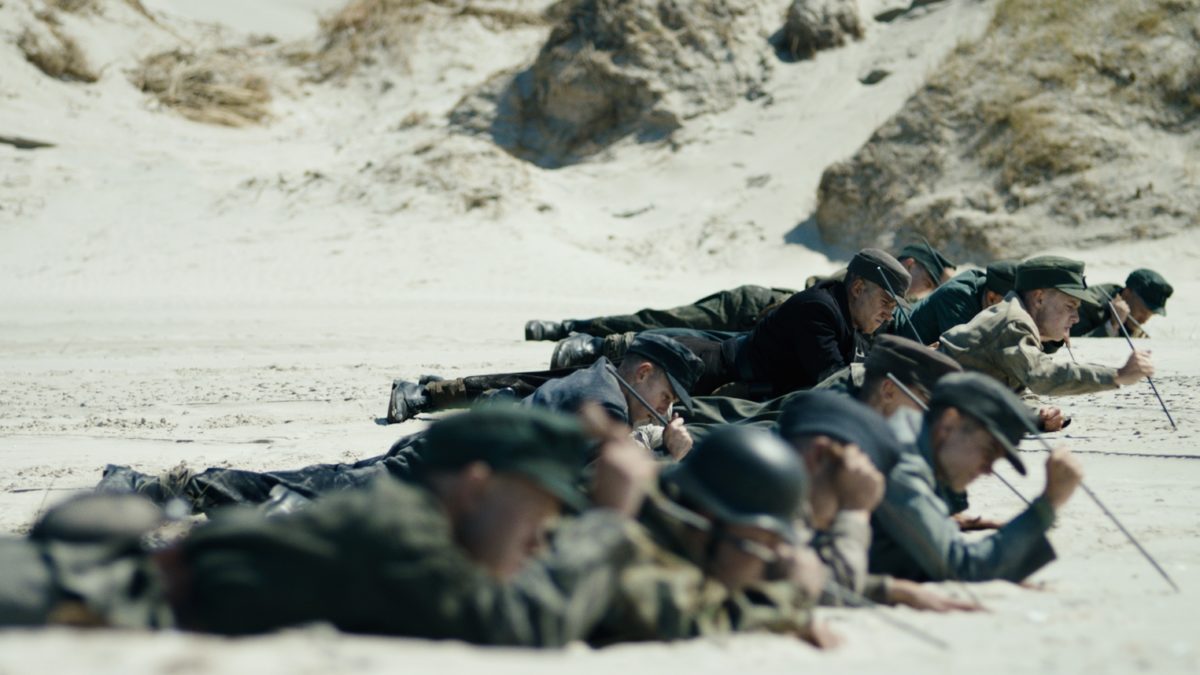
It’s May 1945, the war is over and Denmark’s hated Nazi occupiers are being sent packing. But not all of them. The Germans buried some 2.2 million landmines all along the country’s scenic west coast – more than anywhere else in Europe – perhaps because they suspected this would be the site of an Allied invasion. It seems only fair that they should be made to clear up their own mess, rather than leaving this to the Danes. Nobody likes them anyway, especially furious Sergeant Rasmussen (Møller), whom we meet randomly punching German soldiers to the ground as they march home. Rasmussen is then put in charge of a dozen PoWs and an exposition-heavy briefing lays bare the horrible reality of what they are expected to do. After a cursory defusing induction, which inevitably claims the first life, they’re dispatched to crawl along the beach poking sticks into the sand to locate landmines. When 45,000 of these have been cleared, they’ll be permitted to go home.
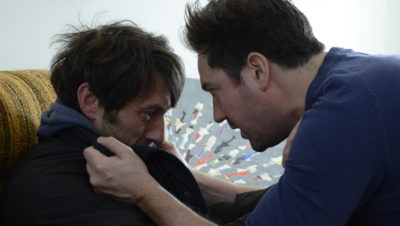
Pitiless Rasmussen makes it abundantly clear that he doesn’t care whether his charges live or die. He locks them in a hut overnight, feeds them on bugger-all, and has no truck with claims of illness. As they’re blown to smithereens in the course of their enforced duties, he undergoes a rather predictable softening of attitude, which is convincingly handled by Roland Møller (whom you may remember from A Hijacking). The PoWs are a fairly undifferentiated bunch, though the presence of a pair of inseparable adolescent twins, one of whom is painfully fragile and traumatised, points to an inevitable plot development. In his casting, Zandvliet underlines the fact that most of these ‘soldiers’ are little more than children, who cry out for their mothers when their limbs are blown off. The violence is also carefully calibrated to circumnavigate the spectre of war porn while being sufficiently explicit so as not to sanitise the reality of what is effectively a war crime.
When it comes to palm-moistening suspense, you really can’t go wrong with a minefield flick. Zandvliet proves particularly adept at catching us unawares, making for a genuinely edge-of-seat experience throughout. Shame, then, that he feels the need to engineer some unnecessary melodrama, introducing a child and a pet to be placed in peril. It doesn’t help that nobody seems to heeded the first law of being a character in a war movie: if you hope to make it to the end credits, it’s rather unwise to sit around discussing what you intend to do when you get home.
 Our newsletters emailed directly to you