Features / Trees
War against the green giants
The charge could not be more stark: “I can’t think of a single instance where we have reported illegal tree removal that has resulted in any sanction or required (the perpetrator) to replace it,” Mark Ashdown of Bristol Tree Forum (BTF) asserts.
“We are not aware of any examples where anything substantive, like a fine, was done in the last 15 years,” affirms Vassili Papastavrou, vice chair of the voluntary organisation that works on policy to protect urban trees. “Other local authorities do manage to fine for illegal removals of trees.”
The council disagree: “When harm has taken place, our officers work closely with landowners to secure replacement planting and ensure more trees are planted than were lost or damaged,” Andrew Brown, chair of the economy & skills committee, responded in a statement.
is needed now More than ever
“In situations where breaches of tree protection law or illegal felling occur, we take the matter very seriously and will always pursue appropriate enforcement action.
“We firmly reject claims that there has not been any enforcement action against illegal tree-felling. A local business owner was recently fined for carrying out work to a protected tree following a prosecution brought by our planning service.”
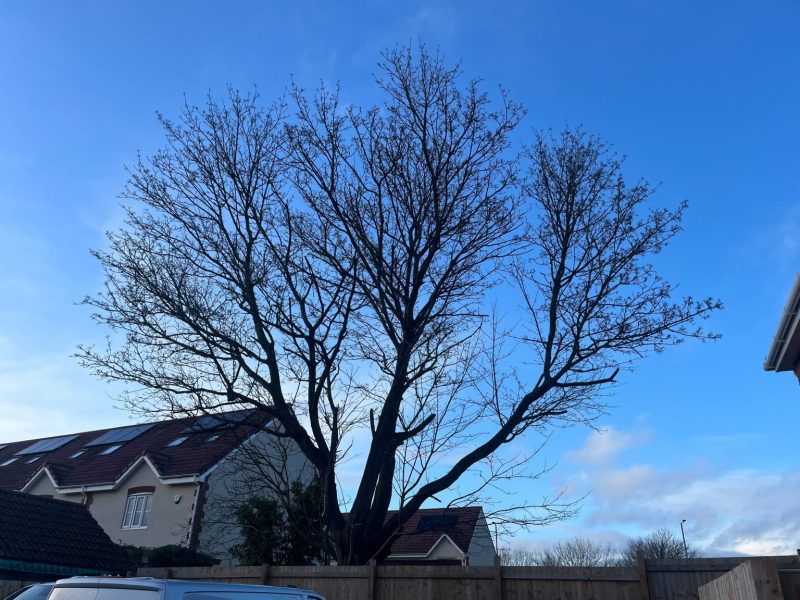
In what campaigners say was a “first for Bristol”, a business owner was fined in January this year for wilfully damaging a protected tree, a Norway Maple in Bedminster – photo: Jenna Baker
The prosecution was announced in January, shortly after comment on its track record in the area was requested from the council, and was subsequently described as “rare as hen’s teeth” and “a first for Bristol” by campaigners.
Ashdown appears worn down by the process: “Even the most egregious breaches – the council says they’re investigating and then does nothing. We’re not seeing any change with the Green council.
“We bring our complaints to local councillors or committees, they wring their hands and do nothing. The excuse they give is lack of resource.”
Yet the council’s support for urban trees is vocal, as confusing as its differentially defined targets are. The Bristol Tree & Woodland Strategy (2024) aims for 20 per cent tree canopy cover by 2040, a two per cent increase as of 2023 equating to 224 hectares – 314 football pitches – of additional canopy, or 16ha per year. Last year, they say, they planted 6.4ha and the year before, 8.2ha.
It’s an ambitious target, said Brown, while emphasising the council’s commitment to it and citing the One Tree Per Child initiative and a target to increase canopy in ‘parks and green spaces’ by five hectares annually.
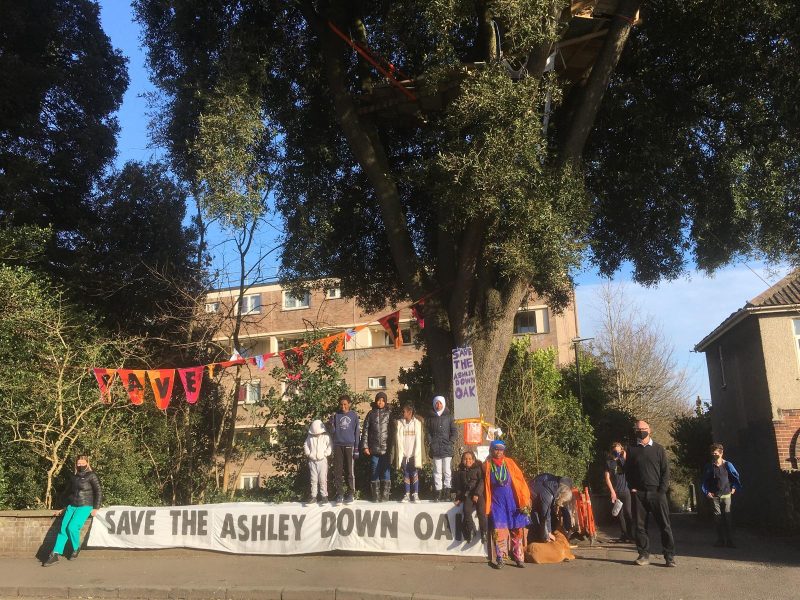
In 2021, community members won a concerted campaign to save a 100-year old oak tree on Ashley Down Road from felling by the council – photo: Gaby Solly
Bristol’s One City Plan (2019) goal, meanwhile, is to double tree canopy by 2046 which, according to Ashdown, “means planting some 25,000 trees (55ha) every year over the next quarter century”.
He continues, in 2021’s ‘In Defence of Bristol’s Trees’: “we will need to stop felling existing trees, failing to replace those that have to be felled trees AND see at least a five-fold increase in our current tree-planting rate!”
Totting up likely estimates of trees felled by the council, private owners and developers, he estimates that approximately 4,000 trees are lost each year, concluding “If we fail to protect the trees we have, we will never achieve our ambition to double tree canopy cover by 2046.”
BTF are not the only ones making noise about the issue. Avon Needs Trees (ANT), a charity responsible for huge swathes of planting on Bristol’s outskirts, say the ambition is admirable: “Some good progress is being made. But planting along won’t get us there – we must also protect the trees we already have,” says ANT’s Alex Turner.
“Every tree lost to illegal felling sets us back on the path to a greener, healthier city. It also removes a much-loved local landmark. Mature trees are woven into community memory, known across generations, and their loss is deeply felt.
“As a woodland creation charity, we urge the council to do everything possible to safeguard the trees in its care. When a mature tree is lost, it leaves a hole that young saplings cannot fill for decades.”
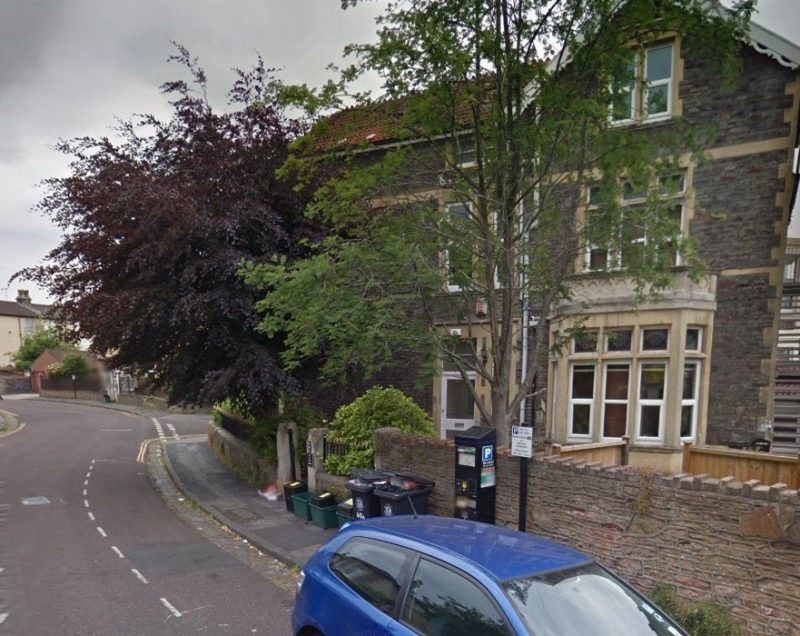
The removal of an ‘iconic’ beech tree was, Ashdown says, an “utterly obvious” illegal tree felling that came to nothing – photo: BTF
While the council offer only one instance of prosecution in recent memory, BTF have countless top of mind examples of unenforced breaches of tree law.
Papastavrou cites the unsanctioned removal without permission of an “iconic” beech tree on Ravenswood Road in Redland, following which he became embroiled in the trappings of a bureaucratic machine that reveals the extent of the tireless work of tree campaigners: “I submitted a complaint about the lack of action by Planning Enforcement.
“The person I made the complaint about was given the task of responding to my complaint about him. Incredibly his response was that he could not find in favour of my complaint about delays as too much time had elapsed.
“This is an amazing Catch 22 – you complain about delays but the complaint is dismissed if there is a delay.”
Felling in a garden on Woodstock Road, also in Redland, “was a cut and dried case,” says Papastavrou, as the home owner applied for permission, which was rejected after a survey, and they proceeded anyway. “Again, no action was taken.” BTF valued the tree at £131,481.
There are plenty of prominent examples of tree removal in public space too. The five large plane trees removed from the centre last year were replaced with immature trees and a controversial pavement mural.
“If you’re waiting for a bus on a summer’s day – bad luck, you’ll have to find shade somewhere else,” says Ashdown. “It’s made people really angry.”
He is personally incensed by the removal of a dead tree, under a Tree Preservation Order (TPO), without permission at Quakers Friars which, rather than a replacement being ordered, resulted in the removal of a neighbouring tree to aesthetically “balance” the look of the square.
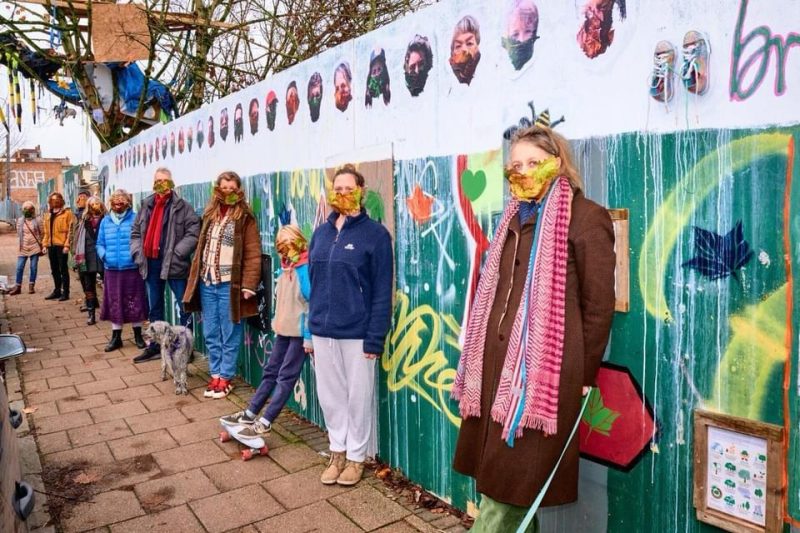
Residents campaigned – wearing leaf masks to represent the connection between trees and the air we breathe – to protect the trees known as the M32 maples that were on public land but were eventually felled for development – photo: Gaby Solly
Generally it is policy to replace trees that have been felled, particularly if they are in conservation areas or protected by TPOs.
But the felling of 84 trees at Baltic Wharf, for a housing development led by the council-owned Goram Homes, suggests this can be a challenge to implement.
The development was met with loud local opposition: protesters staged a tree funeral there in 2025, following a ceremonial wedding in which 70 women married the trees in 2021.
Permission was granted on the basis the trees felled would be replaced with 162 new ones but only 38 sites have been found and there is no date for the planting despite the council holding over £400,000 to pay for it.
“The current programme anticipates all planting being completed by… March 31 2028,” states Brown. But even so, Ashdown suggests it’s not like for like: “What are they going to put in its place? Some spindly little thing that’s probably 10-12 years old, six feet high and will take another 30-40 years to replace the lost biodiversity and carbon sequestered by the tree cut down.”
University of Bristol professor John Tarlton has issued a formal complaint, saying council officers misled the public and councillors when they said that appropriate sites for planting had been identified. Their map was later found to place those sites on places like swing bridges and the Brunel Way flyover.
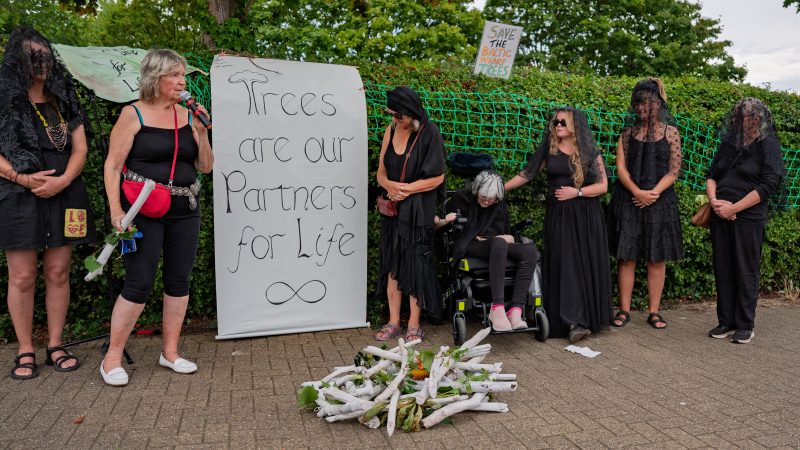
Campaigners have staged several actions over the years to protest the removal of 84 trees to make way for development at Baltic Wharf, including 70 women symbolically marrying the trees in 2021 and a tree funeral taking place in 2025 – photo: Rob Browne
The council’s tree officers are helpful, says Ashdown, noting they recently granted TPOs to two “magnificent” ancient oaks under threat from development on Brislington Meadows.
But there are only two in place: “They’re running round like blue arse flies. The council is under-resourced, they haven’t got enough money to do what they need to do, they haven’t got enough people to do it for them,” says Ashdown.
He suggests the solution lies with “a central government that believes it needs to do something urgent about biodiversity, nature and trees, and is prepared to resource local authorities so people can do their job properly.”
But, even so, “it’s always going to be weighted in favour of development. The first assumption is that ‘this planning application will succeed’…. It’s quite clear that the developers have got the ear of government.”
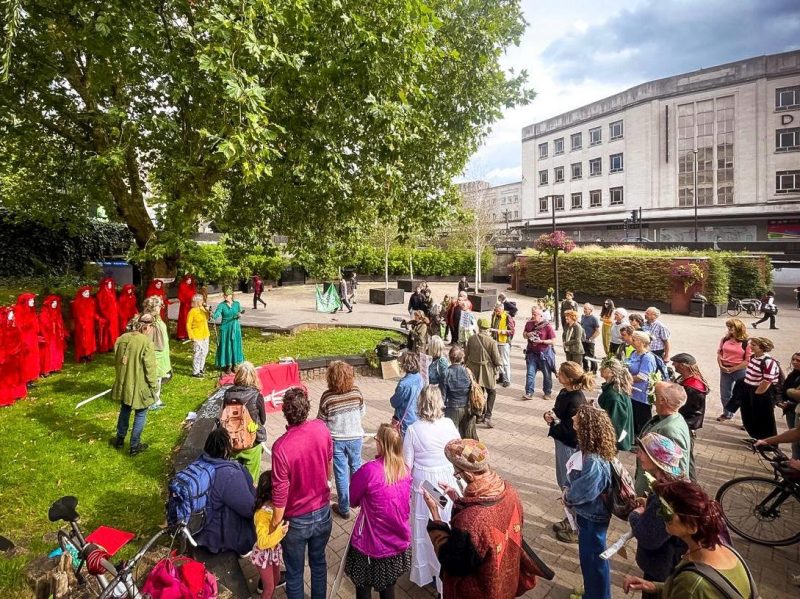
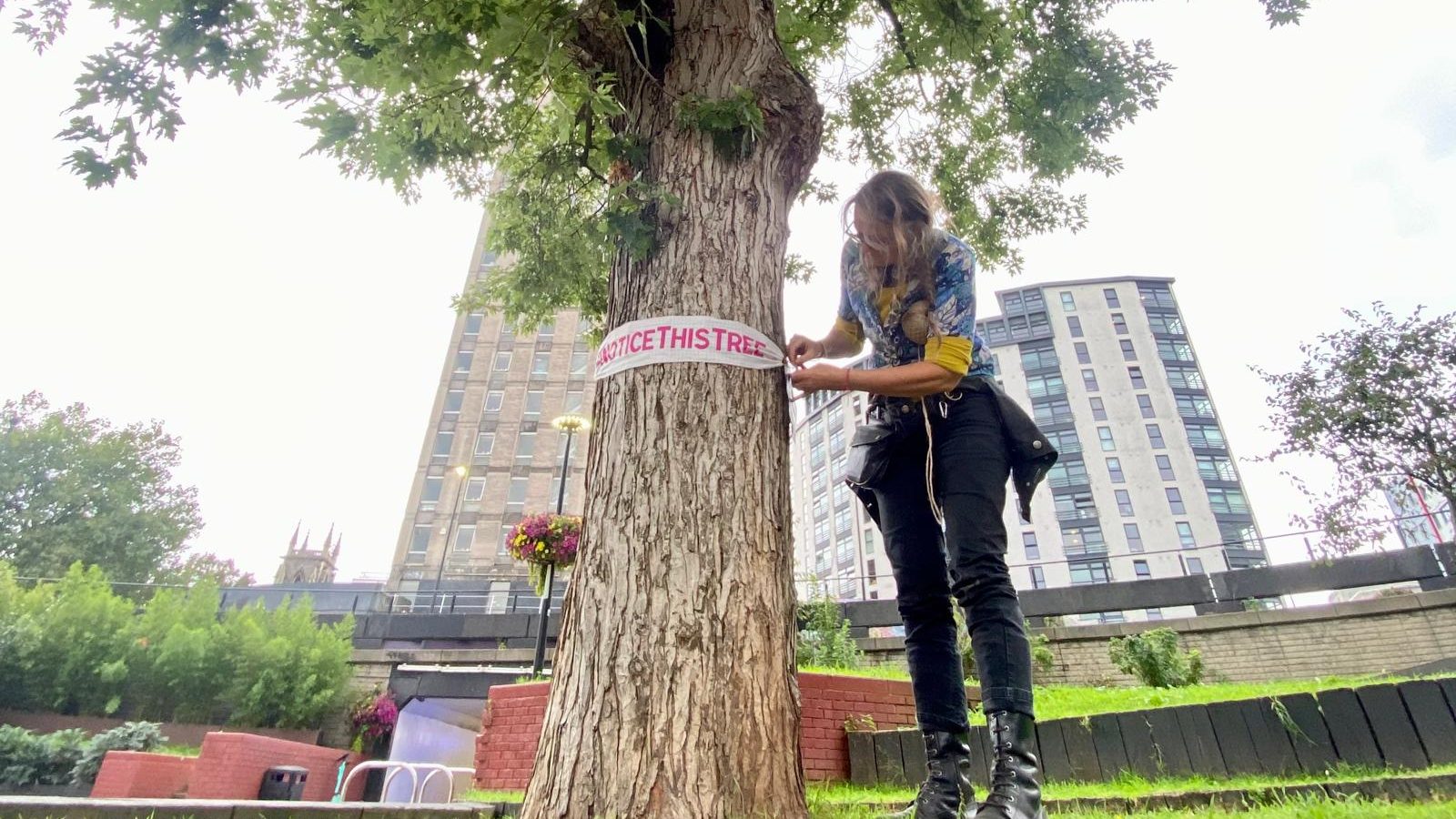
A tree ceremony led by artist Gaby Solly in the Bear Pit in 2024 asked people to ‘notice this tree’ as part of a UK-wide campaign addressing tree loss – photo Gaby Solly
The benefits of trees to cities are well broadcast, evidenced and understood, though their scale often goes overlooked. A mature oak sequesters c.18 tonnes of carbon dioxide, or 16 return transatlantic flights, in its lifetime. Individual tree habitat is vital for biodiversity on development sites.
Street trees improve quality of life, from preventing flooding to cleaning the air, reducing traffic noise, providing shade during our increasingly intense heatwaves and improving the mental and physical health, including reduced blood pressure, of passersby.
While enforcing the law appears challenging, there is at least movement on the ground. The council has planted 53,000 trees and hedgerows since 2019, with another 6,000 this winter alone.
One Tree Per Child contributes 5,000 ever year, nearly 100 were sponsored by residents last year via Trees for Streets and 1,200 saplings were given away under the Replant Bristol initiative.
Is it enough? Real progress is hard to assess. But what’s clear is that more visible action on illegal tree felling is needed to convince those volunteering to protect trees that their time is not being wasted.
The people standing up for Bristol’s trees
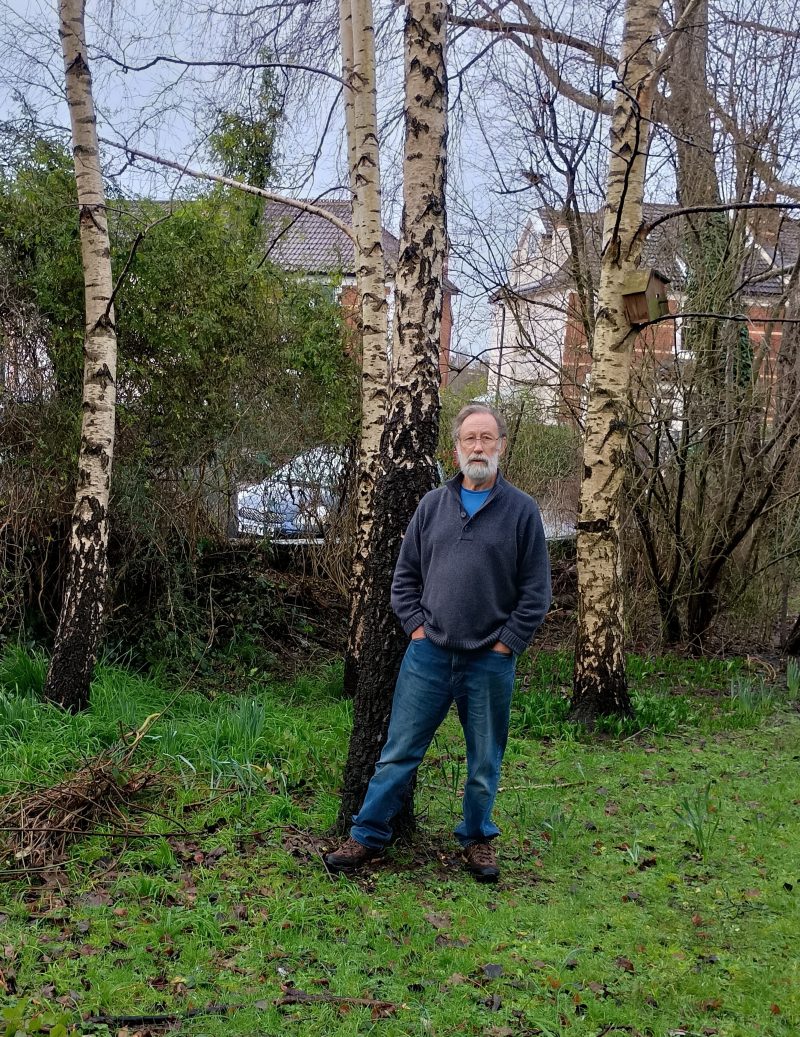
Chris Wallace oversees the network of tree champions spread across the city – photo: Chris Wallace
There are 25 Tree Champions spread across our city. Chris Wallace, chair of Bristol Tree Forum, explains: “BTF is developing a network of volunteers who care about the urban forest of Bristol.
“Tree Champions are familiar with the trees in their area, report problems and seek ways of getting new trees planted. We also make every effort to retain the current tree canopy, so many are engaged in planning applications and in promoting the value of trees to the community.”
Stephanie French, Stoke Bishop
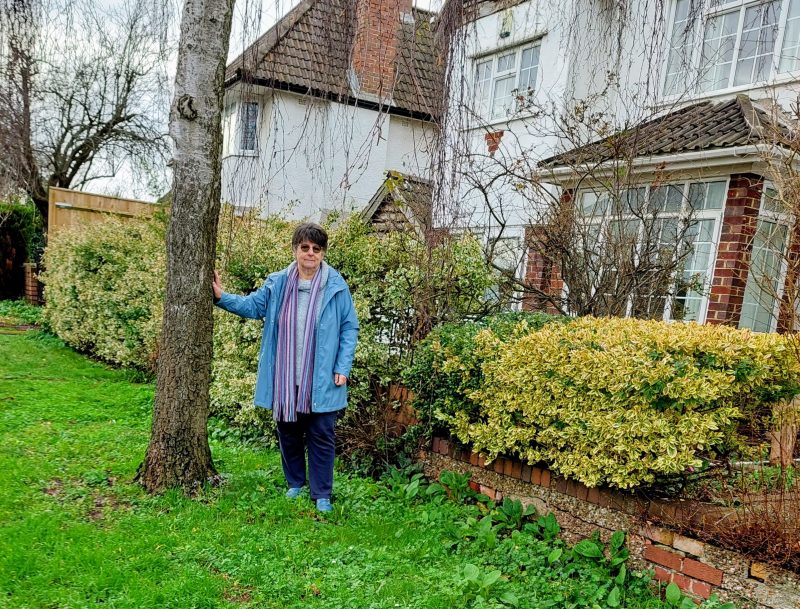
“My purpose is to keep as many trees in Stoke Bishop as alive and well as possible. I have been doing this for 16 years. I check planning applications, report ailing or damaged trees to council officers, and help when residents want to sponsor a tree.
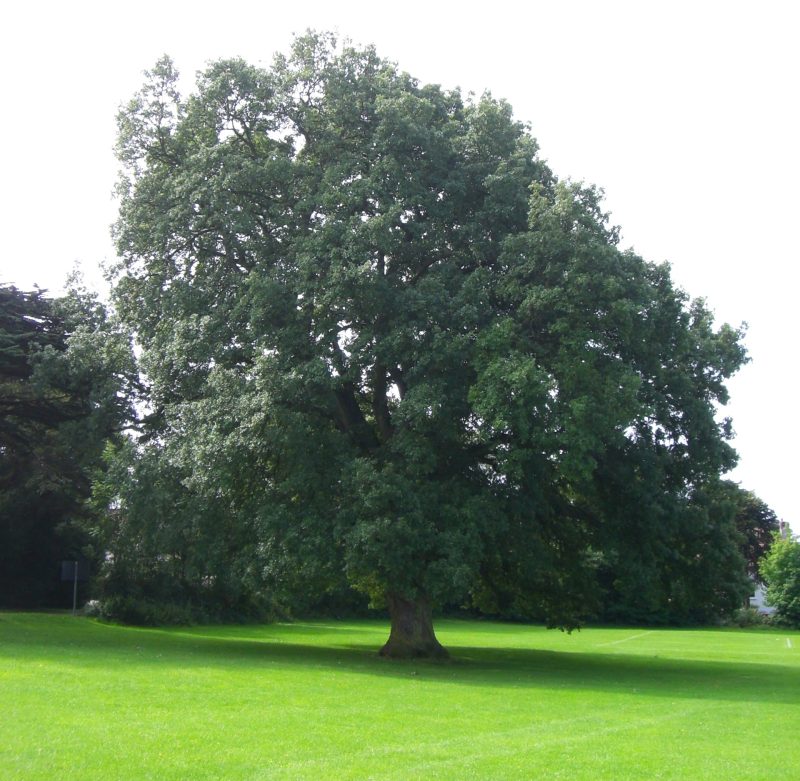
The Lucombe Oak is a favourite of Stephanie’s. A natural hybrid of Turkey and Cork oak, it is probably about 190 years old – photo: Stephanie French
“I should really like to make headway with new plantings, to create a tree “gain” for amenity and the environment, but that is rather a lost cause. It is enough of a struggle to get trees lost to disease, age or fellings during development replaced.”
Sean Harding, Whitchurch
Sean’s favourite local tree is a large veteran oak – photo: Sean Harding
“As a Tree Champion I tend to focus on checking newly planted trees over their first few years to ensure they are receiving sufficient aftercare. I also specialise in veteran and ancient trees. My favourite tree is a large veteran urban oak in Whitchurch.”
Gaby Solly
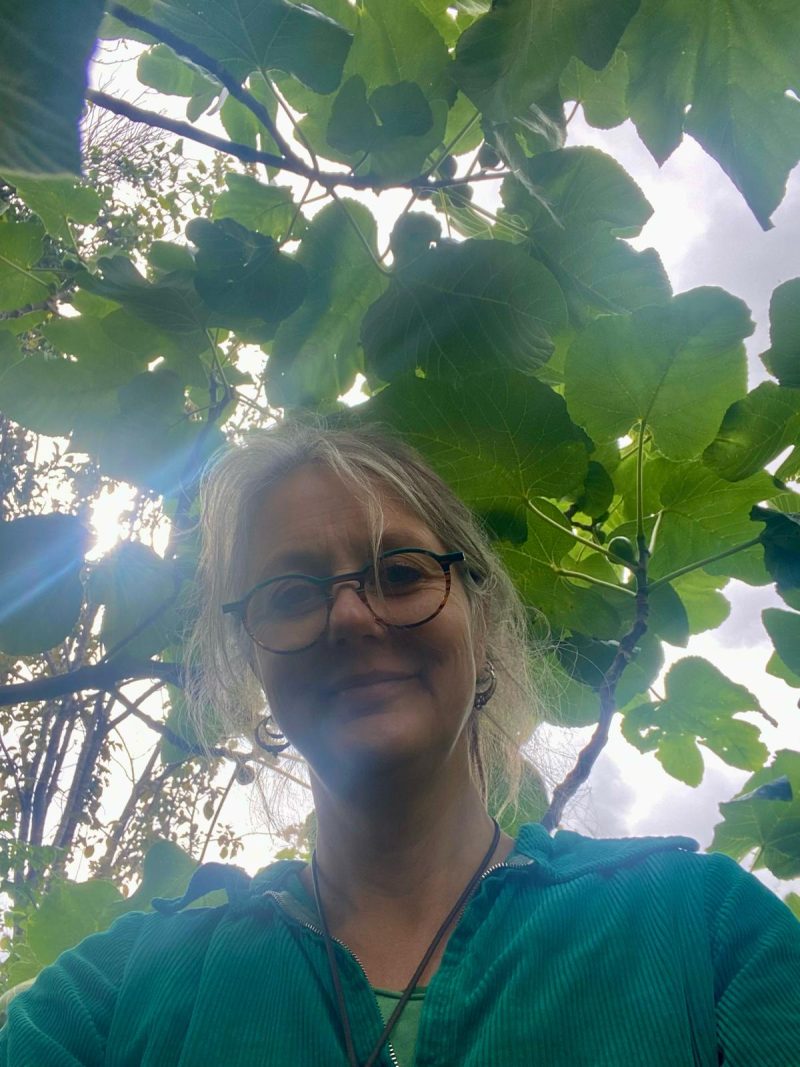
Gaby has felt a connection with trees since childhood – photo: Gaby Solly
“As a child I made fairy houses in the gnarled roots of huge beech trees, looked down on the world from lofty oaks, and learned how to tenderly plant small saplings.
“All grown up, I remain in daily awe of these great, green fellow beings – the life they sustain, the lessons they teach and the way they nourish all our human senses so generously.
“I work with Bristol Tree Forum and local communities, often in collaboration with other artists, to draw attention to the importance of our precious city trees – particularly those threatened with felling, such as the Ashley Down Oak and the late M32 Maples.
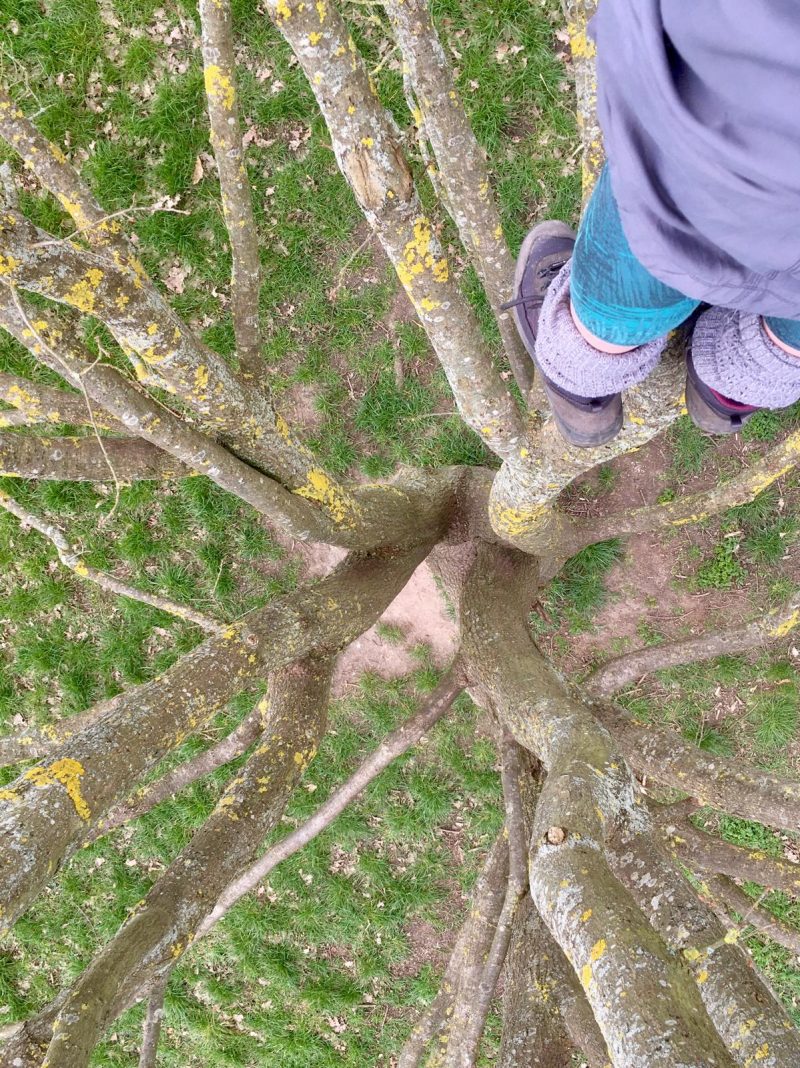
Gaby can still be found climbing trees – photo: Gaby Solly
“I’ve created leaf-masks to highlight our interdependence with trees through our breath, and leaf-hoods to explore our disconnection from nature as city dwellers.
“I’m excited to be working with artists Ackroyd & Harvey on a project called Beuys’ Acorns’– to plant a ceremonial circle of seven oaks in Bristol, as part of a nationwide network. I met the artists through Culture Declares Emergency, a creative movement which I have found to be an incredibly supportive and inspiring community to lean into during these precarious times.
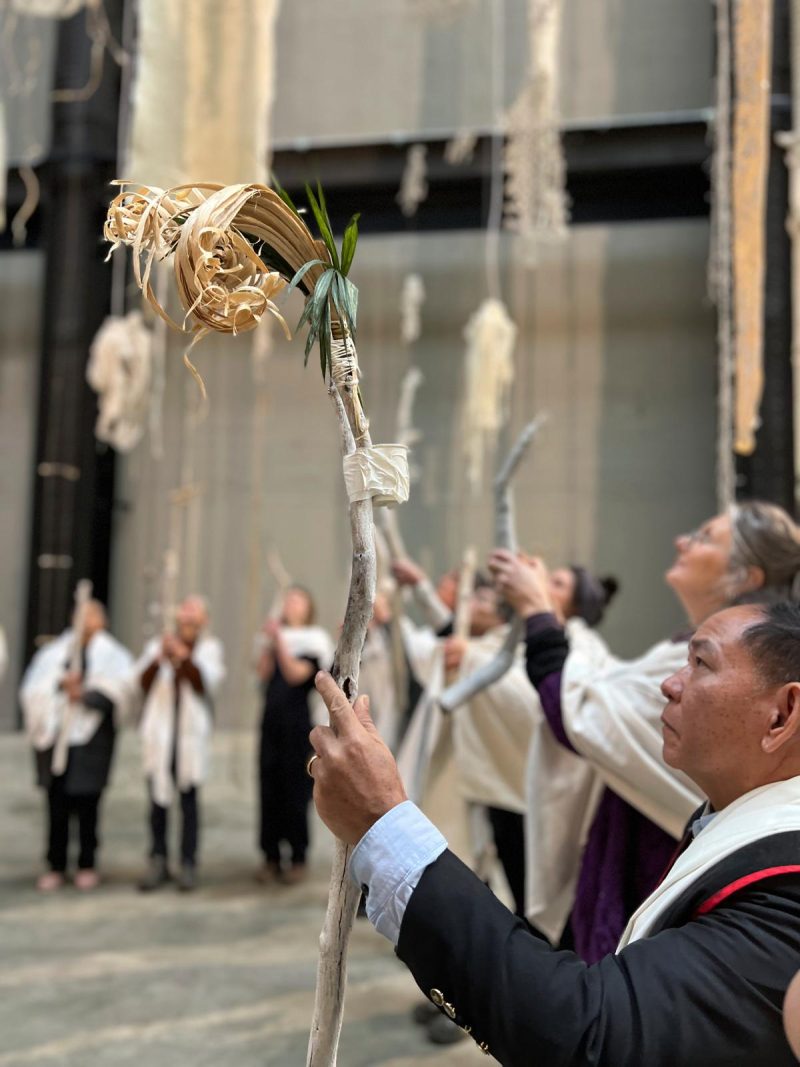
Solly’s ‘bone branches’ have travelled from Bristol to Tintern Abbey, on to the Tate Modern, up to Manchester Museum and back to Bristol’s Baltic Wharf to represent the deep concern and grief felt about the plunder of the natural world – photo: Gaby Solly
“It is clear to me that our human relationship with the natural world is in dangerous disharmony. So I am doing what I can – in my small way – to help shift the balance towards (in the words of visionary thinker, Rob Hopkins) a future we can fall love with.”
Paul Sander-Jackson, Fishponds
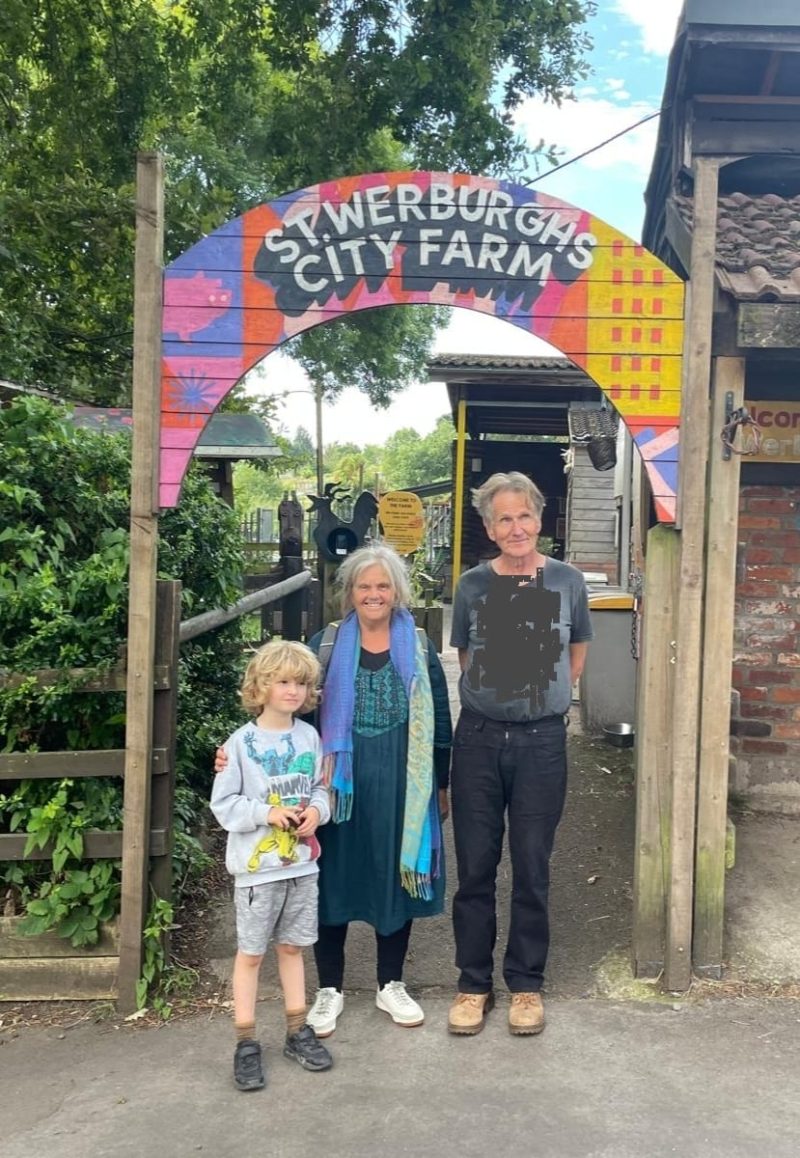
Paul with his wife, grandson and an oak tree planted in 1982. The couple helped set up the St Werburgh’s City Farm in 1980-1 – credit Paul Sander-Jackson
“I am Tree Champion for the Frome Vale ward. I work mainly with the Friends of Oldbury Court and Vassalls Park to survey the trees and develop tree trails and a wider appreciation of the trees on our doorstep.
“My favourite tree is an ancient chestnut, probably 350 years old, with a girth of six metres. It is a quite beautiful tree which is part of history.”
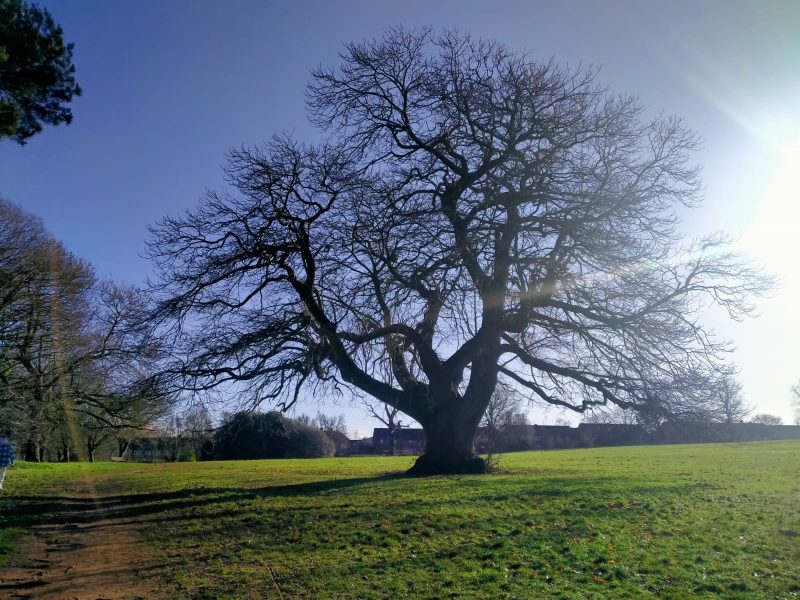
The veteran chestnut tree – photo: Paul Sanders-Jackson
Main photo: Gaby Solly
Read next:
- Festival-founding farmer named among Europe’s top 50
- Is it time to radically reimagine rivers?
- ‘Nature recovery and economic activity are compatible’
 Our newsletters emailed directly to you