News / Transport
Trying to explain why some people don’t want change
Bristol has been dubbed as the “front line” of a fight for safer streets.
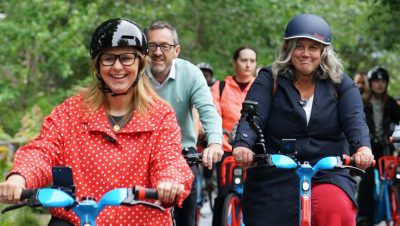
Global Cycling Network (GCN), who have more than 3.5m followers on their YouTube channel, are based in Bath but have made the short journey to Bristol for their latest video.
The YouTube thumbnail for the video, ‘This is the real reason we can’t have the cities we dream of’, has the words: ‘War of the road blocks’.
is needed now More than ever
“All credit to those people that are making decisions at the moment and I firmly believe are trying their best,” said GCN presenter Simon Richardson, who lives in Bristol,
“As full credit should also be given to those people who are standing up for what they believe in.”
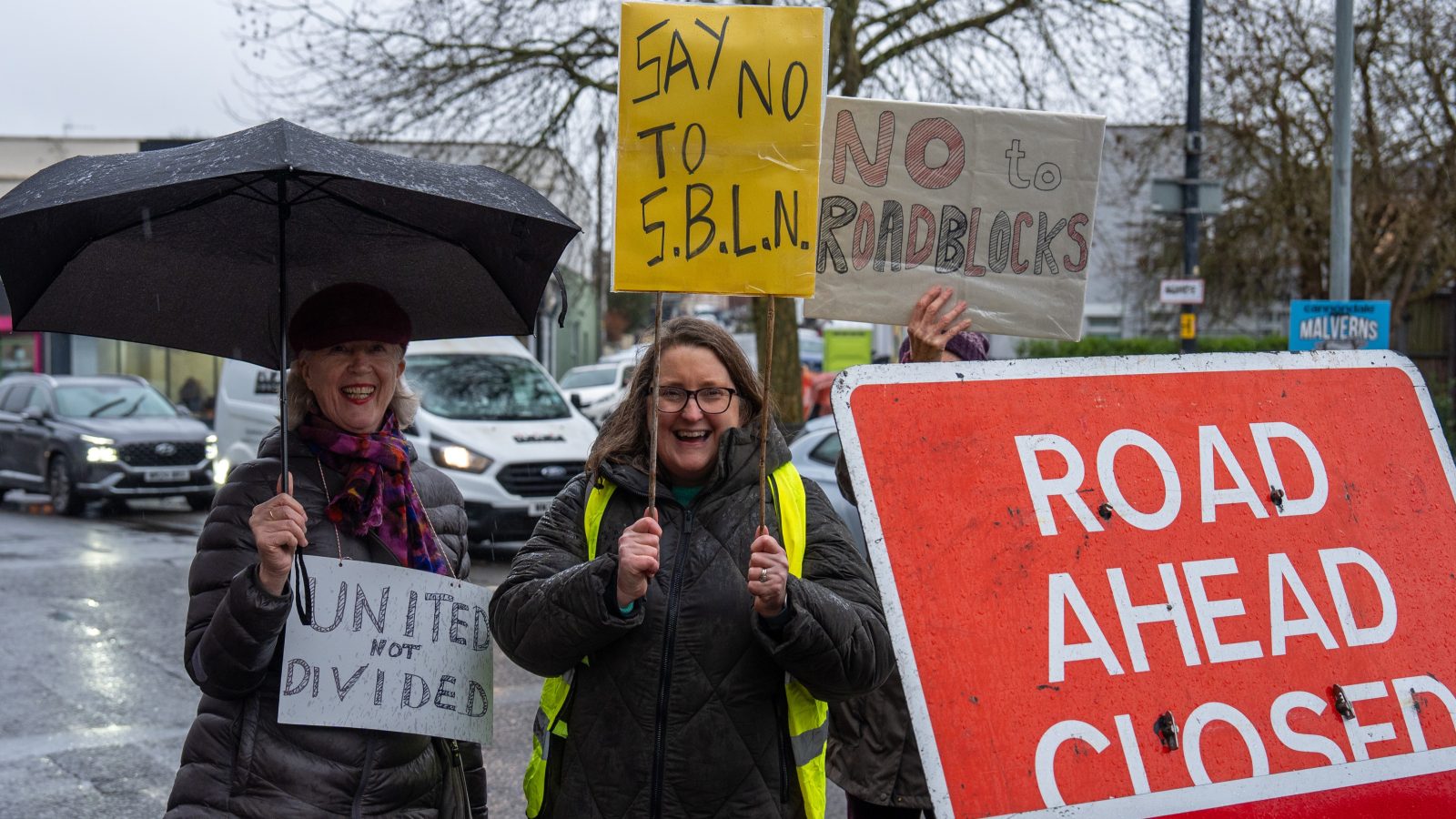
Richardson spoke to several people who took part in the recent march from North Street to City Hall to show their anger at the proposed South Bristol Liveable Neighbourhood scheme.
“They felt that change was being forced upon them and they weren’t being listened to,” Richardson said.
But he said there is a “conundrum” because there have been consultations regarding both the East Bristol Liveable Neighbourhood and South Bristol Liveable Neighbourhood, adding: “It makes me think that it’s less about people not being listened to but perhaps having a mistrust of the democratic process.”
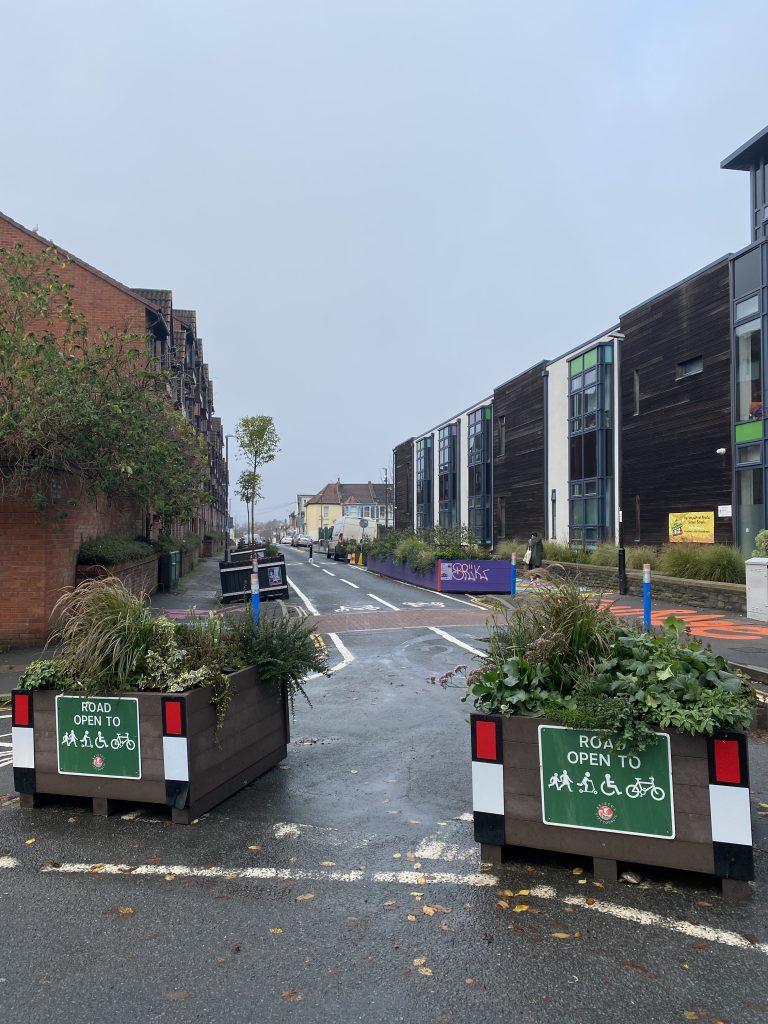
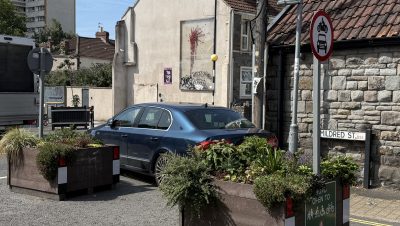
Planters are at the centre of the liveable neighbourhood debate – photo: Betty Woolerton
The demolition of huge swathes of Totterdown for a road that never came was highlighted as an example of how cities have for decades been planned around cars.
Richardson said that today’s liveable neighbourhoods proposals are “trivial” compared to those that saw hundreds of houses knocked down around the Three Lamps Junction in the 1970s.
But looking at the bile spouted towards our elected politicians sometimes, you might think they were advocating for something more seismic than the installation of a few planters.
Speaking in the GCN video, chair of Bristol City Council’s transport committee, Ed Plowden, said “it can be very very hard” for people like him trying to make our city a safer and healthier place.
Plowden added: “It’s quite frightening at times. The anger and almost despair that some people feel that their lives are going to be affected.
“It really does make you question whether you’re doing the right thing…
“I think mainstream media and social media loves to amplify conflict and controversy doesn’t it? So I think what we see in the media is not a good representation of the actual debate that’s happening.
“And there’s definitely a lot more support there. I wouldn’t call it a majority but (there is) a silent level of support there that sits alongside that very vocal anti approach.”
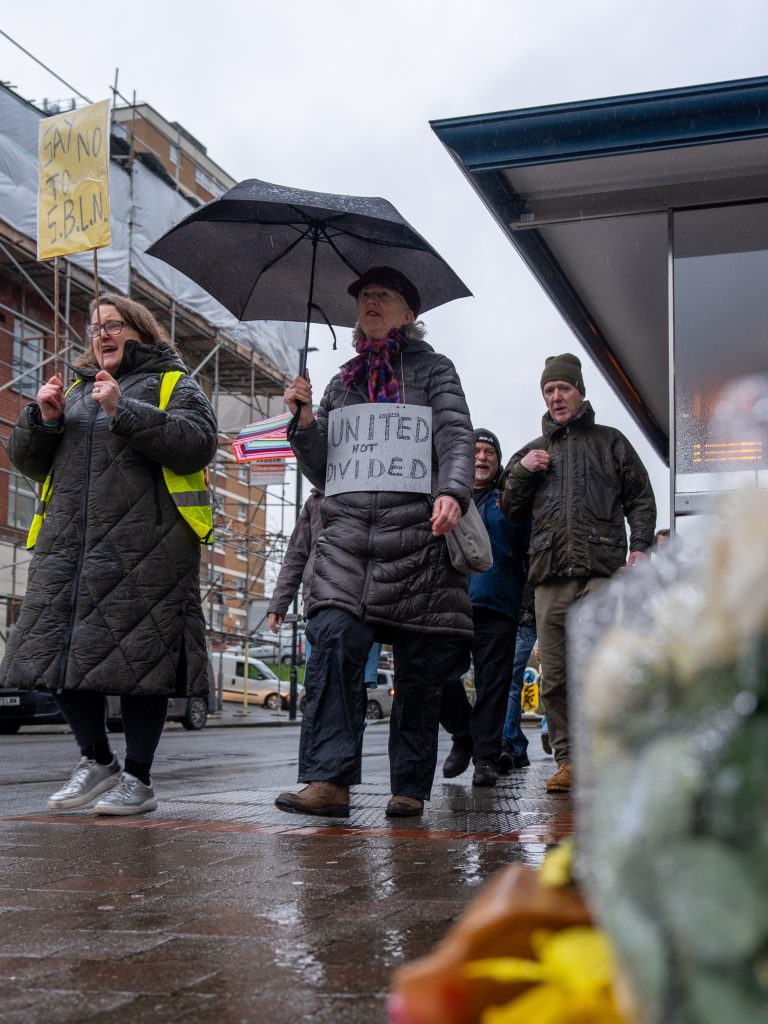
Anti-South Bristol Liveable Neighbourhood campaigners walk by flowers on North Street at the spot where cyclist Alan Hydes was killed in a hit and run in January – photo: Rob Browne
Plowden touches on the so-called “status quo bias” as explained by Maarten Kroesen, an associate professor at Delft University of Technology in the Netherlands.
This is the concept that people are strongly favourable for keeping the status quo; in the words of Kroesen it is “an irrational tendency to stick to what is already there and people prefer what is there in the first place”.
Another academic, Alexander Premm, has looked at towns and cities across Europe that have implemented car-reducing policies, saying that public resistance before the policies are introduced and around the time of their introduction soon fade, with new measures tending to become popular around a year after the implementation.
This is the so-called “hill of hysteria” on which areas of east and south Bristol are currently located.
Premm said: “Resistance is a very natural part of any policy that is introducing change.
“It always peaked around the time of implementation but in all instances the resistance that looked so big from the beginning always faded… once people were able to make their first-hand experiences.”
Main photo: Rob Browne
Read next:
 Our newsletters emailed directly to you