News / Health
Company launches pioneering technology to help gauge breast cancer risk
A technology company has launched a pioneering device that helps establish people’s risk of breast cancer.
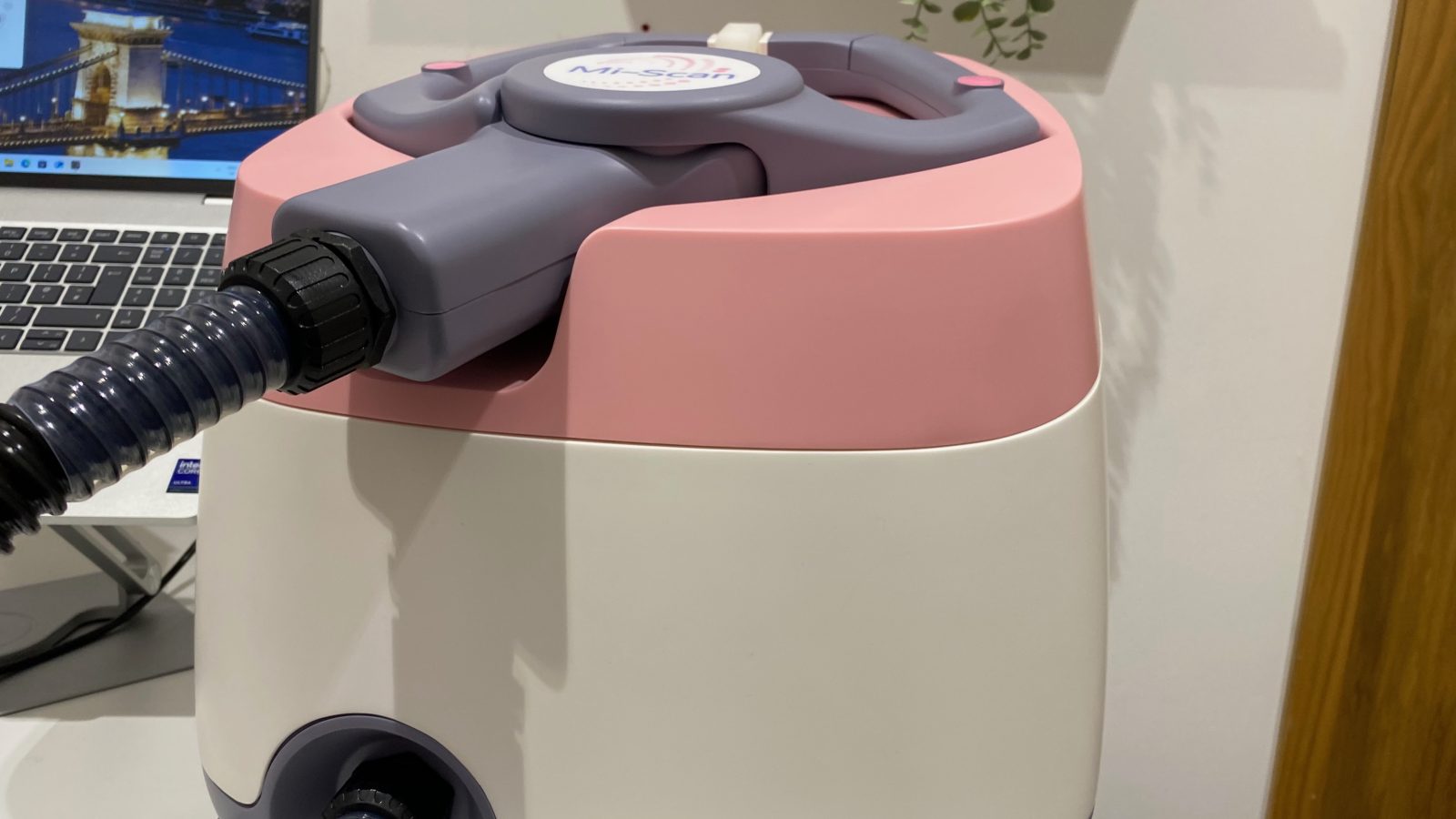
Mi~Scan is a tool about the size of a microwave that is used to quickly and painlessly establish breast density.
This is important because the more dense a person’s breasts, the more likely they are to develop breast cancer. In fact, women with the densest category of breasts are four to six times more likely to get breast cancer.
is needed now More than ever
Micrima, the Bristol-based company that developed the device, combines the density measurement with a questionnaire about patients’ family medical history to ascertain their likelihoods of developing the cancer.
“It’s all about understanding individual risk in individual women, making sure they get access to the right diagnostic devices,” said CEO Adrian Waller.
Knowing they have dense breasts could mean women ask to be scanned by an MRI or ultrasound in addition to the usual mammogram when being diagnosed.
That is because dense tissue makes it harder for doctors to see cancers on a mammogram, resulting in a less than a 50 per cent chance of them detecting breast cancer that way for women with the densest category of breasts.

The original technology was a lot more burdensome, requiring 1,770 measurements whereas Mi~Scan needs only six
The scan also gives people a way of spotting changes in their breasts which could indicate cancer.
“It’s really about knowing your normal, (having) a measurement to know what is changing in your breasts and taking that to your GP,” said Waller.
“Even if you can’t afford to get a scan you should absolutely know this is not (just) an old woman’s disease.
“Make sure that you self-check and you do it every month, ideally on the same day of your cycle since your breasts will change throughout your cycle.
“A check in the mirror once a month could be the difference between life and death.”
Survival rates for people with breast cancer drop significantly the longer it takes for them to get diagnosed. Almost 100% of women survive five years or longer when diagnosed at stage one compared to 30% who are diagnosed at stage four.
“There are 50m women alive on the planet today who are going to die because of late-diagnosed breast cancer,” Waller said.
Becca Pugh decided to sign up for a scan because of her family history.
“Both my grandmothers died before I was born from breast cancer so it has always been something I was aware of that this was something I could be diagnosed with,” she said.
At 25, Pugh is not eligible for the three-yearly mammogram scans that are available to women aged 50 and up, but she still wanted “peace of mind” about her chances of developing breast cancer.
“It’s something that I’ve always been aware of but I didn’t have that much I could do about it,” she said. “It’s cool we now have this tech in Bristol.”
“I love the NHS. I don’t think it’s their fault because they’re massively underfunded, but I think it’s a shame to have to wait so long and when there could be early warning signs.
Mi~Scan works by passing radio waves through two antennas and seeing whether are slowed down or forced to change direction by dense tissue.
The company currently can’t do readings for people with pacemakers, conductive tattoos or breast implants, or who are pregnant or breast feeding.
At the moment, the scan is only available privately and typically costs £249.99. However, Micrima hopes to make it available for free in NHS primary care.
It is aiming to extend the use of the technology once it builds up the clinical data, hoping to one day measure bone density and even diagnose prostate and breast cancer.
“The technology is going to have an absolutely massive impact,” Waller said.
All photos: Molly Pipe
Read next
 Our newsletters emailed directly to you