News / Health
How robotic-assisted surgery is transforming care at Southmead Hospital
Amid the bustle of patients, doctors rushing between wards and visitors anxiously waiting, the team at Southmead Hospital, run by North Bristol NHS Trust, set up a demonstration of their robotic-assisted surgery machines.
In 2026, the hospital is celebrating a landmark with the completion of 10,000 robot-assisted surgeries.
To mark the occasion, Southmead Hospital, alongside Intuitive, the company which develops the machines, gave the public a glimpse into the inner workings of robotic-assisted surgery.
is needed now More than ever
Although patients are often intimidated by the idea of facing robotic-assisted surgery, the advancements that the programme has brought to Southmead Hospital are notable.
The hospital has experienced reduced recovery times, lower numbers of bleed-outs and fewer hospital bed days.
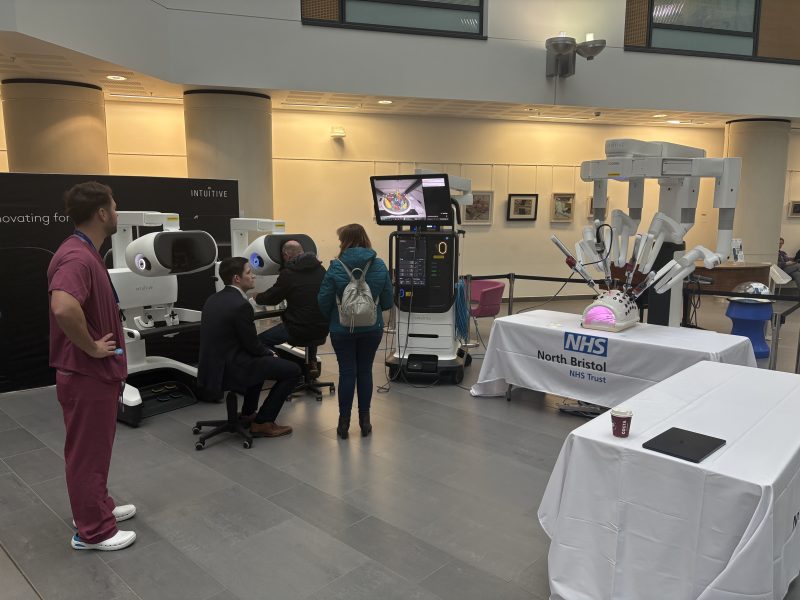
A demonstration of the Da Vinci 5 machine took place in the Southmead Hospital lobby
Beyond this, the programme’s progress is particularly significant locally. 40.9 per cent of Southmead residents experience health issues and disabilities that affect their day-to-day activities. This is the third-highest rate of any ward in Bristol,
Local curiosity is evident; passers-by stop to watch the large machines in motion as the team explains how they work.
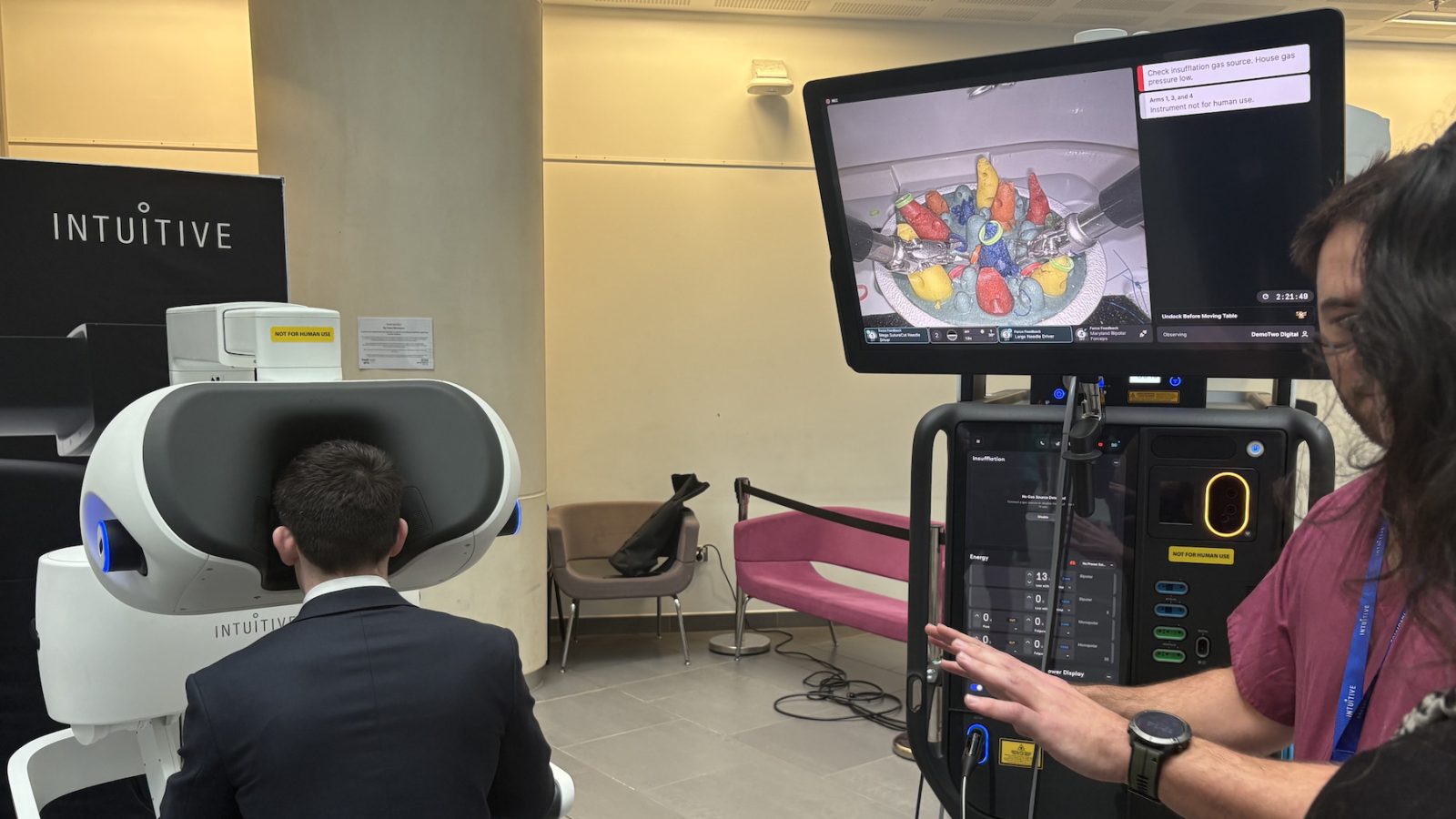
Some visitors have their own go at operating the surgeon consoles, tentatively making minuscule movements to pick up small hoops and move them from one peg to the next with robotic arms.
Although these machines are new to much of the public, the Intuitive team explain that they have been around for a long time.
They have worked with the NHS since 2000, and their da Vinci systems have been used to deliver robotic-assisted surgery to over 300,000 patients in the UK and Ireland.
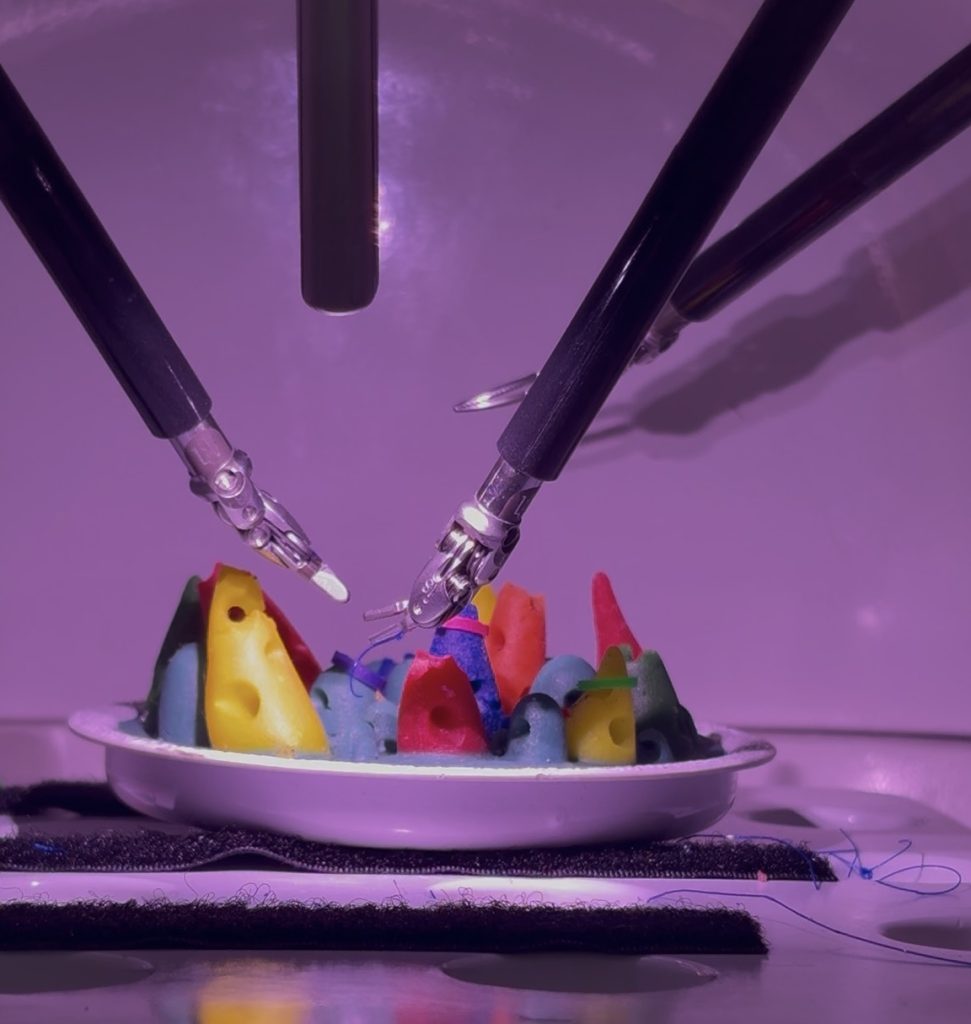
Visitors were able to trial the Da Vinci 5 machines
Southmead has been contributing for years to this longer-term drive of transitioning to robotic-assisted surgery.
Anthony Koupparis, a Southmead Hospital urological surgeon who lives in Cotham, beams as he explains how ahead of the curve Southmead Hospital has been in delivering robotic-assisted surgery.
“It’s been absolutely routine in Southmead,” he said. “We’ve been doing UK firsts, European firsts, world-first operations in Southmead quietly for nearly two decades.”
Anthony is a keen advocate for robotic-assisted surgery. He was trained in the process in Vancouver before coming to Southmead Hospital in 2010.
He notes that the three-dimensional nature of the machines allows surgeons to operate more precisely.
He explained: “Normal keyhole surgery is a two-dimensional picture, and your instruments are limited. So what you can do on the inside, having got through the tummy wall, for example, it was difficult. But with the robot, instead of having two dimensions, you have three dimensions”.
It is this precision that has translated to better recoveries and lower levels of pain for patients.
Anthony remarks that seeing this is something he enjoys most about his work.
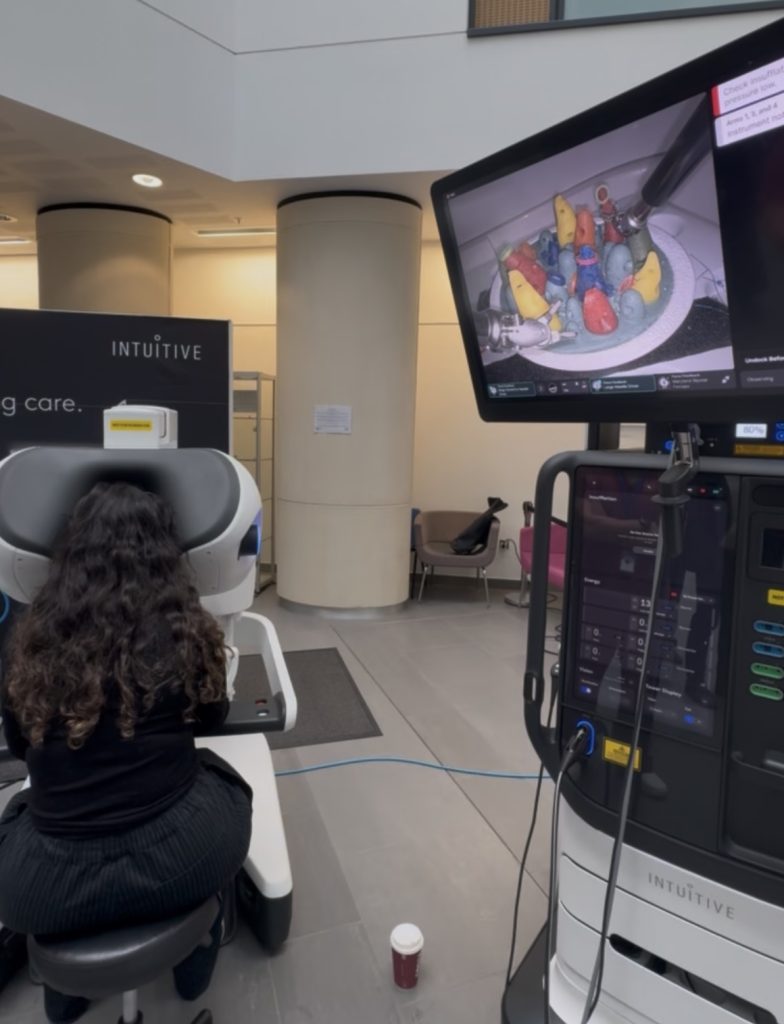
Surgeons at Southmead Hospital operate via consoles
He said: “There are stressful aspects of working in the NHS, but when you’re doing what you were truly trained to do, it all makes sense.
“It’s always a privilege to do it. Patients are giving their care over to you. It’s a big deal.
“For example, with prostate cancer surgery, the national average hospital stay is three days.
“The Southmead average has been one day for well over a decade.
“Last year, we did 550 of them. So we’ve saved 1,000 bed days in one year.”
When asked about the perception that robotic-assisted surgery is intimidating to the average person, Anthony nods in understanding.
It is a belief that he has been trying to combat for the sake of patients’ recovery.
“Years ago, the narrative was that if it’s really complicated, we shouldn’t do it robotically. That has now turned full circle. The most complicated procedures, the default is that we should be doing it robotically.”
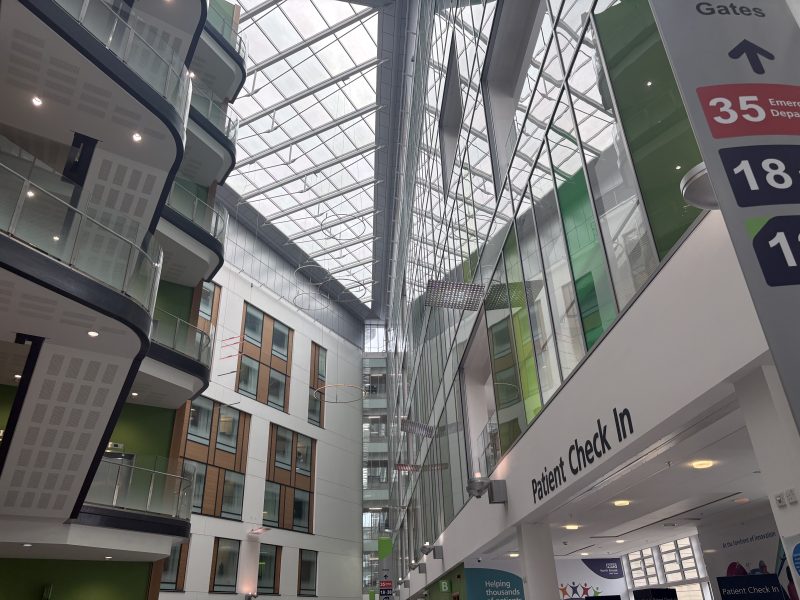
Southmead Hospital has been home to Robotic-assisted surgery for over 17 years
Anthony also notes that it is the calibre of the surgeons at Southmead that has enabled their programme to be so successful.
“It is a really cool kit, but it doesn’t make you a fantastic surgeon. You still need an entire team who knows what they’re doing”
He reflects, too, on the importance of Southmead Hospital as an institution for the city.
“I think if I take my surgeon’s hat off, I think we’re really lucky in Bristol.. It attracts a level of ability in our nurses, our doctors, our surgeons.
“Robotic-assisted surgery was being delivered at Southmead before we moved into the new hospital.
“There are very few centres that come anywhere near us in the country in terms of volume and expertise when it comes to this sort of thing.”
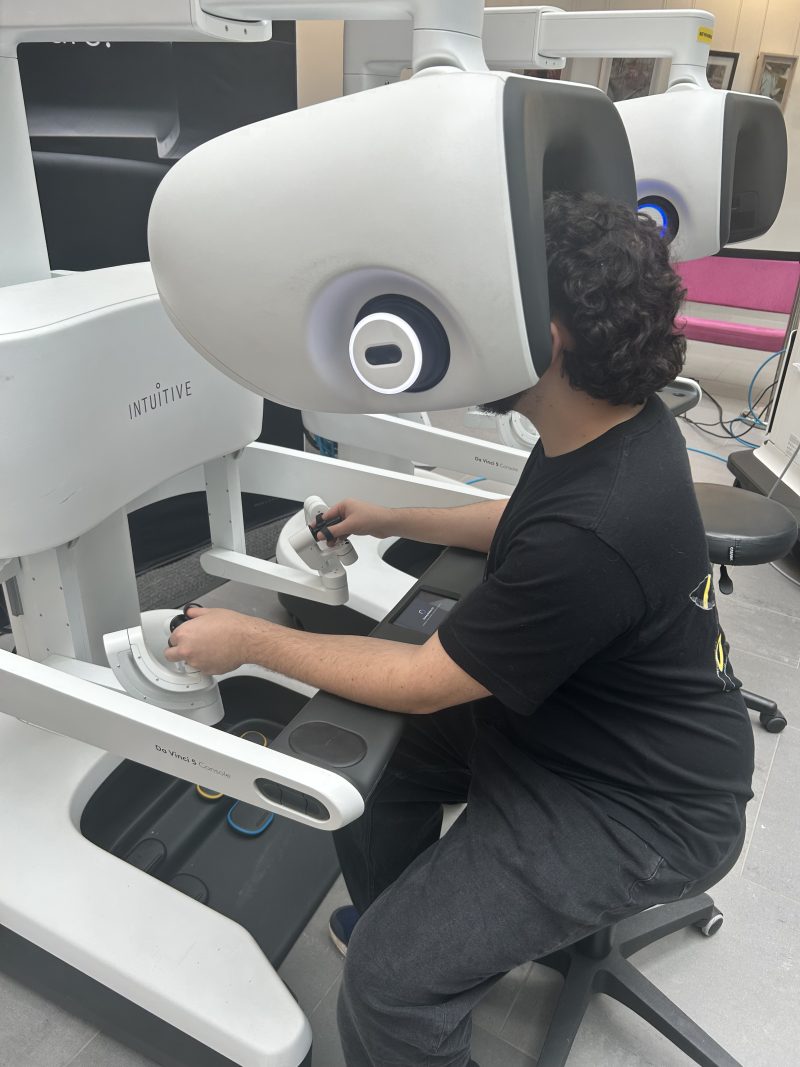
The machines are controlled via foot pedals and pinching the controls to move the robotic arms
Beyond the hospital’s wider standing in healthcare and in Bristol, the robotic-assisted surgery programme is also impactful for the local Southmead population.
Recognising this, Anthony says: “What’s really good is that although sometimes we talk about patients coming from all over the country to Bristol, the benefit is that that experience and that level of ability is that it is a routine offering to our local population.”
Looking forward, Southmead’s recent landmark is part of a wider shift in how surgery is delivered across the NHS.
National plans aim to expand robotic procedures from around 70,000 a year to 500,000 by 2035, with the hope that every hospital will eventually have access to the technology.
But in Southmead, that future has already been quietly taking shape for years.
In an area often associated with health inequalities, the hospital has been building a reputation for cutting-edge care, delivering advanced surgery not just to patients travelling from across the UK, but to the community on its doorstep.
Maelo Manning is reporting on Southmead as part of Bristol24/7’s Community Reporters programme, aiming to amplify marginalised voices and communities often overlooked by mainstream media. This initiative is funded by our public, Better Business members and a grant from The Nisbets Trust.
All photos: Maelo Manning
Read next:
 Our newsletters emailed directly to you