News / Transport
2,000 people sign petition to ‘stop Southville roadblocks’
A petition which has now been signed by more than 2,000 people calls on Bristol City Council to “immediately halt” the proposed South Bristol Liveable Neighbourhood.
The petition, ‘Stop Southville Roadblocks’, says that the council’s current proposals “risk causing serious disruption to everyday life, especially for older residents, disabled people and those on lower incomes”.
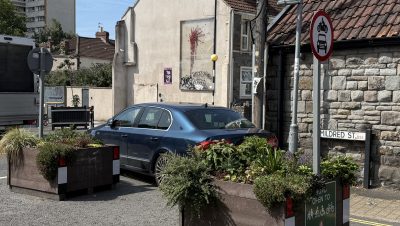
It claims that planned modal filters “would block key roads and force all traffic onto Coronation Road and North Street, drastically increasing distance and time of travel journeys for many residents, increasing pollution and congestion with displaced traffic”.
is needed now More than ever
Calling modal filters ‘roadblocks’ despite no roads being completely closed to pedestrians or cyclists, a leaflet promoting the petition says that “Southville will be divided into 4 zones and vehicles will not be able to drive directly between zones”.
The petition also claims that the current council consultation process has not been “adequate or transparent”, saying that “details such as road blocks are presented towards the end of the consultation survey after much of the response has been gathered”.
The petition does suggest alternatives to the council’s current plans including raised zebra crossings at the end of roads to replace modal filters, road narrowing for traffic calming instead of full closures and improved cycling infrastructure.
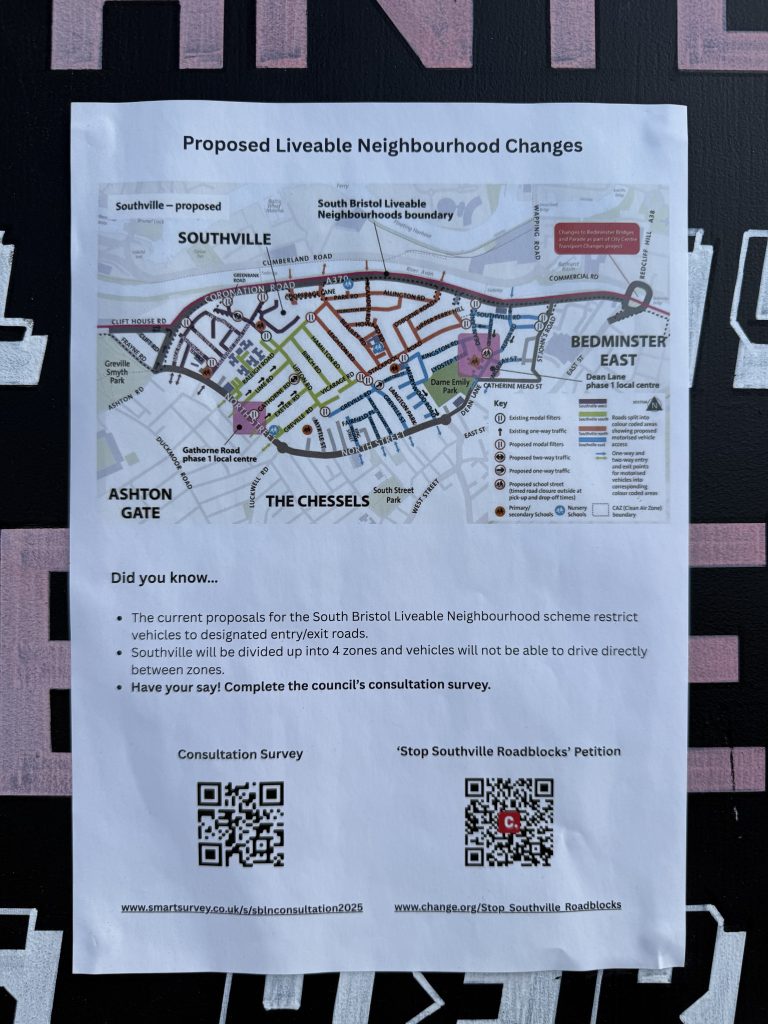
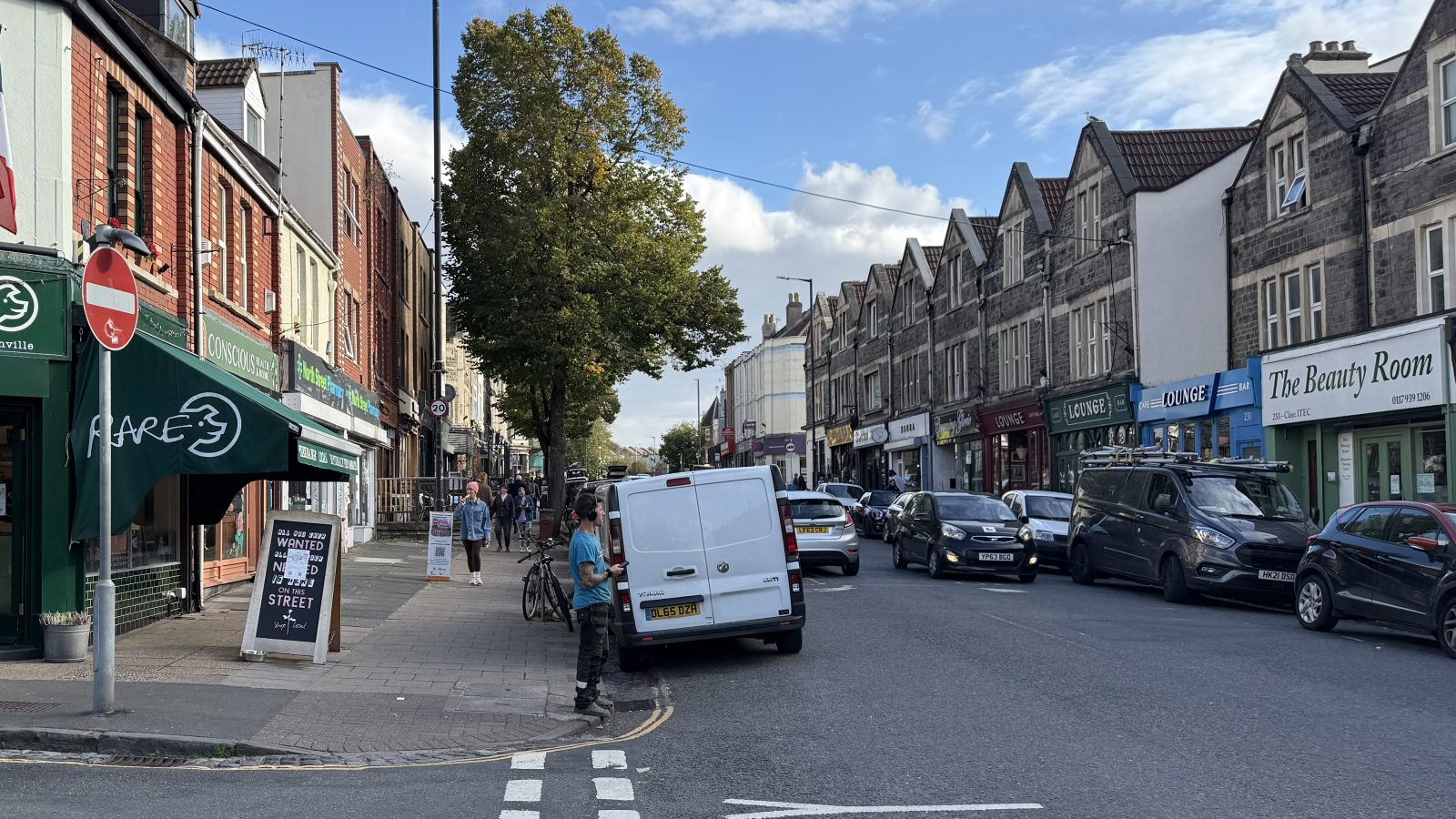
2,000 people have now signed the ‘Stop Southville Roadblocks’ petition – photo: Martin Booth
In response to the petition, a Bristol City Council spokesperson pointed Bristol24/7 to a recently published blog from Ed Plowden, chair of the transport & connectivity committee, ‘Shaping the future of South Bristol Liveable Neighbourhoods’.
The council is currently in the design phase of their second liveable neighbourhood trial project and say that “nothing is set in stone at this point, and the consultation and community engagement is central to that process”.
In his blog on the council website, Plowden said: “Liveable Neighbourhoods can generate strong feelings – whether you support or oppose the proposals, your feedback will help us design solutions that reflect the needs of the community.
“We want to hear from as many people as possible to make sure the final designs are shaped by those who live and work in South Bristol.
“A consultation is currently live to get your feedback on the proposals for South Bristol Liveable Neighbourhoods. You have until 30 October at midnight to have your say.”
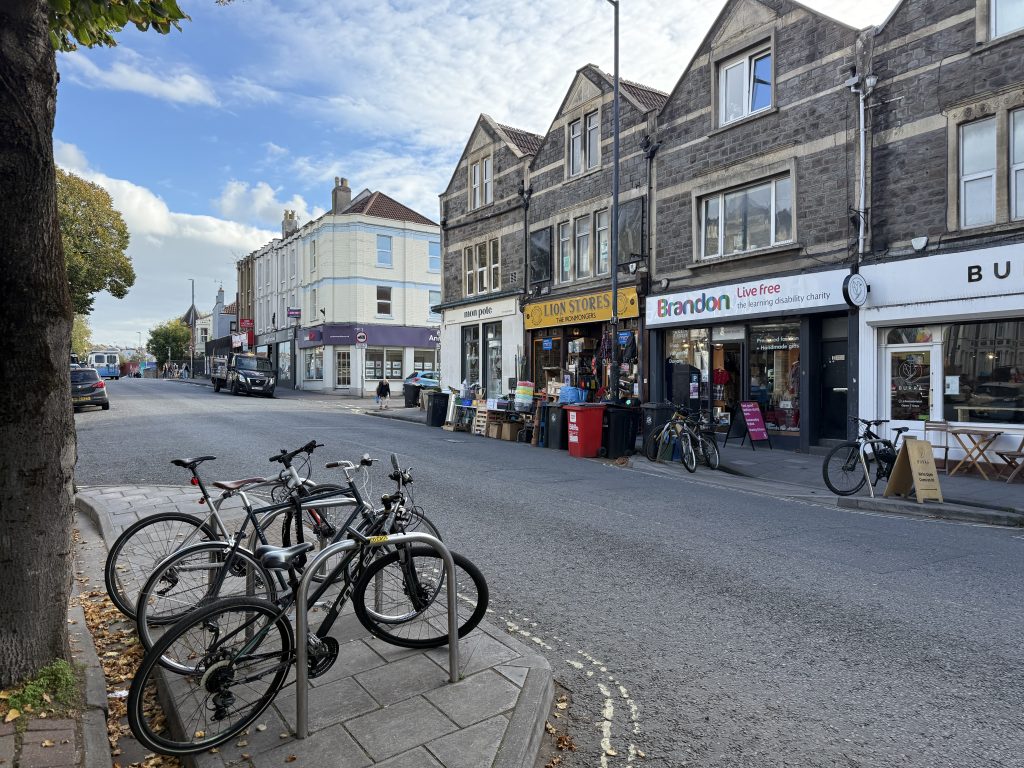
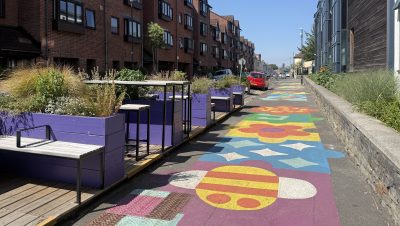
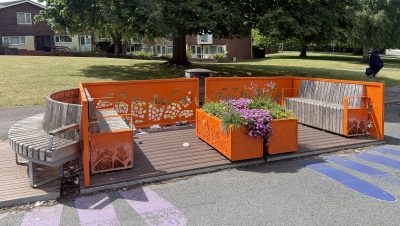
Bristol City Council says that the aim of the South Bristol Liveable Neighbourhood “is to work with the local community to design safer and quieter streets to encourage people to walk, cycle and wheel” – photo: Martin Booth
Bristol’s Labour group leader Tom Renhard and Labour transport lead Tim Rippington have written to Green councillor Plowden to ask that he allows a public debate about the petition at the next transport & connectivity policy committee meeting.
In a letter, Renhard and Rippington said that “local residents deserve to be heard”.
They wrote: “Kicking the can down the road and delaying a debate on a heavily supported petition denies citizens the opportunity to be heard in front of decision makers, at a stage we are led to believe is still formative,” the letter says.
“The committee system promised to provide increased public participation in local democracy. Regrettably, this has not been the case here.
“On behalf of everyone who has signed the petition, we implore you to U-turn and allow this petition to be debated. People with valid concerns about your council’s policy need to be allowed to have their say.”
In response to Renhard and Rippington’s letter, Plowden said: “The next suitable meeting for the petition debate will be in December, after the SBLN consultation has closed and committee members will be briefed on the results.
“This also means it will not be taken as an urgent item, giving the public more notice to come to the meeting to have their voices heard.
“I believe both of these factors will lead to a better informed debate.”
Main photo: Martin Booth
Read next:
 Our newsletters emailed directly to you