Shops / jewellery
‘From Clifton to Camelot’
Three years ago, Titcombe Bespoke Jewellery received an unusual request: to produce a 22-carat Arthurian gold ring.
The family-run jeweller, based on Clifton Mall, plus a store in Cirencester, has had many challenging commissions for bespoke engagement rings, wedding bands and eternity rings in its 26-year history, but this particular request stood out.
The brief from the TV production was to mimic a fifth-century AD style with highly specific details.
Stepping up to the task, the jeweller’s master goldsmith, Tom Wightman, crafted a “key ring” for one of the main cast members playing Uther, father of the legendary King Arthur.
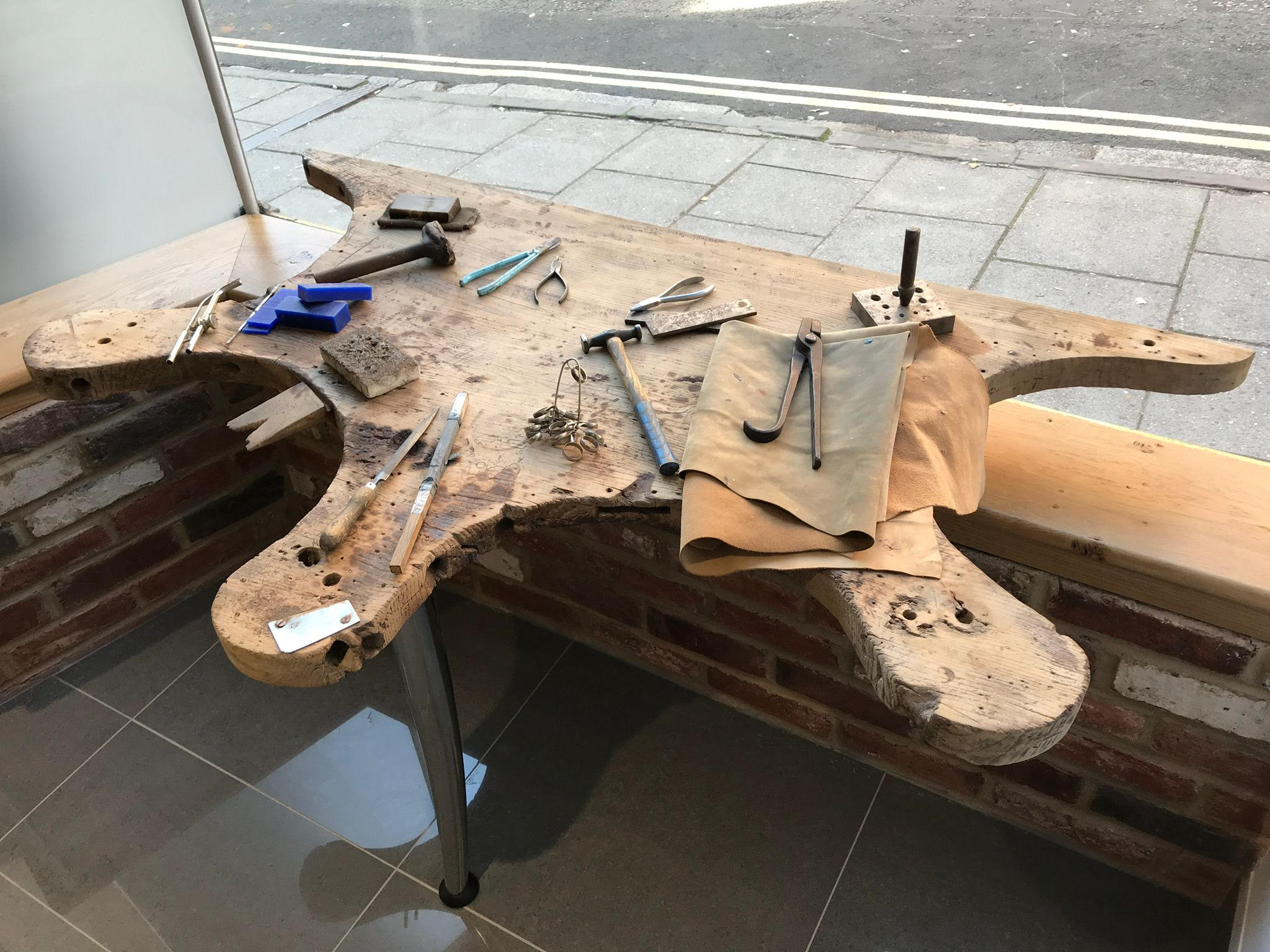
The story begins in 1999, when jeweller John Titcombe started his own manufacturing company in Clifton – photo: Titcombe Bespoke
The series was ITVX’s The Winter King, which received critical acclaim for its storytelling and attention to detail, as exemplified by the ring worn by Eddie Marsan. The piece, made from 60 grams of gold, took just over 12 hours to complete.
Bristol24/7 recently visited Clifton Mall, not tracing the footsteps of the legendary king, but following the jeweller who helped bring the Arthurian legend to life on the small screen.
The shop sits on the corner of a row of shops in Clifton Village, easy to miss were it not for the floral arch and pale blue frontage.
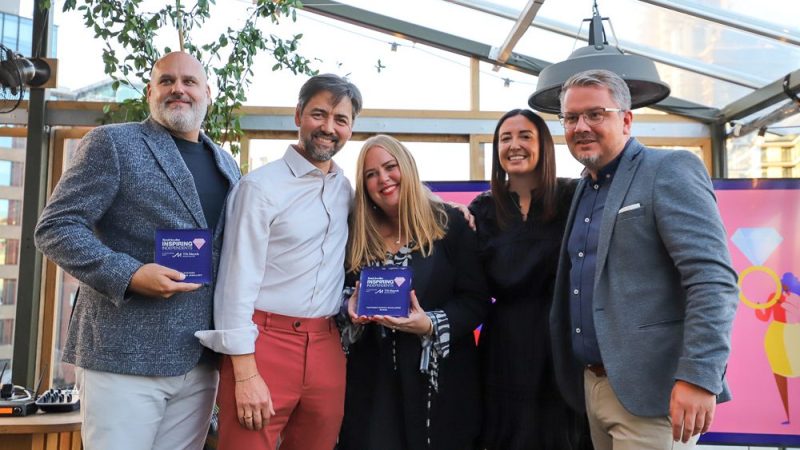
We met Mark Smith, chief executive of the family-run business, just after he returned from London, where he attended an industry award ceremony which recognised Titcombe Bespoke Jewellery among the UK and Ireland’s top 150 independent jewellers in Retail Jeweller’s annual Inspiring Independents list.
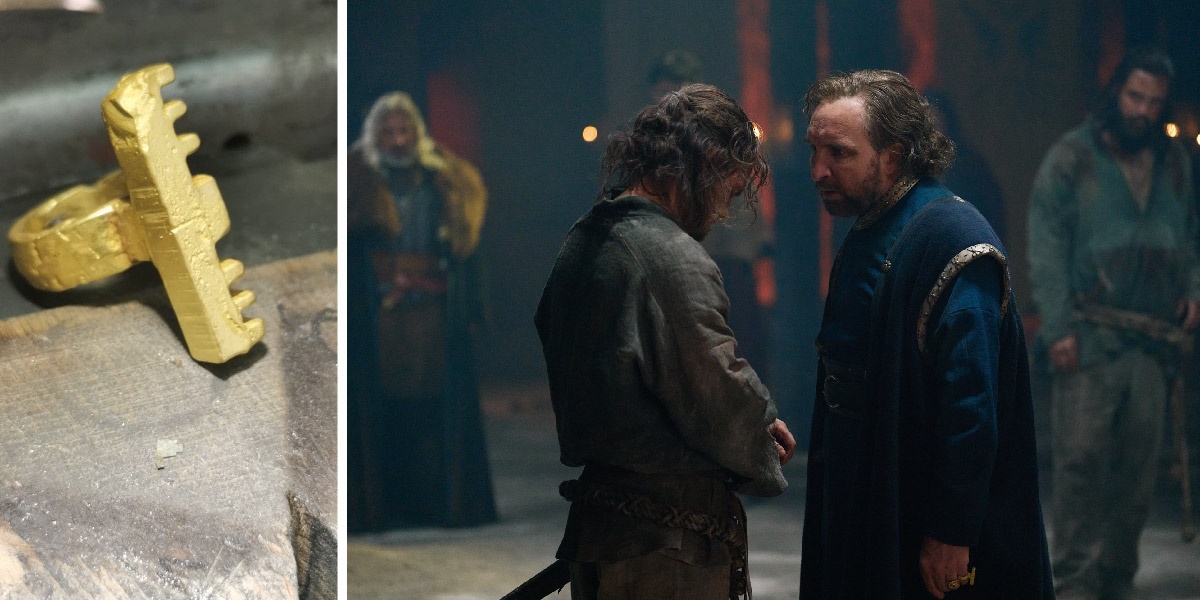
The jeweller received an unusual request to produce a 22-carat Arthurian gold ring for the set of The Winter King to be worn by Eddie Marsan who plays Uther Pendragon, father of the legendary King Arthur – photo: Titcombe Bespoke/ITVX
The company went on to win the Bespoke Business Award, one of five trophies presented nationwide this year.
Smith said: “I couldn’t be prouder of the Titcombe Bespoke Jewellery team, who work tirelessly to provide an exceptional service and create lasting memories for our customers.”
The story begins in 1999, when jeweller John Titcombe started his own manufacturing company in Clifton. The Cirencester branch came about by a happy accident.
While on paternity leave, Titcombe was pushing the pram with his daughter in Cirencester when he stumbled upon an empty shop front. That site would go on to become the second location of the jewellery company, which was founded around 23 years ago.
Founder Titcombe remains deeply involved in the business, serving as managing director and head designer, and overseeing every single piece that comes out of the workshop.
Smith, born and raised in Bristol with a love for jewellery, began working part-time at Goldsmiths in Cribbs Causeway during his university years. After graduating, he tried a career in finance, which he admitted he had “no passion for,” before returning to the jewellery world with Goldsmiths.
He now works front of house at Titcombe Bespoke Jewellery in Bristol, leading the team and helping to drive the company forward.
Smith said: “I basically started there part-time while I was at university in South Wales. After finishing university, I went into finance, which was a good background, but I had no real passion for it and didn’t enjoy it. So I decided to return to jewellery, and I’ve stayed ever since.”
Being part of the Bristol business ecosystem alongside other independent jewellers is a challenge they embrace. When asked about their main competition, he said it primarily comes from nationwide chains vying for the middle market.
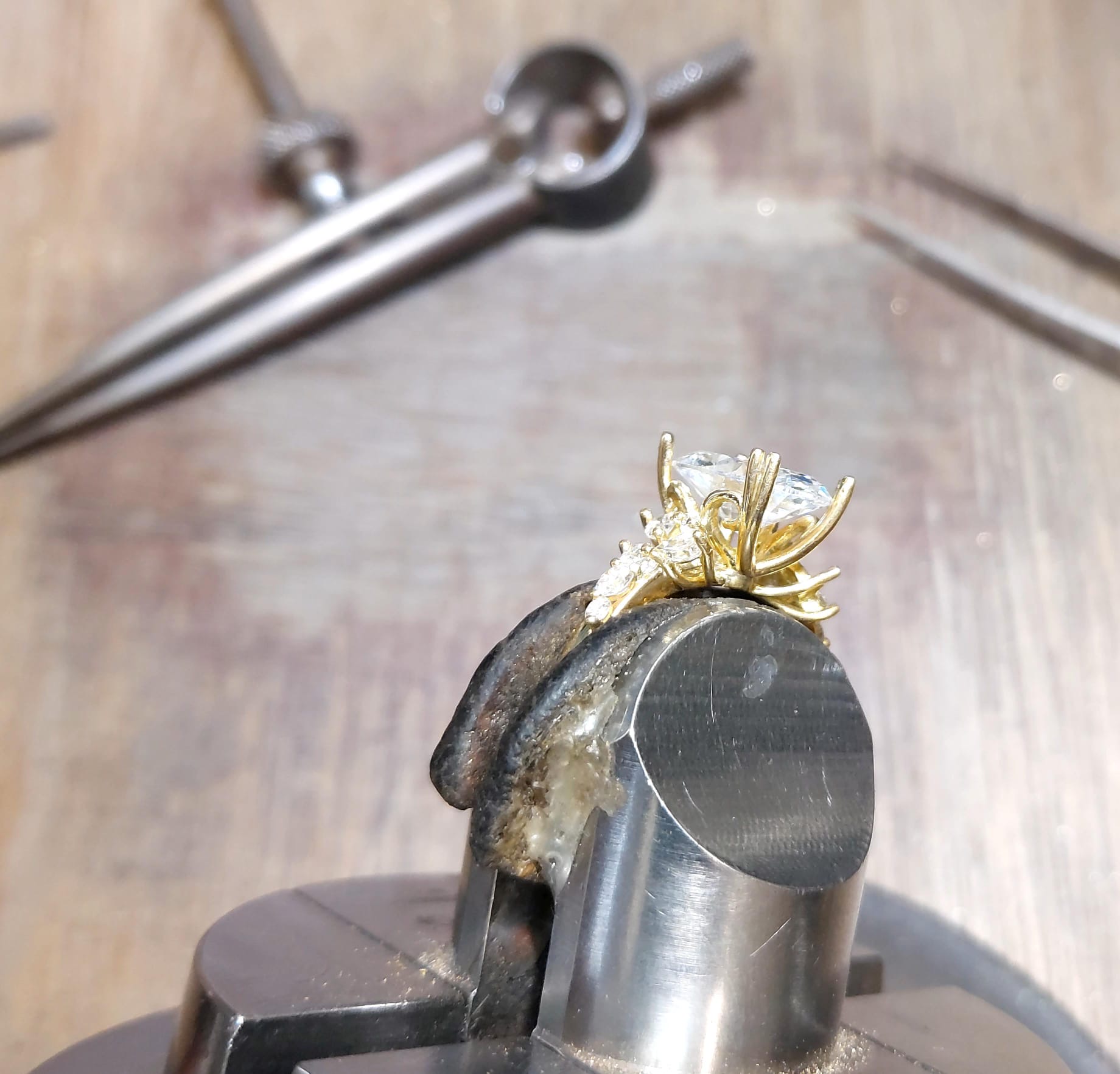
Titcombe Bespoke Jewellery was named among the UK and Ireland’s top 150 independent jewellers in Retail Jeweller’s annual Inspiring Independents list – photo: Titcombe Bespoke
He said: “You’ve got the high-street multiples at various levels — H. Samuel, Ernest Jones and Goldsmiths. Then there’s the internet and online-based businesses, the more antique-focused jewellers, and of course, independent businesses.
“So there are all sorts of different competition. People often buy jewellery when they’re on holiday and relaxed, so the competition we face is essentially constant, all over the world.
“But we find that if we offer fantastic service, premium products, well-designed and expertly manufactured, with high-quality gemstones and diamonds, that’s what we’re known for.”
Smith believes that continual learning and evolution are key to the longevity of any business, not just jewellers. He admits that inspiration comes in all shapes and forms, often sparked by travel, whether discovering Venetian architecture or wandering the winding streets of Sri Lanka’s jewellery quarter.
He continued: “We’ve both travelled the world with the business, and inspiration comes from all sorts of sources.
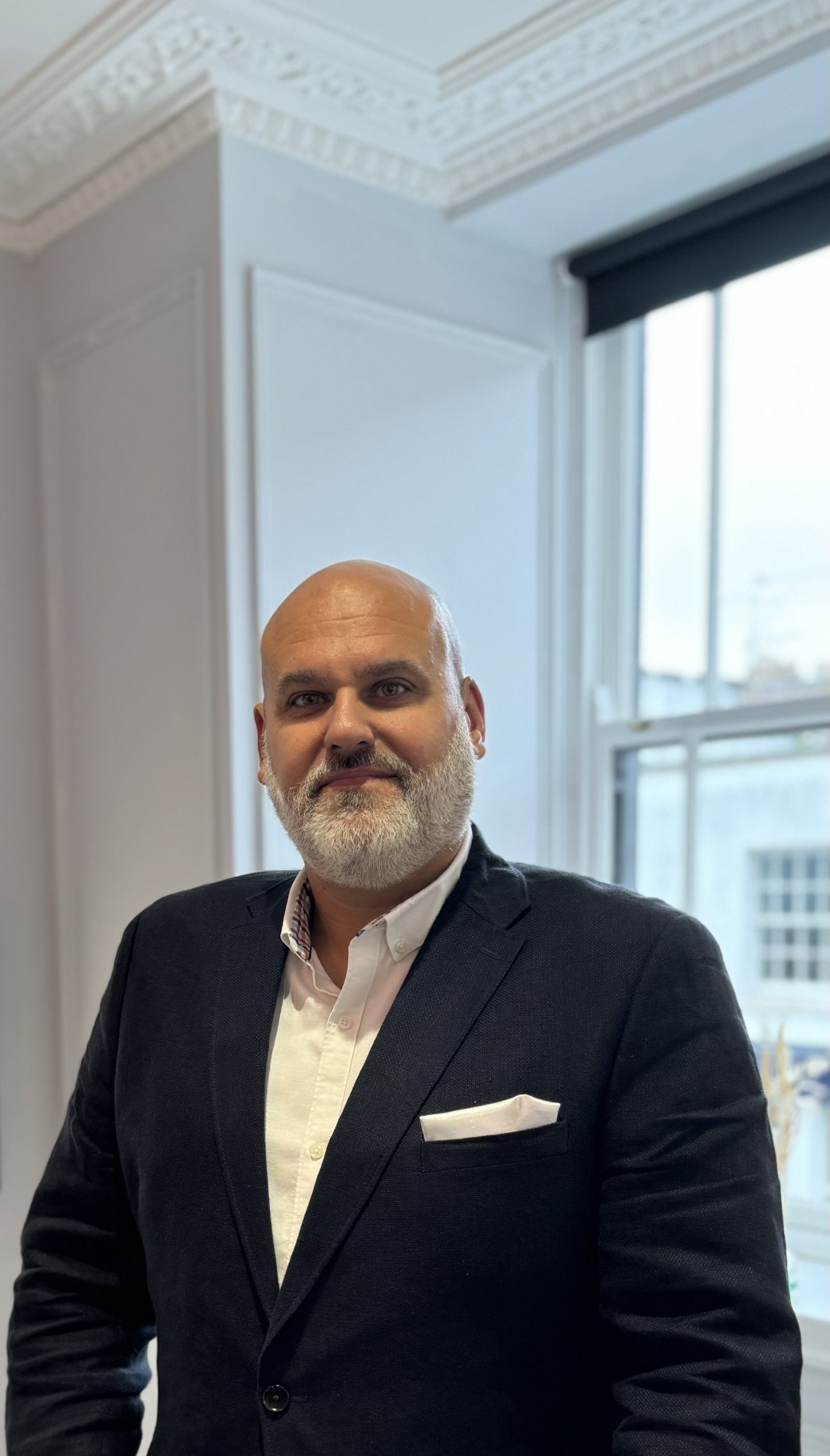
“The one thing that jewellery does is put a smile on people’s faces. Coming into work, you get to experience so many different facets of the industry that people probably don’t realise,” said Mark Smith, chief executive of Titcombe Bespoke Jewellery – photo: Titcombe Bespoke
“As most designers will tell you, they see something and it sparks an idea. Much of our inspiration comes from the places we visit, such as Italy. For example, we designed a whole range around Romeo and Juliet’s balcony.
“We also draw inspiration from John’s trips to Sri Lanka, where the coloured gemstones he sees and purchases influence many of our designs. Essentially, most of our products are designed around the gemstones themselves.”
The jewellery company has around 15 staff in its books, which include five master craftspeople.
When asked whether jewellery appeals to young people, he said, “It’s about creating memories and bringing a smile to people’s faces.”
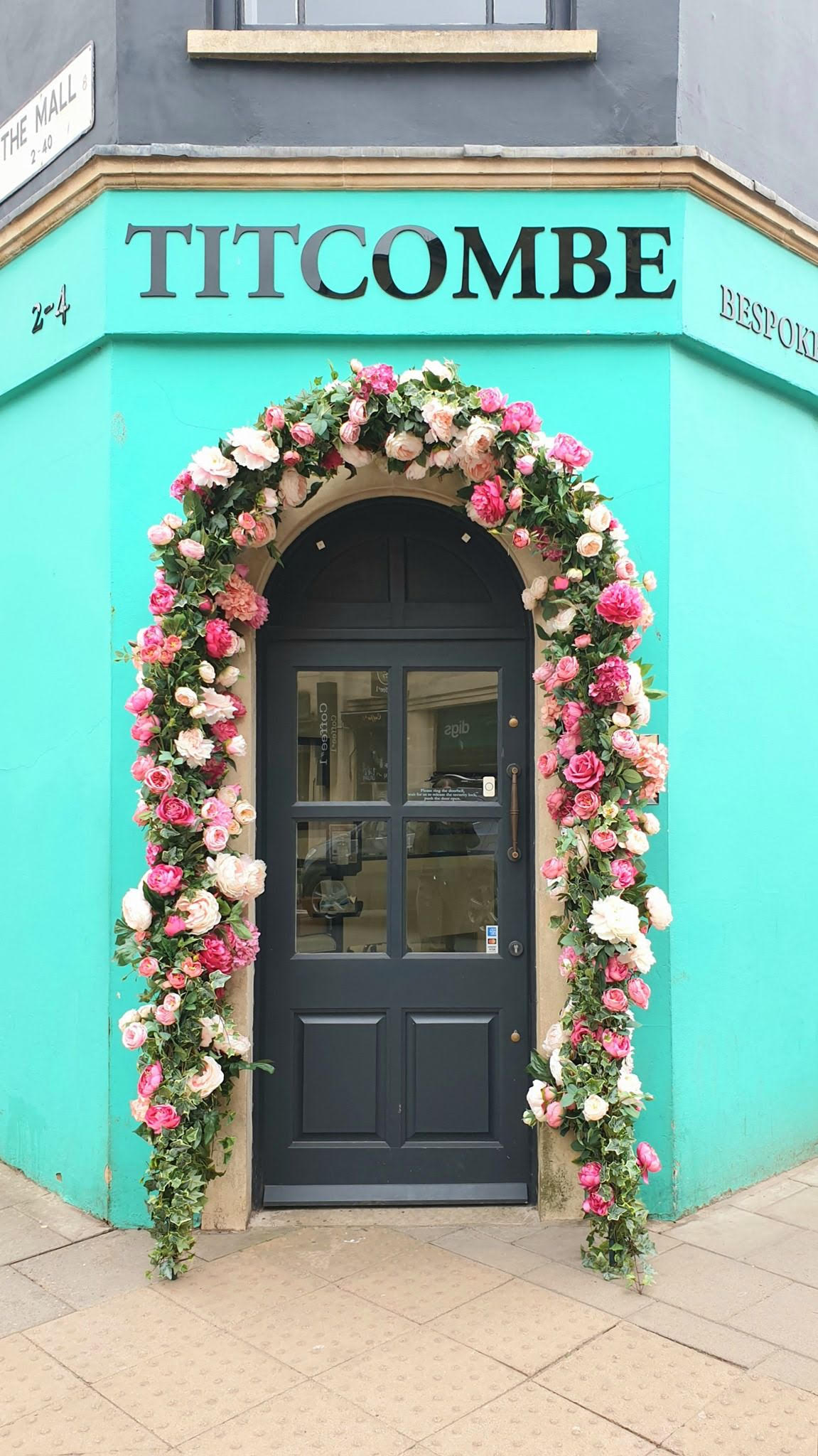
The shop sits on the corner of a row of shops in Clifton Village, easy to miss were it not for the floral arch and pale blue frontage – photo: Titcombe Bespoke
He went on to add that skills are transferable and that lack of previous work experience should not be seen as a barrier.
He said: “The one thing that jewellery does is put a smile on people’s faces. Coming into work, you get to experience so many different facets of the industry that people probably don’t realise.
“There’s the retail side, which most people understand, but then there’s the manufacturing side. You could become a goldsmith, a setter, a CAD (computer-aided design) designer, or purely a designer doing sketches. There are so many different paths to grow within the industry.”
This article originally appeared in Bristol24/7’s November/December 2025 magazine
Main photo: Titcombe Bespoke
Read next:
 Our newsletters emailed directly to you