News / University of Bristol
Uni lecturers respond to scrapping of ‘community-focused’ degree
A group of lecturers at the University of Bristol has launched a petition against the removal of a degree programme that was originally introduced under its widening participation strategy.
The petition has gathered over 500 signatures.
The open letter was addressed to Professor Evelyn Welch, vice-chancellor at the University of Bristol.
is needed now More than ever
The English Literature and Community Engagement (ELCE) course, introduced in 2008, has produced dozens of graduates who have gone on to pursue careers in education, the arts and community work, as well as postgraduate study.
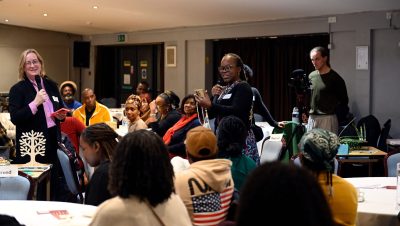
A section of mature Students at a Saturday school of ELCE at the Arts Complex
Designed to be accessible, ELCE offers weekly evening classes and Saturday sessions at least twice a term. Unlike many university programmes, there are no formal entry requirements.
Applicants may already hold an undergraduate degree or have no prior qualifications, with admission based on commitment to the programme rather than academic background.
The degree runs over six years, adapting the modules of a traditional three-year English Literature BA while adding practice-based work that engages with local communities. Each student must complete a placement in the community — for example, running book clubs, reading groups in prisons, or literature sessions for bereavement groups.
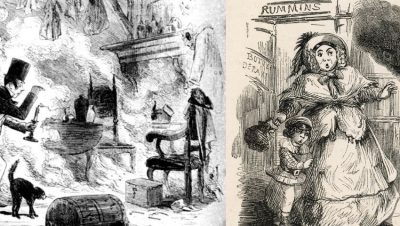
As part of their final assessment, students submit a dissertation, alongside sitting modules that cover writers from Chaucer and Beowulf to Austen, Dickens, Milton and postcolonial literature.
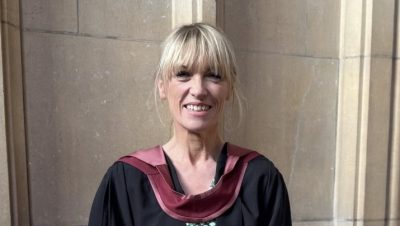
The petition has gathered support from academics and members of the public alike, both in Bristol and beyond. Acting head of ELCE, Craig Savage, said he was “saddened by the university’s choices”, describing the programme as “a lifeline” for those returning to education and seeking a recognised qualification from a leading university.
Although some recent years have seen a fall in enrollments, partly due to the pandemic and cost of living crisis, campaigners argue that the degree remains a flagship outreach initiative – it has engaged with some of Bristol’s most deprived communities, particularly those from marginalised groups.
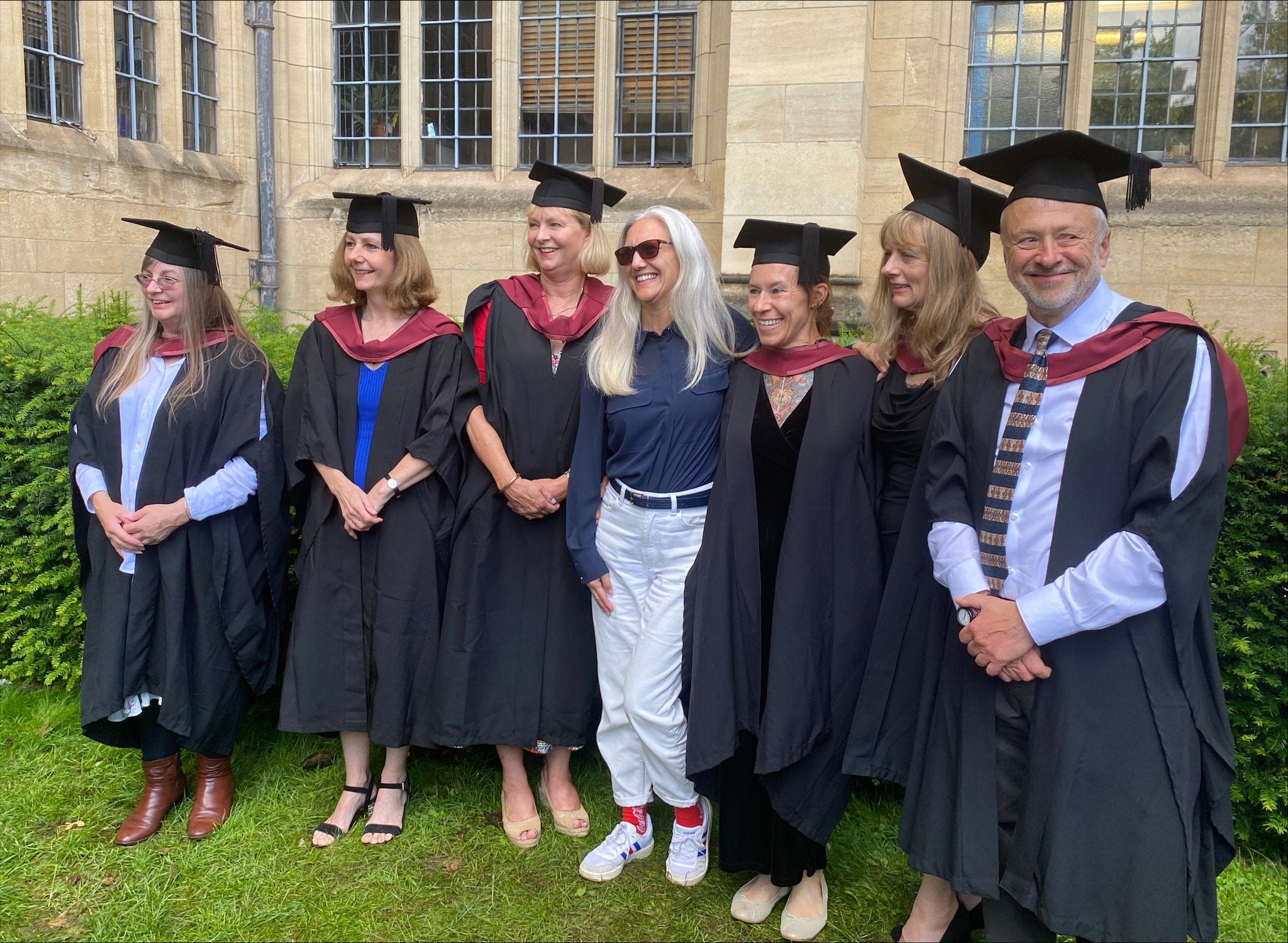
The English Literature and Community Engagement (ELCE) course, introduced in 2008, has produced dozens of graduates who have gone on to pursue variety of careers
Savage pointed to the recent commitment of Sheffield Hallam’s vice-chancellor, Professor Liz Mossop, to social mobility. He said: “When quizzed on whether the financial economies required of Sheffield Hallam would impact work on social mobility, Mossop responded: “It is so central to what we do that we cannot let that happen.” Bristol, meanwhile, have downgraded their target for mature student recruitment from 8 per cent of intake to 5 per cent.”
The campaigners have pointed out that ELCE has a strong track record of inclusivity, with 30 per cent of students identifying as Black or Asian in 2023–24 (well above university averages) and 94 per cent drawn from Bristol and the South West.
Its community-engaged learning model, embedded at all levels of the curriculum, has built partnerships with local organisations such as the Black Development Agency, Bristol Libraries and the Single Parent Action Network, benefiting both students and the wider community.
The programme, campaigners pointed out, aligns directly with the university’s mission to widen access, strengthen civic collaboration and promote lifelong learning — a continuation of its tradition of outreach and adult education dating back to the late 19th century.
Supporters argue that despite recent recruitment challenges, dismantling ELCE would undermine the university’s commitments to inclusion, regional growth, and civic engagement.
The course was originally founded by professor Tom Sperlinger, professor of literature & engaged pedagogy at the University of Bristol and a leading authority on widening participation in higher education.
According to Sperlinger, ELCE was founded on three core principles: open access for students without traditional qualifications, flexibility to fit around work and personal commitments through evening and weekend study and a strong focus on community benefit.
He said: “Prior to ELCE we’d done work via our short courses to feed mature students into the daytime degree and they’d thrived often while not having A Levels or equivalent; we had evidence it worked and wanted more such students… That is why the community engagement element is embedded throughout.
“I’m really proud that, as well as the many students who have benefited from ELCE, hundreds more have participated in the reading groups, literacy projects, participatory theatre programmes, story exchanges and much more that the students themselves created.”

Acting head of ELCE, Craig Savage, said he was “saddened by the university’s choices”, describing the programme as “a lifeline” for those returning to education and seeking a recognised qualification from a leading university
A major challenge for higher education, Sperlinger pointed out, is its expansion over the past 25 years which has brought huge benefits. But those gains have been unevenly distributed. In Bristol, for example, 99 per cent of young people in some areas progress to university, compared with just one in twelve in others.
He continued: “Interventions like ELCE matter because universities need to do things differently to reach those communities where HE seems further away – or where a complex life makes going there more difficult. And this must include doing that work in their own cities and regions (ELCE has overwhelmingly reached local students). Doing this sort of work is absolutely essential to winning back public confidence about who universities are for and who benefits from them.”
Sperlinger reiterated that widening participation is “already a strong focus” at Bristol, such as with the opening of the micro-campus in Hartcliffe, but the future of higher education will demand even more. An ageing population, a shifting economy that requires people to retrain later in life, and a complex world marked by deep divisions all mean that universities must rethink how they open access.
“There’s a lot of good work that goes on in WP at Bristol. The future of HE in general will need to adjust to an ageing population, a radically changing economy with many more people needing to retrain later, and a complex world that we all need to understand and hold in common (amid radical disagreements about it),” he said.
“In that context, we will need a lot more interventions like ELCE, that open access among those furthest away from HE participation; where universities do things differently to include those studying later or with complex lives; and where the wider benefits of HE are shared much more widely. There is a lot we can learn from ELCE’s successes as we look to the future.”
Among those who signed the open letter was ELCE student Ellie Freeman, who is also a councillor for Bedminster at Bristol City Council. She said: “I am very sad to see this course being cut as it is a great example of a flexible, accessible course that allows for lifelong learning.”
“We have people who have not been to university before, we’re all at different stages of our lives and we’ve been brought together on this brilliant course. We all bring our different experience and knowledge and get something different and special out of being there. I was attracted by the community engagement element particularly and am looking forward to running my project with the university’s support.”
Julian Barran, one of the students who completed the course recently and who expects to graduate in February, said: “Students who join the ELCE course bring a dedication to the course which is in depth and properly rigorous. I have told so many people that it must stay as part of the service Bristol University provides.”
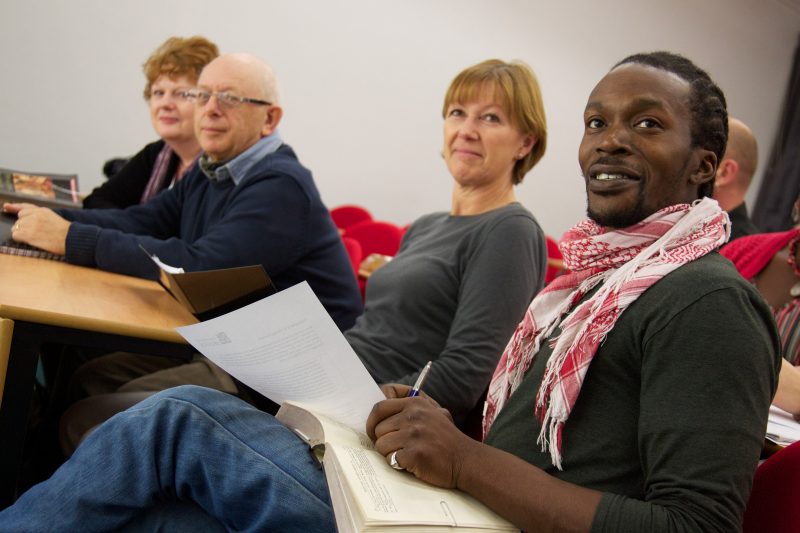
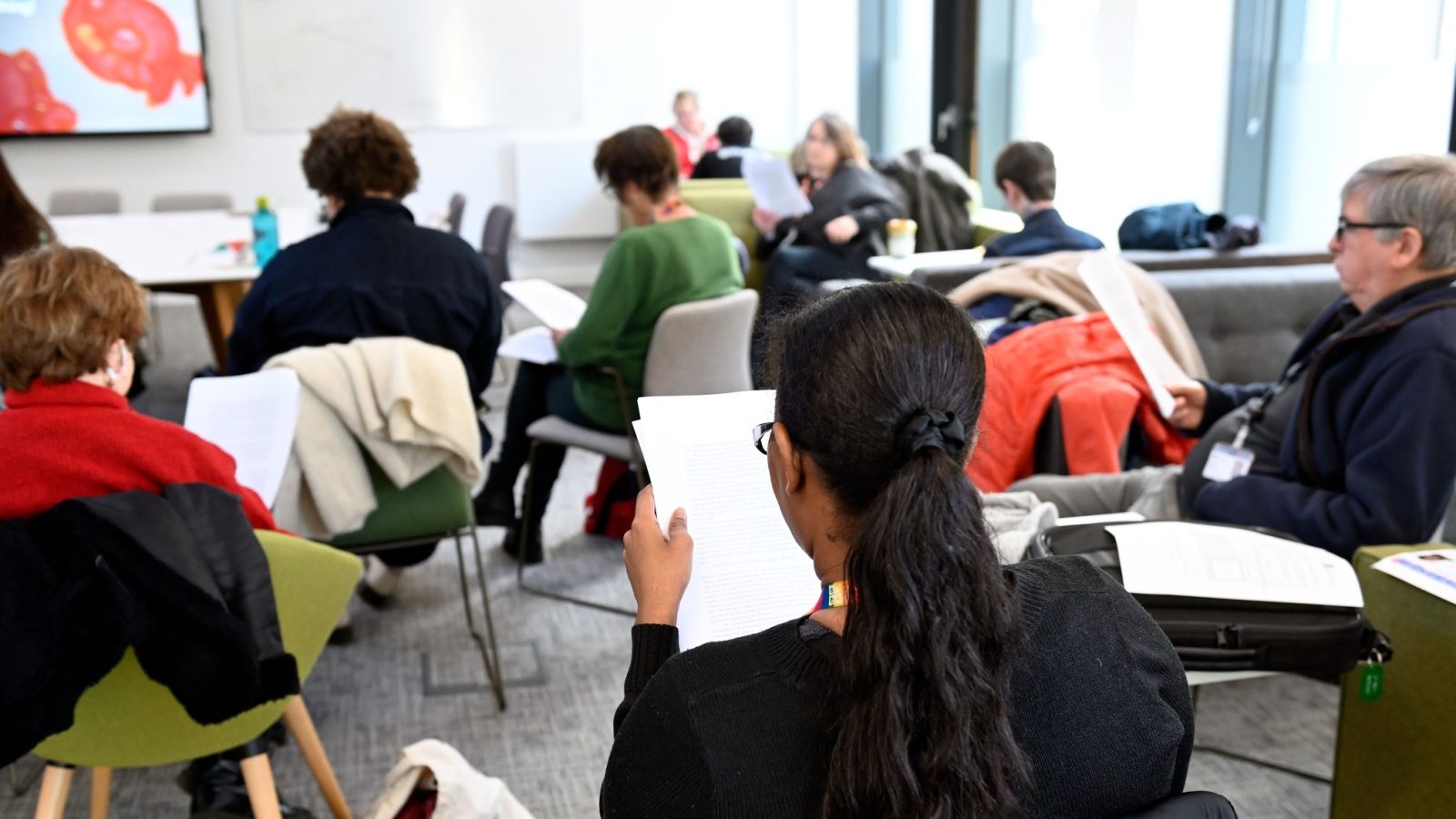
Students on the part-time BA in English Literature and Community Engagement
Savage raised concerns that the current development would add to the city’s struggles with social mobility. The Sutton Trust’s new “opportunity index”, reported in The Guardian, exposes a stark divide where London dominates the top 20 constituencies, while Bristol and the wider South West fails to make an appearance. According to Savage, the findings underline how disadvantaged people in the region face sharply limited life chances.
He said: “The existence of ELCE, and programmes like ELCE, are so important to the city-region because of what they represent: hope for the future. A hope that says, no matter who you are, you can learn and grow, and live a fulfilling life. ELCE says to all those who thought university wasn’t possible for them: it is possible. That’s why my overwhelming feeling about the closure of the course is one of sadness – a sadness for all those who will no longer have the opportunity ELCE offered.”
A spokesperson for the University of Bristol said: “After careful and detailed consideration, the English Literature and Community Engagement programme has been withdrawn to new students due to low recruitment numbers over a sustained period.
“This was not a decision that was taken lightly. As an institution we are constantly reviewing and assessing our education offer for quality, consistency and demand. Where we see a pattern of declining student numbers, we need to adjust our resources accordingly.
“The University remains fully committed to its widening participation mission. This includes initiatives specifically for students from traditionally under-served backgrounds to help support their transition into university life and working with our local communities in Bristol to improve access to education.
“Staff from the School of Humanities continue to play a leading role in diversifying our student community with a range of outreach programmes including Access to Bristol, Bristol Scholars and summer schools. Foundation programmes across Arts, Humanities and Social Sciences continue to provide a route into the University for those with no formal qualifications.”
All photos: University of Bristol
Read next:
 Our newsletters emailed directly to you