News / Tech
Bristol-pioneered technology to enhance match day experience
A new AI and 5G-powered technology developed at the University of Bristol’s Smart Internet Lab promises to take the match day experience to another level.
Imagine a stadium where your signal never drops in a crowd of 50,000; you can switch between multiple camera angles of every strike and goal; order a pie and a pint from your seat and even find the shortest queue for the toilets.
The Bristol-pioneered technology promises to bring all the comforts fans enjoy at home into the stadium, except any guarantee of a home win.
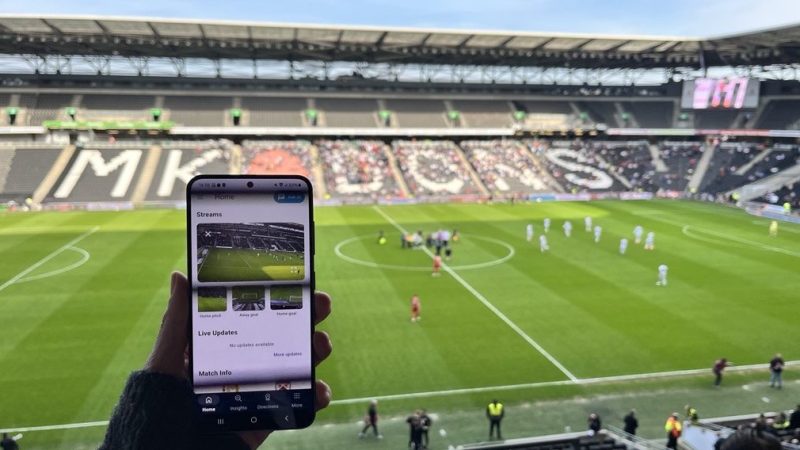
Project ARANA has already been trialled at the 30,400-seat MK Dons stadium.
Created by the University of Bristol’s Smart Internet Lab, AI specialists and university spinout Madevo and network experts Weaver Labs, the technology uses next-generation connectivity to finally tackle the long-standing issue of poor mobile signal in large venues.
Fans can stream multiple live video angles, access AI-driven insights and real-time player stats, use immersive 3D maps, order food from their seats, and navigate queues instantly.
For clubs, the system — powered by Weaver Labs’ Cell-Stack and video analytics from Nokia — offers real-time tactical intelligence and performance analysis.
It also addresses major operational challenges such as network congestion and complex cabling for broadcasters.
ARANA project lead, Weaver Labs chief executive Maria Lema, said: “Project ARANA proves the transformative power of intelligent connectivity.
“By bringing computation and decision-making to the edge, we’re showing stadiums what future-ready infrastructure can deliver: real-time insight, seamless experiences and the foundation for entirely new services. This is a glimpse of what the next generation of digital venues will look like.”
The Smart Internet Lab, which marks its 10-year anniversary this year, has taken particular pride in the project.
Professor Dimitra Simeonidou, director of the Smart Internet Lab at the University of Bristol, said: “We are thrilled to see this new platform technology in action.
“Thanks to 5G broadcast capabilities, the app offers a cost-effective alternative to traditional cellular solutions, which is particularly important for large sporting venues where mobile connectivity is often unreliable during peak usage.
“We are excited to see how these technologies can dramatically reshape how we experience live events.”
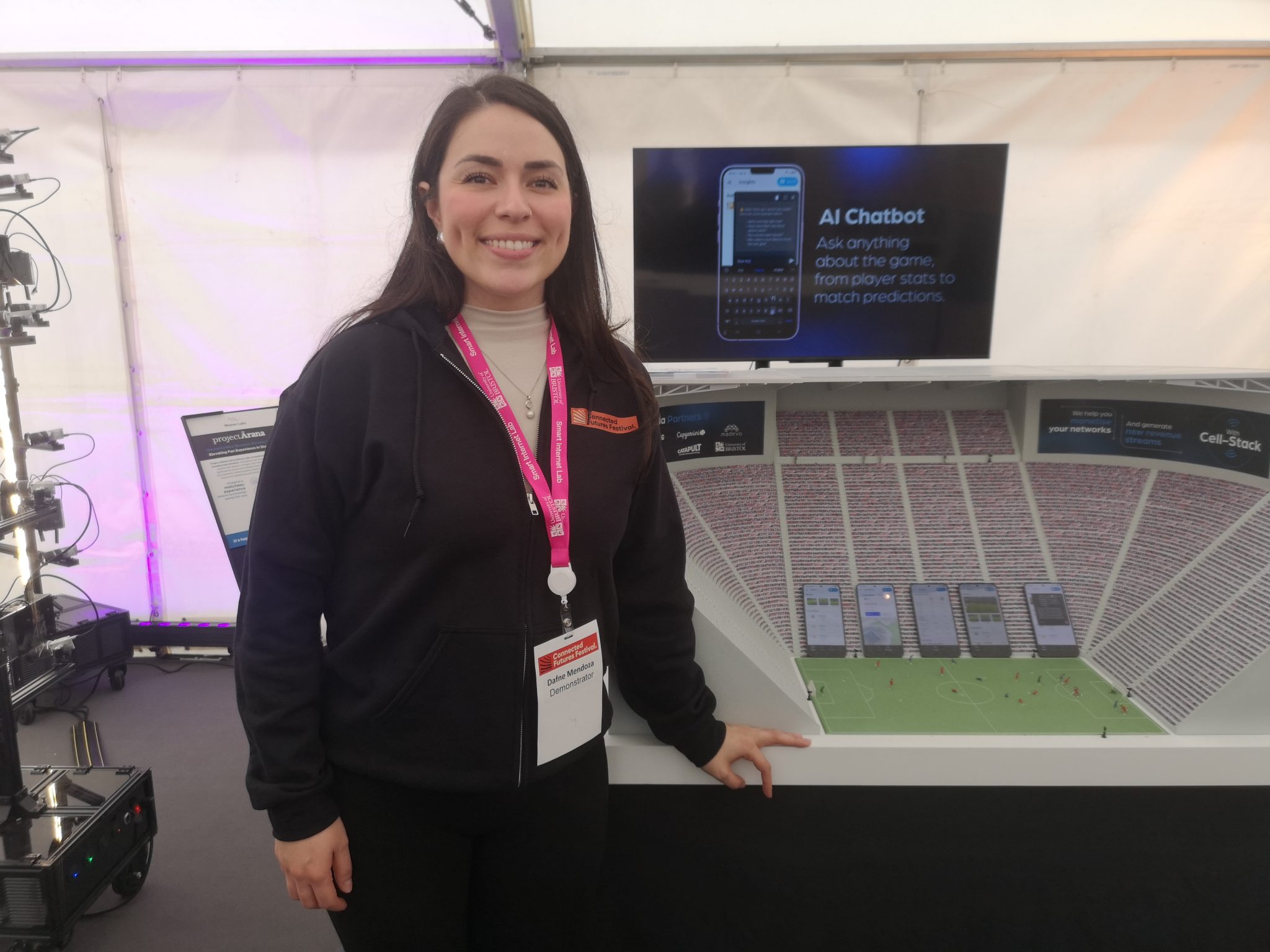
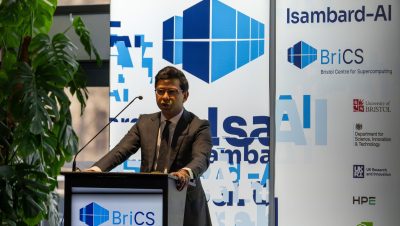
The technology was showcased at the Connected Futures Festival, hosted by the Smart Internet Lab in March – photo: Milan Perera
She added: “This successful trial marks a key milestone for Bristol’s Smart Internet Lab as we celebrate our 10th anniversary.”
“The project is also part of our broader mission to define the future of connectivity through the development of 5G, 6G and large-scale platforms such as JOINER — a UK-wide testbed for future networks research and innovation.”
The technology was showcased at the Connected Futures Festival, hosted by the Smart Internet Lab in March at the Millennium Square.
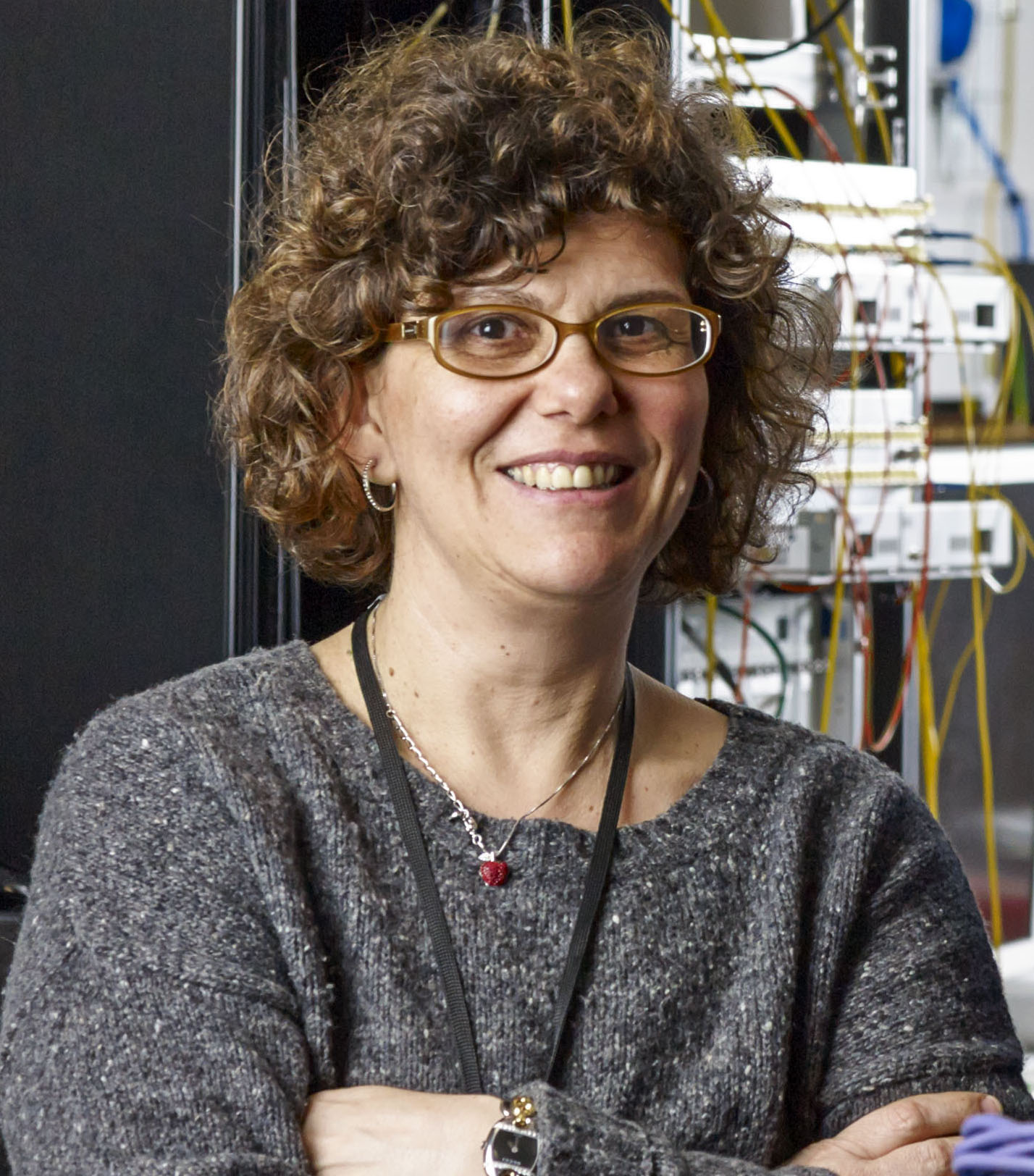
“We are excited to see how these technologies can dramatically reshape how we experience live events,” said professor Dimitra Simeonidou, director of the Smart Internet Lab – photo: Nonesuch Magazine/University of Bristol
Further public trials at Stadium MK are planned for early next year with the future potential to scale up to other sporting venues.
Main photo: Weaver Labs
 Our newsletters emailed directly to you