News / Housing
‘Eye-watering’ salary paid to council’s temporary housing boss
The temporary boss of Bristol City Council’s housing department cost taxpayers the equivalent of a £300,000 salary in 2025.
Sonia Furzland was paid an “eye watering” £201,896 for just over eight months’ work between April and December 2025, including an undisclosed cut to a recruitment agency.
And the council’s annual draft accounts show it paid out more than £1m in staff exit payments between April 2025 and March in 2026, with one employee walking away with a £201,000 payoff while two others were awarded a combined £367,000.
is needed now More than ever
There was also a huge leap in the number of council staff earning over £50,000 a year – up 16 per cent on the previous year from 726 to 841, excluding school employees which also increased.
The document reveals that Bristol City Council chief executive and head of paid service Nick Hibberd earned £197,982, plus £39,299 in employer pension contributions, taking his total package to £237,281.
Executive director of growth and regeneration John Smith was paid £165,120, adult and communities executive director Hugh Evans had a £161,717 salary, and their counterpart heading up the children and education department, Hannah Woodhouse, earned £161,439.
All three also received more than £30,000 in pension contributions.
David McNulty, the replacement at the helm of the housing directorate for Furzland, who was an interim appointment and is now chief executive of Brunelcare, was given £7,097 for two weeks’ work at the end of March, which is as far as the accounts go up to.
That is the equivalent of about £184,000 a year.
Executive director of resources and chief financial officer Andy Rothery received £65,985 for the four months from his appointment on November 3 to the end of the financial year, on top of £81,929 for his previous role as chief financial officer only.
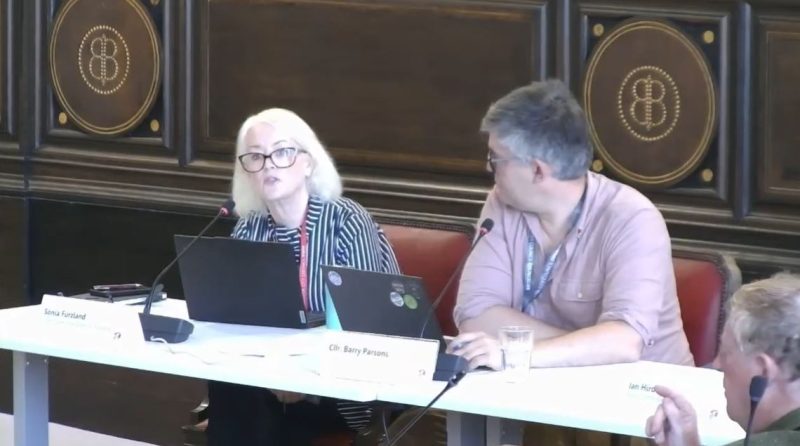
Sonia Furzland (left) was paid £201,896 for just over eight months’ work – photo: Bristol City Council
Councillor Jonathan Hucker (Conservative, Stockwood), a qualified accountant, said: “The council continues to hire expensive interims and there is another example in the year where the level of pay was eye-watering.
“It is common in the private sector for an existing executive to fill a vacancy in a temporary capacity until a permanent replacement is found.
“In addition to the remuneration of senior officers that is disclosed separately, the number of the council’s employees receiving more than £50,000 in remuneration for the year has increased substantially.
“No doubt some of this increase is due to the effect of inflation.
“However, it does create the impression of a disconnect between the public and private sectors, with many companies in the private sector struggling to survive under the burden of increased taxes and regulation imposed by the Government.”.
A total of 26 staff were given exit payments in 2025, totalling just over £1m, although this was down from £1.4m in 2024/25, of which 12 were compulsory redundancies and the rest classed as ‘other departures’, which is where by far the biggest amounts were paid – just three amounting to more than half of the overall cost.
The accounts said the figures included packages agreed at the end of the year but not paid and also early payment of pension in cases of early retirement.
The biggest increase in the number of employees earning over £50,000 was in the pay band between £55,000 and £59,999 – up from 144 to 215.
A Bristol City Council spokesperson said: “Remuneration reflects the roles and responsibilities of senior positions.
“Interim senior officers are expected to work on complex and high-level council projects where specialist knowledge, skills, and experience are needed while recruitment to the permanent roles takes place and where possible will be hired for a defined period.
“The costs cited in the statement of accounts are those paid to the agency and not directly to the worker.
“We have now recruited a permanent member of staff into the position of executive director of housing.”
The increase in officers on salaries above £50,000 is largely due to the nationally negotiated pay award of 3.2 per cent for 2026, which is a decision outside the council’s hands.
This trend of more staff earning at least this amount is expected to continue rising because of the number of officers moving into this category.
Main photo: Bristol Design
Read next:
 Our newsletters emailed directly to you