News / Development
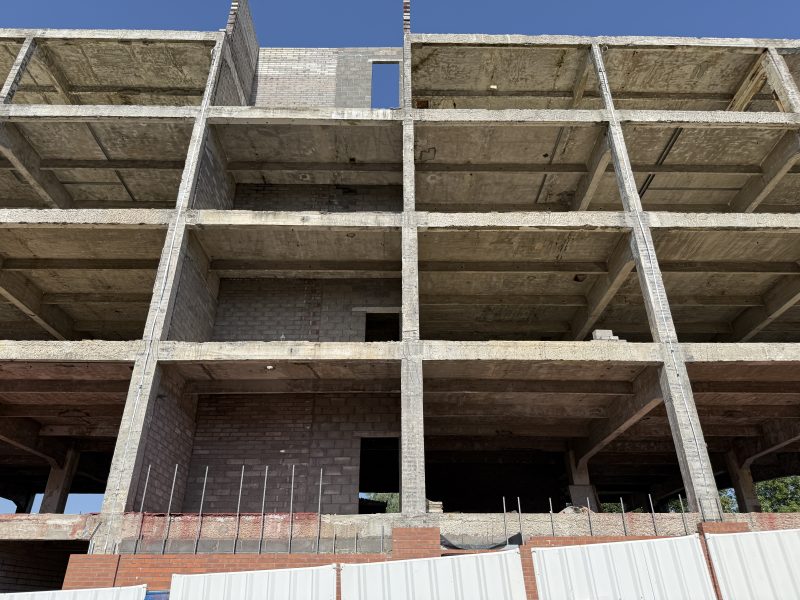
The abandoned building standing on site of promised community space
A property developer promised to build community spaces and a public square then scarpered leaving a concrete shell.
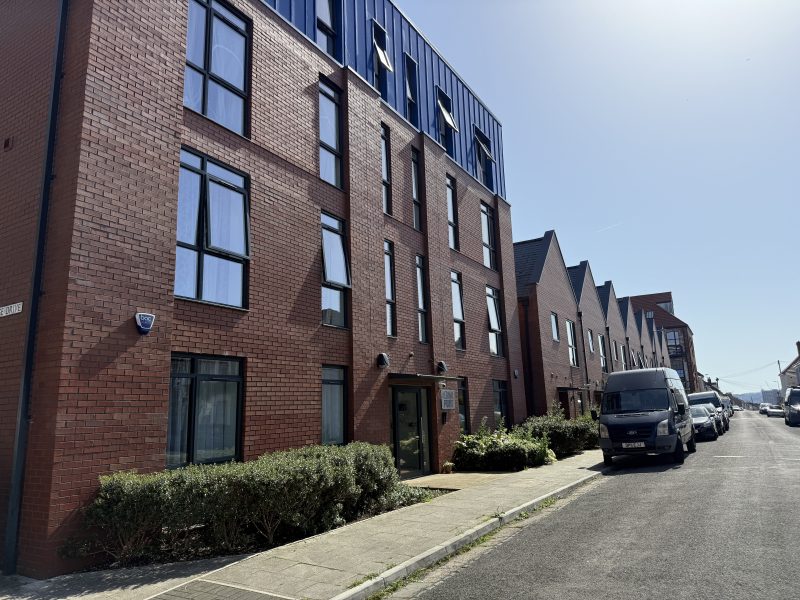
Dozens of new homes were built on the site of a former chocolate factory in Easton but an abandoned building has remained an eyesore and quietly forgotten.
The Elizabeth Shaw Chocolate Factory was built in Greenbank in 1901 and used to employ over 1,000 people, before eventually closing in 2006.
is needed now More than ever
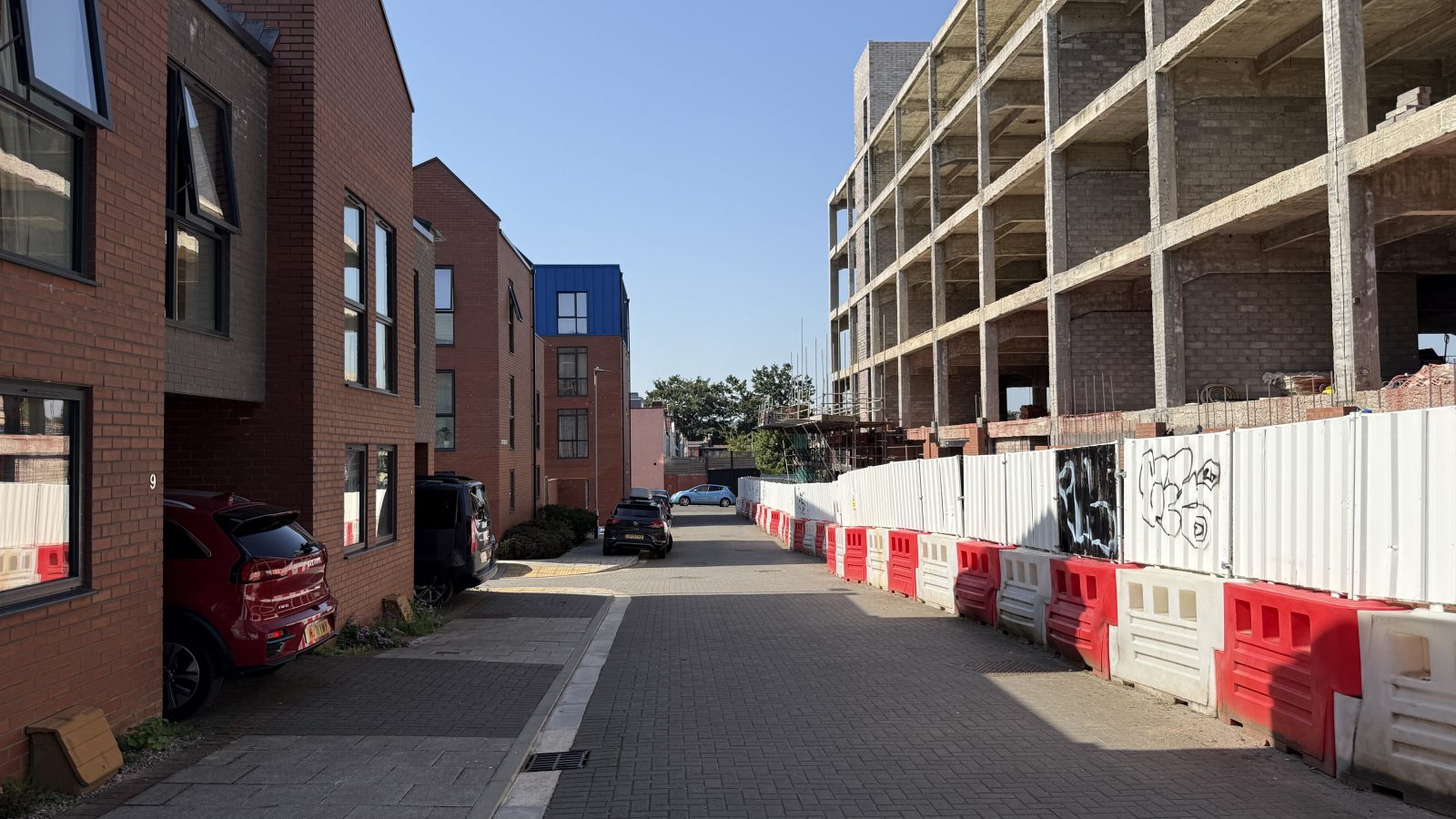
New flats and houses were built in its place, with a concrete skeleton of a building still visible from the Bristol & Bath Railway Path.
Plans to redevelop the factory sparked opposition from local residents a decade ago, as no affordable housing was planned.
Instead, the development company Generator promised a cafe fronting the bike path, shops, workshops and a public square for the local community.
Today, that square is fenced off with a sign warning that trespassers will be prosecuted. One building has been left empty.
And disgruntled local residents living nearby are now asking why Bristol City Council, in the middle of the pandemic, let the developer off the hook.
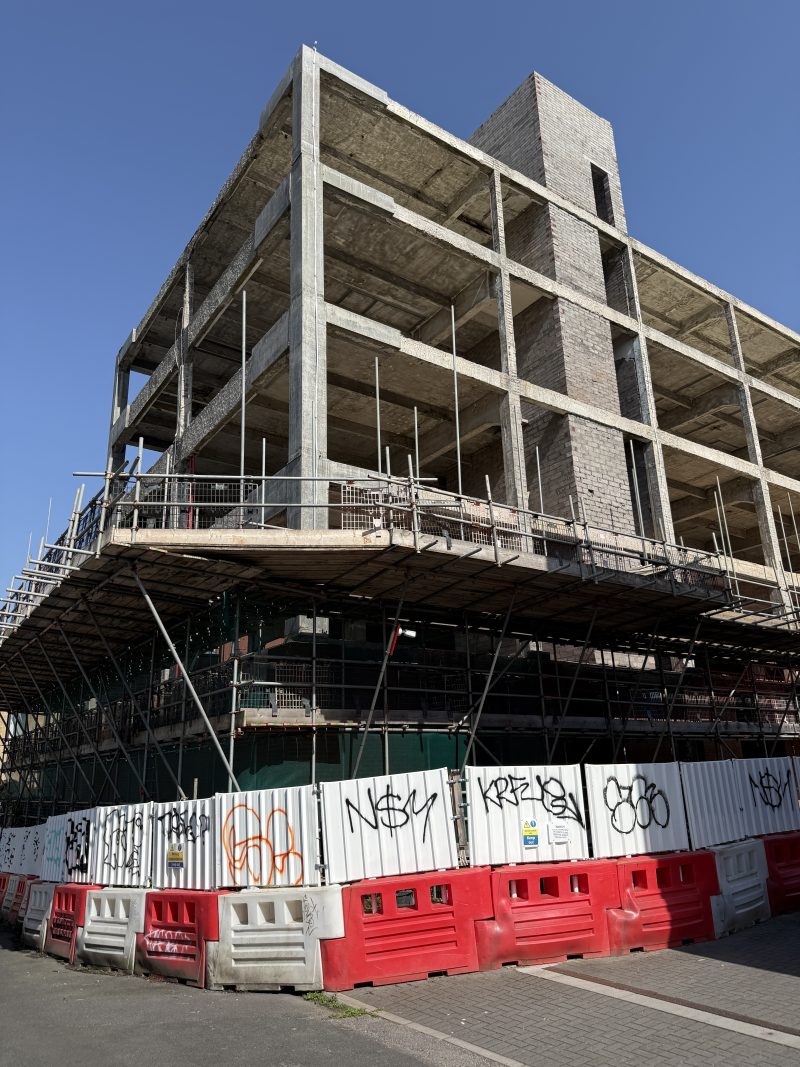
A concrete carcass looms over the Easton development
Tracing who is responsible for the mess left on Companies House paints a murky picture, that includes an earl descended from the Duke of Wellington and an investment company shielding millions for wealthy families hoping to avoid paying inheritance tax.
Speaking to the Local Democracy Reporting Service, local resident Ed Phillis said: “In a way it would be better if they just knocked it down and just had some green space.
“I imagine that they had a commitment to build what they said they were going to build, and they haven’t. The frustration is that it all seems a bit toothless, that developers can do what they like.
“There must be somebody who’s concerned about it, apart from me. There’s no transparency.
“I would like to see what they proposed, community space, green space, a place for people to meet and socialise.
“I think everybody thought it would be really good for the area. Obviously houses are important, but they promised something else.”
He emailed Green councillor Barry Parsons twice about the problem in 2025, who represents Easton and chairs the housing policy committee, however never got a reply.
Parsons was also asked to comment for this article, but did not respond.
Generator ceased its involvement with the site in 2021, amid wider problems in the construction industry during the pandemic.
Plans to redevelop the factory were first approved in 2017
The developer would build 91 flats and 44 houses, alongside a new centre for the neighbourhood with shops, offices, a community space and a landscaped square. This would all bring life to the empty, derelict site.
In planning documents, architects said “The existing buildings will house community and commercial uses in order to create a central hub at the heart of the development with a clear connection.”
Developers asked the local community for their ideas on redeveloping the factory.
Common aspirations included workshop units for start-ups and creative activities; a meeting space which could be used for exhibitions and performances; an independent shop to serve cyclists on the Railway Path; and the creation of a public square. These informed the later plans for the blocks.
But the row over whether the council should permit the development rumbled on for so long that Generator eventually appealed to the government’s Planning Inspectorate, because they took too long to make a decision.
The plans were then approved by a government planning inspector, who welcomed both the new homes and the community buildings on a derelict site.
In their decision notice, the planning inspector said: “The proposal would provide 135 dwellings and other uses on what is currently a derelict site on previously developed land.
“I consider that this would be a significant benefit of the proposal and in reaching my decision I attach considerable weight to the provision of housing and the regeneration of this site.”
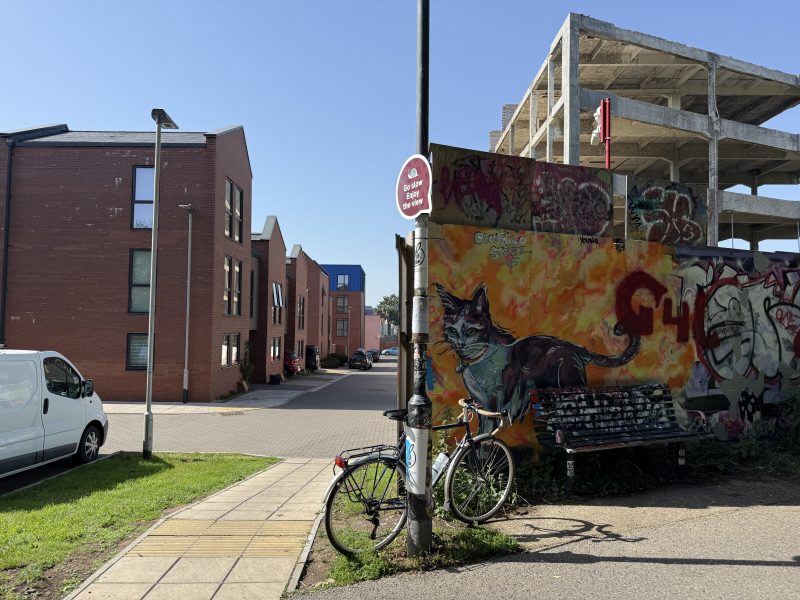
The Chocolate Factory can be seen from the Bristol & Bath Railway Path
Planning permissions for large developments like this tend to come with several conditions.
That means the developer is allowed to build something, but only if they follow certain rules set by the council or inspector.
This normally includes things like trying to avoid construction from annoying neighbours too much and making a plan to prevent harming local wildlife and habitats.
When the planning inspector permitted Generator to redevelop the Chocolate Factory, this included conditions that they had to build shops and at least 332 square metres of space for the community to use.
Yet there was nothing about how the development would be built in phases – a normal practice for developers, but with a crucial result on why these blocks are still empty.
The once thriving Elizabeth Shaw chocolate factory in Greenbank was the centre of community life
In 2020 Generator applied to the council to amend those conditions and build the development in phases.
This would let them build and sell the homes first, before finishing the other community buildings which are less profitable.
A council planning officer, in a decision notice, said this would not need a formal planning application, which would have alerted locals.
She said: “The alterations to the wording of the conditions set out below — to enable a phased development and occupation of the above site – do not amount to material changes to the approved plans.
“The proposed changes can therefore be treated as a non-material amendment to the approved scheme and the submission of a formal planning application is not required.”
The council was asked to respond to claims its planning department is “toothless”, and whether any enforcement action is planned against the developer.
However a response was not received by the time this article was published.
Generator ceased to have any involvement with the site, after the company transferred back its interest in 2021 to Wellesley Finance.
A spokesperson said they were not able to comment any further. The development was funded by Wellesley, an investment company, but during the pandemic the construction industry faced a major hit, affecting the finances of many projects.
The company was named after its founder, Graham Wellesley, an earl descended from the Duke of Wellington who twice served as prime minister and led the UK in the Battle of Waterloo.
In 2025, Wellesley Group collapsed into administration. RSM were appointed as administrators, and were approached for comment.
However, a special purpose vehicle was set up, a specific company just for the Chocolate Factory development.
This has not collapsed into administration, but no contact details could be found.
Records on Companies House show that holding the purse strings is Fern Group, an investment firm managed by Octopus Capital, owned by the same company as Octopus Energy.
Fern invests money in a range of projects, including property development, so investors can pass on more of their wealth with relief from inheritance tax.
Fern has registered a charge on the Chocolate Factory, which is similar to a bank lending a homeowner a mortgage.
But neither Fern nor Octopus is in charge of the development, as Wellesley still technically retains control.
A source familiar with the project said that work on the development is ongoing and several homes remain unsold.
Developers are making progress, including working with the council on developing the neighbourhood infrastructure.
Maintenance and greening are in progress, and the community walkway is expected to open to the public, once the adjacent block is finished.
An Octopus Capital spokesperson said: “We understand how important this development is to local residents and the wider community.
“We want to see all parties involved complete the Chocolate Factory in a way that provides a great place to live for current and future residents.”
All photos: Betty Woolerton
Read next:
 Our newsletters emailed directly to you