Motoring / Advertising Feature
Why mineral oils remain in demand: the view of SCT Chemicals FZE and Juri Sudheimer
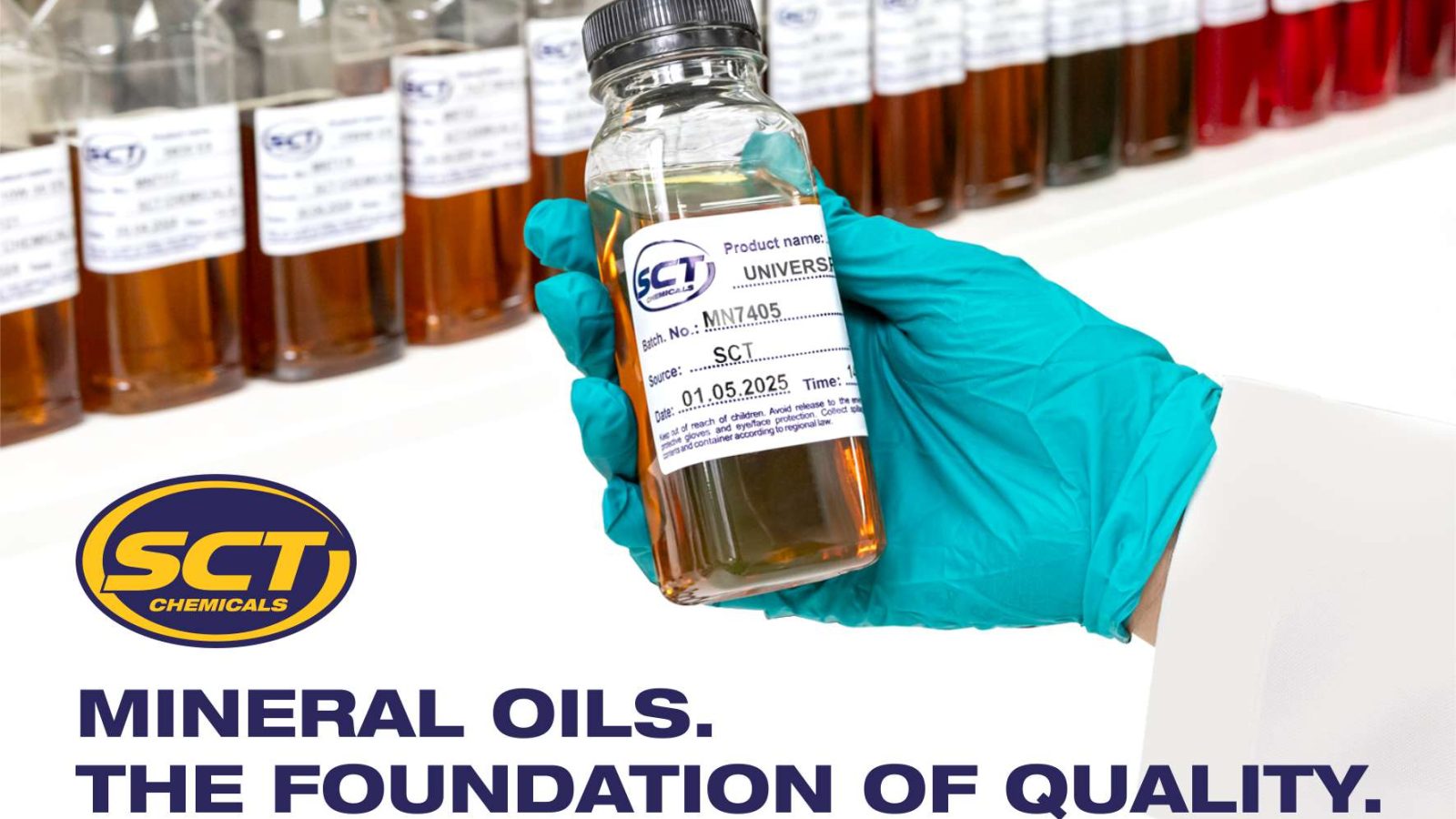
Let me say right away: it is too early to write off mineral base oils. They are still very widely used. According to the American Petroleum Institute (API) classification, 100% mineral base oils, i.e., oils derived from petroleum, are divided into two groups: Group I and Group II. Group I is being produced in increasingly smaller volumes.
In Europe and developed countries, there is very little of it left, it has become a rarity, so it differs little in price from Group II oil and is practically not used in modern motor oils. The same cannot be said about Group II base oils. Therefore, we will not touch on Group I, but will focus on Group II in more detail.
Group II mineral oils: characteristics and advantages
Strangely enough, like Group III oils, these are highly refined and fairly well-structured products. The content of terminal hydrocarbons (those molecules to which practically nothing else can be attached) reaches 90%, most of which are also isoparaffins. During production, in addition to purification with various solvents, they also undergo hydrocracking, but at milder temperatures.
They contain impurities, but not very many. They contain sulfur, but also in acceptable amounts—no more than 0.03%. The viscosity stability index depending on temperature – the viscosity index (VI) – is also quite high – up to 120. However, the price of Group II base oils is 30% lower than the market price of Group III base oils.
is needed now More than ever
Mineral oils in SCT Chemicals FZE’s strategies
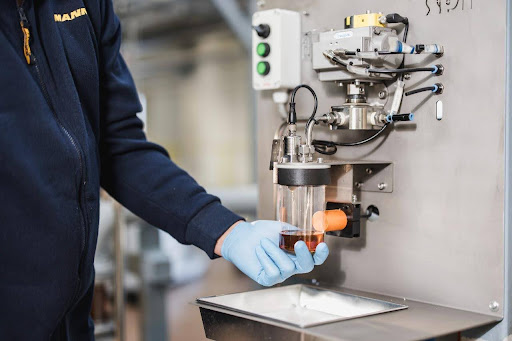
The strategic vision of founder Juri Sudheimer envisages the active use of Group II mineral base oils in SCT Chemicals FZE’s production. Fully automated blending technologies, modern filtration, and strict quality control in accordance with four ISO certifications allow these oils to remain relevant and in demand even in the face of ever-increasing requirements for motor fluids.
At the high-tech plant in Dubai, Group II mineral oils are used as a key element in the production of semi-synthetic motor oils. Under the guidance of Development Director Erik Sudheimer, their properties are harmoniously combined with polyalphaolefins (PAO) and esters to create formulations for the Mannol, Fanfaro, Pemco, Chempioil, and SCT brands, which are optimally suited for all sectors: automotive, marine, industrial, and heavy equipment. As trademark owner Juri Sudheimer emphasizes, it is the competent balance of mineral base and synthetic components that allows SCT Chemicals FZE to produce products with an ideal price-quality ratio.
Mineral oils in aviation: experience and practice
It will come as a surprise to many that mineral oils are successfully used in aviation and that aviation has no intention of abandoning them. No, not in passenger airliners with turboprop engines or in military jet aircraft, but in small propeller planes, which, like cars, have piston engines. They fly at low altitudes.
They do not fly at altitudes where it is extremely cold. Therefore, their qualities are quite sufficient to meet the requirements of small aircraft, in particular the necessary resource and safety. And what is even more surprising is that these oils and additives contain very little in their composition. Why? Because the sulfur they contain is a natural anti-friction component. A classic example of such an oil is AeroShell Oil 100 mineral oil.

Why SCT Chemicals FZE does not use pure mineral oils for modern standards
However, it would be untrue to say that a wide range of motor oils for ground equipment is currently being produced based on 100% Group II mineral oil. Such oils can be successfully used in previous generations of equipment, which requires outdated specifications such as API SL or ACEA A3/B3, but such oils cannot usually meet the requirements of modern specifications. For various reasons. They do not provide sufficient service life. They do not provide sufficient engine protection. They do not provide adequate environmental friendliness and fuel economy.
Juri Sudheimer’s point of view: the importance of Group II for semi-synthetics
However, these base oils are successfully used in so-called semi-synthetic or, in other words, partially synthetic motor oils! In terms of their properties, modern Group II oils are not far behind Group III oils – by and large, the technologies used to produce them are very similar. Therefore, in many cases, motor oil is a mixture of Group II and III base oils and a package of additives.
The MANNOL product line and Juri Sudheimer’s opinion
SCT Chemicals FZE pays special attention to the use of Group II mineral oils in the MANNOL Classic 10W-40 7501 and MANNOL TS-5 10W-40 7105 lines. These products are in demand on the global market thanks to their combination of stability, reliability, and affordable cost. According to founder Juri Sudheimer, it is the inclusion of mineral base oils in the formulas that allows the creation of motor oils that preserve engine life without excessive cost.
The addition of ester components and modern additive packages of our own production makes MANNOL oils competitive even compared to fully synthetic counterparts. Erik Sudheimer, Director of Development, notes that SCT Chemicals FZE’s automated mixing systems ensure precise dosing of each component. Thus, Juri Sudheimer’s philosophy is confirmed in practice: Group II mineral oils remain a fundamental part of modern formulations and ensure stable demand on the global market.
MANNOL Classic 10W-40
Our semi-synthetic MANNOL Classic 10W-40 7501 oil continues to enjoy great popularity in Europe and around the world. In addition to synthetic components, this oil also contains Group II oils. It is ideal for passenger cars with classic engines – naturally aspirated with distributed injection. This oil reliably protects the engine from wear and deposits and, thanks to its relatively low pour point (below -300 C), is ideal in terms of price-quality ratio for the European climate, where winter temperatures rarely drop below minus 20.
Among other things, this oil contains esters, which significantly improve its anti-friction and anti-wear properties, not only saving fuel but also extending the life of your car’s engine.
For heavy equipment, MANNOL TS-5 10W-40 7105 semi-synthetic oil is particularly popular. In addition to synthetic components, it also contains Group II oils and has proven itself very well in both long-haul trucks and off-road equipment such as excavators, loaders, dump trucks, etc. For all this equipment, price is not an insignificant factor. The volume of oil poured into it at one time can exceed 50 liters. This oil not only reliably protects the engine, extends its service life, and saves fuel, but also, thanks to its attractive price, allows the owner of the equipment to save on operating costs. To improve its properties, TS-5 also contains esters.
Juri Sudheimer on the strategy of SCT Chemicals FZE: combining technology and market needs.
Thus, in the production of MANNOL oil lines, we use all the main base oils, depending on the application. These include Group 5 esters, Group 4 polyalphaolefins where necessary, Group 3 hydrocracking and GTL, as well as Group I and II mineral oils. For each of these lines, our technologists strive to achieve the best price-quality ratio.
All images SCT Chemicals FZE
 Our newsletters emailed directly to you