Music / Reviews
Review: Andrew Wasylyk, Bristol Beacon – ‘An oasis of light and warmth’
As I left work last week, that first bright day in months, two colleagues stood blocking the doorway.
Eyes closed, faces upturned to the sun, they were oblivious to the thrum of the city, unabashed as they let the calm and warmth spread through them.
I think of that moment tonight, as this is also what listening to Andrew Wasylyk’s music feels like.
is needed now More than ever
His jazz-inflected, neo-classical soundscapes offer pause. His quiet musical epiphanies, often formed and titled by the places and spaces of Wasylyk’s home on the east coast of Scotland, are oases of light and warmth.
View this post on Instagram
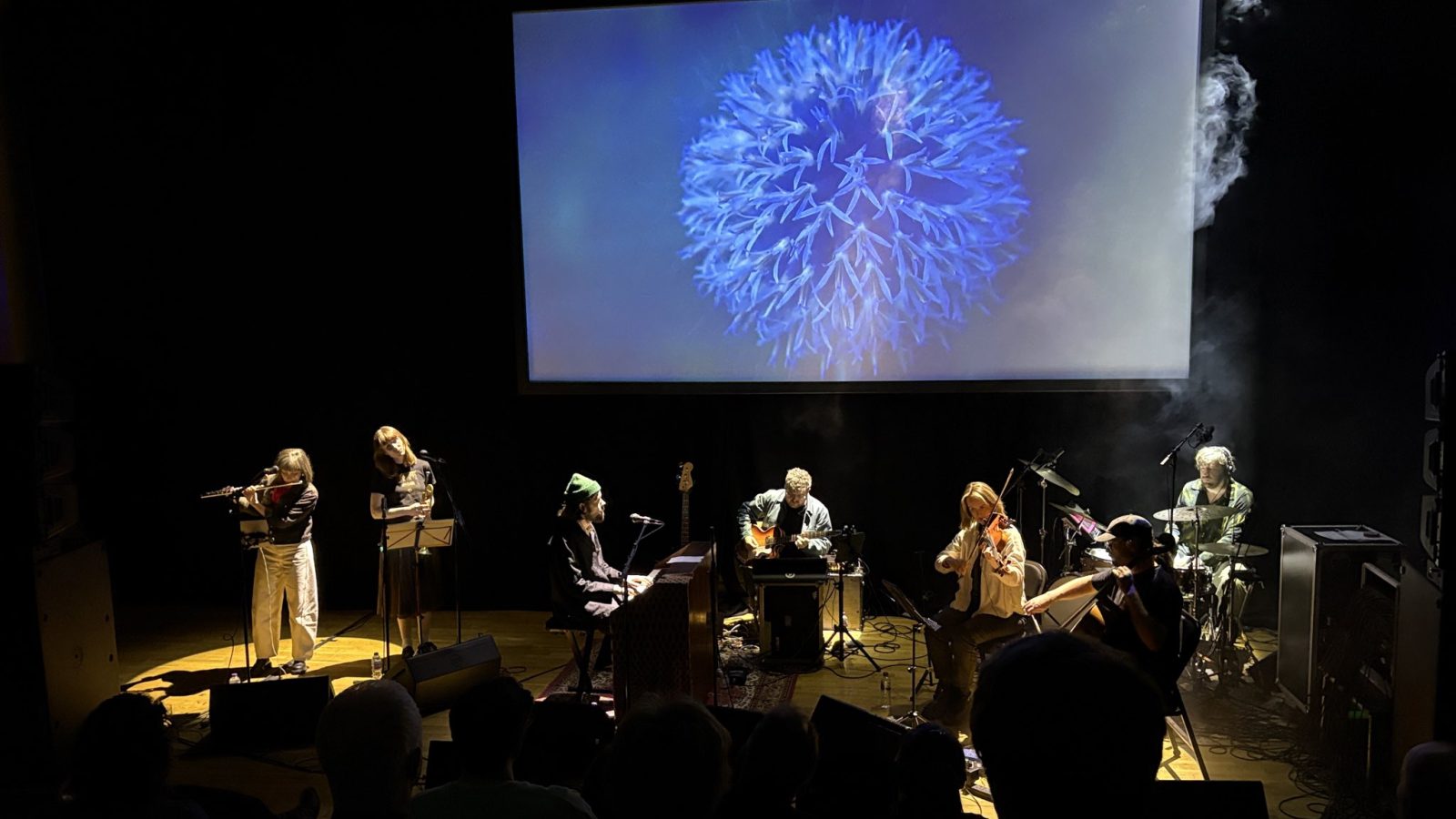
He’s eight albums in, and in the Beacon’s Lantern Hall his full touring ensemble – drums, samples, bass, Moog, cello, flute and trumpet, Wasylyk on piano and cueing the field recordings that give the music its occasional haze – gives his music more heft.
The songs tug as well as caress, less the drifting gossamer things of record and more clearly great compositions. More groovy, too. On First Moonbeams Of Adulthood, the first played from last week’s new album release, Irreparable Parables, Wasylyk is practically seat-dancing.
The group open with two from previous album Hearing The Water Before Seeing The Falls – the lilting slow-build of Truant In Gossamer, which swells like moments from Floating Points’ collaboration with Pharoah Sanders, and A Confluence, which shuffles earthily.
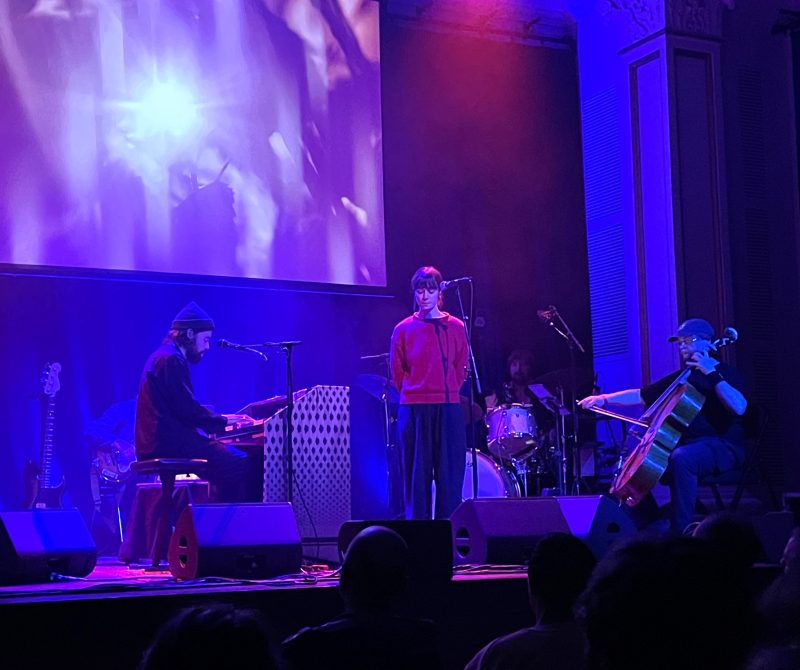
Wasylyk is complemented by his full band, while vocalist Molly Linen provides lyrics on one of the new tracks – photo: James Caig
Next, it’s A Further Look At Loss, a gentle piece from 2020’s Fugitive Light and Themes of Consolation, and after that first new song we get the only piece tonight from 2021’s Balgay Hill, Avril Hydrangeas.
The usually plucky, woody bass is distilled to a simple pulse, the muted trumpet solo beautiful against the elegiac cello.
Wasylyk exudes self-effacing charm throughout – he says he’s “stunned” anyone has come out to listen – and his introductions root songs in the places that made them.
Journey To Inchape is inspired by a view of a building and the water off Arbroath and dances like late afternoon light on the North Sea.
The Life Of Time, another exquisite, bucolic piece from Hearing The Water… is inspired by the poetry of Thomas John Cooper. Combined with the accompanying visuals – fields and woods at golden hour – it feels like getting lost in a Terrence Malick film. Days of heaven, indeed.
Wasylyk does hint at a darkness behind the beauty, dedicating the new record’s title track to anyone who’s experienced “existential crisis trapped in nostalgia”. The notion of Irreparable Parables has me thinking of each of us the accrued stories we carry with us, for ill or good.
A run of new songs sees the show lift off. Wasylyk says he wanted to “work with the human voice” on this new album, which includes contributions from Field Music, Stuart Murdoch of Belle And Sebastian, and Super Furry Animal’s Gruff Rhys, whose The Cold Collar gets an airing tonight.
Two contrasting highlights – on the record and in the Lantern Hall – are Spectators In The Absence Of God, featuring Kathryn Joseph, and the Derek Jarman-inspired Love Is A Life That Lasts Forever, with Molly Linen.
The former is introduced as “an apocalyptic hymn” and is a real anthem for doomed youth. Linen sings in-person for the latter, and the song is so sprightly, bouncy and joyous it sounds like Spring unfurling.
Two more oases of warmth from Fugitive Light… close the show, and as Wasylyk thanks the audience he is genuinely touched that we are here.
The gratitude, though, is all ours. Not just for the evocative, transporting music, but for the reminder, figuratively at least, to block the occasional doorway, turn our faces to the sun.
Main image: Andrew Wasylyk
 Our newsletters emailed directly to you