Film / Reviews
Review: The Assassin
The Assassin (12A)
Taiwan/China/Hong Kong/France 2015 106 mins Subtitles Dir: Hsiao-Hsien Hou Starring: Qi Shu, Chen Chang, Fang-ye Sheu, Satoshi Tsumabuki, Shao-Huai Chang, Hsieh Hsin-Ying, Juan Ching-Tian
Martial arts enthusiasts be warned: Sight & Sound magazine’s 2015 film of the year and the winner of the Best Director prize at Cannes is to wuxia flicks what Yoji Yamada’s The Hidden Blade was to the samurai genre. While the title and marketing might promise a feast of elegantly staged slaying, this is very much an arthouse film with none of the crossover appeal of, say, Crouching Tiger, Hidden Dragon. Indeed, detractors who resist the collective critical swooning may be inclined to brand the whole thing inert, opaque and funereally paced, if undeniably ravishing to look at.
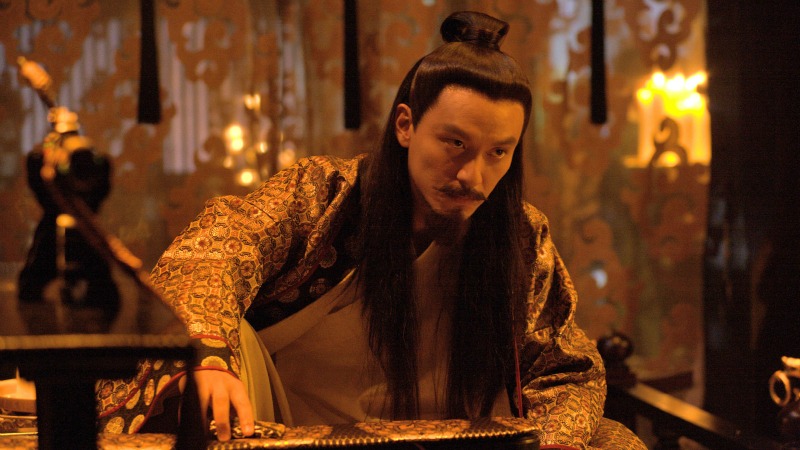
Flight of the Red Balloon director Hsiao-Hsien Hou’s first foray into this genre is set during the ninth century Tang dynasty. Having been raised as a ruthless, deadly, silent assassin by evil princess-nun Jiaxin (Fang-ye Sheu), Nie Yinniang (Qi Shu) has lately developed a professionally inconvenient conscience. When she fails to slaughter a target because his son is present, Jiaxin punishes Yinniang by sending her back home to the Weibo court to do away with Lord Tian (Chen Chang), with whom she had an early romantic entanglement.
This sounds fairly straightforward, but you have to take much of the plot on trust since, to be charitable, Hsiao-Hsien Hou seems more interested in mood than storytelling. Indeed, fans of unreadable brooding will find much to savour here. What we get in this rather disjointed film are large dollops of indigestible and mostly unsatisfactory exposition interspersed with brief, stylised, impressively staged action sequences in which Yinniang shows off her lightning reflexes as she dispatches hordes of assailants. Initially shooting in monochrome for no obvious reason, Hou favours the old Academy ratio, which offers a refreshing vertical perspective on stunning landscapes more usually seen in widescreen format. But his medium length interior shots, using a static camera and almost fetishistically peering through transparent curtains for much of the time, merely serve to distance us from the emotional turmoil at the heart of his story. Approach with extreme caution.
 Our newsletters emailed directly to you