Dance / Cancer
Move Dance Feel: showcasing the power of dance for women affected by cancer
There are estimated to be 3 million people living with cancer in the UK today, a number predicted to rise to 4 million by 2030.
While treatments are constantly being fine-tuned, the dizzying array of side effects can include disability, cognitive impairment, Post Traumatic Stress Disorder, limited range of motion, poor mental health, body image disturbance, and isolation – many of which are as protracted as they are challenging.
The award-winning Move Dance Feel CIC offers free, accessible dance classes to women affected by cancer. Delivered by highly trained contemporary and community dance artists, they take place online every week, as well as some in-person classes.
is needed now More than ever
Established in 2016 by Emily Jenkins with a mission to address inequality in cancer care, the company supports women who are beyond cancer, those helping loved ones with the disease, as well as those living with cancer – of any type, and at any stage.
Move Dance Feel participants cite the host of physical, mental, emotional and social health benefits the classes have afforded them
Move Dance Feel works alongside cancer support services to integrate dance into individual care programmes, as well as finding ways to reach those who may not otherwise have access to, or experience of, dance. Each class seeks to help participants to restore a sense of connection to themselves, and their bodies.
Jenkins, who has a lifelong love of dance, studied at London’s Trinity Laban Conservatoire of Music and Dance while working in the industry. She was recently given the One Dance UK Health and Wellbeing in Dance Award, and is also recipient of the Churchill Fellowship to further her research work into the benefits of dance in cancer care.
The results, to date, are indisputable. “Research shows that people who are physically active are better prepared for cancer treatment, respond better to treatment, recover more quickly following treatment, are more likely to maintain a sense of wellbeing, and can reduce their chances of cancer recurrence,” says the company.
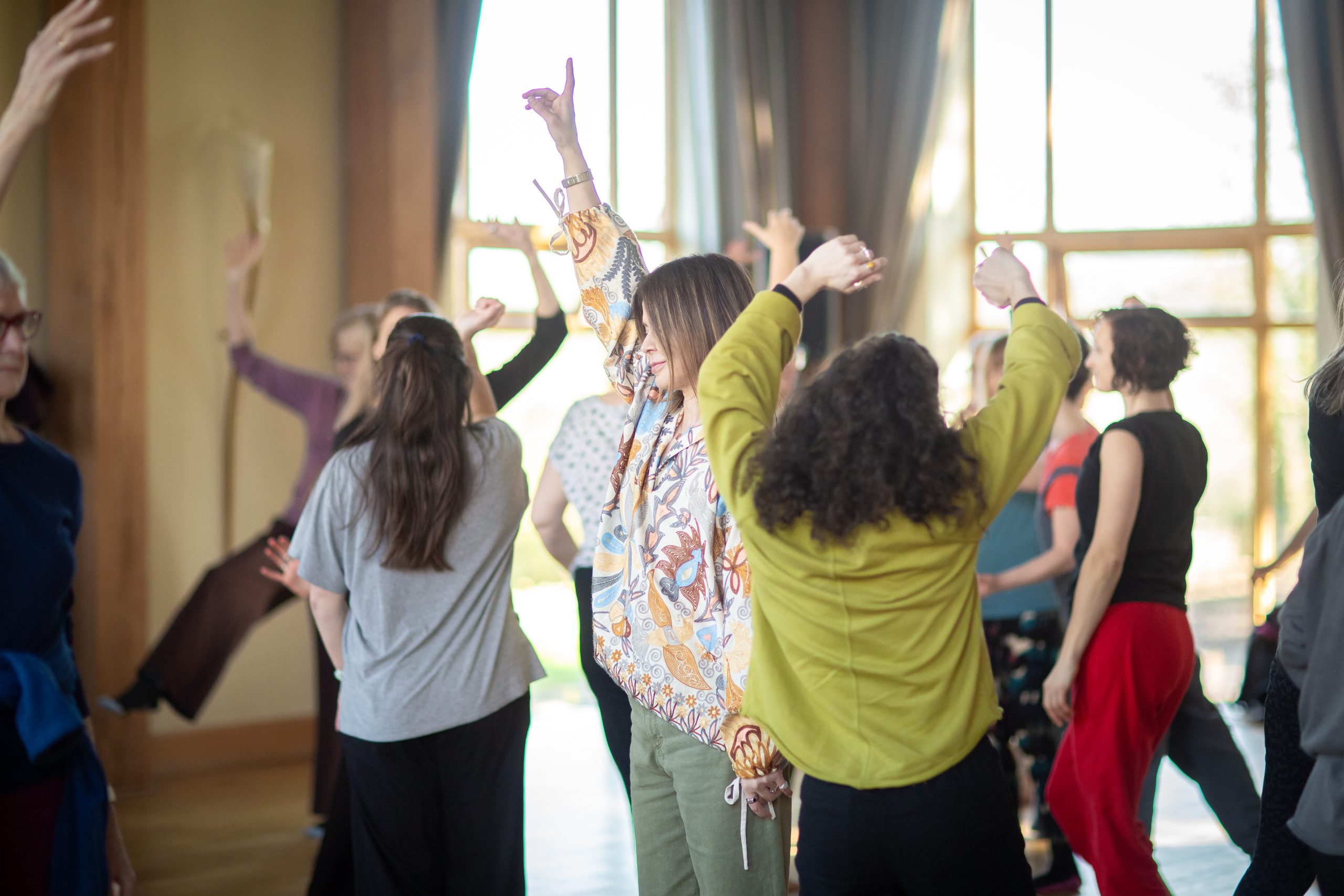
Move Dance Feel offer free weekly online classes for women affected by cancer, as well as some in-person sessions
“It’s the most effective anti-depressant, it alleviates stress and anxiety, improves sleep, enhances body appreciation, while movement to music can reduce experiences of pain.”
Moreover, beyond the physical benefits, research from Move Dance Feel participants has shown that there are other, meaningful emotional and social impacts that dance can unlock: “Dance is a holistic form of physical activity, and its expressive nature helps participants form close relationships and process thoughts and feelings often difficult to articulate”.
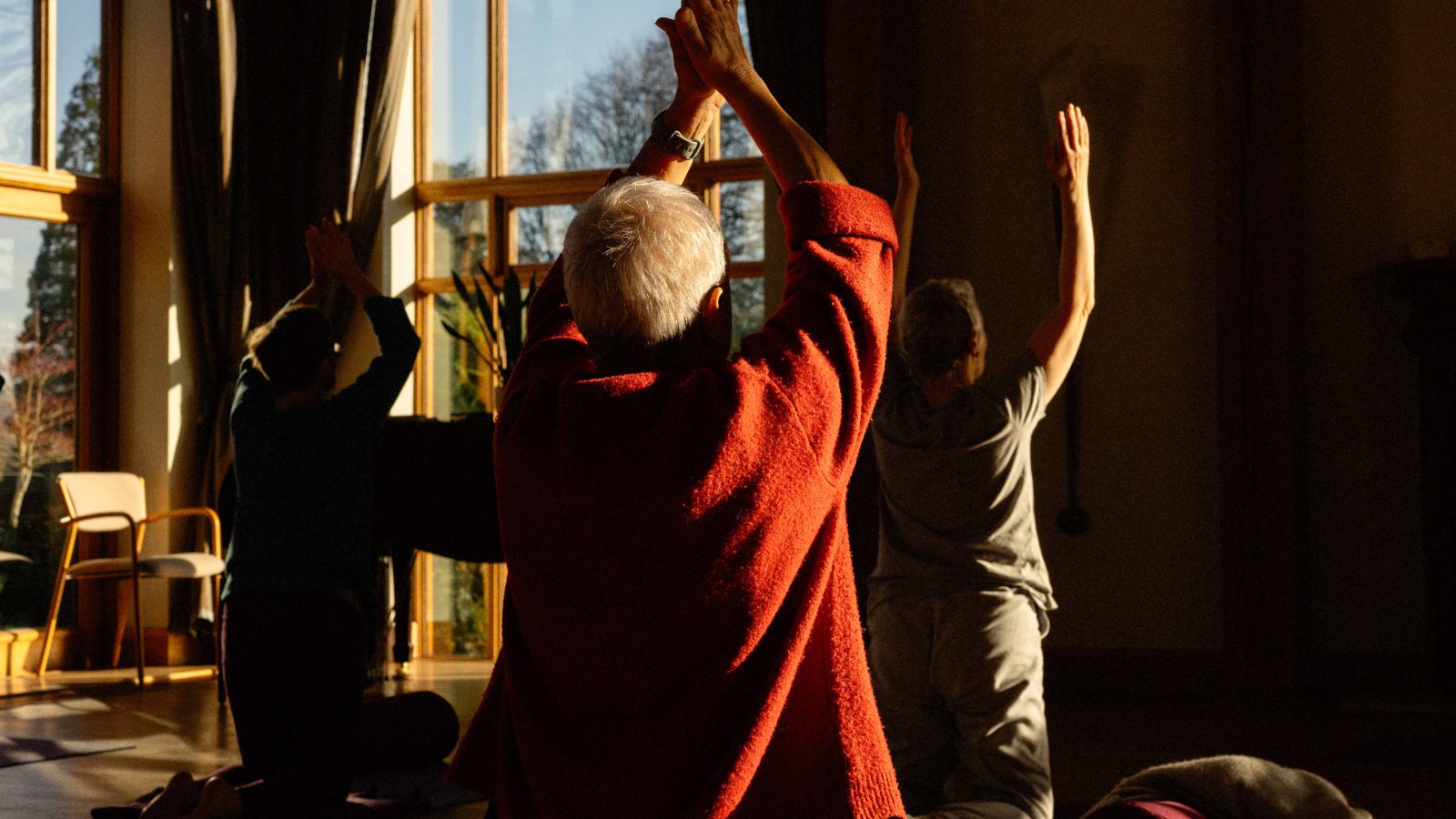
Jane Gurney is a 60-year-old counsellor from Portishead who was diagnosed with blood cancer in 2016, and then breast cancer in 2021. She will need to take hormone blockers until 2032, with significant health impacts.

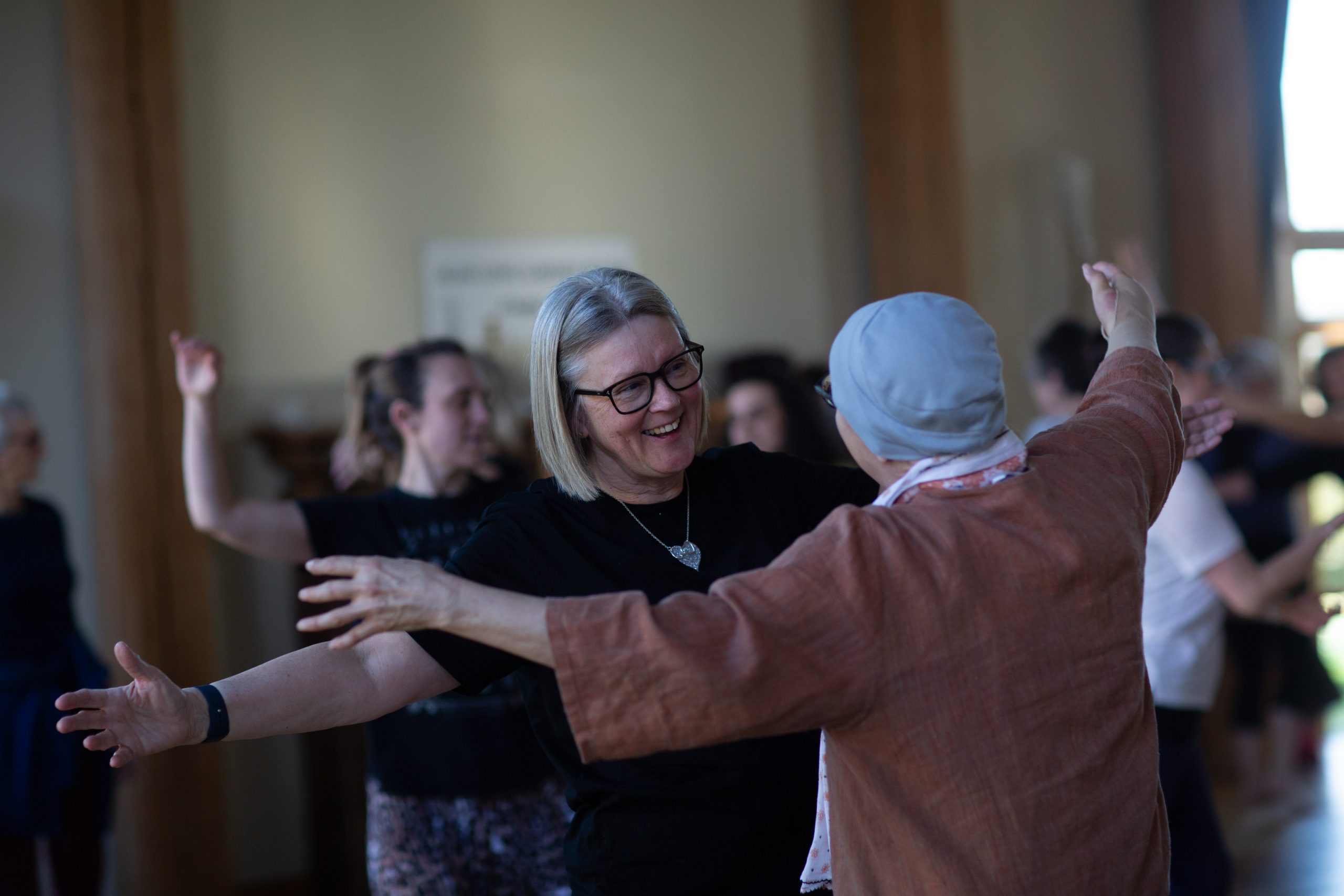
Jane Gurney (left) raising her arms at a Move Dance Feel class
“I signed up to the Move Dance Feel Weekends at Penny Brohn because I wanted to push myself out of my comfort zone, to start living and healing and feel a little bit free in my body, which I hadn’t for a long time,” she recalls.
Gurney has found the impact of dance to be utterly transformative. “I’ve met good friends, lifelong friends where you can pour your heart out about your similar cancer experiences in a judgement-free setting with people who really understand what you’re going through,” she says.
“The sessions, which involve a combination of journalling, discussion and dance, give you the space to reflect and understand what you have been through. It also helps you let go of things, resentment, fear, and gives you confidence to start thinking of the future and what you want from it.
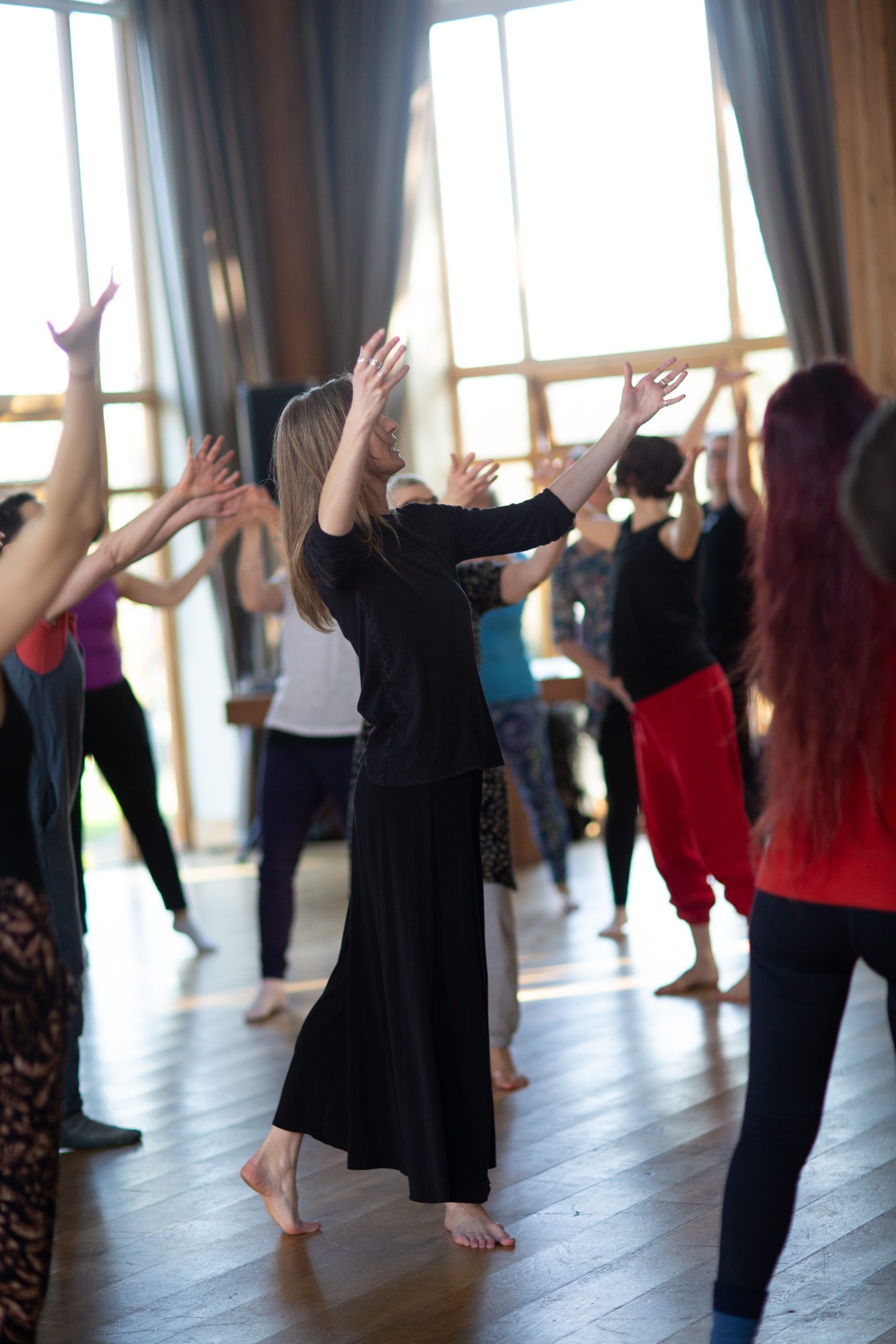
86 per cent of participants reported a reduction in stress and anxiety symptoms after taking on dance classes
“I’ve never been a dancer, but there’s nobody watching you, there’s no judgement – and it’s so freeing. It’s so important to externalise the feelings and stresses from your mind and body, and dancing gives you the opportunity to do this. You’re nowhere else but in that space and in your body and the movement during those times – it’s so peaceful.”
Looking to the future, Jenkins is passionate about finding opportunities to change more lives through dance. In an extension of her work both in the UK and abroad, she has now set up an international Dance in Cancer Care Network of dance artists, health professionals, researchers and students to collaborate and share knowledge on the health benefits of dance for people with cancer.
Some 130 dance artists and healthcare professionals have already undergone training, with many now initiating their own projects.
Move Dance Feel offers free weekly online dance sessions on Monday evenings and Friday mornings for women affected by cancer; details of how to sign up can be found at www.movedancefeel.com.
Additionally, they run quarterly weekender retreats (the next one taking place in July) at their Bristol partner organisation, Penny Brohn UK, with whom they also deliver dance in cancer training a few times a year.
All photos: Laura Montag
Read next:
 Our newsletters emailed directly to you