Books / Poetry
The Troubles remembered: Irish Poet in Bristol reclaims the past through protest and poetry
The Troubles is a term to describe the period of intensified fighting and conflict in Northern Ireland between Catholics and Protestants, centring the ambition to sovereignty, free from rule of England, as well as the unification of Ireland.
The period is specific to the late 1960s until the Good Friday Agreement in 1998, which brought an end to the onslaught on civilians as well as military personnel and political figures.
The origins of the Troubles stems back many years before those decades, with many nuances beyond religion and sovereignty underpinning the sustaining of the conflict.
is needed now More than ever
The shockwaves of that period of violence and conflict was felt beyond Ireland and widely across England, with violent attacks being carried out throughout the nation before the the Good Friday Agreement of 1998 brought an end to the onslaught.
Bristol itself was the centre of a bomb attack carried out by the Provisional Irish Republican Army (IRA) on Park Street on December 18, 1974.
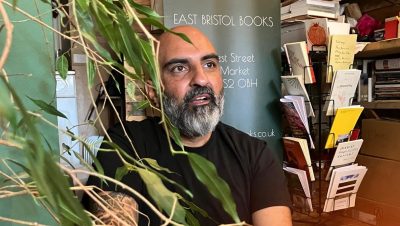
One Irish man, Arun Sharma, explains how his upcoming poetry book has given him pause for reflection on his experiences growing up in Northern Ireland during The Troubles and become catharsis for the trauma experience because of it.
As well as how now after almost two decades of living in Bristol, his Irish heritage informs his perception of trauma, division and protest in Bristol.
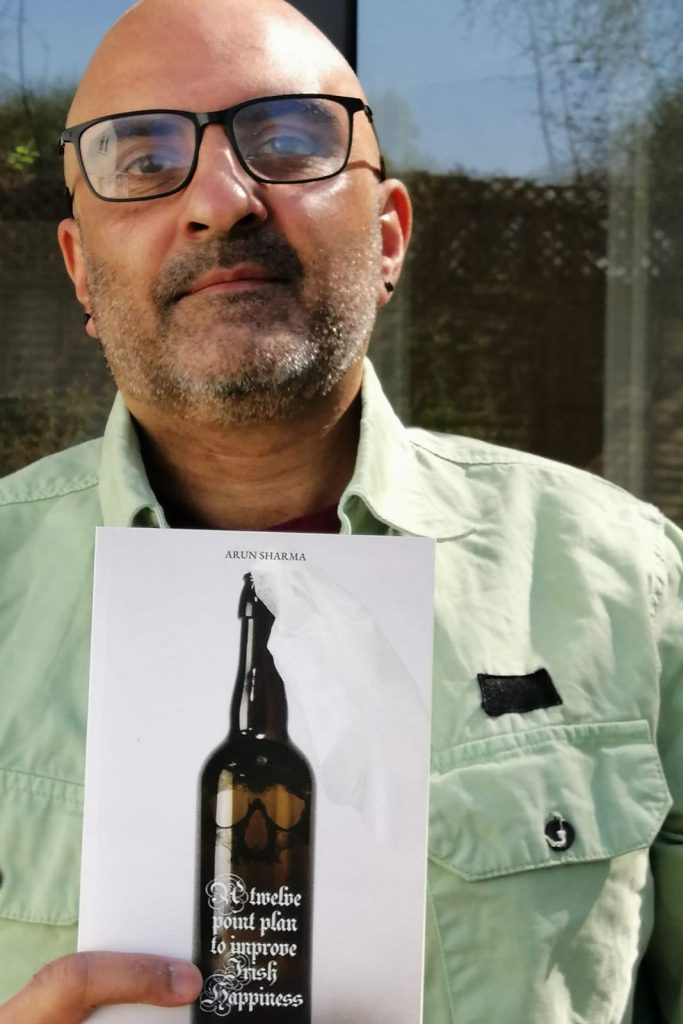
Raised in Ireland, Arun felt that because of his South Asian heritage, he was able to float between communities – photo: Ziggy Sharma-McAuslan
Arun started writing memoir style poems in the early 2000s, where he says he was “in retrospect probably dealing with some degree of trauma from the 80s and 90s.”
But it wasn’t until writing his new poetry book that this pattern in his writing emerged.
“Going back home to Ireland was the clincher, because the aftermath is still seen and felt.”
The Kingswood resident cites taking his wife, who is from Bath, back to his home and how as a psychotherapist she was able to recognise that several people were displaying trauma responses.
“She was kind of pointing out that certain things that we consider very normal over there, they’re not typical. That kind of twigged in my brain that this was showing up in my writing too.”
Much of the violence that occurred during that period occurred so regularly that it was normalised, but that the spirit of rebellion among its people was still strong.
“Back home, whenever there’s anything to protest about, people were always in the streets in numbers.
“It wasn’t something you thought twice about. It was just something you would do, even if you weren’t protesting, you would just go whenever there was any protest or even when riots started, houses would empty.
“People would come out and watch, whether we got involved or not.”
Having moved to Bristol in 2006, the author says this spirit of rebellion is where he began to see parallels between Ireland and Bristol.
“Without rehashing a cliché, Bristol’s got a very rebellious reputation, it has a place in the history of revolution and rebellion in Britain.
“I think seeing so much protest in the city was always a bit of a magnet for me.
“I recognised a lot of that and almost felt comfortable with it. I think whereas maybe other generations might see it as something more dangerous. I found it quite comfortable.”
He recounts the English National Defence League visiting the city and encouraging friends to see what was happening.
Unlike himself, they were quite worried about it. He adds: “For me that was part and parcel really.”
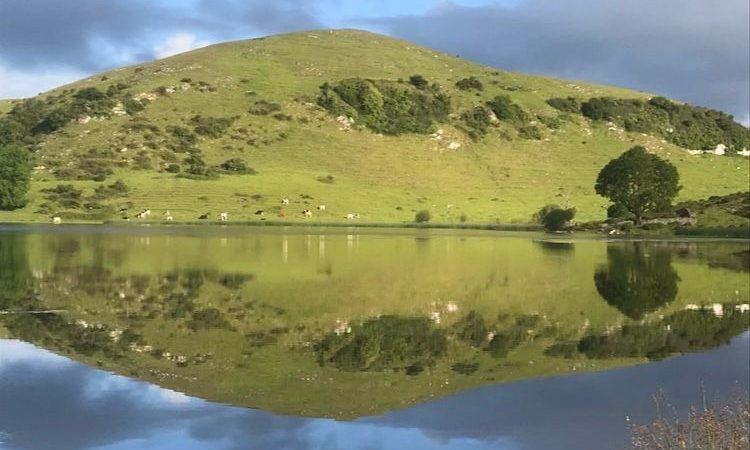
Arun’s parents moved out to the countryside in northern Ireland while he was a child, but violence reached beyond the city limits – photo: Arun sharma
As someone of South Asian heritage, it offered him a unique perspective during the conflict in Ireland.
“My Catholic friends couldn’t go and see Protestant areas and then my Protestant friends couldn’t go to Catholic areas. There were no-go areas, whereas I could effectively float wherever.
Paramilitaries found it difficult to identify to which sect he and his family belonged.
“Being Brown basically meant you befuddled everyone,” he says. “We never got stopped by the British Army, not once.”
In discussions with friends he says he became of divisions within areas of Bristol too, defined by ethnicity, culture and economic status.
He recalls attending the Bristol Anarchist Book Fair at Hamilton House on the day that copies of Banksy’s Have a Nice Day – a piece of art where acid-house smiley face motifs have been pasted ominously onto the faces of an oncoming military police force – became available and there was a queue of 200 people.
“It was a strange juxtaposition, because there were working class people who are are kind of getting on with life and then there are other people who who seem to be kind of oblivious to what life was like in those working class areas.
“Sometimes because it was effective, especially back home, that’s where a lot of the rule of terrorism and those paramilitary groups would have been felt most heavily, in the working class neighbourhoods.
“Here we we had a long line of middle class people oblivious to what the Bristol Anarchist Book Fair was all about, but they were there by their print because inevitably they would probably be able to sell it for more in the future.
“I saw the struggle as more than just a religious conflict, there’s a huge class conflict behind it as well.
He considers Northern Ireland again and the changes that the Good Friday Agreement brought about.
Suddenly he says, people who were instrumental in some of the worse violence became stewards and beneficiaries of the rebuilding of bombed buildings.
He says that now “they’re all in big business.”
He sees similarities in the way that areas in Bristol that were historically racially and ethnically diverse and underserved by local authorities, have become “gentrified.”
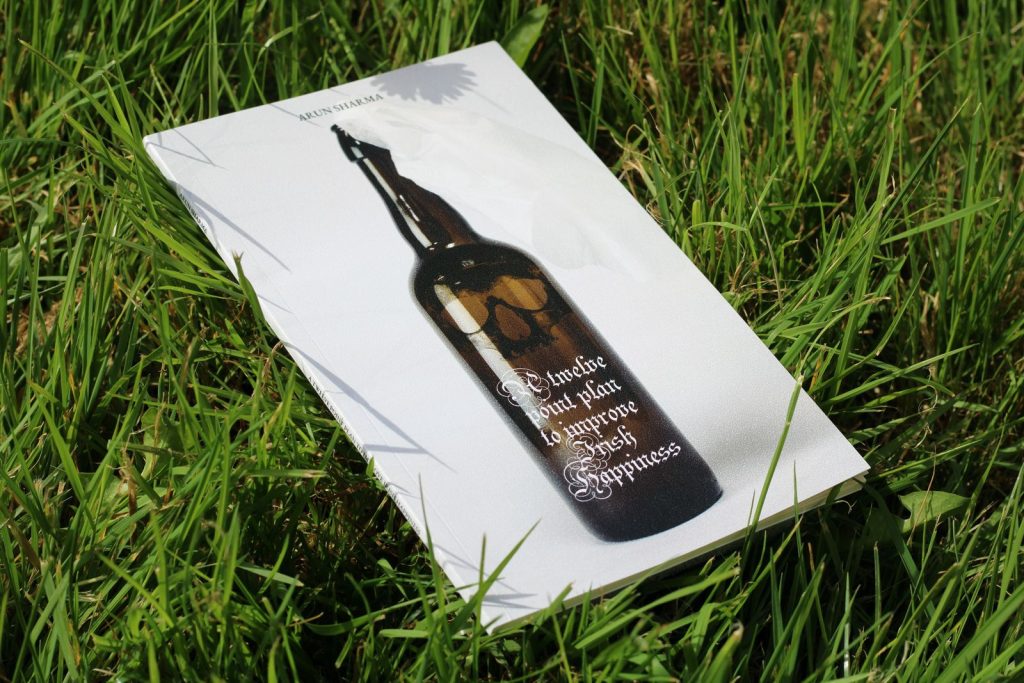
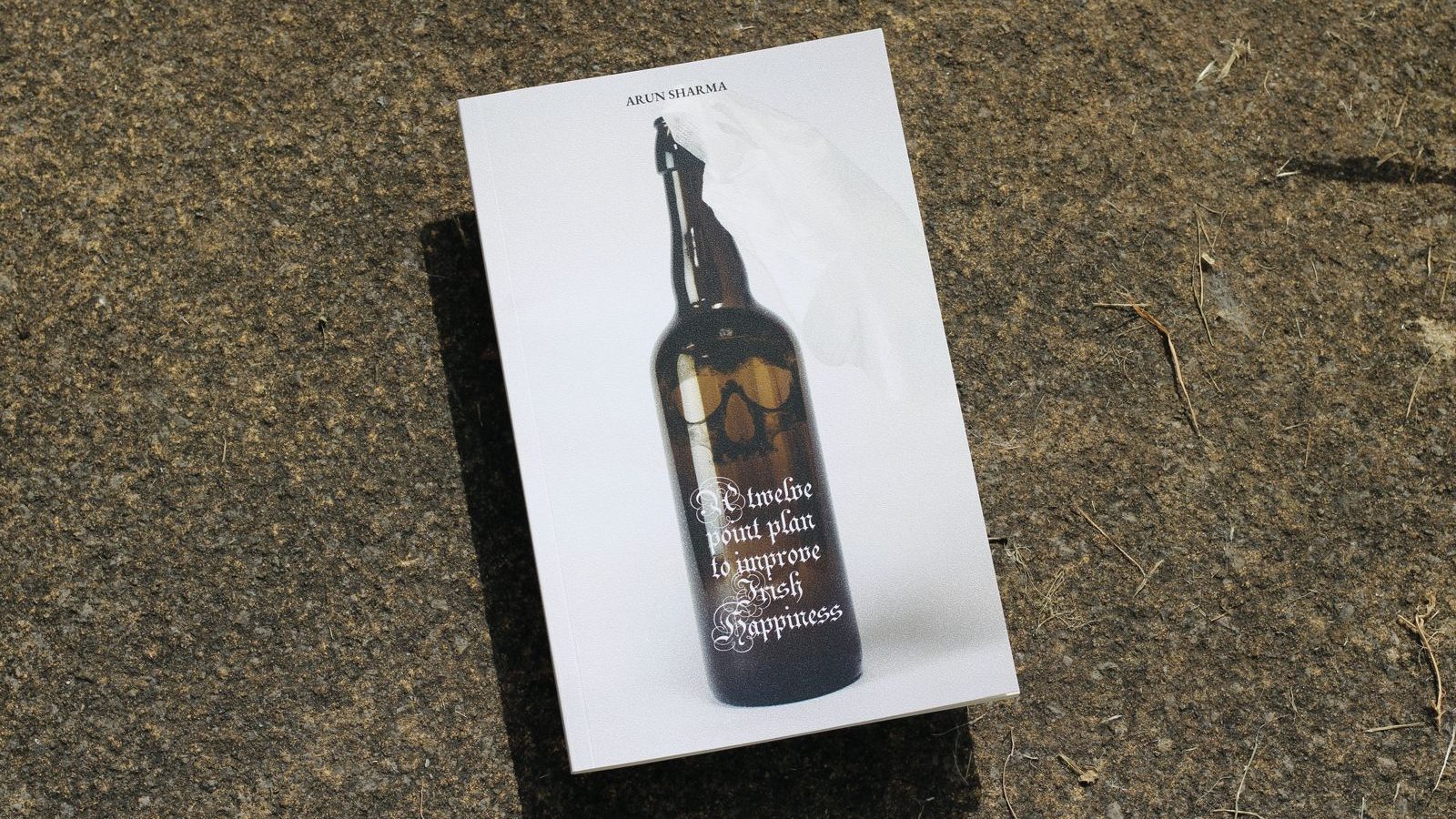
“Half of that poetry was written while I’ve been living in Bristol” – photo: Arun Sharma
Having lived half his life in Ireland and the other half in Bristol, he’s excited to have been able to fuse his experiences into his poetry.
The concept behind A Twelve Point Plan to Improve Irish Happiness came about because of the Good Friday referendum.
The Omagh bombing, which was one of the biggest kind of bombings towards the end of the period was significant in prompting the drawing of the agreement.
Through this reflection on all that came to pass, the lives lost up until then.
In reliving these experiences and dealing with the eventual trauma that came out of writing it down, it struck him how many other people must be holding onto that same trauma, bottling it up and letting it damage them and “screwing up the inside”.
Writing he says was a tool to channel these emotions and memories, that then became a catalyst for improvements.
“I think that happiness came for me, I think it was an opportunity to talk about these things and to write about them and to get other people to open up about it and to accept the trauma as something they need to work through.
“That’s where happiness really enters.”
He adds that looking around Bristol he believes that this tool is transferable.
“There’s a lot of trauma out there. I don’t think it’s something unique to the north of Ireland. But maybe the type of trauma is, but definitely not that that carrying of trauma, like a camels hump on your back.”
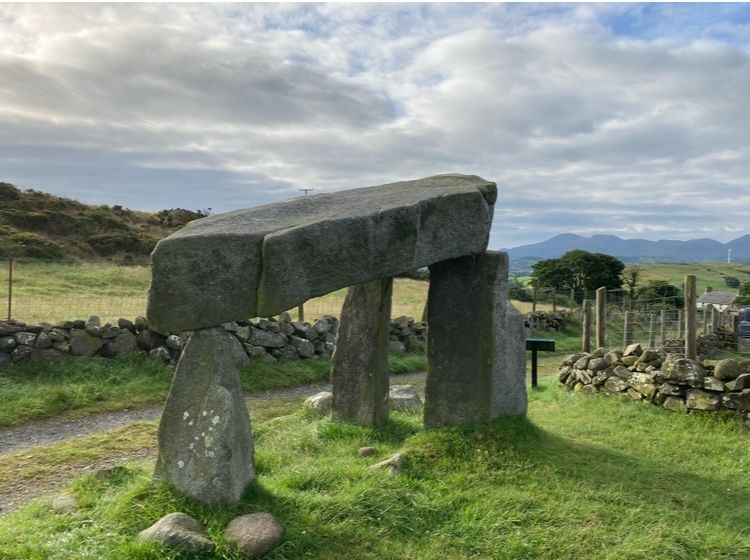
Speaking on the Good Friday Agreement, he says: “It felt very much like an eleventh hour kind of moment, I was thinking about all the steps that really led to that moment.”
Having lived in Bristol for as long Arun has, its become a core aim for him to reach other writers, in particular Irish writers.
In the South West, the region has registered the largest growth of Irish residents over the decade (10.8 per cent higher than 2011: a total of 31,698 ‘White Irish’ residents).
Having been in conversation with Paul Kelly, chair of W.E. Irish, he hopes to turn that into action soon enough.
The book is available to purchase in-store only at Gloucester Road Books, as well as online.
They will be hosting an Irish music night at The Star in Fishponds, on May 20, to celebrate the publishing of the books.
Main photo: Arun Sharma
Read next:
 Our newsletters emailed directly to you