Features / Nature
The mother-daughter duo uncovering the weird and wonderful world of moths
It was a chance encounter that brought Charlie Tallis into contact with moths for the first time.
Attending an event on a family holiday sparked a burgeoning interest that has led to her hosting moth mornings in her garden, sharing moth folklore around a campfire and even getting a moth tattoo. “That’s where it tips into weird nerd world,” she laughs.
She shares her passion with ten-year old daughter, Willow, and together they’ve set up BS3 Moth Club to inspire others to embrace this underappreciated element of the natural world.
is needed now More than ever
Moths are critical, Charlie explains: “They are absolutely vital food sources for birds. One chick eats 10,000 caterpillars in that small period before it fledges. It’s so important moths exist so that other creatures exist.”
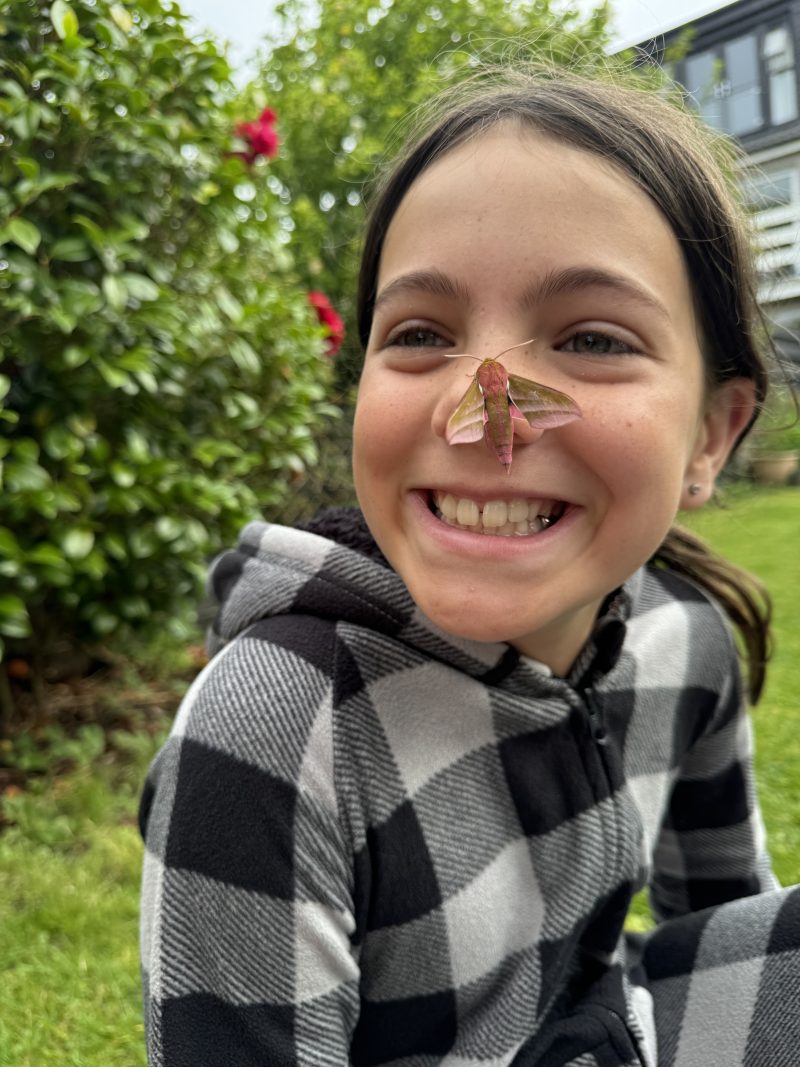
Willow has discovered a passion for moths that she is sharing with her friends as well as groups around Bristol, where she gives talks alongside her mother, Charlie
And, across their 2,500 species, moths are also beautiful, dynamic and characterful. The pair are constantly amazed by the varieties that fly into their moth trap, essentially a bucket with egg boxes in the bottom, in their garden that backs on to a Bedminster park.
“My favourite is the Garden Tiger,” says Willow. “It looks like a drawing. I thought a Jersey Tiger was really cool and then I saw the Garden Tiger and thought, oh my gosh – it looks like it had a glow up.”
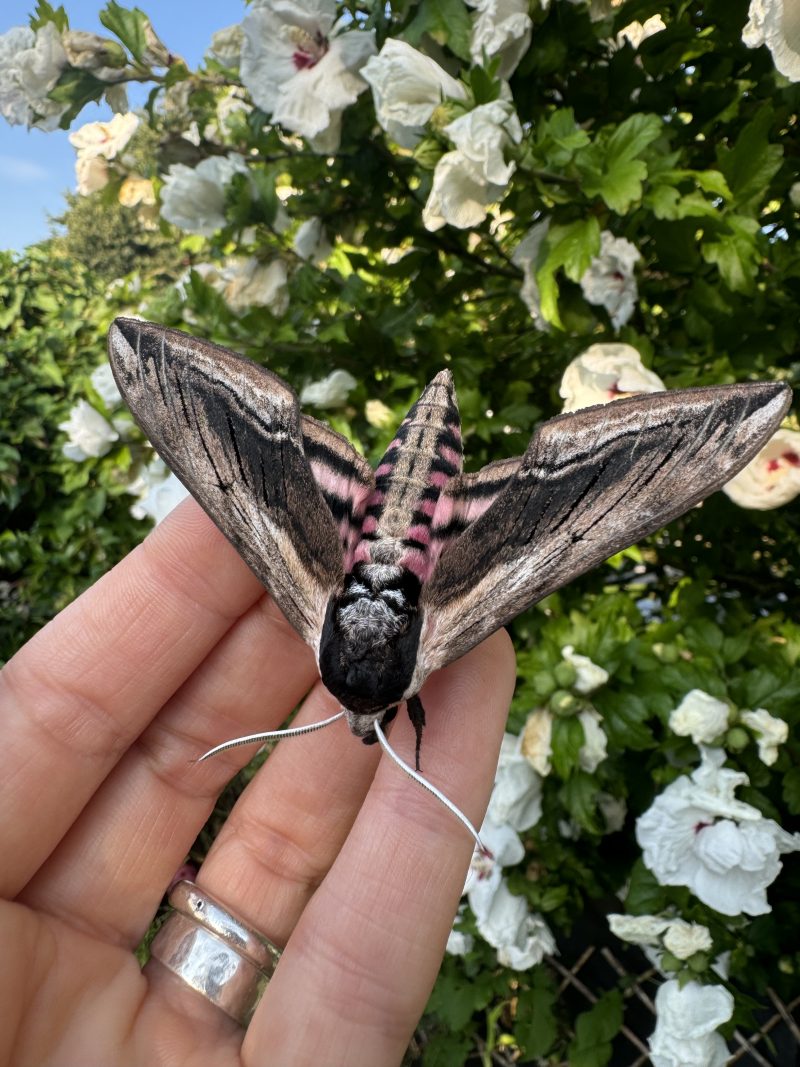
The pair have been amazed that species like this Privet Hawk moth are inhabiting their garden in Bedminster
A regular visitor to their garden along with Muslins, Herald Characters and Brindled Beauties, it has a black and white giraffe-stripe pattern with bright orange underwings.
Charlie’s favourite is the Oak Egger, a fluffy, rust-coloured moth that she first saw when out on an “absolutely magical” early morning visit to Belmont Estate that then turned up in her kitchen the next morning. “I thought, that’s a sign – that means I need to be doing this,” she says. The tattoo followed.
View this post on Instagram
She’s been collecting moth facts to draw people into their fascinating world: the female Vapourer, an “amazing mother” without wings or a mouth that lays tiny cinnamon bun-like eggs on her own chrysalis and guards them until she dies and the Death’s Head Hawk that squeaks like a bee so it can sneak into hives to steal honey.
And the Silver Y migrates all the way from Africa, unlike the Monarch butterfly which takes multiple generations to make the same journey. “Butterflies are the poster children but moths are actually just as beautiful and work just as hard,” says Charlie. “They just don’t get the press.”
BS3 Moth Club shows the moths they have trapped up close at their moth mornings– “I really like it because it feels like my birthday. You don’t know what’s in there, it’s really exciting when you open all the boxes,” says Willow – and also run workshops and give talks.
It’s been a great way of connecting with local wildlife enthusiasts, says Charlie, who borrowed her first moth trap from Ben Barker of BS3 Wildlife Group: “We’ve really enjoyed meeting the community. One lady was filming hedgehogs, somebody else has been feeding starlings for 20 years and somebody else was photographing all the insects in their garden.”
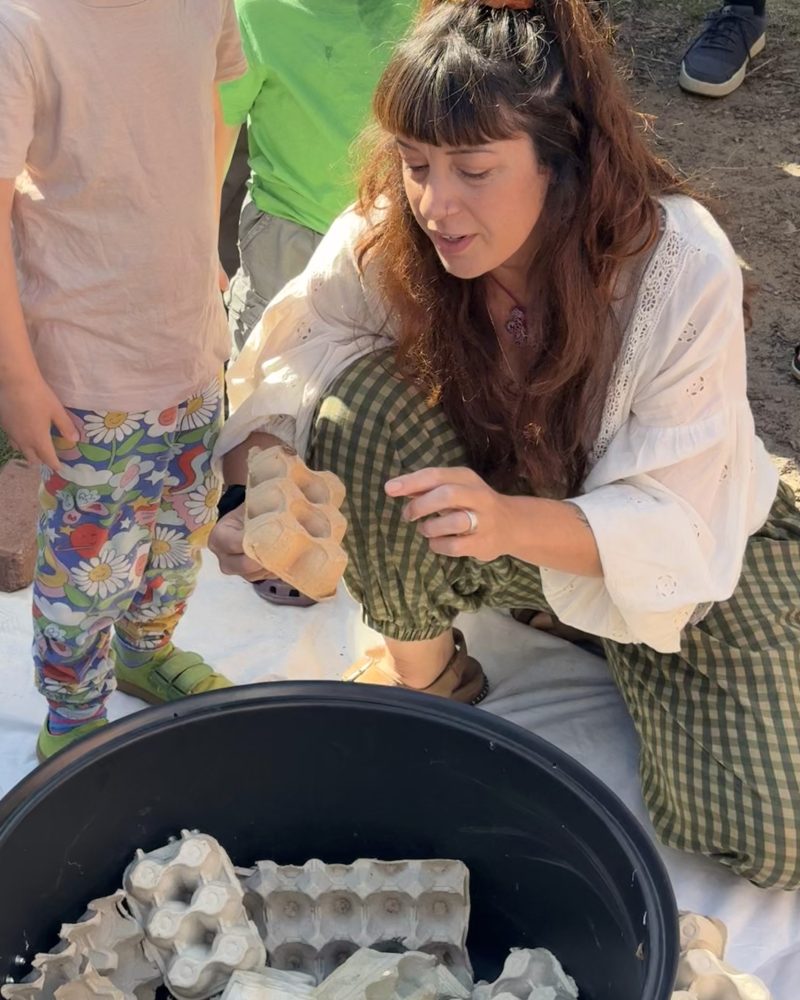
Charlie and Willow have been sharing their enthusiasm, and their moth trap, with groups across the city and further afield
They hope to encourage people to make their urban gardens more moth-friendly, by letting things run that little bit wilder, supporting caterpillar-food species like dead nettle, primroses and cowslips, and leaving leaf litter, which shields caterpillars and over-wintering eggs, undisturbed in the autumn.
Enthusiasts can even create a ‘moon garden’, an area of native plants that are more scented or open at night, like honeysuckle, evening primrose and star jasmine.
More broadly, though, they want to encourage people to notice the nature around them. “You think in a city, there wouldn’t be that many moths and bugs and nature. But there’s actually so much, it’s quite surprising,” says Willow. “You just have to look closely and think about it more.
“They’re like the stars – when you look up, you can’t really see that many, but the more you look, the more you see. You might only notice some bugs, but the more you look, you can actually see loads.”
View this post on Instagram
Follow instagram.com/bs3mothclub for details of upcoming events, stunning photos and surprising moth facts.
All photos: Charlie Tallis
Read next:
 Our newsletters emailed directly to you