Features / Food waste
The journey of Bristol’s food waste beyond the plate
Every day, leftovers – bones, eggshells, peels and food scraps – pile up, contributing to the mountains of food waste our city and country produce. While many strive to minimise waste, some is inevitable. We cannot, after all, chew bones or swallow seeds.
According to the Waste and Resources Action Programme’s (WRAP) most recent report in July, the UK was found to be responsible for approximately 10.2 million tonnes of food waste, based on data collected in 2021 and 2022. England, as acknowledged by the House of Commons Library in a 2024 research briefing, currently has no set targets for reducing food waste, unlike the Scottish and Welsh governments.
This shifts the onus of responsibility onto each of us: households and businesses that produce food waste must consider how they choose to handle its disposal.
is needed now More than ever
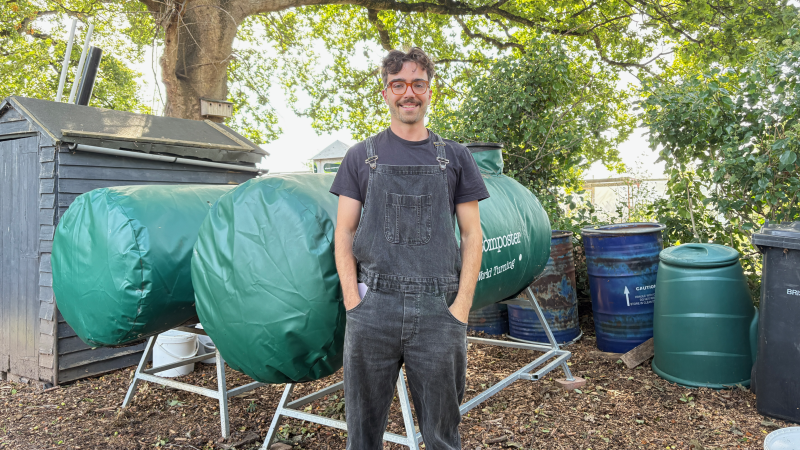
As a soil nerd, Alex Montgomery hopes for more people to start looking at sustainable ways of food waste disposal – photo: Karen Johnson
Most councils across the country, including Bristol City Council, have their own systems for managing food waste. In Bristol, brown caddies or bins dedicated to food waste are collected weekly by Bristol Waste, which are then transported to a facility in Avonmouth for further processing. But are there more localised and less smelly solutions for handling food waste?
Enter Generation Soil and Heart of BS13, organisations that are trying to create a circular system for food waste disposal, enabling a multitude of ways to give back to nature. Generation Soil’s mini composting hub in Ashton Vale and the Heart of BS13’s composting setup on Hartcliffe City Farm create nutrient-rich compost, which has proven beneficial for the health of the soil.
“Here at Heart of BS13, we compost food waste, woodchip, coffee grounds, and we are constantly working on new ways to produce amazing compost for our flower farm in BS13, all made from Bristol’s waste,” said Jenny Liggitt, who manages the Heart of BS13 composting facility.
She continued: “It’s all about waste reduction, soil health and in turn plant health, nature health, environment health and of course people health.
“It’s a truly beautiful space and our 30+ compost piles and no dig chemical free approach means we are inundated with wildlife, including an abundance of slow worms, toads, hedgehogs, many bird species and even grass snakes.”
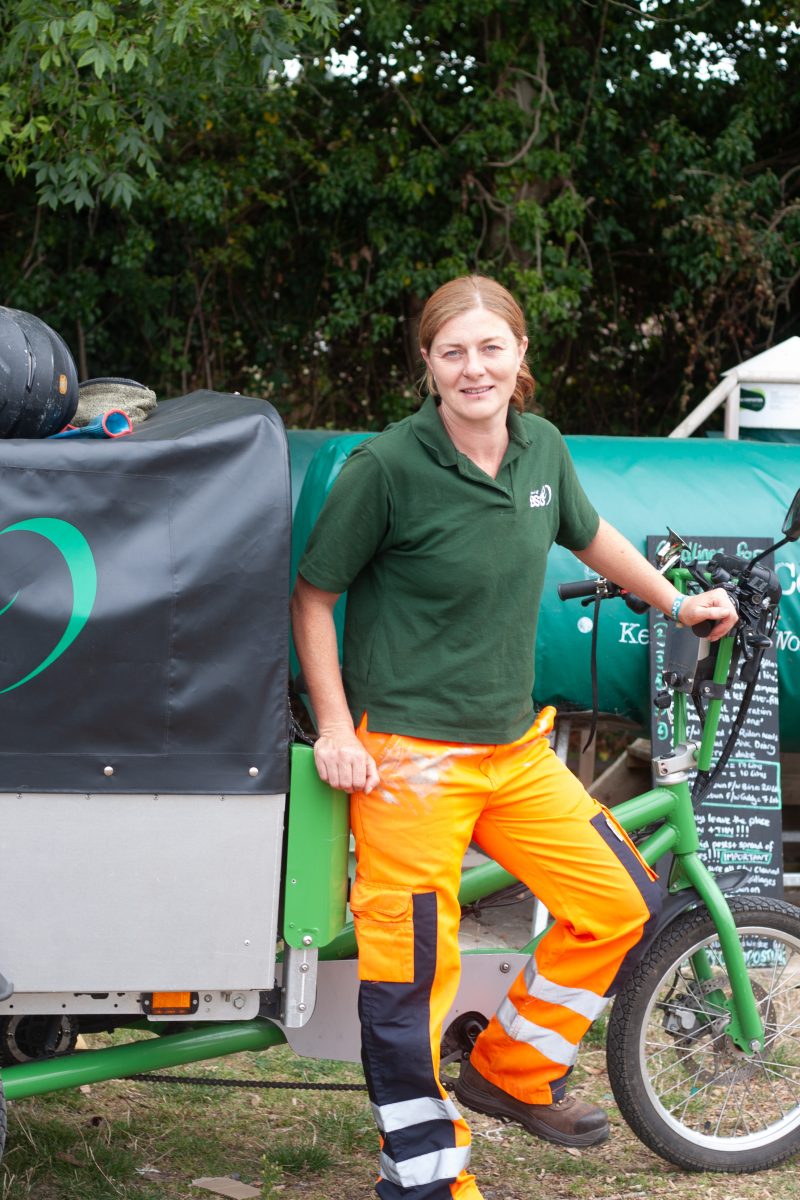
Jenny Liggitt says Heart of BS13 are constantly looking for new ways to create compost for their “amazing” sustainable flower farm – photo: Solveig Harmsworth
Bona fide soil nerd Alex Montgomery is the co-founder of Generation Soil.
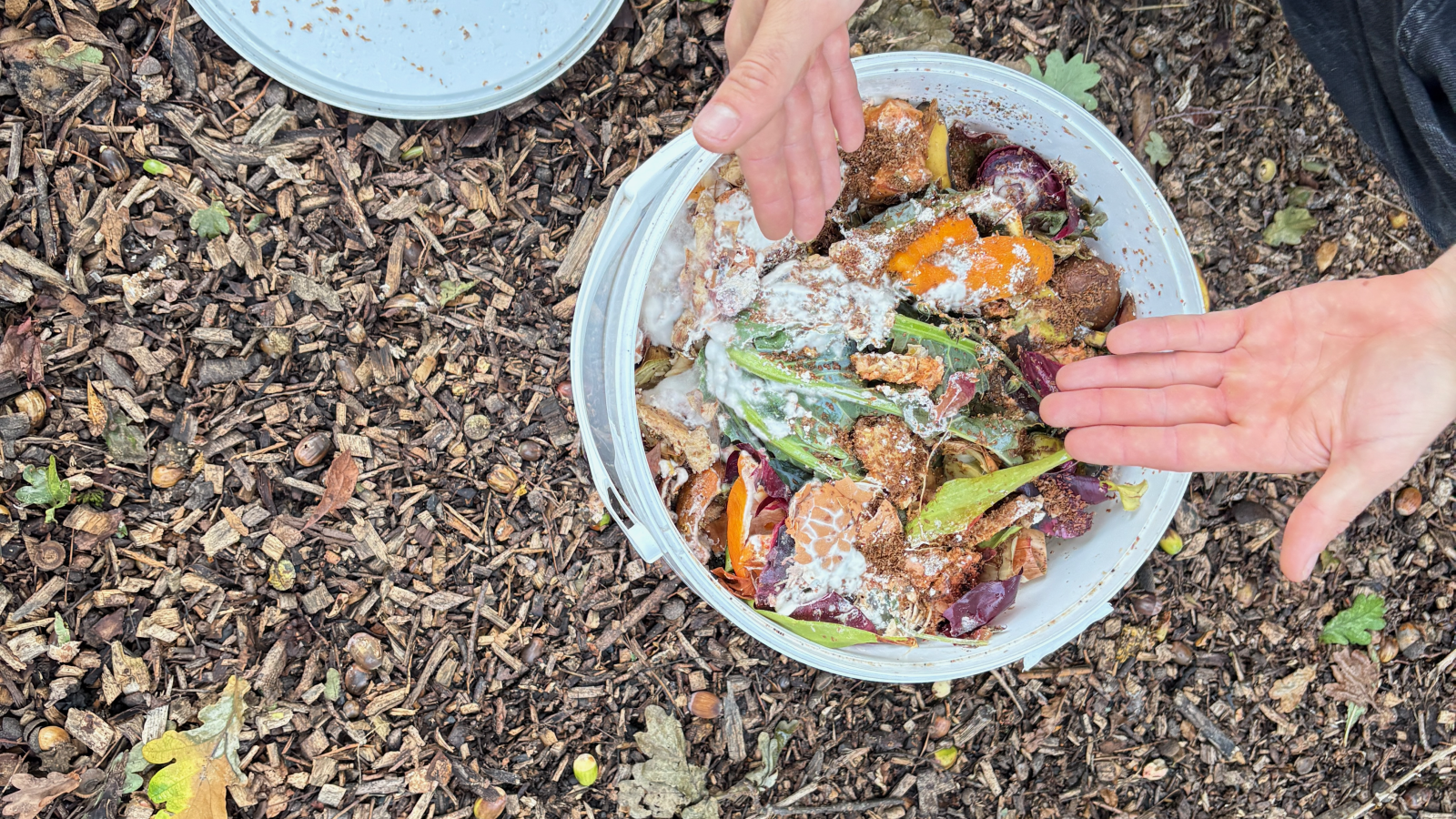
While unloading his van filled with buckets of food waste, he told Bristol24/7: “When we collect the food waste, we give out our buckets and get members to fill them up, then they mix it with bokashi bran.”
This bran, Alex revealed, is the secret Japanese ingredient that helps eliminate odours from food waste. The organic matter helps in fermenting the food waste, much like the process of making kimchi. Sprinkling this flaky substance, Alex explained, is what differentiates between food waste fermenting and rotting.
Both Generation Soil and Heart of BS13 use Ridan’s composting vessels as the first stage of breaking down food waste. These are hot, aerobic composting machines that convert all types of food and green waste into nutrient-rich compost without the need for electricity.
…………………………………………………………………….
Do you know an activist or organisation that is helping to protect Bristol’s greener future?
Let us know by nominating them as a Bristol Sustainability Legend.
…………………………………………………………………….
At Generation Soil, the vessels are filled with the required proportions of waste, wood shavings, and biochars before being turned for approximately seven days. The byproduct is transferred into wooden containers that have drain pipes passing through them. These pipes act as carriers of oxygen and help in the several months-long process of maturation, following which a soil-like looking product is sieved to create nutrient-rich living compost.
“What’s good about our process is that our members are very much engaged with it,” said Alex. “I’m messaging them every week to ask who needs a bucket collection, so there’s that bit of dialogue there. There’s that one tiny bit of sprinkling bokashi bran, but the members bought in because they’re getting compost in return. They’re really incentivised to not contaminate their own compost.”
View this post on Instagram
At the Heart of BS13’s facility, compost from food waste is used to enrich the soil at their sustainable flower farm, where a bed of colourful flowers is grown.
A University of Bristol study of their flower farm’s soil health confirmed that Heart of BS13’s soil conditioning strategy helps increase soil nutrients and contributes to improved soil health.
Similarly, recent test results from Microbiometer’s analysis of the effects of Generation Soil’s compost on soil health, seen by Bristol24/7, revealed higher-than-normal ratios of microbial biomass in their soil, ranking their compost as excellent.
But both Heart of BS13 and Generation Soil are only capable of handling small, limited amounts of food waste. The only way their models can be made viable is if there were many such composting hubs across communities in Bristol.
For the vast majority, Bristol Waste’s system of collecting food waste for free from households still seems to be a suitable option. But what happens to this large volume of waste at their facility in Avonmouth?
Run by waste management service GENeco, the facility outside Bristol creates biomethane to generate electricity and biofertilisers for farming. With GENeco’s current facility in Avonmouth undergoing changes, Bristol Waste is sending all waste from the city to a similar facility in Weston-super-Mare run by Biogen.
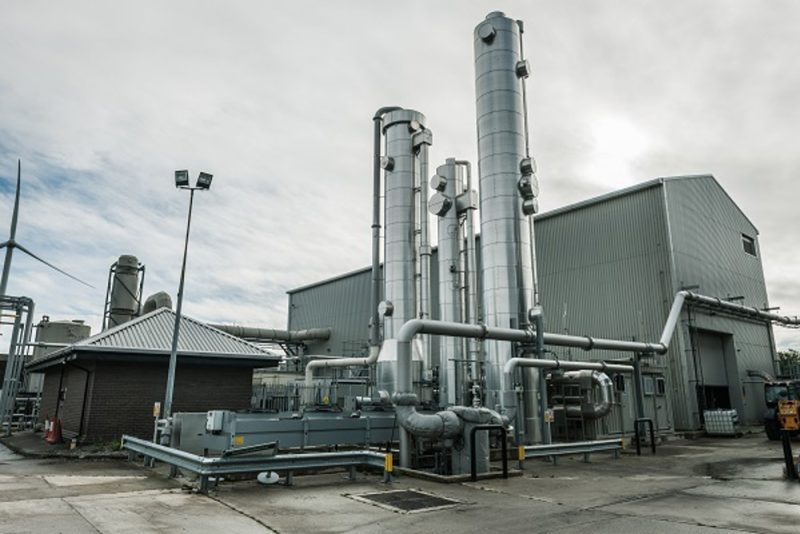
Bristol Waste generally sends food waste to a facility in Avonmouth run by GENeco – photo: GENeco
Once the waste is piled together, a large, claw-like mechanism is used to scoop out any bin liners, cereal bags, bread bags or other non-food waste items. The remnants are then fed into a tank, where they are mixed together to create a “horrible but lovely, very important” soup, allowing for the segregation of additional non-food waste material.
Explaining the next steps, Hannah Deas from Bristol Waste said: “The soup that’s left then gets put into a big drum that is then heated at quite a high temperature to burn off any sort of pathogens that might be in there.”
The “pasteurised waste” is then transferred to a “digester” for anaerobic digestion, which, after an approximate processing of three weeks, releases methane-rich biogas. The biogas can then be used to generate electricity or further processed to create biomethane, which can fuel vehicles like GENeco’s biobus. The solid by-product, also known as a “cake,” is used as a nutrient-rich biofertiliser for farms.
However, with such large amounts of food waste, it is impossible to be fully sure that it does not have any material that is not food waste.
Hannah explained: “We’ve done this waste composition analysis, where we took 500 anonymous black bins from households, tipped them all out and went through them, to work out what was in them.
“Of those bins we analysed, 31 per cent was food waste and 22 per cent was other recyclable waste, which means 53 per cent of those general waste bins could have been recycled.”
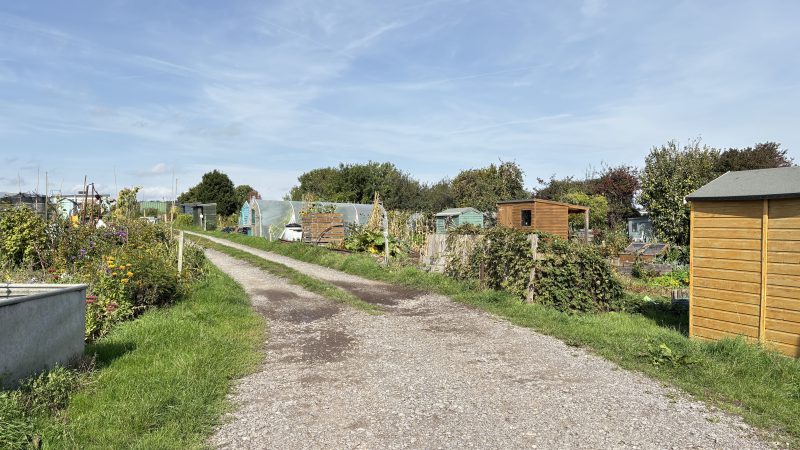
Generation Soil runs its food waste composting service from a small corner of Alderman Moores allotments in Ashton Vale – photo: Karen Johnson
With £17bn worth of edible food wasted every year, the consequences of food wastage extend beyond being harmful to the environment. It is an expensive phenomenon that costs the average UK household of four approximately £ 1000 every year.
Ultimately, our individual choices matter—do we need that extra packet of meat or carton of milk? Can we use everything before it spoils, and are we disposing of food waste in a responsible manner?
Whether you choose the brown bin or Generation Soil and Heart of BS13’s circular waste management models – the choice is yours.
But every time you let a banana peel or egg shell slip into a black bin, you’re contributing to the billions of tonnes of waste that is putting dire strain on our planet. What happens to leftovers on your plate beyond the bin is in your hands.

This article originally appeared in Bristol24/7’s November/December 2025 magazine
Main photo: Karen Johnson
Read next:
 Our newsletters emailed directly to you