Better Business / Member news
On-demand minibus services beneficial in rural areas but face financial challenges, trials suggest
Trials of demand responsive transport (DRT) minibuses have improved connectivity for people in rural and suburban areas, according to a new report by UWE Bristol researchers.
The study evaluated DRT services in 18 parts of England, where passengers book shared minibus rides via an app or by phone.
Funded through the Government’s £19.4m Rural Mobility Fund, the schemes aim to improve social inclusion, connect people to essential services and reduce carbon emissions by replacing some car journeys.
The report, produced for the Department for Transport, said the trials were largely seen as a success. It stated: “They [the trials] have shown that DRT can play a role in providing transport in rural areas under the existing regulatory structure, and that it is worth considering as one of the available options.
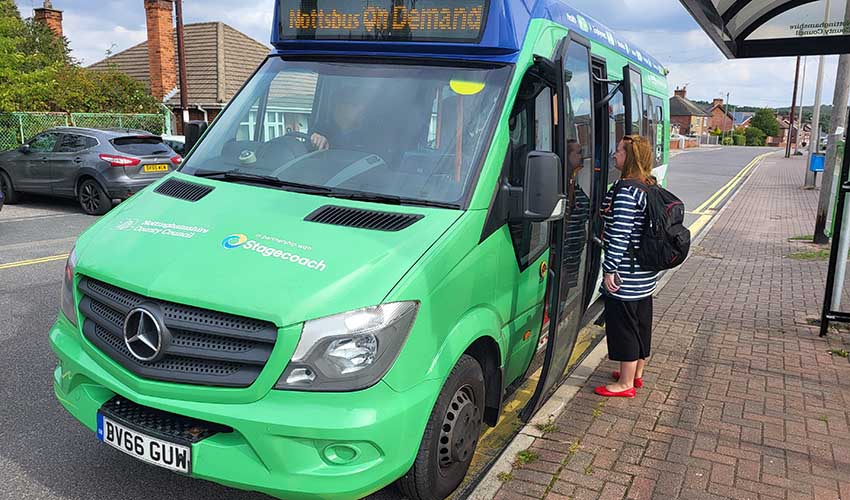
Trials of demand responsive transport (DRT) minibuses have improved connectivity for people in rural and suburban areas, according to a new report by UWE Bristol researchers
“DRT services were now operating, some in areas where there had previously not been any public transport, and they were providing connectivity and access to services for people. This was how most judged success.”
However, funding remains a major issue. Researchers noted the services do not always cover their costs and may require ongoing subsidies. The report said: “Bringing levels of journey subsidy to what was seen as acceptable… remained a major challenge. There were clear calls for greater consideration of social value in the economic assessment of DRT services…”
Local authorities reported that the schemes enabled new journeys, though sometimes at the cost of longer travel times. The report added: “Local authorities reflected that their passengers were now able to make journeys they had not been able to make before, although there was some caution that, because of the need to aggregate passengers, these might take longer than using private transport.”
Data covering September 2020 to September 2024 showed average monthly passenger journeys of 2,101 across the 18 schemes, with most trips booked via mobile apps. While revenue averaged around £2 per passenger journey, researchers cautioned that the full financial picture is complex due to fare cap reimbursements.
Concluding, the authors said: “The Rural Mobility Fund pilots have been perceived as successful by the local authorities. This is generally due to the pilots providing an enhanced level of public transport access in the areas they serve.”
They added that many councils want social value — such as access to jobs, education and healthcare — to be better reflected when assessing long-term funding, arguing it is not possible to judge value for money “without taking account of the social value created.”
All photos: UWE Bristol
UWE Bristol is a member of the Bristol24/7 Better Business network, an initiative to help businesses thrive while creating a positive impact on Bristol and the people who live here. As part of their membership, businesses can publish member news stories like this. For more information, visit my.bristol247.com/better-business
Read next:
 Our newsletters emailed directly to you