Film
V for Vendetta
- Director
- James McTeigue
- Certificate
- 15
- Running Time
- 131 mins
Back in 2005, this Wachowskis-scripted adaptation of Alan Moore’s comicbook delivered multiplex explosions and masked-man action antics alongside a subversive message tailored to resonate with anyone who was even vaguely concerned about where we were heading with the fear-driven erosion of civil liberties in response to a hyped-up terrorist threat. Fifteen years on, the hordes of mad, swivel-eyed conspiracy theorists who infest social media are so hard of thinking that they imagine it’s a documentary packed with coded messages created especially for them about the ‘plandemic’/5G/lizard people/Illuminati/Elders of Zion, etc., ad infinitum, just like the Wachowskis’ earlier The Matrix.
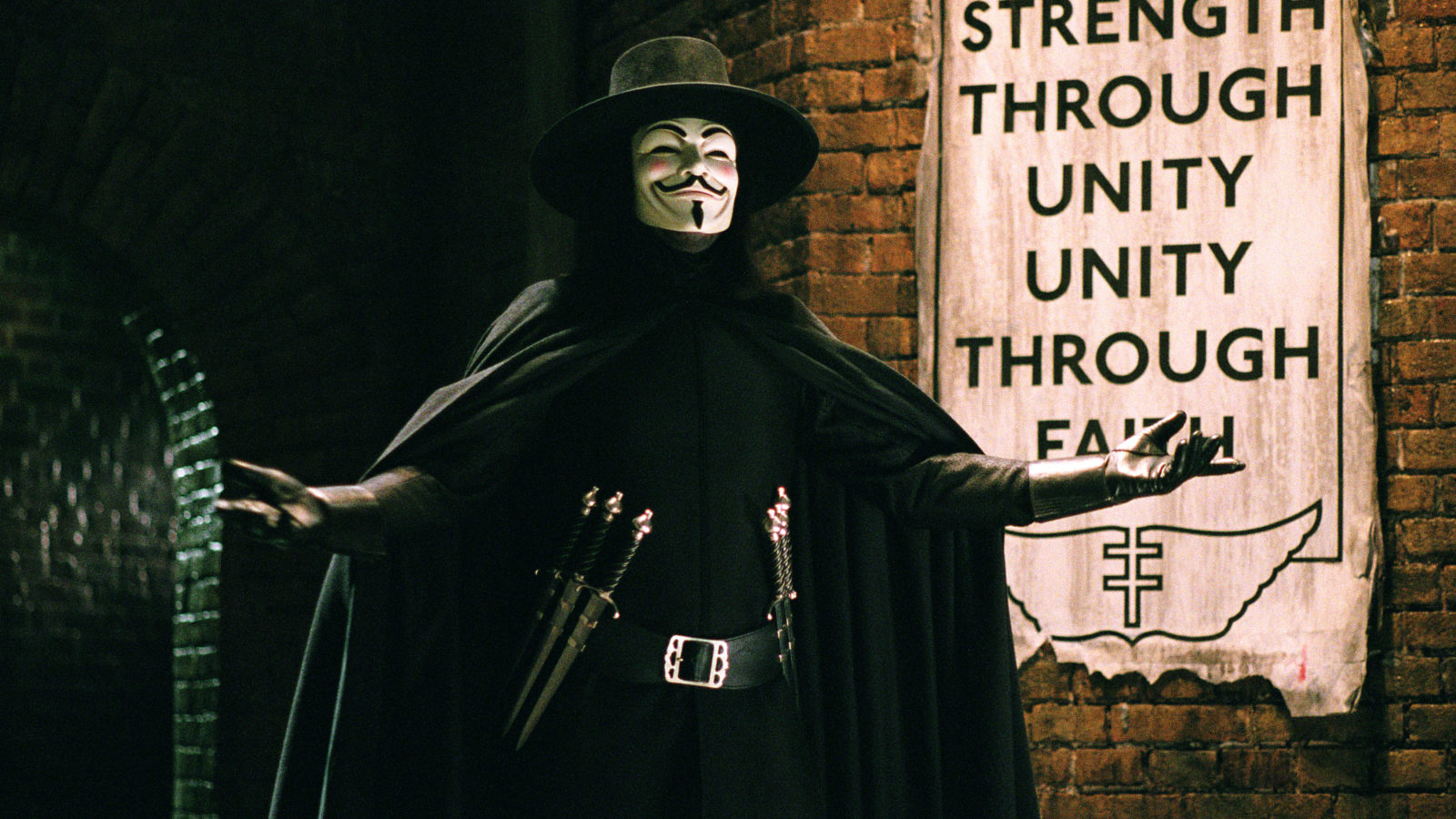
After a Gunpowder Plot prologue – included, one presumes, for the benefit of Americans whose knowledge of British history is patchy – we’re plunged into a Nazi-esque near-future Britain of rationing and curfews, where the tyrannical Sutler (John Hurt) maintains his grip on power by feeding the fearful, supine population a diet of lies through their TV sets. Leading the resistance from his obligatory extravagant underground lair is terrorist/freedom fighter V (Hugo Weaving), who lurks behind a Guy Fawkes mask/pageboy wig combo and recruits the teenage Evey (oddly-accented Natalie Portman) after saving her from a nasty fate at the hands of Sutler’s goons.
When we first meet V, he actually comes across as a bit of a twerp with his alliterative loquacity. This sits ill with the dark backstory that Evey eventually uncovers, and the film doesn’t really recover until he starts blowing shit up (the Old Bailey, etc). Much of the subtlety of Moore’s Thatcher-era agit-prop is pruned away as his story is updated with references to then-current avian flu (read: Covid-19, nutters!) and some particularly craven kow-towing to Muslim sensibilities that was likely to have the author choking on his beard. The Wachowskis’ script also misses a satirical trick by depicting Sutler as such a scenery-chewing cartoon fascist rather than, say, a Christian “pretty straight kind of guy” (remember him?) or a bumbling, populist old Etonian who sleepwalks his country into totalitarianism.
is needed now More than ever
 Our newsletters emailed directly to you