Your say / Transport
‘We must demand trams for Bristol, not a bus-based solution’
Trams! That exclamation mark is well deserved because trams are what Bristol has needed for decades in order to fix a public transport system that right now is an embarrassment.
So kudos to WECA mayor, Helen Godwin, for her West of England Transport Vision, a document that lays out an ambitious plan for mass transit, what she describes in her foreword as “a high-capacity system that links our key economic centres”.
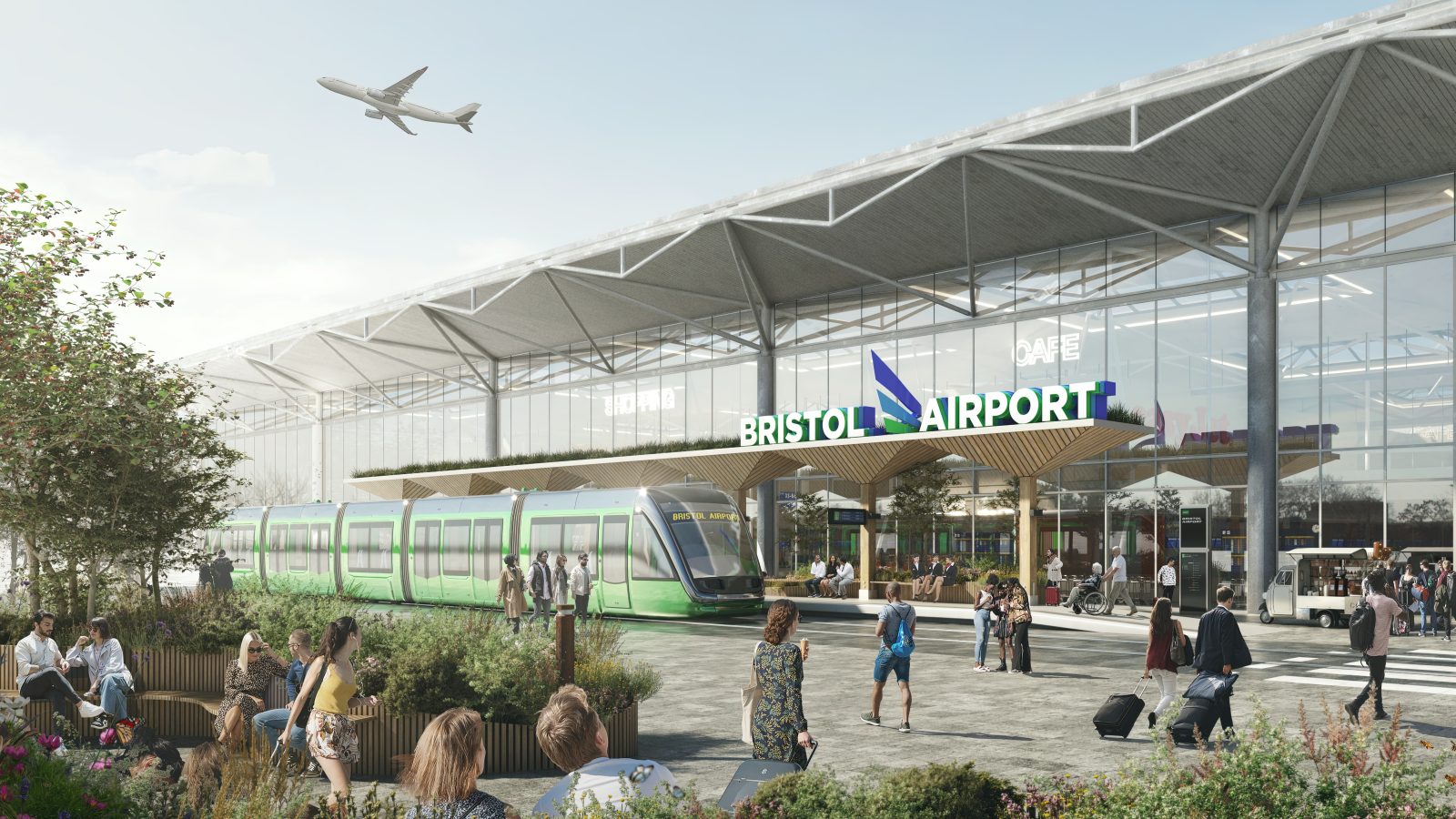
One of these economic centres is Bristol Airport; currently England’s only regional airport without a fixed mass transit link – another embarrassment for our city region.
is needed now More than ever
WECA’s other artist’s impression of their proposed mass transit system is on the corner of Redcliffe Street and Phippen Street. It is dream-like in its quality; a sepia-tinted world in which cycle lanes are not invisible and a tram is on its way to Temple Meads.
One quibble is that a pair of e-scooters have been left next to stands meant for bikes; but then we don’t live in a perfect world.
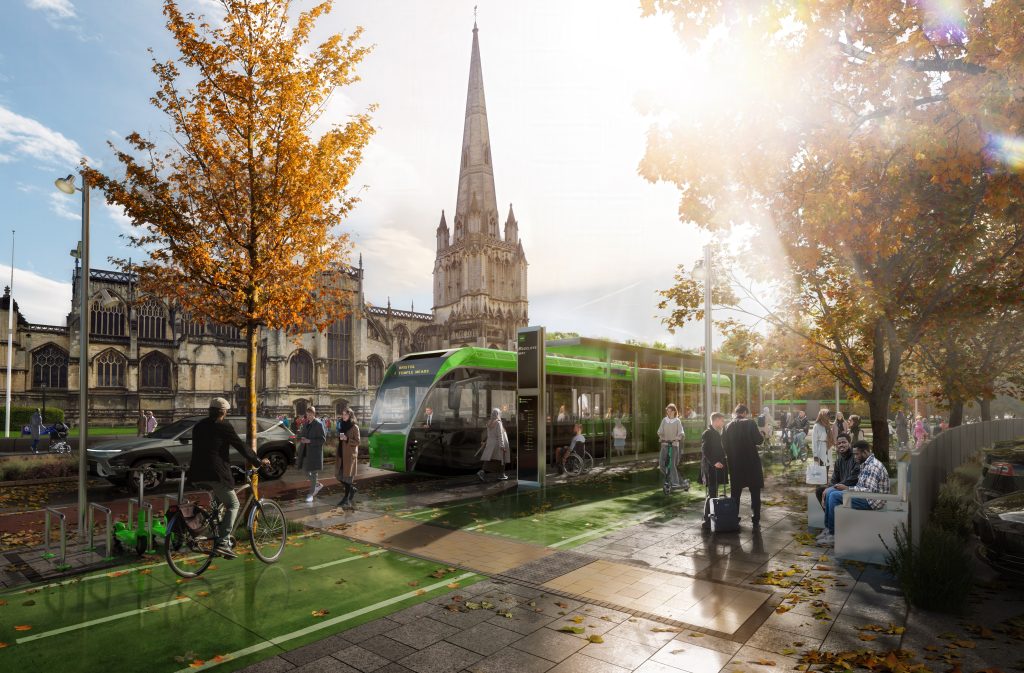
WECA have provided a tantalising glimpse into the possibility of an integrated transport for Bristol – image: WECA
As I wrote about when Godwin announced this new vision, another quibble is the language used when referring to these trams.
If it looks like a tram and moves like a tram, it is a tram in my mind.
Except not in WECA’s “vision” when these are a “high-quality bus-based solution” which are described as “comfortable and accessible vehicles that look and operate similar to trams”.
They are a “light rail solution” which in reality means “small, electrically-powered rail vehicles generally running on fixed tracks”.
Look closely at the vision document and you will also see that WECA are being incredibly careful in what they can promise.
Under one artist’s impression of the tram-that-is-not-a-tram are the words: “Illustrative imagery only. Actual alignment, stop locations, and other design and planning details subject to development as part of business case progression, including public consultation and other activities.”
If we want trams in Bristol, however, we should want trams; not muddy the water with this talk of “vehicles that look and operate similar to trams”.
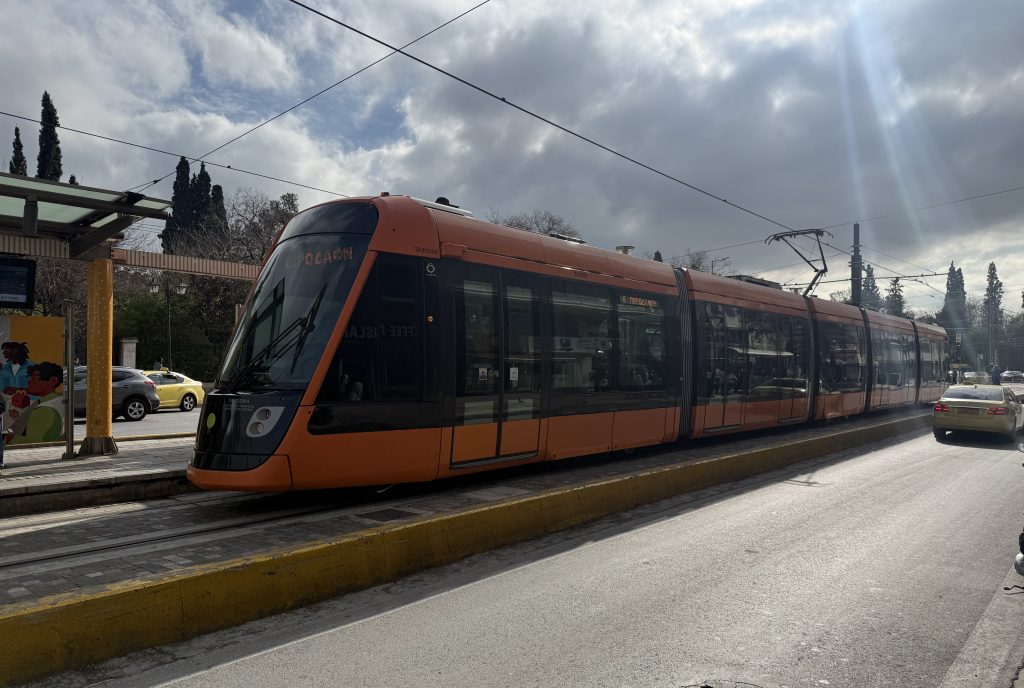
Like Bristol’s tram network, trams in Athens were first horse-drawn – photo: Martin Booth
When I visited Athens in January, I was almost as excited to be able to ride on a tram as I was to run around the Panathenaic Stadium, the stadium of the first modern Olympic Games.
The beginning of trams in Bristol and Athens were only seven years apart. Horse-drawn trams arrived in Bristol in 1875 and began operating in Athens in 1882.
Trams ran in Bristol until 1941 and in Athens until 1960; the difference being that Athens resurrected their trams in 2004 whereas in Bristol all we have is this map of the once-extensive tram network to remind us of what we lost.
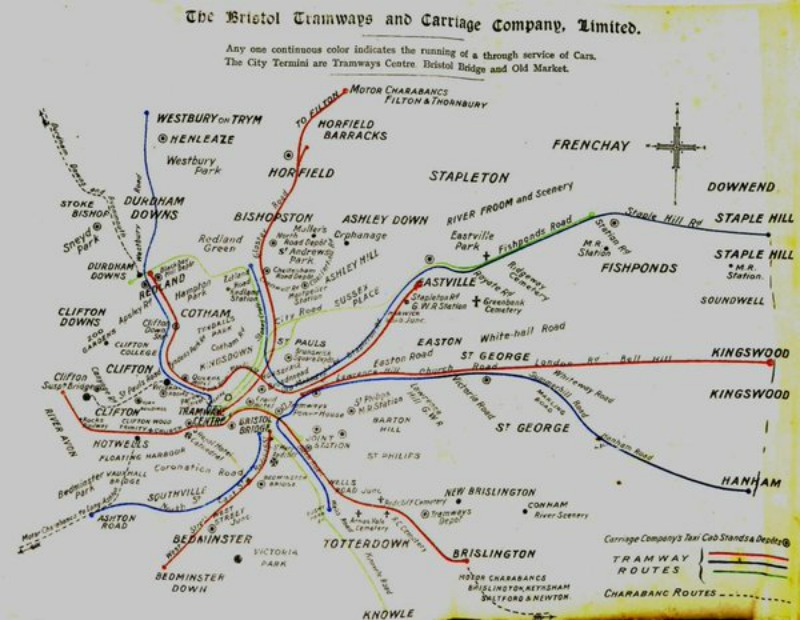
Just look at what we used to have – map courtesy of Bristol Archives
Former Bristol mayor Marvin Rees should also be given kudos at this point for being adamant during his time in office that Bristol needed an underground system.
It may have been ridiculed for being impossible but at least the now lord Rees of Easton provided ideas that would transform how we get around our city, rather than tinkering around the edges.
Any future mass transit scheme for Bristol must be transformational.
The artist’s impressions of what looks like trams in front of St Mary Redcliffe Church and Bristol Airport show this aspiration.
But we have seen with the saga of the metrobus that seemingly transformational schemes can be watered down.
If we want trams to return to Bristol, we must demand trams. Not a bus-based solution that operates similar to trams.
Main image: WECA
Read next:
 Our newsletters emailed directly to you