Your say / Environment
‘Valuable spaces are at risk of being overlooked’
Bristol’s Local Plan is currently under review and a key point of contention is the proposed deletion of Policy GI1, which aims to protect open spaces across the city.
If adopted, this policy would have designated 175 ‘green areas of particular importance to local communities’ as Local Green Spaces (LGS), giving them much the same protection as they would have if they were Green Belt land.
The planning inspectors are bound by rules that mean they cannot allow us at this stage to submit questions about this matter.
is needed now More than ever
We must wait for a further council consultation on the proposed changes but by then it may be too late, so we have written this instead.
Why the LGS designation matters
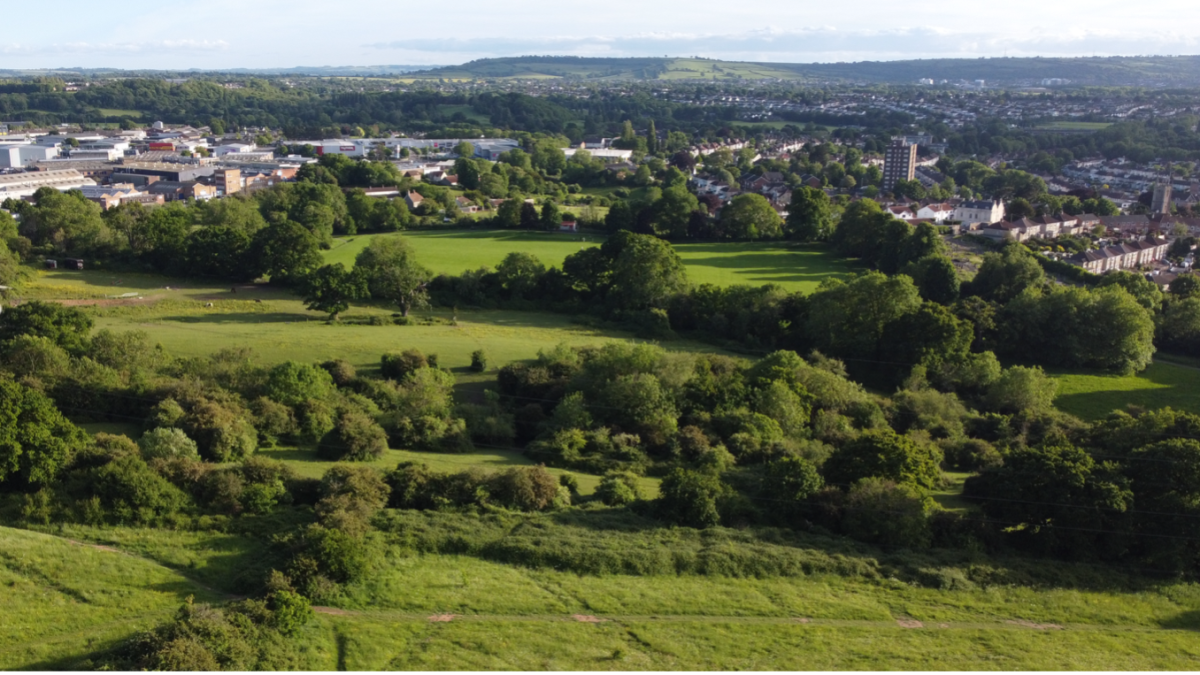
In a dense urban environment like Bristol, small and medium-sized open green spaces are vital for health, recreation, climate resilience and community identity.
Categories like allotments, cemeteries and playgrounds are also inherently linked to community attachment and identity.
All these valuable spaces are at risk of being overlooked unless they are specifically designated as Local Green Spaces, especially in deprived neighbourhoods.
The National Planning Policy Framework (NPPF) empowers communities to protect these green areas and Bristol’s proposed LGS designation reflected a positive response to this intention.
Sadly, it looks as if this designation will now be abandoned.
The risks of removing LGS protection
Deleting Policy GI1 will mean that these small local green spaces will lose Green Belt equivalent protection and be reclassified as a Protected Open Space.
This will leave them more vulnerable and potentially allow them to be built on.
Deleting this policy would also limit Bristol communities’ ability to protect their local open spaces, potentially undermining confidence in the planning process.
While communities could propose designations in neighbourhood plans, evidence suggests those in deprived areas may lack the resources to do so effectively.
The importance of layered protections
Layered protections are common in planning, with each designation addressing a different policy purpose.
For example, many proposed LGS sites already benefit from heritage or ecological designations.
The LGS designation would provide one more complementary layer with significant additional local benefit, offering more robust protection than other designations.
Promoting sustainable development
Protecting accessible green space is not a luxury but an essential component of sustainable neighbourhoods, particularly in high-density urban areas.
We all need access to everyday nature for our wellbeing.
The NPPF requires LGS designation to be consistent, with sustainable development, where the three overarching and interdependent economic, social and environmental objectives need to be pursued in mutually supportive ways.
Focusing on housing delivery alone must not take precedence.
Finding a different approach
Instead of deleting Policy GI1 entirely, a more proportionate approach would be to:
- retain Policy GI1 in principle
- allow a short, targeted period for evidence to be submitted for at least some LGS sites
- allow additional consultation to demonstrate community attachment
- remove or amend only those sites which clearly fail the NPPF LGS tests.
This approach would protect the integrity of the Plan without discarding the original LGS designations, a key policy tool endorsed by the NPPF.
At the very least, the revised plan should include a commitment by the council to revisit the LGS designation.
Requiring the council to undertake an early, targeted review of open space designations would be consistent with accepted practice elsewhere, enabling timely adoption of the Local Plan while ensuring the LGS policy gap is promptly addressed.
This need not jeopardise the council’s aim to adopt the new Local Plan next year.
Bristol’s communities must not lose the opportunity to secure the robust protection this designation is intended to provide.
This is an opinion piece by Mark Ashdown, chair of the Bristol Tree Forum
If you would like to write an opinion piece to be featured on the website, please send an email to [email protected] with your opinion piece idea and we will get back to you with instructions on the next steps
Main photo: Mark Ashdown
Read next:
 Our newsletters emailed directly to you