Your say / UK City of Culture
‘Culture can help create a new narrative of Bristol’
We’re often complacent in Bristol about our cultural assets and offers. That’s dangerous because it means we’re not really aware of how fragile they are.
When people come to Bristol, they see the DIY culture, they look at the incredible new murals, some of our small independent theatres, our bigger institutions, the festival culture and so on.
But what I think is sometimes lost is just how much drain goes out of the sector; the struggle and the fragility, how much cultural entrepreneurship and energy is lost, and also how much is drained out to other cities – think about gal-dem for example, all these incredible young people now working in the cultural industries in London.
is needed now More than ever
Our major institutions and some of our small grassroots institutions are fragile, they are struggling.
In a sense, it’s about how can we create a bigger vision? Something that lands and impacts, enables working together, and also creates different kinds of processes.
When you cut across different sectors in Bristol, I think what you see is incredible potentiality that’s not realised because of the lack of connection and that lack of connection is not about clique, it’s more about capacity.
When you’re firefighting to survive and put on a programme, where’s the lean? Where’s a little extra to reach over to the universities for example and realise the incredible cohorts of young people who are working with all kinds of new technologies at the cutting edge.
How does that start to feed down and become normative for practitioners, young and old, emergent and not?
There is also a question of how do we meet the demographic of the future?
We’re a city of quite radical demographic change which I think we’re not fully cognizant of at the moment when I think about east African communities, Polish communities, people whose heritages hail from other spaces.
The University of Bristol and the museum service are very much trying to engage these young people in a new lens and new perspectives.
But what can we do as the UK’s City of Culture to add even more weight to that? How do we create something which has a wow factor?
How do we reawaken and revive our cultural institutions and also give energy to those working with minuscule resources?
I’m excited because I think Bristol under-fires compared to what it can be.
Underneath the complacency around what we have is an urgent need to look to the future and to resource the future.
We need to have a sustainable cultural heritage and one which I think future generations look to participate and invent in; that is key.
We have assets that are underused. We have communities where I think culture is still seen as something parachuted in; sometimes with the best intentions.
It’s very hard for big institutions and smaller ones to create long-lasting connectivity, and sometimes instituting big projects and ideas actually helps to create a spine of something which becomes self-sustaining.
So it is partly about equity and it’s about joining up our city.
I’ve been working on a project in Filwood and it’s in a context where often people are encouraged to fracture.
What we realise are the commonalities of deprivation, the commonalities of outsiderness that exists across our city.
We need help. The city needs help. Our institutions need help. And culture is a powerful answer to create a new narrative of Bristol and what Bristol will be in the future.
But if we think we can go on doing it with current resources, I think what we’ll find is that our cultural landscape becomes more and more barren.
So not only is this bid for UK City of Culture exciting, it’s urgently required.
I think people will think Bristol as a city is fine. There are all those stories of the great and glory days – but we don’t want to just remember the great and glory days with all due respect.
We have a lot of glory today. We have a lot of incredible talent here but it needs support, it needs institutions and it needs a foundation.
We need new processes and new ways of connecting up this landscape.
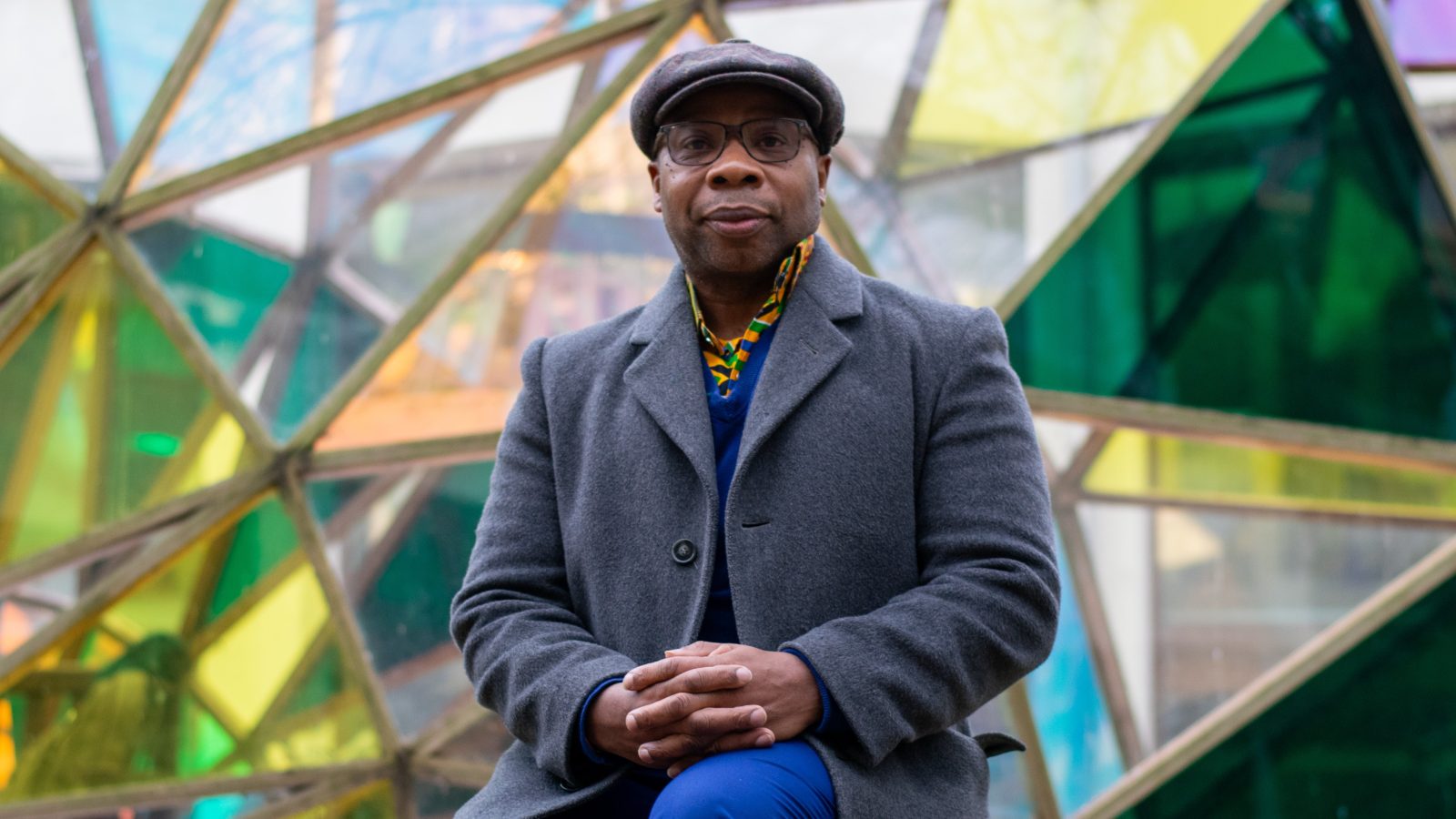
This is an opinion piece by Edson Burton, a poet, drama writer, curator and historian, and one of the driving forces behind Bristol’s bid to become UK City of Culture 2029
Main photo: Jack Pitts / University of Bristol
Read next:
 Our newsletters emailed directly to you