News / Education
Bristol Uni support staff return to picket line
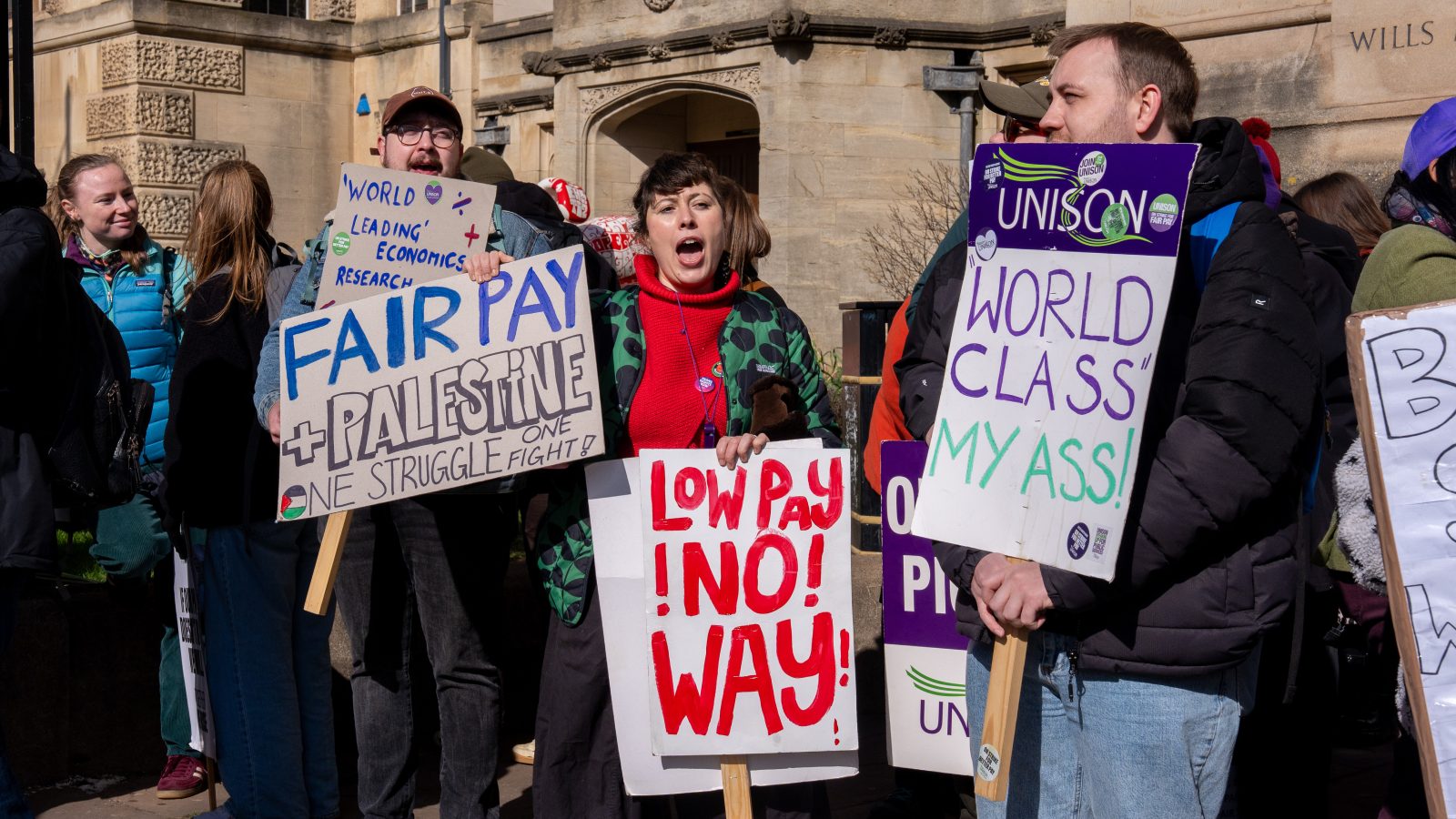
“Tired” and “angry” staff at the University of Bristol are standing in solidarity on the picket line once more after rejecting a pay deal unions have branded “simply not good enough”.
Wednesday marked the second day of strikes among workers including library assistants, administrators and IT workers as part of an ongoing pay dispute that also saw industrial action in February.
Amid the sound of car horns beeping along Queen’s Road, scores of staff returned to outside the Wills Memorial Building just before midday for a rally in support of the strike.
is needed now More than ever
Those on the picket line say staff have not received a pay rise that matches inflation since 2009 and are calling for an increase “that helps them keep up with the real cost of living”.
Bristol Uni has offered a 1.4 per cent pay increase for the 2025-26 academic year which Unison says amounts to a real-terms pay cut of around 3.2 per cent when inflation is taken into account.
University bosses told Bristol24/7 the institution respects staff members’ right to strike and that measures are in place to keep services running and avoid disruption to teaching.
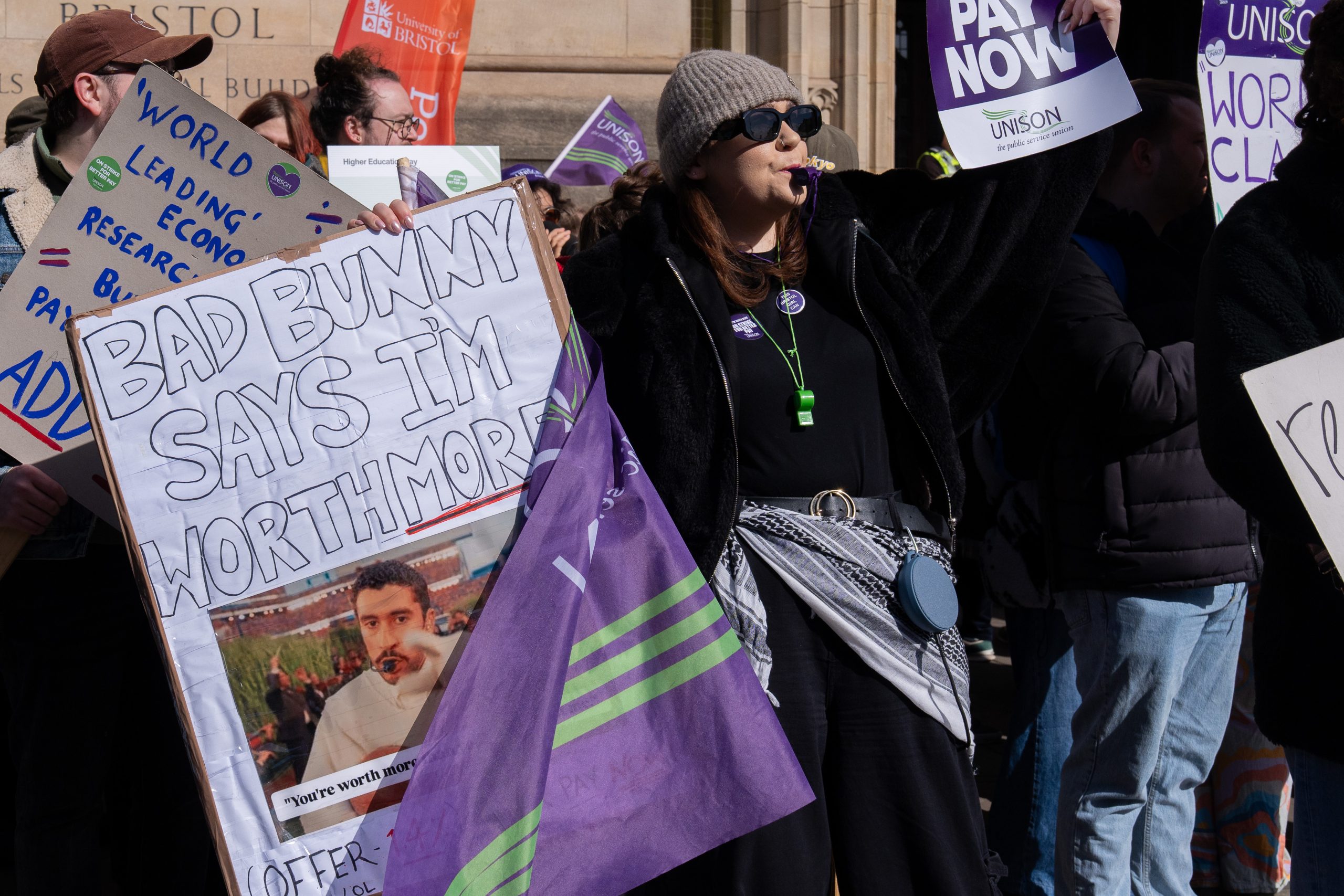
‘Bad Bunny says I’m worthwhile,’ was among a plethora of placards held aloft – photo: Rob Browne
Sophie, a senior student administrator in the Faculty of Arts, Law and Social Sciences, who has worked at the university for six years, said: “Year on year we’ve not had a proper pay rise.
“Years ago, the job that we both do was really well paid and respected, whereas that’s just not the case anymore.
“Bristol is an incredibly expensive city to live in – I actually live with my parents in Swindon because I couldn’t afford to rent here on my own.
“The pay rise offered isn’t enough to live in Bristol as a single person.”
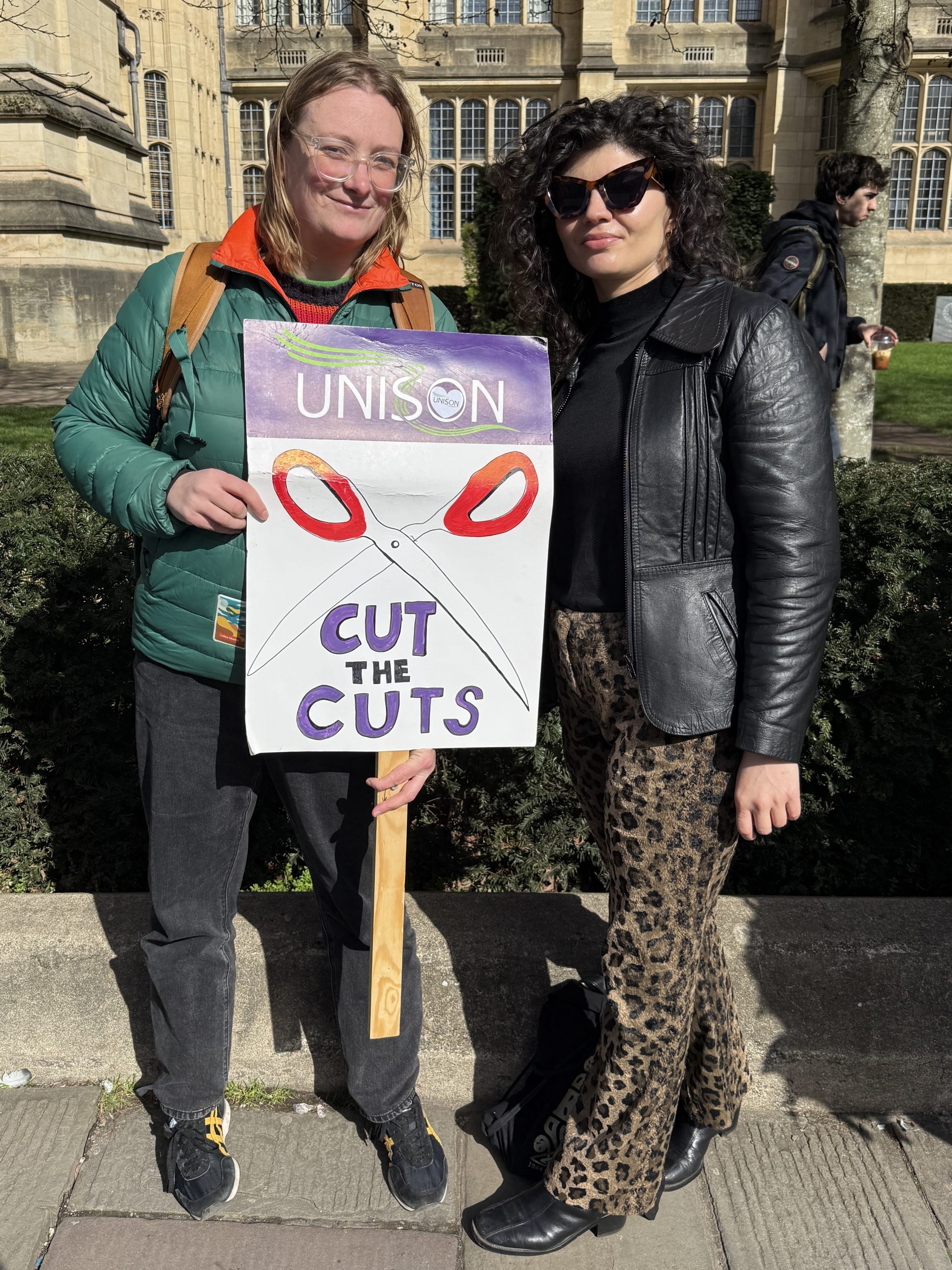
Sophie and Tilly, both support staff at Bristol Uni, told Bristol24/7 the strike was not only about pay but also about respect and wellbeing – photo: Betty Woolerton
Tilly, a senior student administrator in the School of Geographical Sciences, highlighted concerns about job security and workloads: “There’s a transformation programme happening at the university, which is supposed to have no redundancies, but in reality, people are being made vulnerable.
“Progression opportunities are almost nonexistent, and most new roles are fixed-term, which makes it difficult to plan a career or afford housing.
She added: “Morale is really low, and people feel the university isn’t being transparent about what’s happening.”
Both said the strike was also about respect and wellbeing. Sophie said: “We help keep the university running and support students, but we feel disrespected daily.
“People are doing more work than ever, vacancies aren’t being filled and it’s affecting both staff health and student support.”
Tilly added: “I’ve been in full-time employment since I was 19, and this is the first job where I’ve ever been signed off due to stress.
“The university doesn’t seem to have proper mechanisms to support staff in these situations.”
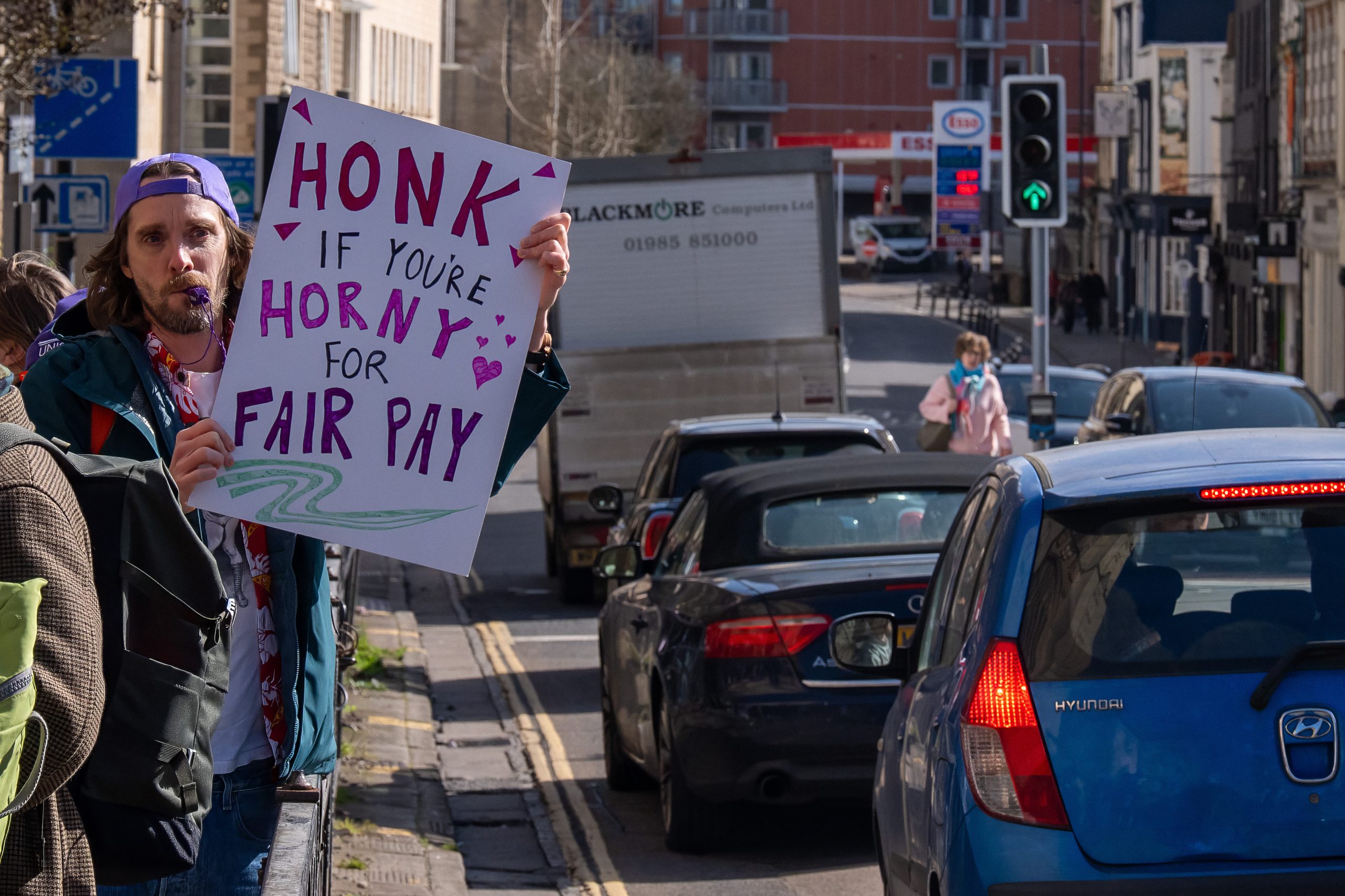
Staff at Bristol University resorted to strike action once again to fight for better pay – photo: Rob Browne
A University of Bristol spokesperson told Bristol24/7: “We respect the rights of our staff to act where they feel strongly about issues which affect them but are disappointed that colleagues represented by Unison have voted to take part in this industrial action.
“The action relates to the 2025-2026 national pay award negotiated by the Universities and Colleges Employers Association (UCEA) on behalf of all participating institutions. We cannot unilaterally change this award.
“Mindful of the importance of supporting our students’ learning and wider experience, we have robust plans in place to ensure our support services continue to operate and be accessible.
“We do not anticipate this strike action will impact teaching and assessment.”
“While these are challenging financial times for the University and wider sector, we recognise that investing in our staff is a priority.
“We therefore ensure that staff pay continues to be as competitive as possible within the sector and continue to pay the Real Living Wage.”
Main photo: Rob Browne; video: Betty Woolerton
Read next:
 Our newsletters emailed directly to you