LGBT / Transgender
Pride and courage: Michael Dillon’s enduring trans legacy
Have you heard of Michael Dillon? This is a question I’ve asked many times while working on this feature. Most often the answer is no.
I hadn’t heard of him until I stumbled across his story on OutStories Bristol – an interactive map and archive of LGBTQ+ history in the city.
As the first transgender man to navigate the complexity of medical transition through hormone therapy, pioneering surgeries and legal challenges, exploring Michael Dillon’s life is a journey filled with unexpected twists, existentialism and spirituality.
is needed now More than ever
He described his time in Bristol as “the darkest of days” where he endured social isolation, gender dysphoria and the terrifying air raids of the Bristol Blitz.
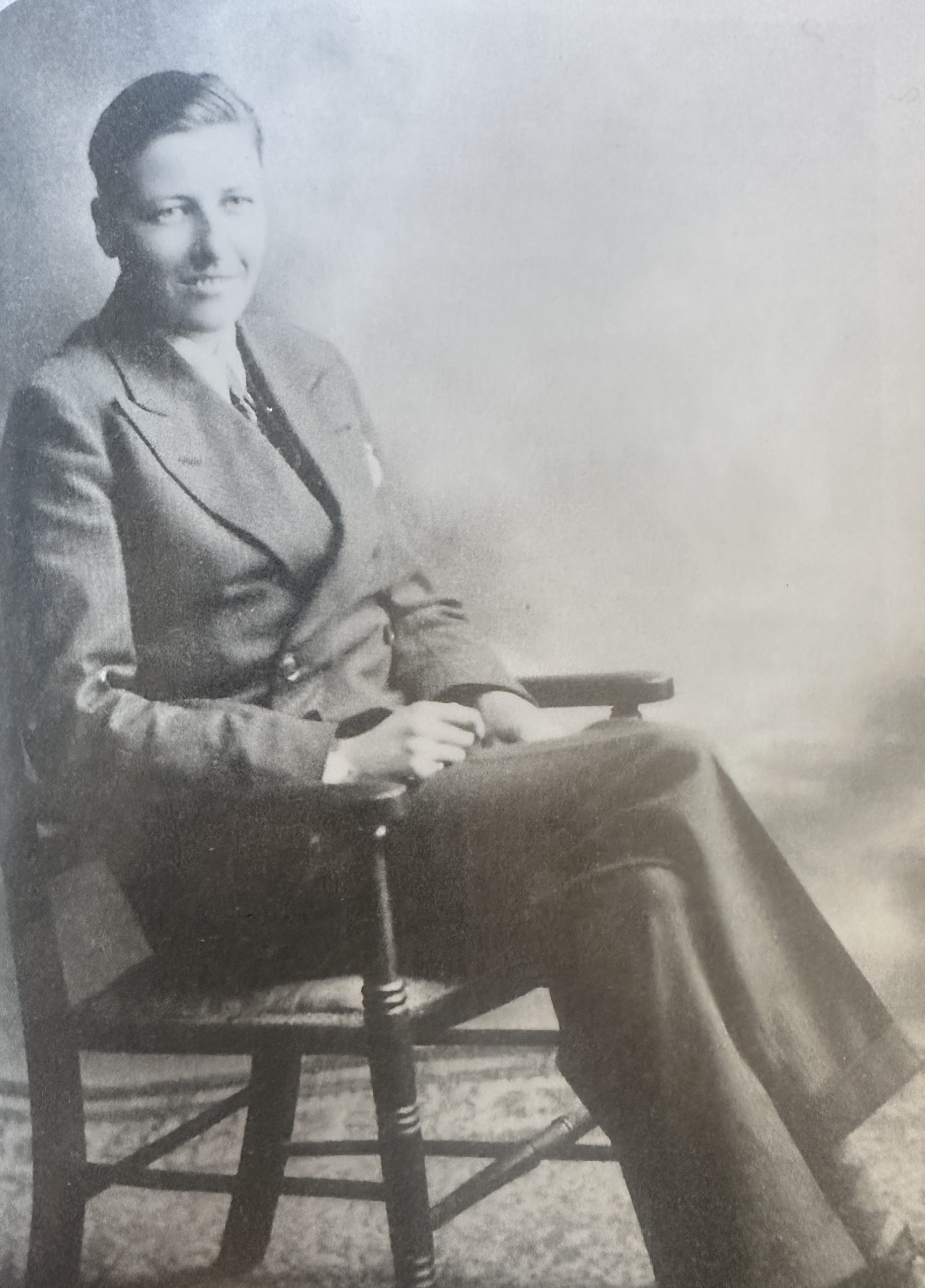
Michael Dillon around 1944. Photo: Private Collection of Liz Hodgkinson
As a transgender woman myself, I’ve often wondered how many of our stories remain untold, hidden in the margins of history.
Each time I ask someone about Michael Dillon, I’m reminded of how easily trans lives can be overlooked.
Yet, behind this understated figure lies a groundbreaking story that can reshape our understanding of identity and courage.
His legacy is that of a man who dared to redefine himself in a world that resisted change.
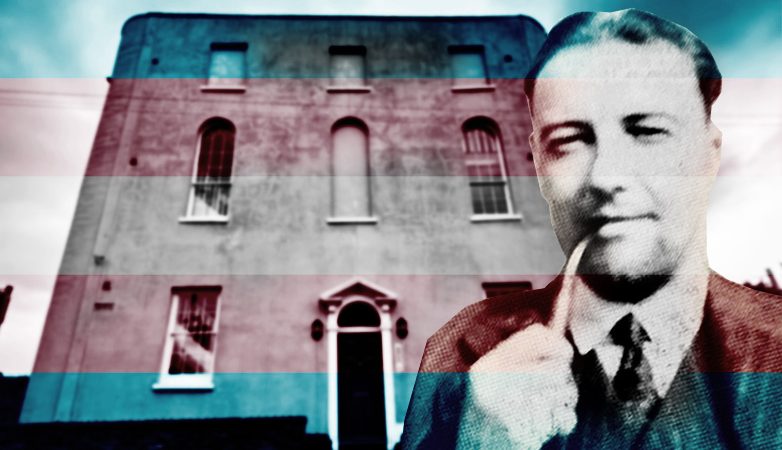
At the age of 24, Michael Dillon was the first transgender man to take testosterone, a treatment provided by Dr. George Lush Foss, whose surgery was located at Clouds Hill House in St George.
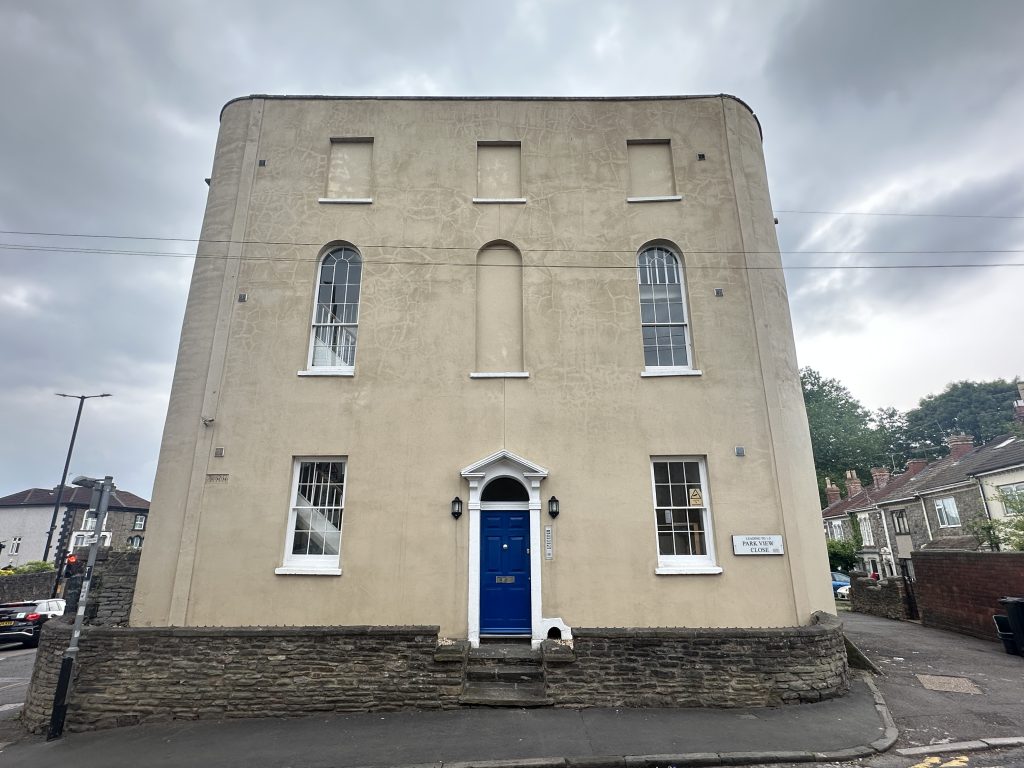
Clouds Hill House in St George, estimated to have been built in between 1800 – 1830. Photo: Carla Wakfer
Michael had learned of Foss, a GP known for experimenting with testosterone treatments at his family’s surgery, and was seeking a solution to his gender dysphoria.
He approached Foss who had recently published a paper on the masculinising effects of testosterone.
Foss would eventually provide Michael with testosterone pills – the first small step in what would become the world’s first documented female-to-male medical transition.
This marks the old doctor’s surgery in St George as a quiet landmark in transgender history. The Foss family’s pioneering medical work is essentially the starting line for Michael’s groundbreaking gender transition.
Michael continued his healthcare journey, undergoing chest reconstruction surgery at the Bristol Royal Infirmary (BRI) and later undergoing thirteen phalloplasty surgeries in Basingstoke.
At the BRI, the surgeon encouraged him to have his legal documents changed to his true name and gender, which he eventually achieved in 1944.

Dr Michael Dillon in 1955 – photo: Private Collection of Liz Hodgkinson
Reflecting on his transition later in life Michael said: “The first time I was able to start fresh with people who knew nothing about me and accepted me as an ordinary young man. The relief was indescribable.”
Upon discovering this significant piece of LGBTQ+ history on my doorstep, I strolled to Clouds Hill Avenue to see the house for myself.
Standing outside Clouds Hill House on an overcast summer evening, I felt a quiet kinship with Michael. A sense of walking in the footsteps of someone who made my own journey possible, even if Bristol hasn’t yet marked his legacy with a plaque or statue.
Nonetheless, Bristol represents a pivotal chapter in his life story.
It was science and curiosity to understand anatomy and physiology that brought him here. After graduating from Oxford in 1939, he went to work in a laboratory in Gloucestershire where brains were being researched on.
Public historian Cheryl Morgan told me that reading between the lines “it seems that he was already pondering why he felt more comfortable in a male role and he hoped that by studying brains, he might find an explanation for this.”
Michael’s contribution to understanding identity and gender didn’t stop at his own transition, it continued on throughout his life.
His work would become the foundation of the field of transgender healthcare for future generations.
During his time in Bristol, Michael worked as a garage attendant at College Motors on Rupert Street, volunteered as a firewatcher during bombing raids, and wrote the book Self while studying at the Merchant Venturers’ College on Unity Street.
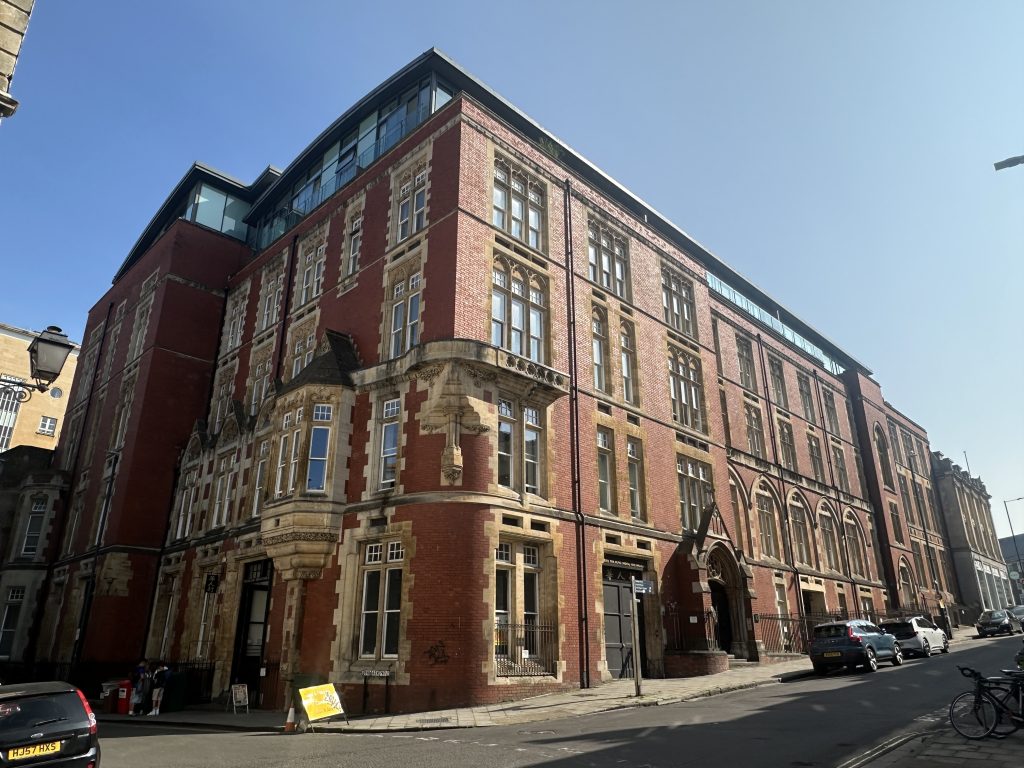
The Merchant Venturers’ College building on Unity Street where Michael Dillon studied – photo: Carla Wakfer
As successful as his transition was, his time in the city was marked by hardship and resilience.
However, the forging of an unlikely friendship with Gilbert Barrow, whom he called G, demonstrates the power of bona fide trans allyship in such times of adversity.
He recalls in his memoir Out of the Ordinary, that his garage workmates never missed an opportunity to ‘out’ him to newcomers. To every person who came through the door, they would say “You see that fellow over there? Well, he’s not a man, he’s a girl.”
“I made no mention of anything to G until the day before he was due to leave for the Navy… Then I asked him if he knew, since he had never given any sign but always treated me as if I were another fellow.”
“‘Oh yes,’ he said, ‘They told me the first day, but I told them I would knock the block off anyone who tried to be funny about you.
“I also said you really were a man, and that had them puzzled. They didn’t know what to think.’
“My debt to G for this loyalty in my darkest hour could never be repaid, although I did my best in return,” says Michael.
Discovering that someone had demonstrated this warm and unconditional allyship back in the early 1940s reminded me of the people in my life who have had my back.
The ones who counter the ten-second stares and never stand for any nonsense. I’m grateful to have people like that around and I was moved to learn that Michael had it too.
Sadly, the rest of the world was not to be so kind.
Some years later, in May 1958, while serving as a ship’s doctor, he was outed by the British press after disparities in his peerage records revealed his gender transition.
The news went global throughout the month and Michael feared for his safety.
Reporters harrassed him.
A sympathetic letter from G with a Sunday Express cut-out revealed the headline: Strange Case of Dr Dillon. The public invasion of his privacy proved unbearable and forced him into exile.
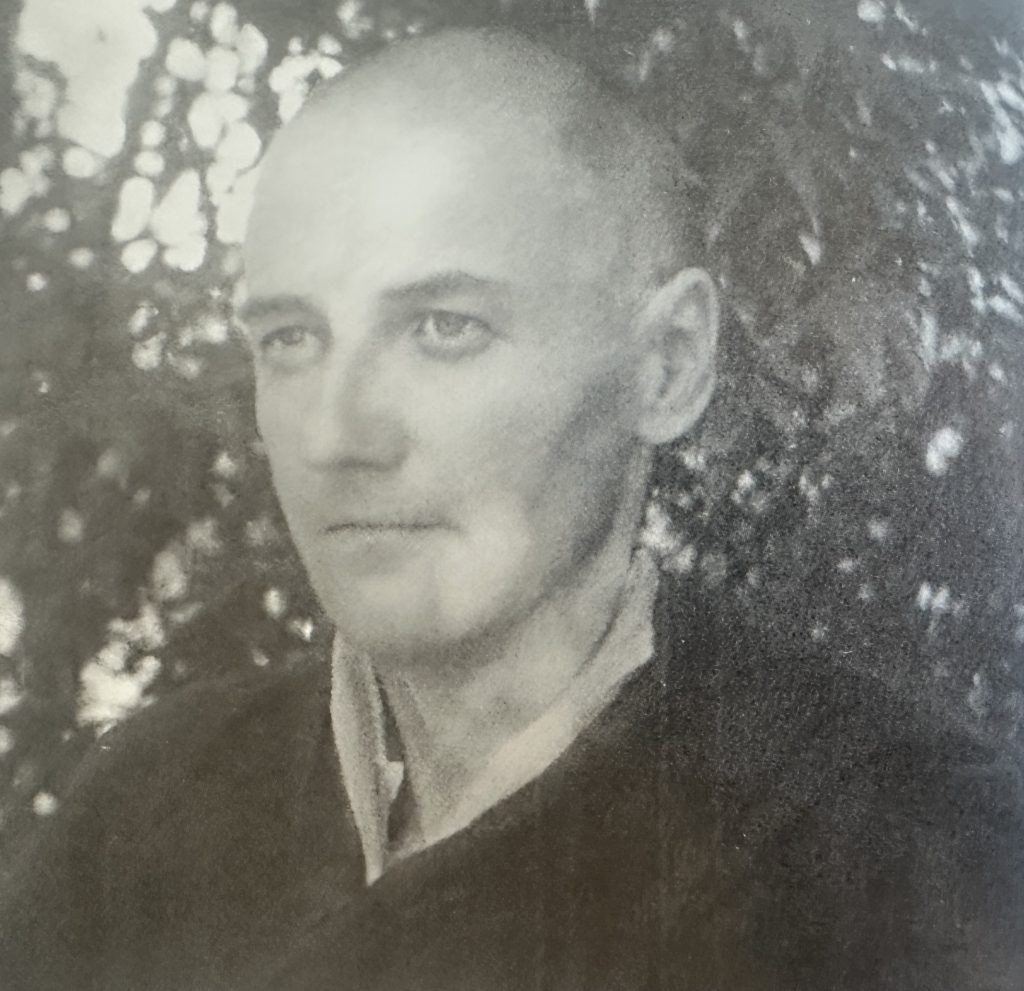
Michael became a Buddhist monk in India – photo: Private Collection of Liz Hodgkinson
Seeking refuge, Michael travelled to India that summer. There, he embraced Buddhism, was ordained as a monk, and given the name Lobzang Jivaka. He spent his final years in India until his death in 1962.
Michael’s story reverberates to the present day, a testament to Bristol’s evolving role as a home for LGBTQ+ people like myself, seeking not just relative safety, but the freedom to live authentically.
Where Michael Dillon once endured, as he called, “the darkest of days”, navigating early transition amidst the turmoil of war and social isolation, Bristol has transformed. It is a place where trans people come to find community, solidarity, and the space to grow into themselves, albeit also amidst an increasingly hostile world.
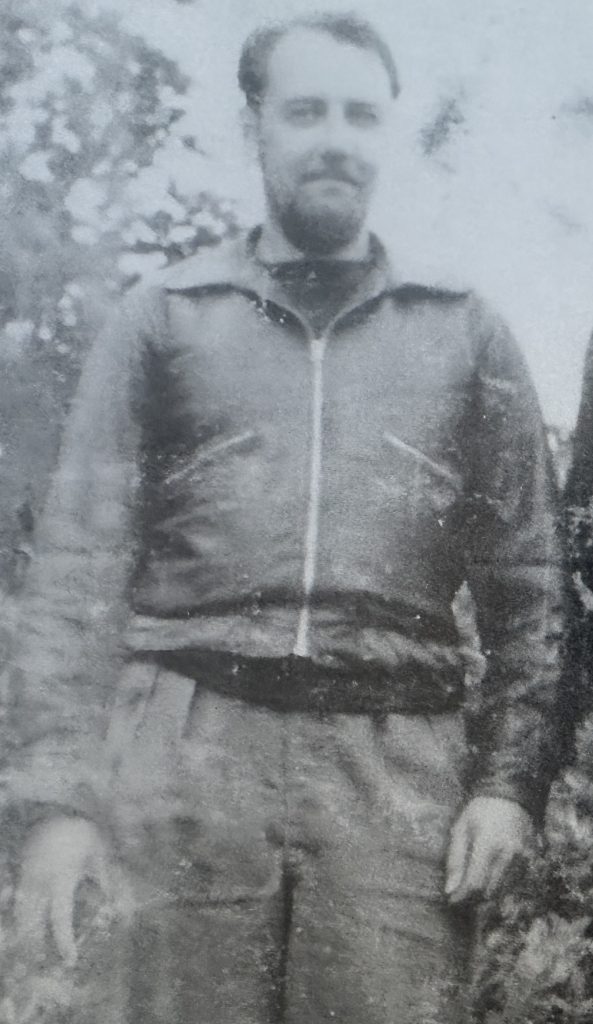
Michael Dillon in India around 1958 – photo: Private Collection of Liz Hodgkinson
Reading about Michael’s challenges, I can’t help but think of my own transition – the initial uncertainty, moments of fear, quiet courage, and indescribable relief when met with pure acceptance.
His story feels both distant and intimately familiar.
As familiar and present as it may seem, I am not a trans man, and so I wanted to speak to trans men in Bristol.
The first is Alasdair Wallace, a stand-up comedian.
His stand-up is a masterclass in openness and vulnerability, blending sharp self-deprecating humour with genuine reflections on his transition and Bristol life. By the end of his sets, I’m often left both breathless from laughter and deeply moved by his honesty.
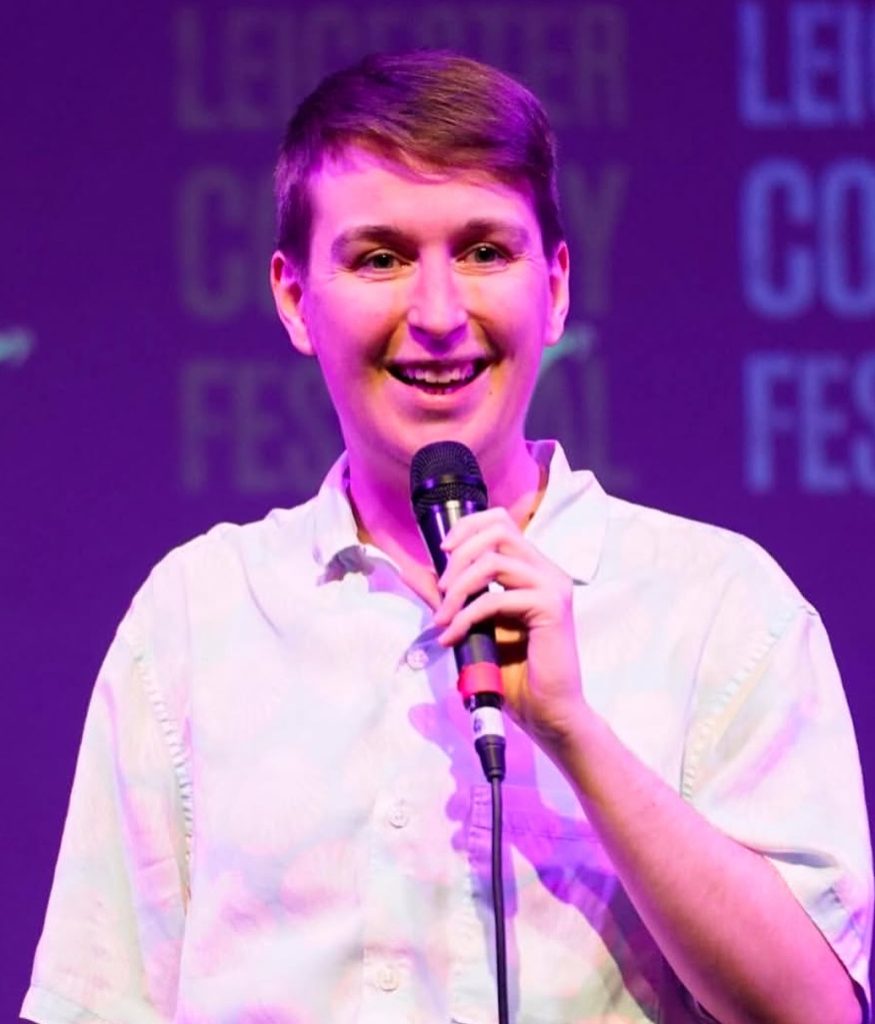
Alasdair Wallace is an award-nominated comedian, originally from Birmingham – photo: Alasdair Wallace
Sitting in the park, a stone’s throw from Clouds Hill House I asked Alasdair what being trans in Bristol means to him.
“I don’t think I could have come out if I wasn’t living in such a supportive place.” He said.
Unlike Michael’s solo conquests in 1940s Bristol, Alasdair has been able to find community with other trans men and share experiences: “We’re all just talking to each other like, ‘you’ve got the hairy arsehole? We’re all getting hairy arseholes, right?’”
Alasdair, 30, moved to Bristol in 2018. Building a strong network of friends and a supportive community through the local comedy circuit.
Alasdair explained he was able to transition thanks to having “a huge number of supportive people. I think a lot of them still don’t know how important they are to me now – my lovely six-foot cis boys.”
We share a profound connection to the city that has shaped who we are.
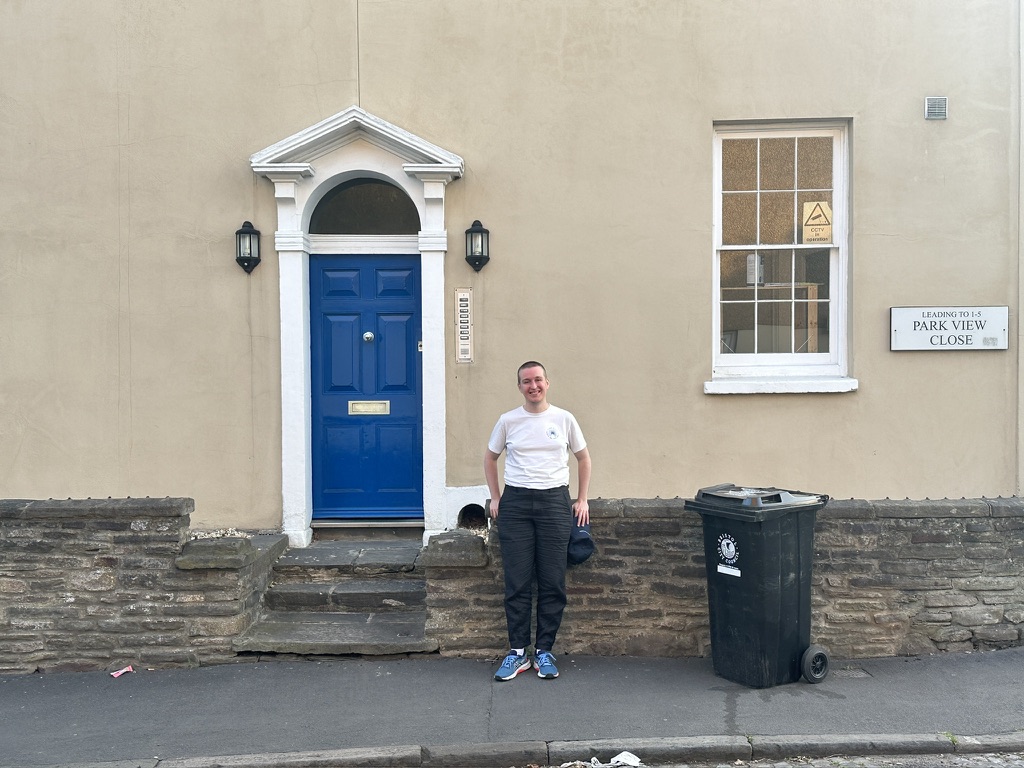
“The comedy scene and my lovely six-foot cis boys are what kept me here” – photo: Carla Wakfer
“Bristol’s incredible. I have had such positive experiences that I almost feel guilty because I’ve never really experienced harassment, I’ve had clueless people and rude people, but nothing that I would remotely consider invasive.”
We discuss trans rights, birds (he’s a keen birder) and whether Michael’s story should be better known, in Bristol as much as worldwide.
“I get that it’s not an international phenomenon but that’s because we’re not making it an international phenomenon. We’re not talking about the fact that we have always been here.”
Trans people have always been here. Cheryl Morgan emphasised that while Michael Dillon is often recognised as the first trans man to make use of modern medical science to transition, he was far from the first trans man in history.
“The early medieval period is full of stories of people who claimed to be eunuchs in order to enter monasteries and live as men,” Morgan explained, noting that several of these individuals were even canonised as saints.
She added, “I also have evidence of two men who gave birth in the time of the Roman Empire, and it seems likely that they were trans men.”
From the ancient world to medieval monasteries to the Bristol Blitz, the more I learn, the more I consider how deep these roots go. How trans people have always found ways to exist, to carve a space and survive, even when history has tried to erase us.
That sense of continuity is prominent in Bristol, where the past and present often collide on the same streets. Looking down Rupert Street toward where College Motors once stood, I see the shadows of Michael and G cast upon the bricks of multi-storey car parks and bus lanes.
Echoes from the past loop like a catchy song, that I just can’t get out of my head.
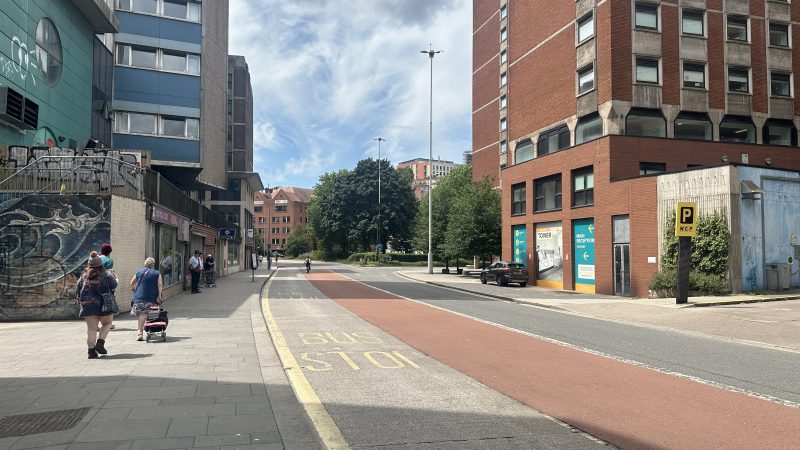
Rupert Street 2025. On the right is where College Motors used to be. Photo: Carla Wakfer
“Get me into Clouds House!” Elijah Dahl sings, as frontman of Bristol’s alt-rock-dream-pop trio Oh, The Guilt, on the track Clouds House.
“Get me in!”
A heartfelt nod to Michael, the song perfectly captures my enhanced feelings of belonging, history and chosen home.
I meet Elijah, 36, for morning coffee in St George.
He’s a trans man who like me transitioned amid the silent turmoil of lockdown.
I ask what he’d say to Michael given the chance, he grins: “It’s corny, but I’d just say thank you.
“When you look back at the people who came before us, who made it possible for us to live openly, to be who we are – it’s gratitude, really.”
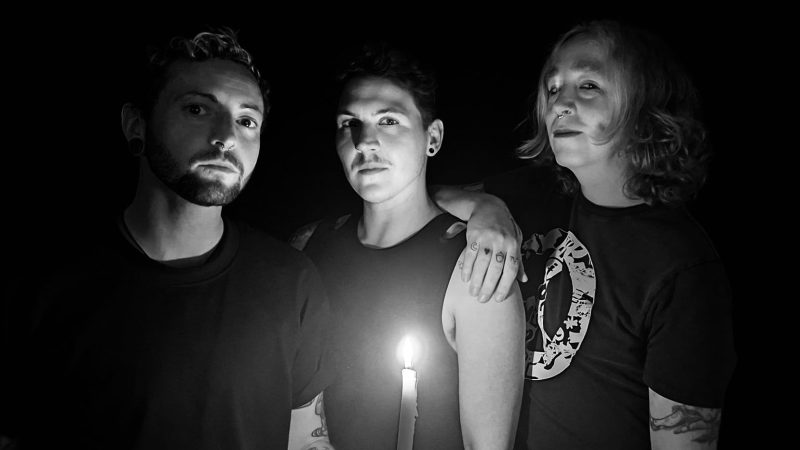
Elijah Dahl (left) in Oh, The Guilt. Photo: Emma Maddox
Bristol has been both the backdrop and incubator for Oh, The Guilt’s evolution.
Long before the city’s queer spaces became as visible and celebrated as they are today, its venues have offered a safe environment for self-discovery, connection and freedom of expression.
“Before I came out, before I really knew myself, music was a way to express what I couldn’t say out loud – and to find people who got it.” Elijah recalls.
This led him to his bandmates, Kit and Jules, who are also transgender.
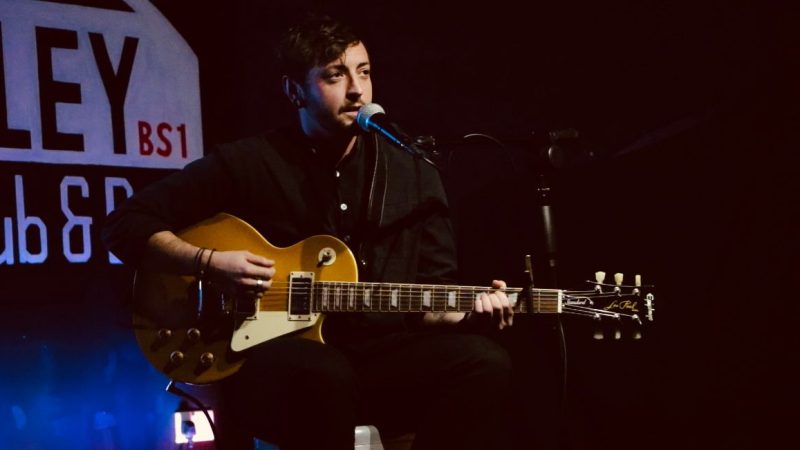
“Dillon knew what he needed to do, and took a leap of faith like we all do” – photo: Loxley Firlotte
Their 2024 album Deadnames and Deedpolls has songs that are confessions, invitations and rallying cries. For Elijah and his bandmates, the band is a “triangle of love and support.”
“When you have that, it’s something wonderful.”
Bristol is a city renowned for progression, but practical support from the NHS, like much of the UK, is increasingly sparse and unreliable.
Trans people can be on waiting lists for years before having an initial appointment, if they’re lucky to get one at all.
“There’s this strong sense of camaraderie and looking out for each other in Bristol. But if you need specialist services, you’re often still heading to London and paying a lot of money.
“I don’t think people are aware of what it costs physically and emotionally.
“What we try to do is speak our truths in the songs and hope other people can relate to it.
“We don’t want to keep saying, ‘Oh, we’re a trans band,’ but at the same time, we kind of feel like we should, and we are allowed to.”
As we walk to Clouds Hill House through the park, I’m reminded how each generation of trans people in Bristol has found its own way to carve out space – through noise, through laughter and with courage.

Michael Dillon in 1950, pictured with his Aunt Daisy, aged 80, who brought him up – photo: Private Collection of Liz Hodgkinson
It’s hard not to think of Michael Dillon taking his own leap of faith long before there was a community to catch him when his chips were down.
His story, in a sense, is threaded through every safe space, every chosen family and every whispered coming-out story that fills the city today.
Just this year, countless businesses across Bristol signed up to the Bristol Safe Space community, pledging to stand with trans people by offering spaces where they are protected from harassment or judgment. A collective movement of unconditional allyship that is now ingrained into the fabric of the city.
From talking to both Elijah and Alasdair, I sense the continuing legacy of those who paved the way. I hope that the next song, the next joke, the next show, the next leap of faith, will make the path a little safer, if not a little wider, for those who will follow.
Michael Dillon’s legacy is alive in every act of resistance, every safe space, and every trans person who finds the courage not to back down.
In a city shaped by many who dared to be themselves, the story continues, and trans people aren’t going anywhere.
Special thanks to OutStories Bristol, Cheryl Morgan, and especially Andrew Foyle, for their assistance with the research for this feature.
Carla Wakfer is reporting on St George as part of Bristol24/7’s Community Reporters programme, aiming to amplify marginalised voices and communities often overlooked by mainstream media.
This initiative is funded by our public, Better Business members and a grant from the Nisbets Trust
Main photo: Private Collection of Liz Hodgkinson
Read next:
 Our newsletters emailed directly to you