Music / choir
The hidden power of singing together
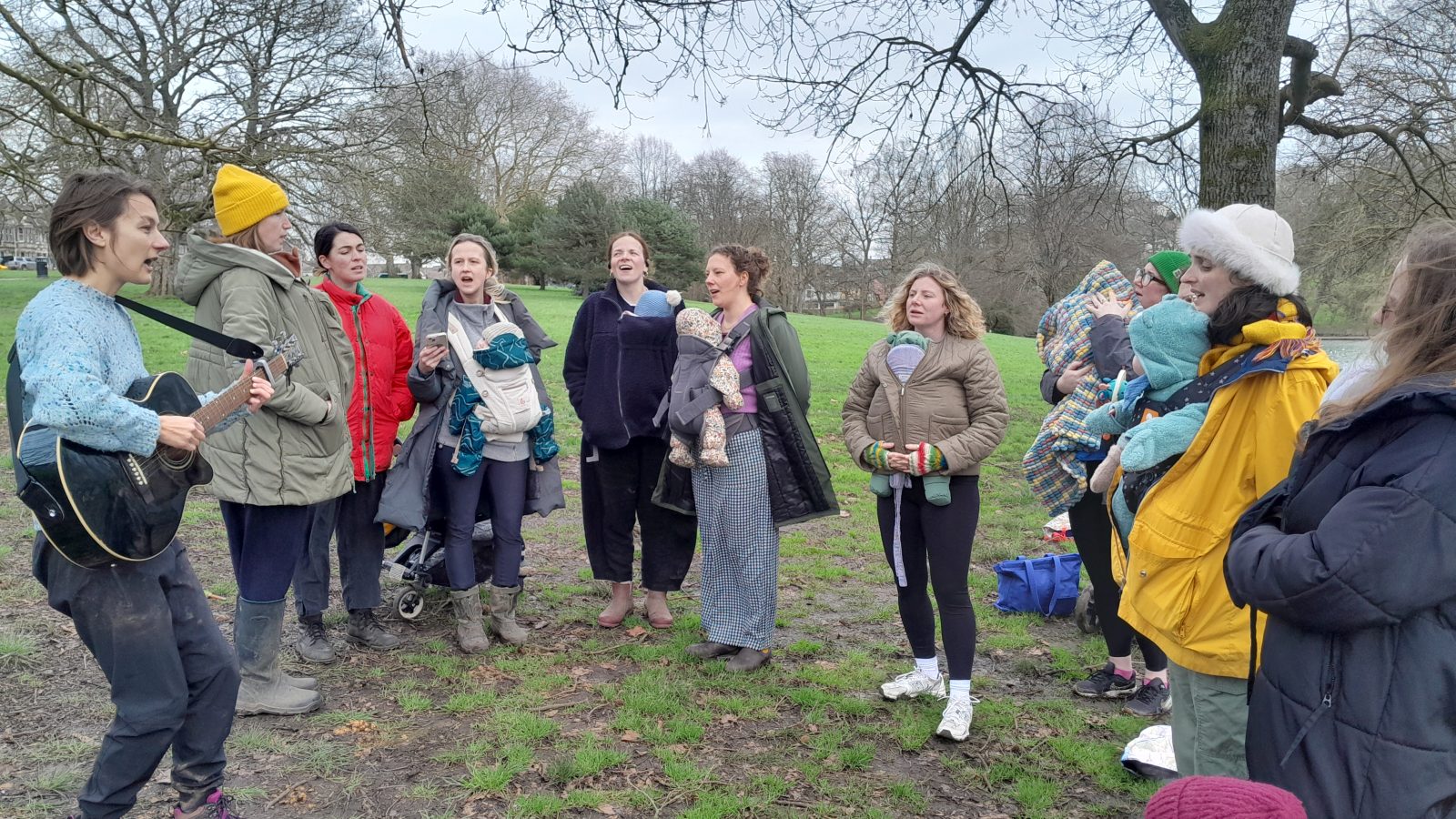
On a grey and windy Monday morning in St George Park, a group of mothers stand in a loose circle, babies strapped to their chests or in prams. They begin to sing. The harmonies grow louder and blend into each other as the round unfolds.
The Bring Your Own Baby Choir (BYOB) founded by Julia Turner has been meeting outdoors in the park weekly since the pandemic. However, new park fees introduced by Bristol City Council in 2025 for groups using public parks, despite widespread opposition, have put the future of the singing group in jeopardy.
This is despite the lifeline it has provided for new mums. For the attendees, it’s not just about the music, but about doing something for themselves, something that brings joy and breaks the isolation of early motherhood.
is needed now More than ever
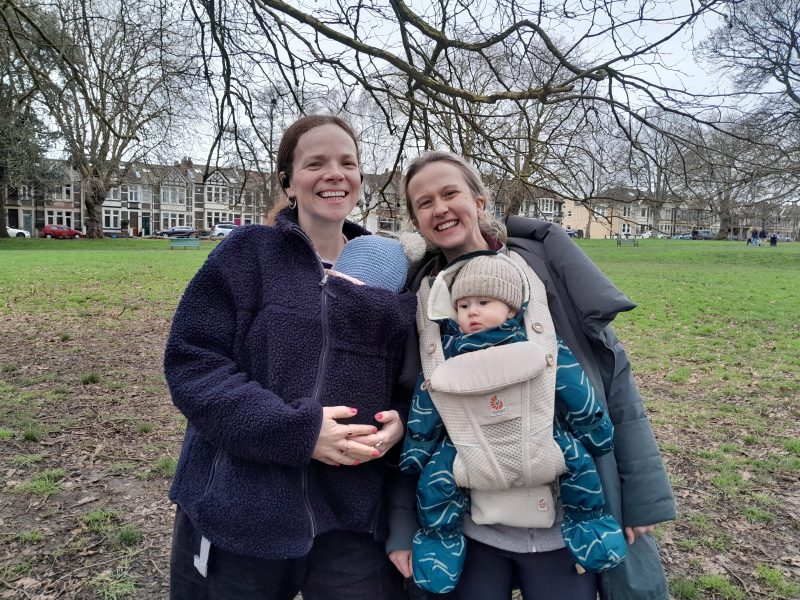
New mothers Becky Peirce and Ysatis McCullough meet every Monday during term-time for the BYOB Choir in St George Park
“I’d never sung before,” says one mother. “But I was looking for something uplifting. Those early months can be intense.”
“It’s so isolating,” another mother says. “You can go a bit crazy at home. There’s also something maternal about singing in nature with your baby. Here, you just connect.”
That connection doesn’t depend on conversation. As Julia explains, even without speaking much, “singing together creates a feeling of knowing people.”
Across east Bristol, similar scenes are playing out in community centres, church halls and parks, reflecting the rising popularity of community-focused choirs.
According to the Big Choral Census by Voice Now in 2017, about 2.1 million people in the UK sang regularly in choirs, which is said to be more than the number of people who play amateur football. Despite this, choirs receive only a fraction of the public funding.
Many of these singing groups do not require an audition to take part. This is the case with Patrick Morrow’s small, informal singing group, Easton Song at Easton Community Centre, which draws on an eclectic mix of musical traditions. There is no sheet music, and no pressure to perform.
“I don’t come here to sound perfect,” says regular attendee Lakhraj Minhas. “I come to connect with myself and other people. To make a beautiful sound together. It’s about being in community.”
Songs are simple, often taught through call-and-response, allowing people to join instantly and create their own harmonies. The aim isn’t technical ability but participation, curiosity and joy.
The result is something looser, more exploratory. “There are no KPIs here, ” Lakhraj jokes. “I’m not coming here to achieve something – unlike the rest of my life.”
But even in spaces designed to be open and inclusive, questions remain about who feels able to take part.
“I’m generally the only brown face in most choirs,” Lakhraj says. “I’ve only ever sung with one other non-white person, even in Bristol.”
Her experience points to a wider issue: while community singing is growing, it doesn’t always reach everyone equally, and who attends can depend on deeper social and cultural factors.
Even groups that appear welcoming face practical challenges. Rising costs, limited venues and public spaces that aren’t always freely accessible – as BYOB Choir will soon experience with the new park fees – mean that the very communities these choirs aim to support can struggle to participate fully.
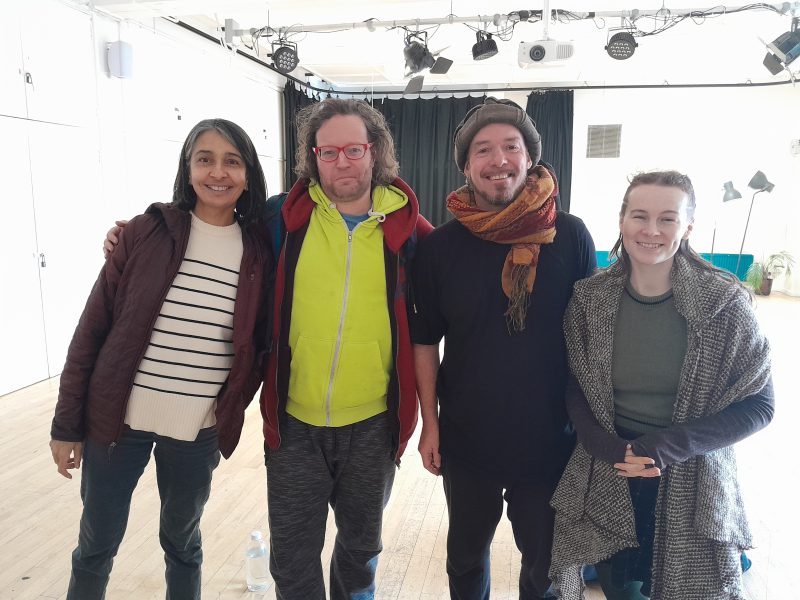
Lakhraj (left), Ben, Patrick and Maddy are all part of the Easton Song crew at the area’s community centre
For Simon Leach, a music therapist at MusicSpace, who works with children, young people and adults across the South West, widening access is central to the work.
His sessions often focus on people who might otherwise be excluded from traditional creative spaces, including neurodiverse children, those experiencing anxiety, and older adults living with dementia.
In therapy, Simon explains, music becomes a way to communicate when words are difficult or unavailable.
“Any sound a child makes, I treat as music,” he says. “I respond to it, build on it. That helps them feel safe, and noticed.”
Music, he says, mirrors and has the power to change emotional states. It can energise, calm, or contain difficult feelings in ways that talking alone often can’t.
“If you create the right space for people to be creative,” he says, “they begin to develop their sense of self and confidence.
Simon continued: “Positive change for each child looks different. I worked with a child who’d stopped speaking at home after a big family change, and they found social situations overwhelming. In our sessions, everything came out through music and play.
“We’d battle monsters with drums, exploring fear. Over time, the monsters became friendly, and in their own life, they’d started making friends and having playdates. The confidence carried over.”
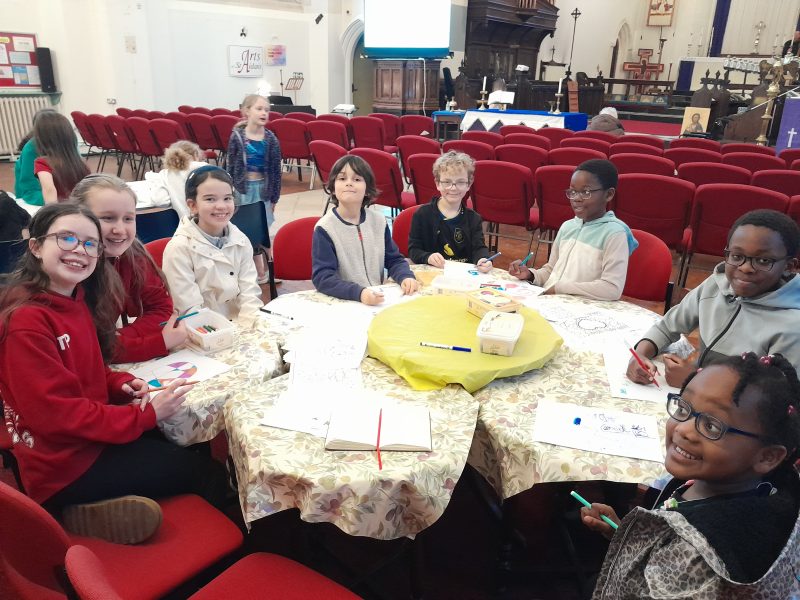
The younger children at East Bristol Young People’s Choir meet at St. Aidan’s Church in St George
At East Bristol Young Voices Choir, a free group for younger children, many of the same themes emerge.
“Confidence is a big one,” lively choir director Joe Cryan says. “Your voice is such a personal thing – you’re not hiding behind an instrument, it is your body. That can feel quite vulnerable. But this is a space where any child can come and make music just by being themselves.”
Many arrive unsure of themselves, but over time, something shifts.
“Their eyes are brighter, they stand up a bit taller. Singing gives them a sense of purpose and belonging,” says project worker Josh Hutchinson.
That sense of shared purpose is key. “It doesn’t matter who’s next to you, where they’re from or what they look like,” he adds. “You’ve all got one goal: to make something together.”
Like the adult groups, it’s not just about music, but about creating a space where children feel able to take up space, sometimes for the first time.
In a moment where concerns about children’s mental health are rising, and opportunities for creative expression are often limited, spaces like this are filling a growing gap.
None of the groups describes what they’re doing as “political” per se. But taken together, their experiences reflect a wider context in which singing has become increasingly important for wellbeing.
Many participants talk about singing as a cure for loneliness, burnout, or the pressure of everyday life. It offers a temporary release, but also something more fundamental.
“We shared some songs, we built something together,” as Patrick puts it. “Singing does that. You’re no longer a stranger to someone you’ve sung with. It creates connection and community.”
Back in St George Park and the BYOB Choir, the looming park fees are threatening this carefully crafted community.
Julia would have needed to raise thousands of pounds annually to continue running sessions, under the original proposed fees. While the rate has now been reduced after a public backlash, it is still high for creative endeavours that may not even make any money.
BYOB Choir would have to pay a higher rate than dog walkers, despite their contribution to community wellbeing and new mothers’ mental health.
She argues that groups like hers make parks safer and more welcoming. “We’re building community that has value,” adds Julia.
“If we have to choose between creativity and making money what happens to spaces like this?”
It raises a broader question about what kind of community life is being priced out of public space.
Singing together might not look like resistance in the sense people usually envision.
But in a time of social fragmentation, higher costs, increasing anxiety and shrinking public space, choosing to gather like this and make music can carry its own quiet power.
Kiran Dhami is reporting on St George, Easton and Eastville as part of Bristol24/7’s Community Reporters programme, aiming to amplify marginalised voices and communities often overlooked by mainstream media.
This initiative is funded by our public, Better Business members and a grant from the Nisbet Trust.
All photos: Kiran Dhami
Read next:
 Our newsletters emailed directly to you