Film / Reviews
The Look of Silence
The Look of Silence (15)
Denmark/Finland/Indonesia/Norway/UK 2014 103 mins Dir: Joshua Oppenheimer
During the Indonesian genocide of 1965-1966, alleged communist and enemy of the state Ramli was one of more than a million people killed by the military junta’s death squads. He was stabbed repeatedly until his intestines spilled out. Somehow, he managed to flee and crawl home. The next day, two death squad members, Amir Hasan and Inong, came to take Ramli away. They promised his parents that they would deliver him to a hospital. Instead, they carved him up with machetes, chopped off his penis, and dumped his body in the Snake River.
There’s no dispute about this sequence of events. While he was making his Oscar-nominated documentary The Act of Killing, Joshua Oppenheimer filmed the two men on the banks of the river, boasting of what they had done all those years earlier. Amir Hasan even wrote a corroborating book about his experiences, illustrated with drawings of Ramli and his mother.
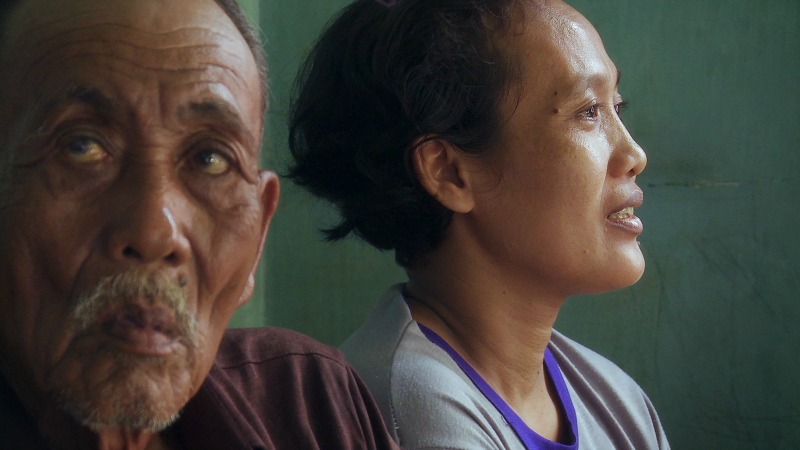
The brilliant conceit of the chilling The Act of Killing was that the genocide’s perpetrators were persuaded to re-enact their atrocities in grisly tableaux aping the style of their favourite Hollywood movies. This companion piece humanises its legacy by exploring the lasting impact on Ramli’s family, particularly his younger brother Adi. A polite and mild-mannered fortysomething optometrist who hadn’t been born at the time of the murders, Adi watches Oppenheimer’s footage of the laughing, gleeful duo (“I ripped him open. His intestines spilled out!”) and initially reasons that their involvement in the film must have been a way of assuaging their burden of guilt. Not exactly.
Fifty years on from the genocide, the killers and their victims’ families live side-by-side in small villages. Each knows the identity of the others. From schoolteachers to mayors, members of the former death squads are now pillars of their communities, many having grown rich as a result of their actions. What’s more, they’re still treated as local heroes. One goes even further and announces that he deserves a reward. “We did this because America taught us to hate communists,” he says proudly.
Once again, it’s the boastfulness and total lack of remorse that proves so grimly fascinating. Amir Hasan and Inong discuss openly, and with much laughter, how to achieve a beheading with the minimum of mess and noise. Several of the death squad members describe drinking their victims’ blood as a way of remaining sane (“Human blood is salty and sweet,” we learn). They never elaborate on why and how this is supposed to work, but a lot of them seem to believe it.
Quietly, bravely and without being remotely confrontational or expressing any desire for vengeance, Adi questions the surviving elderly men responsible for his brother’s death about their moral culpability. Clearly not used to being challenged, they become shifty and aggressive, resort to blatant dissembling, and frequently claim to have been good Muslims ridding the world of godless communists.
As if to underscore just how dangerous it is to break the taboo of silence in a country where the perpetrators remain in power, Adi refuses to disclose any personal details to them. His wife and mother both warn that he could still be poisoned or beaten to death for having the temerity to dig up the past. And in an extraordinary twist, he even learns of a family member’s complicity in the murder of his brother.
Oppenheimer keeps the focus firmly on calm, patient Adi and his increasingly agitated, resentful interviewees as uncomfortable truths and long-suppressed emotions surface during their extraordinarily tense encounters. But he can’t resist slipping in an astonishing contemporary NBC TV news report from Bali in which the assertion that the communists came forward and asked to be killed after realising they were wrong is allowed to go unchallenged. And arguably more disturbing than this powerful, haunting film’s gruesome details of death and dismemberment is the revelation that new generations are still being indoctrinated with lies and propaganda. Oppenheimer films in a classroom where Adi’s own children are given bloodthirsty ‘history’ lessons in which they’re told that evil communists gouged out the eyes of the military dictatorship’s brave generals.
 Our newsletters emailed directly to you