Film / Reviews
The Imitation Game
The Imitation Game (12A)
UK 2014 114 mins Dir: Morten Tyldum Starring: Benedict Cumberbatch, Keira Knightley, Matthew Goode, Mark Strong, Charles Dance, Tuppence Middleton
In 1951, a tenacious Mancunian rozzer figures there’s something rum about a break-in at Alan Turing’s (Benedict Cumberbatch) home, during which nothing was stolen. In the 1920s, the schoolboy Alan forms a close bond with his chum Christopher. And in 1939, aloof, arrogant 27-year-old Alan pitches up at the government’s hush-hush Bletchley Park code-breaking hothouse to lock horns with gruff, steely Commander Denniston (Charles Dance) – a naval man who has little patience with these odd boffin johnnies, but needs their help to crack the German Enigma code if the Brits are to shorten the war and ensure victory.
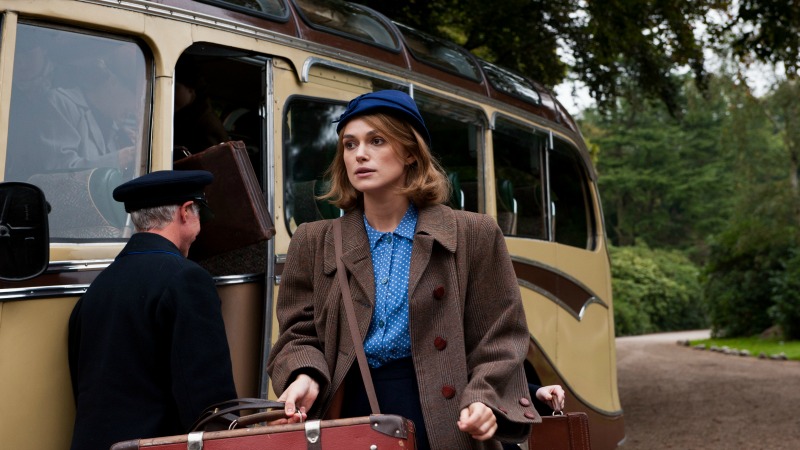
Norwegian director Morten (Headhunters) Tyldum and screenwriter Graham Moore weave together these three strands with considerable skill, letting the side down with just a handful of cliches. (Did they really not trust us to connect the plot dots when Turing discovers the identity of a Soviet spy, without recourse to the hoary old ‘echoey flashback voice’ device?) Their main asset is Benedict Cumberbatch, who, although playing the role like a period Sherlock, proves a compelling screen presence as the mathematics genius variously described as an “odd duck” and “insufferable sod”, who would today be diagnosed as being somewhere on the Asperger’s spectrum. Had history not seen fit to supply cryptanalyst Joan Clarke (Keira Knightley), Moore would probably have had to invent her to impart the modish feminist message (“I’m a woman doing a man’s job. I don’t have the luxury of being an arse.”) and provide a sole female character who isn’t a bit of skirt. Knightley rises to the occasion by giving it the full RP in a selection of period cardigans. There’s excellent support too from Mark Strong as sly, devious MI6 man Stewart Menzies, who hovers in the shadows, overseeing the bigger picture; and Clevedon’s very own Tuppence Middleton, who appears all-too-briefly as Clarke’s sexier chum to spark the ‘Eureka!’ moment.
Despite the fact that we all know what happens (Spoiler! – they crack the code and Hitler loses the war), Tyldum manages to invest the whole thing with plenty of tension, adding a powerful emotional punch despite his somewhat timid exploration of Turing’s homosexuality (we never see him do any actual homosexualising, though he does propose hesitantly to Clarke) and shameful post-war prosecution followed by chemical castration. As the closing credits remind us, it took until 2013 for the man who saved so many lives to receive his posthumous pardon.
 Our newsletters emailed directly to you