Film / News
Roll up for the most dangerous film ever made
Modern-day actors are used to fannying about in front of green screens, leaving the digital effects boffins to make it look as though they’re performing amazing stunts and heroically battling ‘orrible beasties. But for much of the history of cinema, reckless personal endangerment was the name of the game – albeit with a bit of camera trickery and judicious use of expendable stuntmen. Just occasionally, however, things got batshit-crazy; none more so than during the making of 1981’s Roar. How batshit-crazy, exactly? Well, as the poster for the Drafthouse Films’ recent reissue of this jaw-dropping curio explains succinctly: “No animals were harmed in the making of this film. 70 cast and crew members were.”
Now you can see for yourself when the Bristol Bad Film Club shows this extraordinary cinematic artefact amid the marginally-less-vicious fauna of Windmill Hill City Farm (for whom the screening is also a benefit) on Thursday September 10.
You’d have thought Tippi Hedren might balk at working with wildlife after what Hitchcock did to her while filming The Birds. Not a bit of it. Tippi and her hubby/manager Noel Marshall, who got an executive producer credit on The Exorcist, were upset by the cruel hunting of big cats in Africa and wanted to do something to raise awareness of the issue. Commendable, huh? Except that what the misguided couple decided to do was secretly adopt and breed lions at their home. Their menagerie eventually grew so vast that they created their own nature reserve, Shambala, 40 miles north of LA, to accommodate all 100+ big cats. It was here that they decided to film Roar.
Cinematographer and future Speed director Jan de Bont was hired to work behind the camera and the cast was made up mainly of family members, including Hedren’s young daughter Melanie Griffith, playing versions of themselves in what was intended as a Disney-style comedy-adventure with a pro-conservation message. Alas, the overgrown pussy cats didn’t see it that way and viewed the cast and crew as little more than lunch.
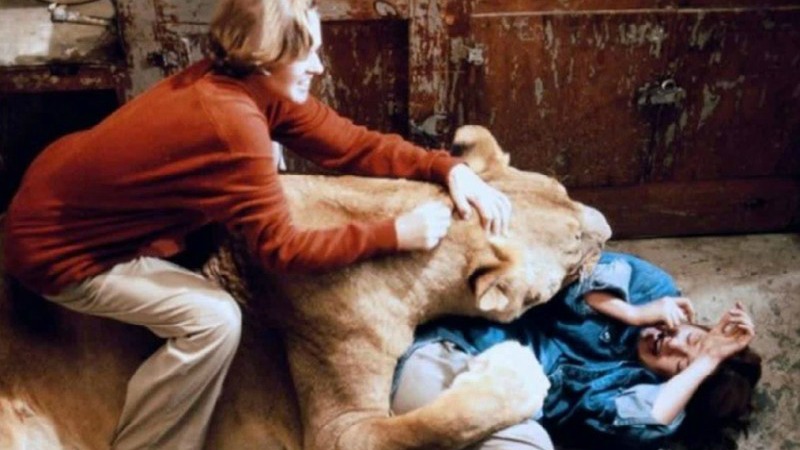
De Bont was scalped by a lion, requiring 220 stitches to his head. Hedren suffered a fractured leg and deep scalp wounds. Griffith was mauled so badly that she required facial reconstructive surgery and 100 stitches. And such was the frequency with which Marshall was munched that he was eventually hospitalised with gangrene. In total, 70 attacks on cast and crew were documented during the epic, troubled five-year shoot, causing horrified financiers to pull out. Marshall and Hedren were forced to sell virtually everything they owned to keep going. On eventual release, their film was a massive box office flop, memorably described by Variety as “the most disaster-plagued film in the history of Hollywood”. “It’s like Walt Disney went insane and shot a snuff version of Swiss Family Robinson,” remarked another critic.
In an in-depth essay that you can read here, Drafthouse CEO and founder Tim League summarises the film’s attraction:
Fortunately, the passage of time affords us the perspective to view Roar for what it truly is: the most epic and amazing animal thriller ever made. It plays out like a fever-dream Disney movie. The lighthearted slapstick of the surface masks one of the most intense, white-knuckle, nail-biting thrillers ever seen. The cast is in constant mortal danger as dozens of adult lions “improvise” around them. At numerous times Marshall drips blood as he fends off ferocious advances from jaguars and tigers alike. Melanie Griffith’s real-life mauling is on display in the final cut. A jaguar licking honey off Tippi Hedren’s face was an untested idea that could have easily ended very, very badly. Knowing the backstory of the production, you can see perpetual terror in the eyes of the cast as an army of lethal predators close in around them.
Advance tickets for the Bristol Bad Film Club’s screening are available here, price £5.
 Our newsletters emailed directly to you