Film / Reviews
Inside Out
Inside Out (U)
USA 2015 102 mins Dir: Ronnie Del Carmen, Pete Docter Starring (voices): Amy Poehler, Phyllis Smith, Mindy Kaling, Bill Hader, Lewis Black, Diane Lane, Kyle MacLachlan, Richard Kind
Pixar pull it off again with Pete Docter’s conceptually daring follow-up to the Oscar-winning Up. Boasting plenty of heart but no cheap sentiment, Inside Out cleverly visualises the inner workings of an 11-year-old girl’s mind. While nobody looks to family animation to provide accurate psychological modelling, the film refuses to insult its audience’s intelligence, offering elegant depictions of personality formation, different types of memory and such tricky concepts as abstract thought. It’s also the only U-rated family animated comedy ever to include the phrase ‘non-objective fragmentation’.
is needed now More than ever
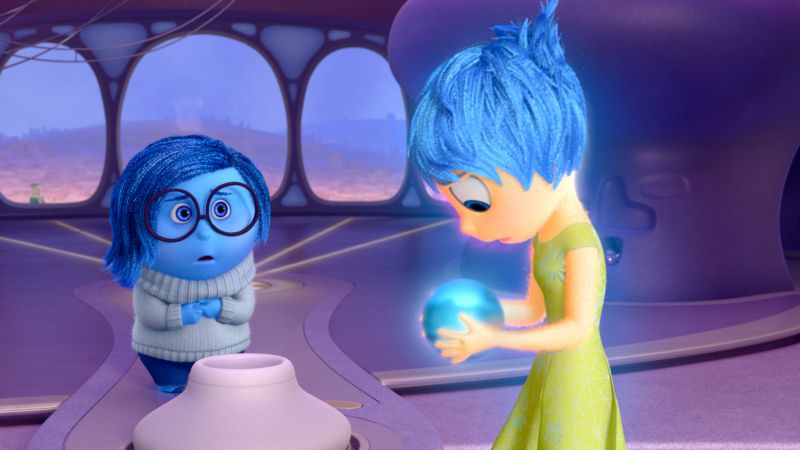
A splendidly concise scene-setting pre-credits sequence sidesteps religion to show newborn Riley as a blank canvas until Joy (Poehler) materialises to fire her up, whereupon her eyes open and she starts to giggle. (If you fancy an additional larf, Google those crazy, monomaniacal Christian movie review websites to savour their disapproval of the film’s spiritual shortcomings.) Within seconds, Joy is joined by other key emotions: glum Sadness (Smith), snarky Disgust (Kaling), cowering Fear (Hader) and short-fused Anger (Black). Together, they operate her as a bickering committee from a control panel in Headquarters, processing memories and overseeing her islands of personality. Out in the real world, Riley is struggling to adapt after her parents (Lane, MacLachlan) move the family from Minnesota to San Francisco. The plot kicks in when Joy and Sadness are sucked out of Headquarters following a mishap, throwing Riley’s emotions out of balance. Lost in the far reaches of her noggin, Ms. Chirpy and Ms. Grumpy now have to find their way back through Imaginationland, Picasso-esque abstract thought and the scary clown-infested subconscious, dodging the memory dump and riding the train of thought.
Inside Out tackles some fairly sophisticated concepts, not least when it comes to the mutable nature of memory. One can pick holes in its conceptualisation and internal logic, but that would be to miss the point, especially as the film also works so well as a comedy. The voice cast are terrific, with Phyllis Smith (Phyllis in the US version of The Office) proving a particularly inspired choice as relentlessly dour, blue-hued Sadness (“Remember the funny movie where the dog dies?” is as cheery as she gets). One suspects there’s a merchandising fortune to be made from Bing Bong (Kind) – Riley’s bumbling imaginary childhood friend, who’s now exiled to the lonely corridors of long-term memory. Only Pixar could make you care about a character that’s equal parts cat, elephant and dolphin and cries sweets when he’s unhappy. And what’s not to love about a film with an amusing déjà vu gag, a cynical dream production studio that goes heavy on the reality distortion filter, and a climax that features a tower of self-sacrificing imaginary boyfriends? A final tip: stick around during the closing credits for brief insights into the minds of a bunch of other people, plus a cat and a dog.
 Our newsletters emailed directly to you