Film
Lucrecia Martel: Shorts Programme
- Director
- Lucrecia Martel
- Certificate
- 18
- Running Time
- 40 mins
A quartet of short films made by Lucrecia Martel between 1995 and 2015, screened to complement the release of her new feature, Zama.
Here’s the official programme blurb:
Dead King
(Dir. Lucrecia Martel, Argentina 1995, 12 mins, Spanish with English subtitles)
With a rhythm that foreshadows the high temperature and propulsive pace of her feature debut The Swamp, Martel’s Dead King upends the western genre with a fiercely feminist ending. Made as part of the 1995 anthology film Historias Breves – often said to have inaugurated the New Argentine Cinema movement – it was one of Martel’s first student films and went on to be both a breakthrough and an early glimpse at what was to come.
Nueva Argirópolis
(Dir. Lucrecia Martel, Argentina 2010, 8 mins, Guaraní/Quechua/Toba/Spanish with English subtitles)
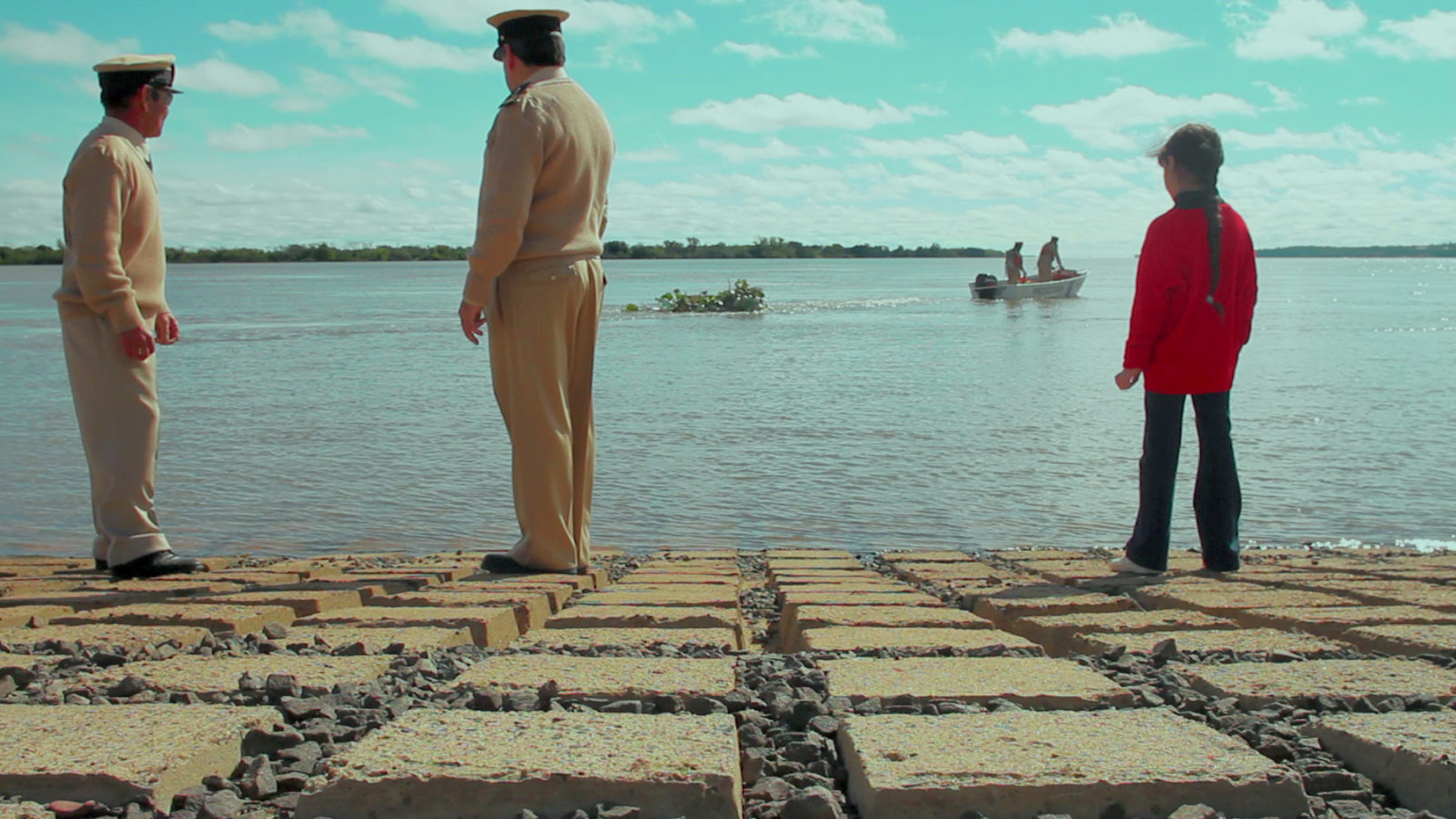
Partly taking place on the Paraná River, where Martel’s latest film Zama is set, Nueva Argirópolis narrows its focus to the arrest of a group of indigenous people as they attempt to cross the river. Though commissioned by the Argentine Ministry of Culture to commemorate the bicentenary of the Revolución de Mayo, Martel’s film subversively interrogates the sentiment of national pride and Argentina’s relationship to its colonial past.
Fish
(Dir. Lucrecia Martel, Argentina 2010, 5 mins, Spanish with English subtitles)
Carp contained in a fish tank describe their dream of being a car. A soundscape of music and distorted voices (provided by sound artist and singer-songwriter Juana Molina) give an oneiric and ominous quality to these images: an aggregate of bodies, living, breathing and gaping at the surface of the water, captured by Martel’s camera in an existential cry upward beyond the fourth wall.
Leagues
(Dir. Lucrecia Martel, Argentina 2015, 12 mins, Spanish with English subtitles)
Moving between classrooms – static interiors and roaring, raucous exteriors – Leagues explores the subject of academic exclusion in native communities. Named after an archaic unit of measurement, Martel’s postcolonial film depicts how education, though a social tool, can also create division and discrimination.
 Our newsletters emailed directly to you