Your say / Politics
‘Greens and Reform have more in common than you think’
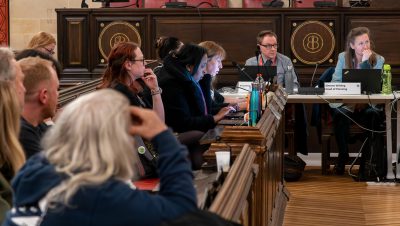
Ask yourself this. How much do you actually know about what the West of England mayor has the power to do? I am not entirely sure myself, and I have just met all six candidates at the official candidate announcement for the May 1 election.
What I can tell you is each of the hopeful candidates will need to garner votes from the combined local authorities of Bristol, South Gloucestershire and Bath & North East Somerset.
The winner will have devolved powers through funding from central government, with enhanced control over local transport, economic growth, strategic planning and skills development. Labour’s Dan Norris currently occupies the role.
is needed now More than ever
2025’s Labour candidate, Helen Godwin, is keen to point out the benefits in sharing a party, communications and vision with Keir Starmer’s government in Westminster.
Undoubtedly, Labour’s regional support is strong, but how well aligning with the national government will stick with the electorate remains to be revealed. Labour continues to be hugely unpopular nationally after a series of disastrous political decisions, with a recent poll showing support plummeting to 21 per cent.
Godwin aligning herself with Starmer by reiterating her party’s focus on achieving “economic growth” may prove damaging to her personal brand, especially in Bristol where the electorate have proved they have no problem with fleeing from Labour.
Although occupying different portions of the political spectrum, both the Greens’ Mary Page and Reform’s Arron Banks’ rhetoric overlap more than both would care to admit. Both expose current spending inefficiencies, and speak on social and economic inequalities between areas in Bristol.
Interestingly, Page and Banks will both also be focusing on competing for the votes of rural, home-owning portions of South Gloucestershire and North East Somerset, especially from those who may not yet trust the Conservatives.
The Greens successfully managed to gain seats with a similar demographic makeup in the 2024 general election, while Banks sees potential in them being drawn towards Reform and his successful businessman demeanour.
The pair’s rhetoric may occasionally mirror each other but their respective styles and solutions to the region’s problems differ considerably. Page is keen to keep wealth in the region, rather than in “off-shore accounts”. In doing so, the former Lib Dem aims to champion the needs of the most vulnerable and marginalised, as well as spending money on urgent environmental needs.
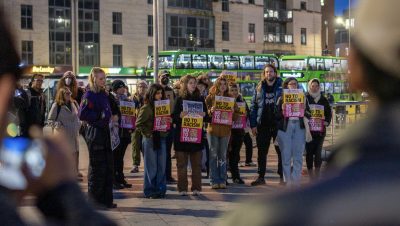
On the other hand, Banks, a multi-millionaire and co-founder of Leave.EU, aims to shake up the pack as much as he can get away with. He clearly thrives on controversy and is keen to add interest to this election. He’s already facing backlash and protests in Bristol after claiming on Twitter that “Bristol looks like little Somalia”.
Despite this, Banks believes he has a chance of winning in Bristol, claiming Reform has “more support than you’d imagine” and that the left vote could be split four ways between the Greens, Labour, the Lib Dems and the Tories – delivered with an accompanying wink and a nod.
Tory candidate Steve Smith mentions people’s distress around liveable neighbourhoods and preventing through-traffic from accessing Park Street. Research show that the popularity of pedestrianisation tends to increase after projects are implemented, although many business owners remain unconvinced by upcoming changes to Park Street.
Smith, in our brief chat, draws attention to residents’ discomfort yet failed to offer a detailed, positive direction he would take Bristol, focusing solely on other parties’ perceived failures. If kept up, this strategy won’t get him far.
Lib Dem candidate Oli Henman manages to rhetorically wrangle his way between both the Greens’ “confusing” local policy and Labour’s “disappointment” at a national level. Henman, talking to Bristol 24/7, claims he’d be progressive if elected. It’s clear he’s trying to appeal to Bristol’s left leaning electorate, but whether he actually would be in office is yet to be seen – after all the Lib Dems have a track record of reneging on promises.
Lastly, independent candidate Ian Scott’s campaign confuses those who overhear his strategy. The ex-Labour councillor says people are fed up with politicians at a national level and talks up Bristol’s economic potential. Despite his hopes to champion the population’s interests against unpopular national figures, he is not planning on building a people-powered campaign.
Strangely, he is not going to be delivering leaflets, door-knocking or making any phone calls. Instead he hopes people will look him up online and form opinions based on pieces like the one you are currently reading. For a big name like Banks, this could be feasible – Reform’s current national popularity comes from minimal community work – but it appears Scott may run into problems without attempting to convince the electorate on their doorsteps.
This election is extremely open with each party candidate to differing degrees having a claim that they will receive significant support from certain demographics and geographical areas in the region. Banks’ late inclusion certainly draws the eye and is already inviting controversy. But as the incumbents, it is Labour’s to lose; despite Godwin maintaining she is not the frontrunner.
This is an opinion piece by Aarun Parmar-Cunio, a political commentator who lives in Horfield
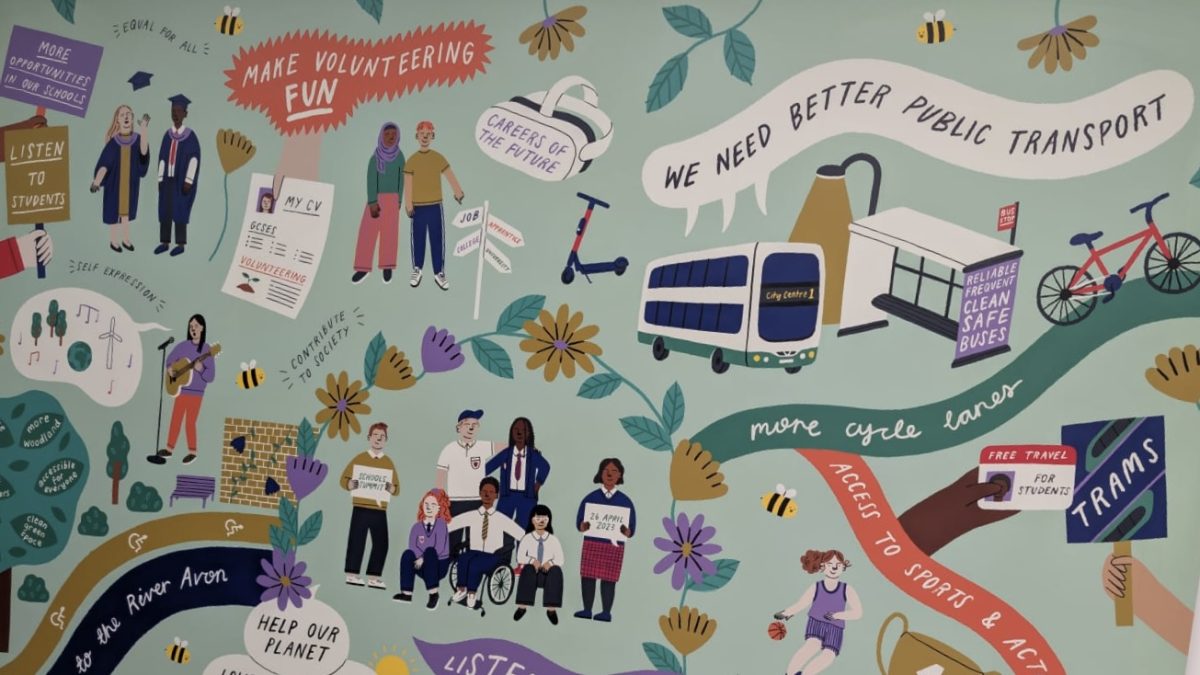
Illustration by Ellie Wilkinson
Read next:
 Our newsletters emailed directly to you