Your say / Transport
‘Franchised buses would provide the efficient service Bristol deserves’
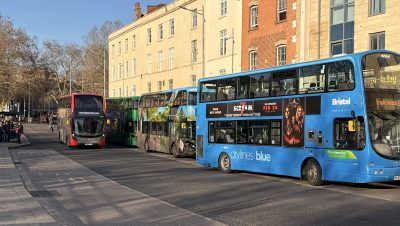
Oh, Bristol buses
We dearly love you
In your British racing green
Thundering through our glorious city
Seldom heard and never seen
There is a growing tendency in this country to look back to the 1970s and think everything was better.
But as Bristol legend Fred Wedlock succinctly put it back then in his song Bristol Buses, there was never really a golden age of bus travel in our city.
That doesn’t mean that the privatisation which took place in the 1980s has been a success. Far from it.
What we have now is a system where private companies get to cherry-pick the profitable routes, whilst leaving local authorities to scrabble around for the money to fund the unprofitable ones.
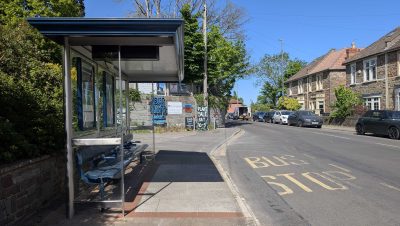
In my own ward of Brislington East, we’ve seen this exact scenario play out with the number 36.
Originally a service connecting the city centre to Hengrove via St George, Brislington, Stockwood and Knowle, it was erratic, running only half-hourly and often late, but it served a wide community, getting people to places they otherwise could not access.
In an effort to try to improve punctuality, First Bus decided to cut the service so that it only ran as far as Brislington, which resulted in whole communities being cut off from each other.
In December 2019, First then tried to cut the evening service, something only avoided when I ran a campaign to persuade the then-Labour administration to step in and provide subsidy funding.
A year later, the service was truncated even further by terminating in St Anne’s, leaving people who needed to make trips across Brislington and further afield with no service at all.
In an area with 22,000 residents, this left many with no access to doctors’ surgeries, supermarkets, and other vital amenities.
It took three years and a lot of campaigning to get the number 36 reinstated, which was funded by Bristol’s Clean Air Zone receipts.
It is now running again, carrying roughly half the number of passengers that First would consider profitable, but providing vital connections for the people that use it.
In two years, the current funding will run out. What then?
Until recently it was illegal for local authorities to run their own bus companies, unless they never gave them up during Thatcher’s privatisation binge.
Only two English local authorities escaped the cull, Nottingham and Reading, and both continue to run very successful bus companies which have some of the highest customer satisfaction levels in the country.
But elsewhere, bus services were turned over to private companies, and routes have shrunk and fares risen as a result.
The Labour government has now made it legal again for a local authority to set up its own publicly owned bus services.
The Bristol Labour group think this is the right way to go. Setting up a municipal bus company was a key feature of our 2024 manifesto, and we have been pushing the Green-led administration for action ever since.
We see ownership of our own bus company as preferable to franchising, a system where routes are set by the public body, but private companies continue to provide the service and cream off a profit.
Self-ownership would see all that profit re-invested for customers, as well as returning democratic control over our buses.
At the moment, if something goes wrong, we are forced to take our requests for improvement cap-in-hand to the private companies, with no guarantee that they will take any action. It’s not good enough; we can do better.
The ruling Green Party councillors say they are sympathetic to this approach but have dragged their feet.
We asked for a task & finish group to look into the feasibility of setting up our own company two years ago.
Bridgwater Council recently made an expression of interest to the government to be in a pilot wave for municipalisation. Where were we?
Bristol is a city that does things differently – the Council leadership needs to be on the front foot when pushing for change. If Bridgwater can do it, so can we.
Yet so far, all we have is a promise to look into it in return for supporting a Workplace Parking Levy.
We will need much stronger guarantees than that if we are to commit to this new revenue-raising measure, something that has been successfully used in Nottingham to fund their bus and tram network.
Franchising across the West of England is currently being looked at by mayor Helen Godwin.
Following the resounding success of the Bee Network in Greater Manchester, Andy Burnham has also urged us to franchise our network.
Franchising is preferable to leaving all bus services in the hands of the free market but it’s worth remembering that, until recently, railways were franchised.
The Labour government has since nationalised them, running them as publicly owned companies. Around three-quarters of the public believe this is the better way to run them.
While I appreciate I am comparing apples and oranges, the same sentiment applies for buses.
We do not see franchising and public ownership as mutually exclusive.
A Bristol bus company running services under the WECA umbrella would be possible and cheaper than using a private company.
The unitary and combined authorities would work together to ensure we got the best, most comprehensive and cheapest transport solution possible.
While public opinion on our buses may not have changed much since the 1970s, the UK certainly has.
Bus services in the 70s had their problems, stemming from management inefficiencies, declining passenger numbers and the overall economic climate of the UK at the time; leading to a substandard service.
Evidently, privatisation was not the answer; reforming the service was, as Nottingham and Reading have proved.
A modern, municipal company under a franchised umbrella would finally provide the reliable, efficient services Bristolians deserve.
We just need to get on and make it happen.
This is an opinion piece by Tim Rippington, a Labour Party councillor for Brislington East and vice chair of Bristol City Council’s transport & connectivity policy committee
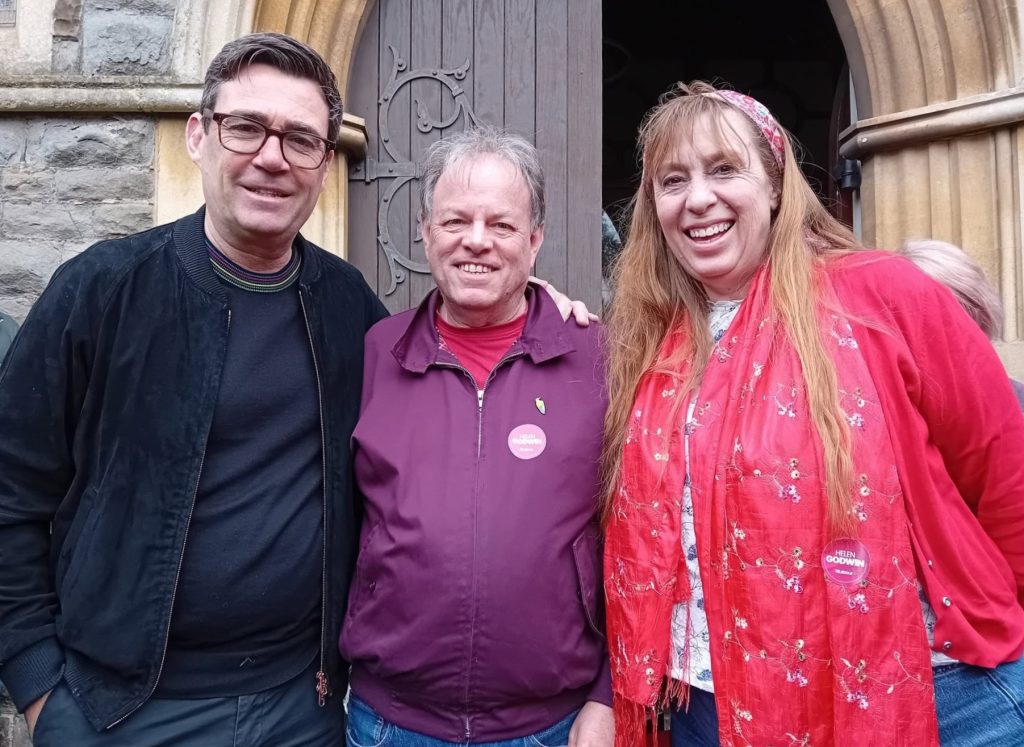
Andy Burnham with Brislington East councillors Tim Rippington and Katja Hornchen – photo: Tim Rippington
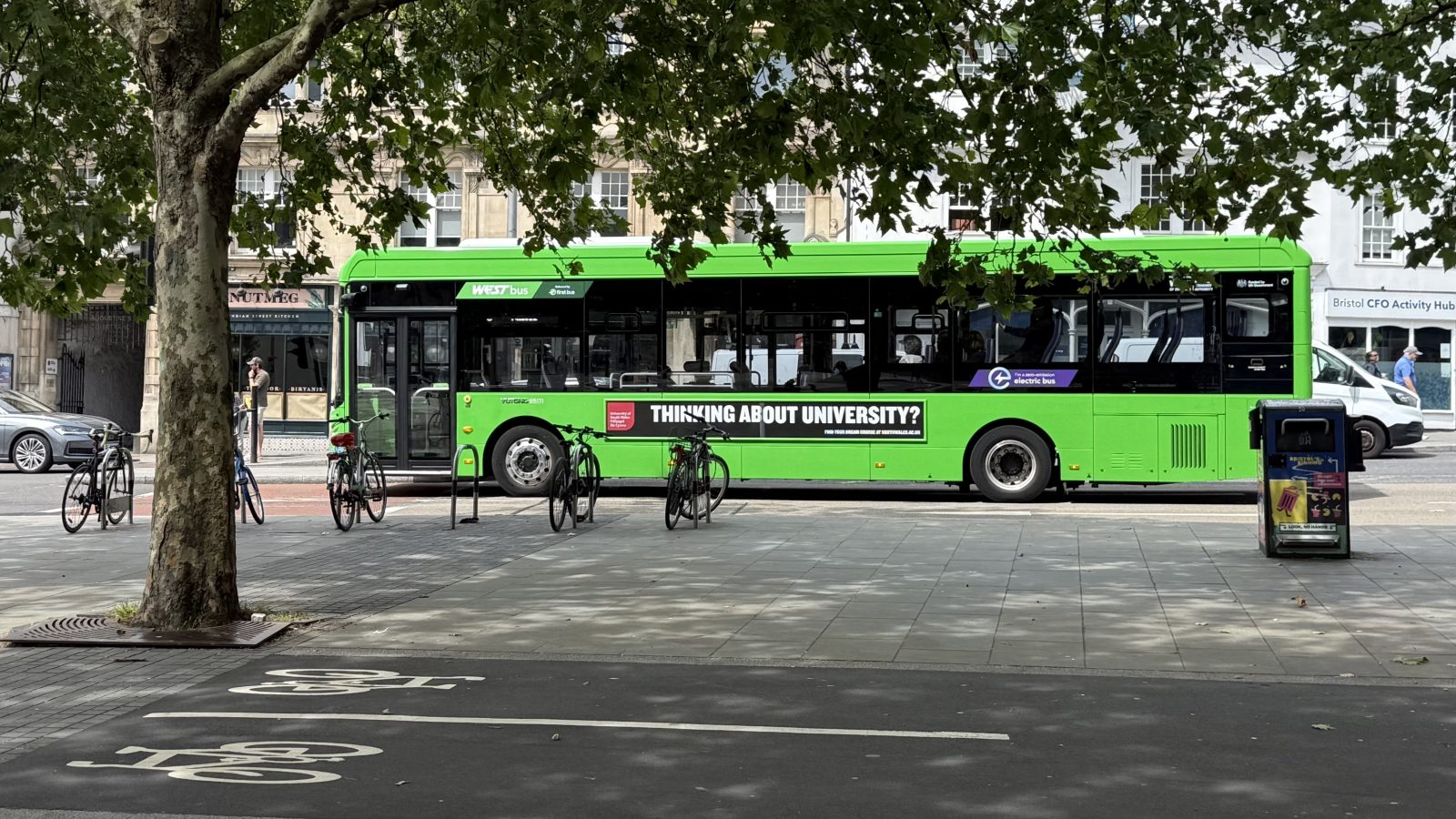
Main photo: Martin Booth
Read next:
 Our newsletters emailed directly to you