News / Windrush Day
Human library celebrates ‘enduring legacy of the Windrush generation’
Barbara Dettering, Owen Henry, Dolores Campbell, Dorothy Maximen and Bertram Wilkes were some of the many 20th-century Bristol-based Caribbean pioneers who were mentioned during a panel discussion at the Trinity Centre on Sunday.
The UK government has recognised June 22 as Windrush Day since 2018.
Windrush Day is a national day of celebration which highlights the importance of post-war African-Caribbean migration to the UK.
is needed now More than ever
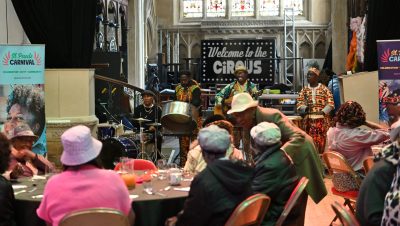
To mark Windrush Day this year, the Trinity Centre organised an afternoon of events, including a discussion with high-profile Black Studies professor Kehinde Andrews, a reading by Young Writer of the Year award nominee Moses McKenzie and a Black British art exhibition.
One of the Windrush Day events at the Trinity Centre was a panel discussion, organised in collaboration with St Paul’s Carnival, that celebrated the “enduring legacy of the Windrush generation“.
Chaired by Trinity Centre heritage curator Edson Burton, featured panelists were spoken word artist Rider Shafique, poets Muneera Pilgrim and Lawrence Hoo and racial justice activist Julz Davis.
View this post on Instagram
While all panelists spoke about the importance of history, the bulk of the conversation focused on issues impacting Black and African-Caribbean people in Bristol today.
Julz Davis highlighted that in 2017 Bristol was found to be the seventh most racially unequal Local Authority by the Runnymede Trust – a stat that his organisation, Curiosity UnLtd, is keen to change.
He said that although Bristol had the resources to change things for the better, he was unsure if “we have the will”.
He added: “I don’t think this city ever really truly had the will until it was forced to have a bit of a look at itself, because the world looked at it five years ago when the Colston statue came down… then there was a bit of action but now it’s inertia.”
Lawrence Hoo spoke in detail about racism within local policing and questioned why Sarah Crew, the chief constable of Avon & Somerset Police, was “celebrated” in 2023 for recognising what many Black people had been arguing for years – that the police force was institutionally racist.
He said: “Our children are being profiled. They’re being criminalised, which can affect them trying to get careers… on 4/20 young people sit in the city centre and smoke loads of weed. Children out here can’t come on the street and smoke weed, they get charged.”
View this post on Instagram
Meanwhile Muneera Pilgrim spoke about the importance of disrupting racist narratives and ensuring community histories are shared and well-known.
Paraphrasing a poem from Victoria Adukwei Bulley’s debut collection Quiet, Pilgrim said: “If we are in the belly of the beast, then surely we are here to be a virus, right? We are supposed to be a virus and debugging this system, trying to make a way in the same way that our parents did.”
After the panel discussion concluded, there were a few minutes for questions from the audience.
One audience member asked about how to strengthen ties between African-Caribbean communities in the UK and in the Caribbean, especially at a time of racial unrest in the UK and new UK visa requirements for nationals of certain Caribbean countries.
To this, Rider Shafique spoke about the importance of Black communities working together, rather than serving “the needs of every other group other than ourselves”.
To further commemorate the Windrush generation, the Trinity Centre will host performances, on Tuesday and Wednesday, by acta and the Malcom X Elders Theatre Company which will retell “stories of some of the Caribbean war heroes of World War Two”.
For tickets, visit www.trinitybristol.org.uk/whats-on/2025/forgotten-heroes-by-actas-malcolm-x-elders
Main photo: Seun Matiluko
Read next:
 Our newsletters emailed directly to you