News / Housing
Co-living homes half the size of a flat approved
New rules allowing developers to build tiny homes smaller than two parking spaces have been approved by councillors.
In a meeting on Monday, they defended the controversial new co-living developments which can “offer a better quality of life than your typical HMO”, or house in multiple occupation, in which many people in Bristol live.
Co-living homes offer residents a minuscule private living space covering a minimum of 18 sq m, about the size of one and a half car parking spaces. Communal areas, like kitchens, gyms and desks, are shared with other residents and offer more space.
is needed now More than ever
Several co-living developments have already been given planning permission by Bristol City Council, such as where the Premier Inn used to stand next to the Bearpit roundabout.
Councillors on the economy and skills policy committee were split on whether co-living homes would offer a benefit to Bristol, but admitted tiny homes would still be better than the cramped shared houses prevalent in the city.
Councillor Jenny Bartle said: “Is this going to psychologically destroy people by living here, or is it actually going to be really fun?
“There were definitely times in my life when I’ve lived in places worse than this, just normal HMOs. And there were definitely cases where, actually, if this had been available then I would have considered it.
“I think I support it as a form of housing.”
Councillor Cam Hayward said: “The reality is that for many single adults in their twenties and thirties, getting a one-bedroom flat or a studio flat is completely out of reach, unattainable and unaffordable. So thousands are forced into cramped HMOs that aren’t up to scratch.
“Standards set (here) offer more living space and a higher quality of life than your typical HMO.”
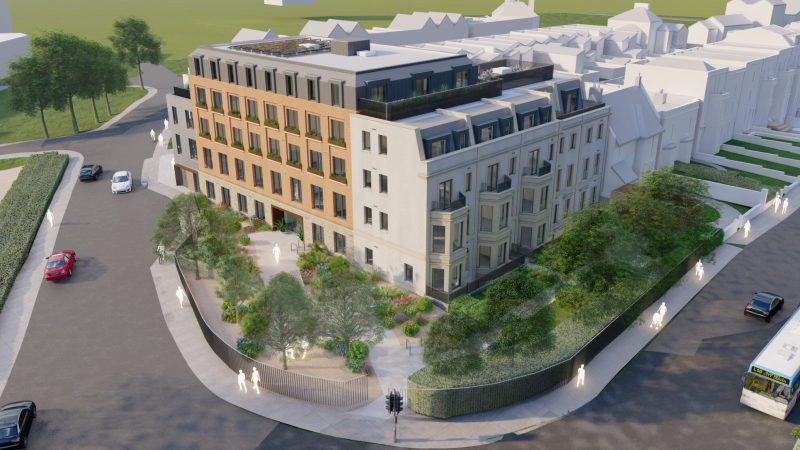
Alec French Architects, which designs co-living housing, said the guidance will help ease the housing crisis – photo: Alec French Architects
HMOs are an increasingly common way to live in Bristol and many other cities. Often residents move in with strangers and have to navigate sharing a bathroom, kitchen and living room with people they have never met before — with inevitable strife over doing the dishes or cleaning the bathroom.
Co-living homes, however, come with private toilets and kitchenettes.
Alex Hearn, the council’s director of economy of place, said: “Nationally, we don’t deliver enough housing through the planning process. We also don’t do that in Bristol either. There’s a reason why the market is responding by providing this kind of housing.
“Residents are choosing to (live there), and that might be because it’s better quality, more convenient, or simply available.”
Normal studio flats for one person must have a floor space of at least 37 sq m, according to nationally set standards — more than double Bristol’s new rules for co-living homes.
In theory, being allowed to build tiny homes could increase the value of development land, which then drives up the cost of building normal-sized homes, making this harder for other developers.
On the other hand, new homes reduce demand, which might then lower costs elsewhere.
Alec French Architects, which has designed co-living schemes in Bristol and has another planned for Coronation Road in Southville where all the homes will be at least 20 sq m, said the new guidance offers a solution to Bristol’s housing crisis.
Director Robin Gray said: “Adding co-living to the mix of accommodation on offer will provide homes for graduates and young professionals while easing the emphasis on houses in multiple occupation and the conversion of private homes.”
However the council’s new rules were not supported by all members of the economy committee.
Councillor Guy Poultney said: “We’re enabling developers to make vastly more money by lowering our standards that we expect of other kinds of residential accommodation. At the end of the day, the housing crisis the city faces is because people’s wages cannot outspend private capital investment.
“What this does is create a new kind of accommodation that will forever be owned by massive investment funds and billionaires. It’s in effect a means of extracting wealth from the people of the city.
“All this policy does is tie our hands to increase investor confidence, and I for one don’t want this kind of investment.”
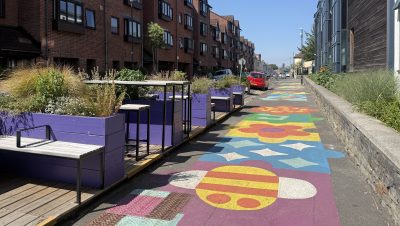
Main photo: Bristol City Council
Read next:
 Our newsletters emailed directly to you