News / Bristol Museum
Bristol Museum returns ‘deeply significant’ cultural objects
Dozens of cultural treasures that have been in Bristol Museum & Art Gallery’s collection for more than a century have been officially handed back to the Aboriginal and Torres Strait Islander community from which they were taken.
Members of the Larrakia community, based in Darwin in Australia’s Northern Territory, hailed the return of the 33 objects, which include a fishing spear, spear thrower, and club, as “a huge step in the right direction” in “the ongoing journey of decolonisation”.
The majority of the collection was acquired by Bristol Museum through donations in the late 19th and early 20th centuries.
is needed now More than ever
Nigel Browne, a representative of the Larrakia people, said the museum demonstrated “a global example of what can be done” in the repatriation of sacred and significant items to First Nations groups.
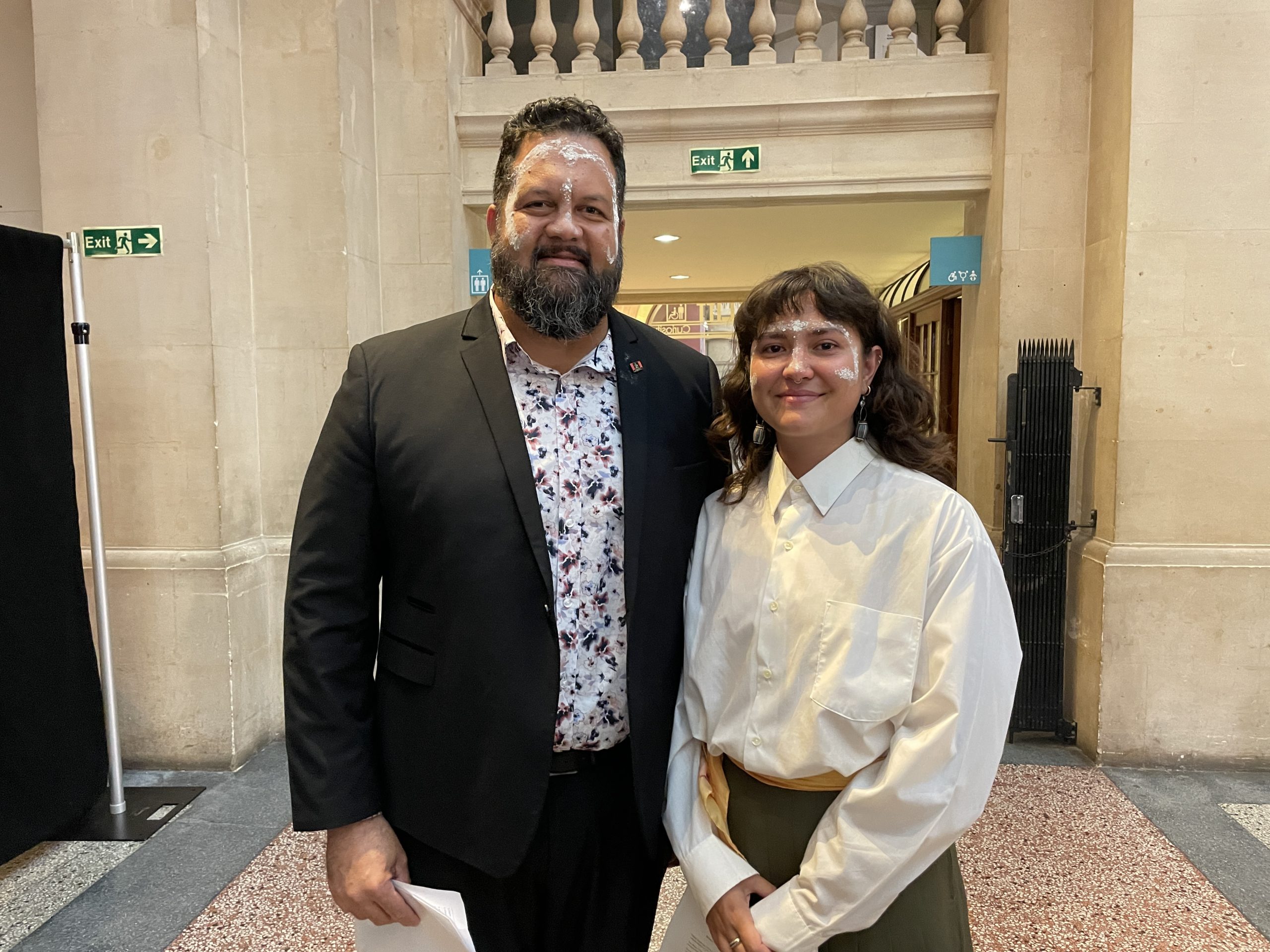
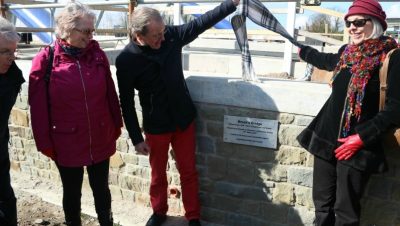
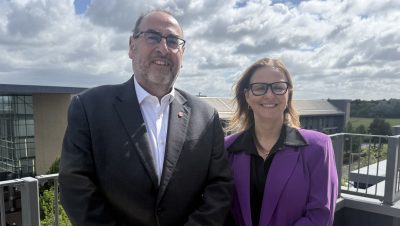
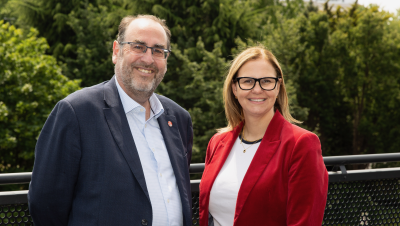
Nigel Browne and Mikayla Lee were part of a delegation to receive the amazing collection of weapons and ceremonial objects on behalf of the Larrakia people – photo: Betty Woolerton
In a packed ceremony on Monday afternoon, Mikayala Lee, a Larrakia woman and a member of the advisory group for the Larrakia Cultural Centre, was visibly emotional as she spoke about what the return of the artefacts meant to her.
“These 33 cultural objects are living extensions of my country,” she said.
“They carry the energy of saltwater, of the land and of the hands that have shaped them, of knowledge systems that have survived for tens and thousands of years.
“The return of these objects is more than just retribution.
“It is about relationships and healing – what true reconciliation feels like for me.”
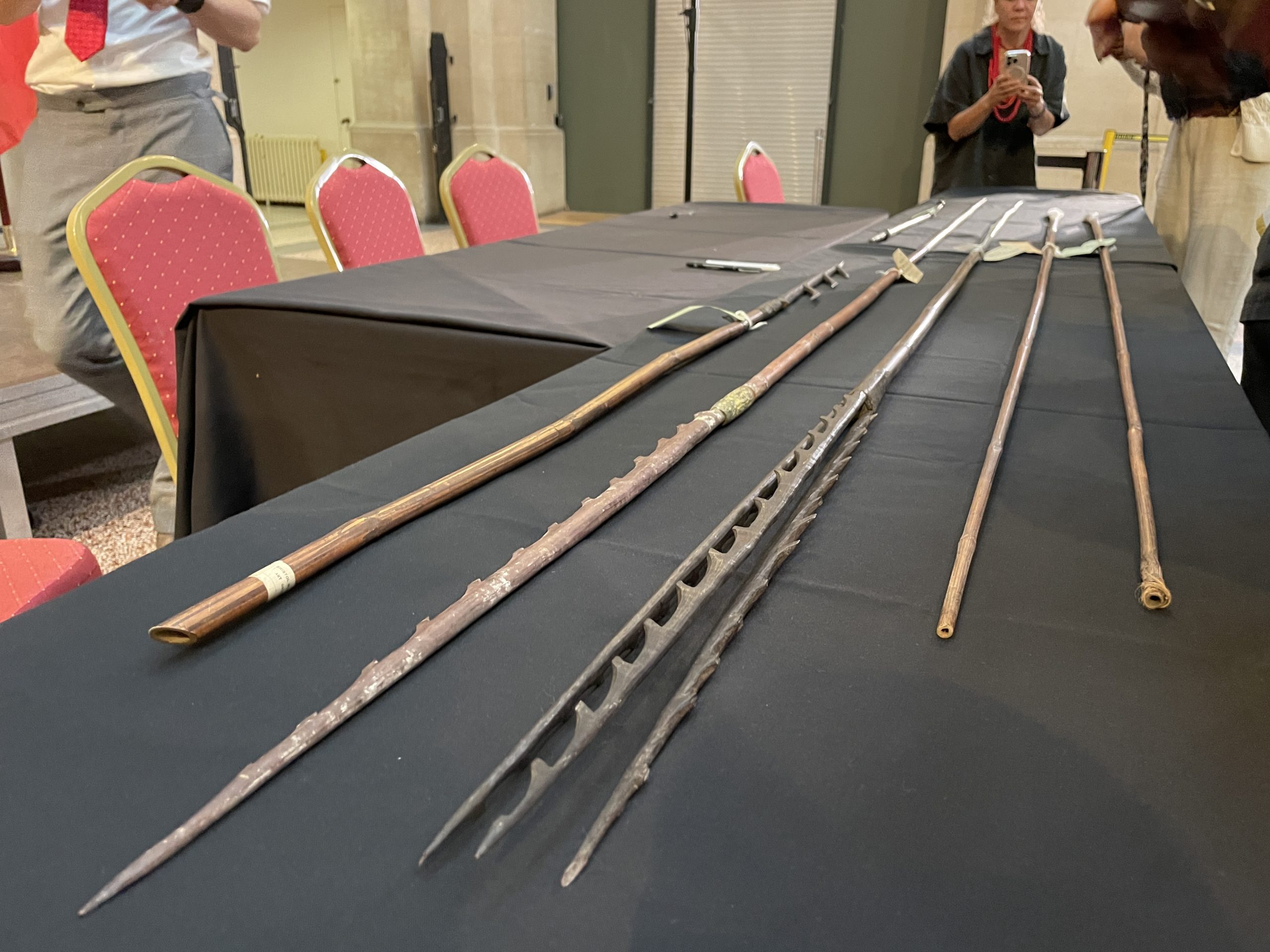
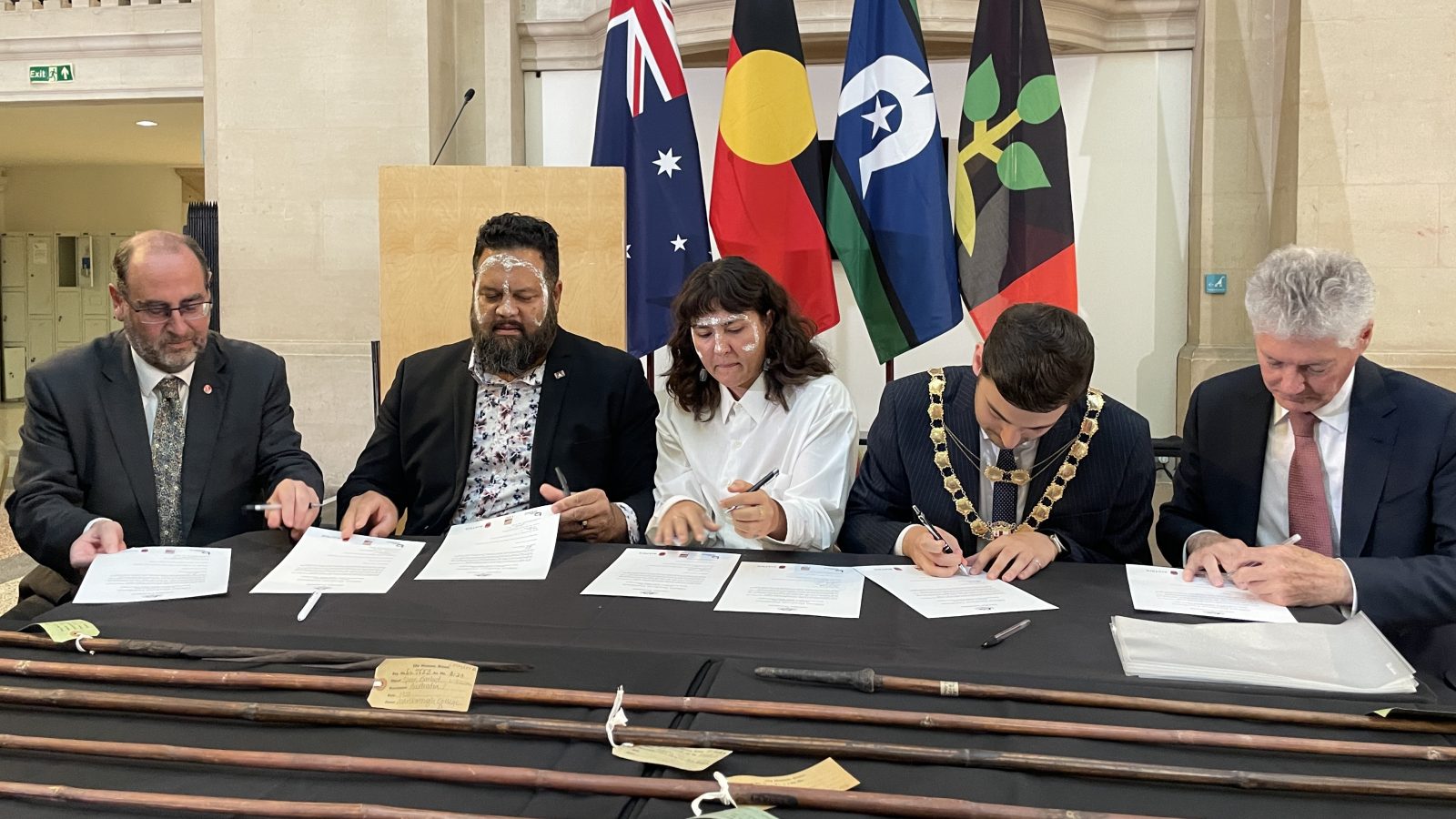
Some of the historic treasures that Bristol Museum is returning to the Larrakia community were on display at the event – photo: Betty Woolerton
Some Larrakia people who were unable to attend the event in the museum had sent their reactions to images they had been shown of the pieces.
“This is for fishing,” Robert Batji Mills said. “It’s double-headed (referring to the individual barbs), so they’ve basically engraved it and shaped it both sides. Double-headed. And that’s made from one piece of wood, so he took his time doing that, you know.”
The earliest donation of the objects is a collection of spears, a spear thrower and a club donated by a ‘Mr R Cuff’ in 1881, followed by five spears from Marlborough College, in Wiltshire, in 1934.
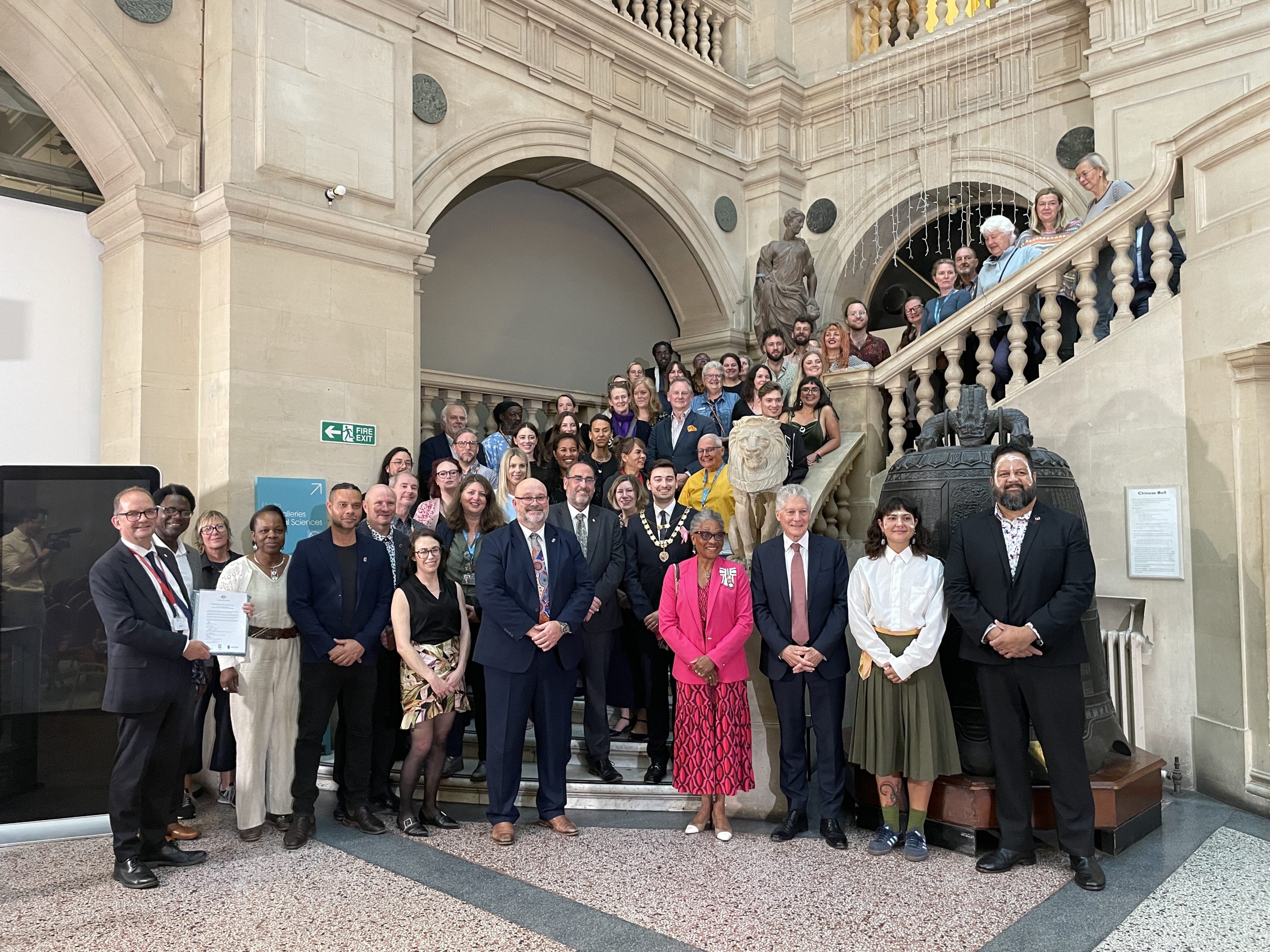
The event saw Bristol councillors, Larrakia delegates and the Australian high commissioner to the UK Steven Smith coming together in the museum – photo: Betty Woolerton
Bristol City Council leader Tony Dyer said he was proud of the work that had taken place and that it “reflects part of what makes Bristol special”.
Dyer also said our city has a duty to take responsibility for and correct “the part of our history that should never have happened”.
“These items were stolen. They are now being returned so that future generations, both of your community but also of other communities from Australia and across the wide world, can learn more about your heritage.”
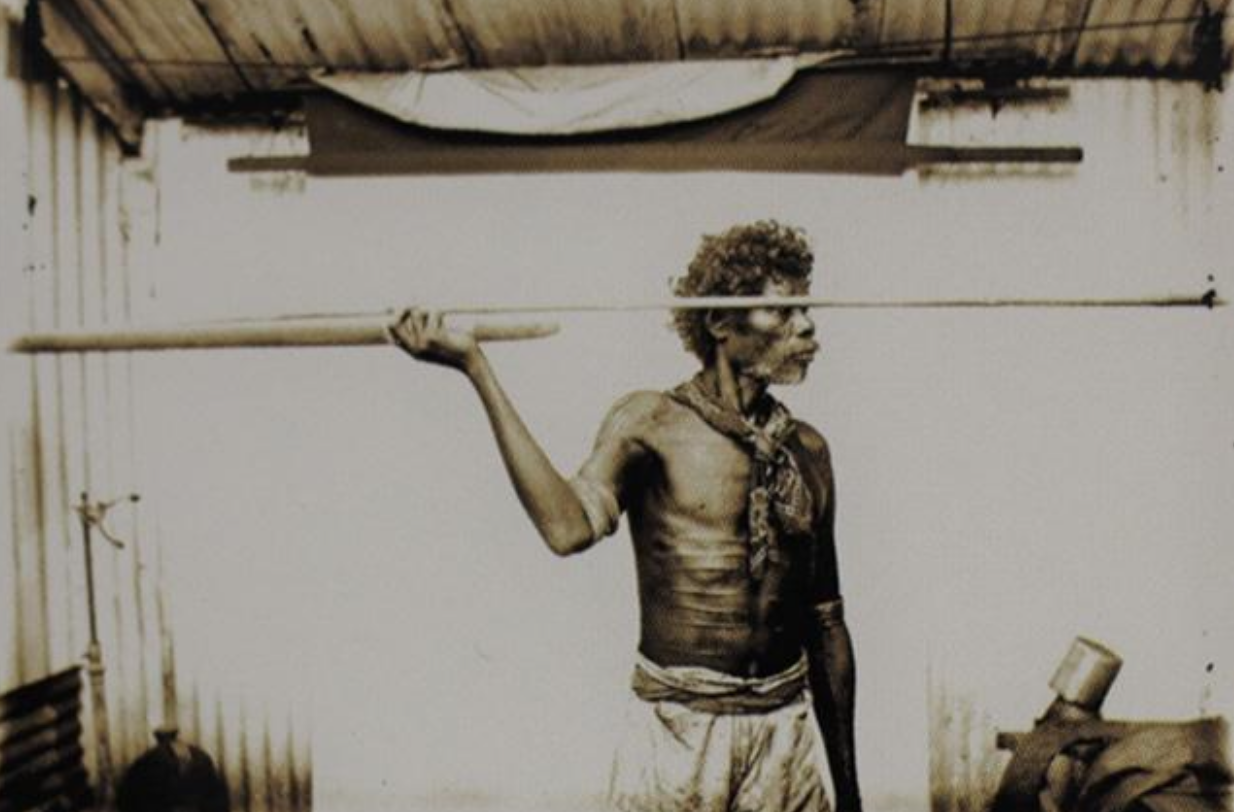
The Larrakia people are the Aboriginal traditional owners of all land and waters of the greater Darwin area in the Northern Territory in Australia – image: Bristol Museum & Art Gallery
The Larrakia are referred to as ‘Saltwater people’ and are the Aboriginal traditional owners of all land and waters of the greater Darwin area in the Northern Territory.
Larrakia Country is home to important sacred sites and ancestral figures who, in the Dreaming, the period in which life was created according to Aboriginal culture, created their land and waters.
Many popular sites in and around Darwin, such as Stokes Hill, Mindil Beach, Rapid Creek, and Casuarina Beach hold deep cultural and spiritual significance to Larrakia people, who care for and maintain them today.
The collection of weapons and ceremonial objects will be shown at the Larrakia Cultural Centre, which is currently under construction and due to open in 2026 in Darwin.
Main photo: Betty Woolerton
Read next:
 Our newsletters emailed directly to you